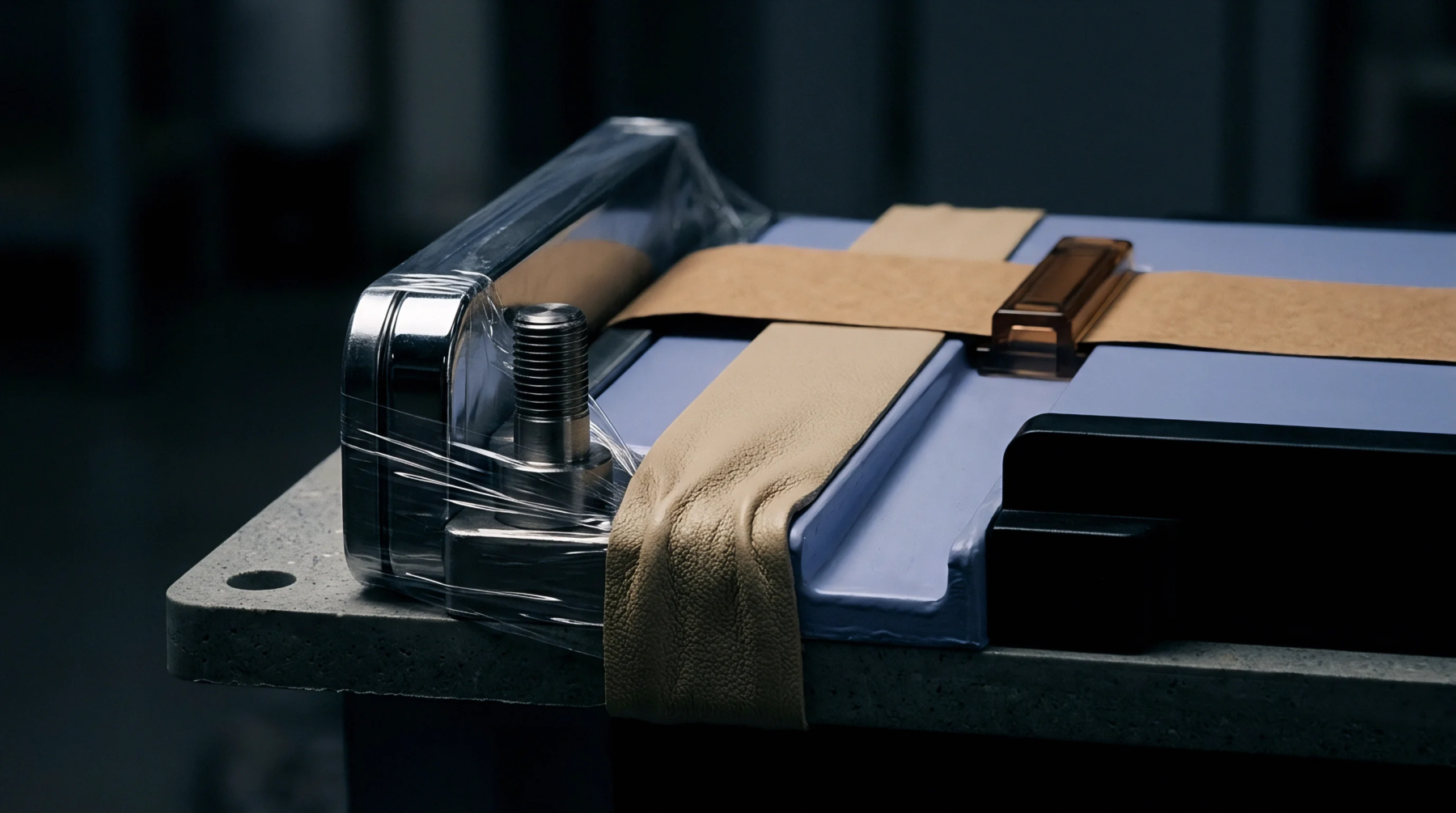
Mechanical Clamping Compression Mechanics under Cyclic Lithium Cell Swelling
Controlled mechanical clamping combines rigid platen bracing with elastomeric cushions to constrain cyclic lithium cell swelling stress between 0.2 and 0.5 MPa.
Progressive physical damage occurring within battery electrodes, current collectors, and cell packaging materials under the repeated stress of electrochemical cycling defines an irreversible wear regime in secondary electrochemical systems. The phenomenon of cyclic mechanical degradation encompasses particle microcracking, active material delamination from metal foils, loss of electrical percolation networks, and fatigue failure in terminal tabs or module containment hardware. Boundaries of the mechanism exclude instantaneous fracture from external impacts, chemical decomposition devoid of mechanical stress, and thermal runaway events caused purely by ambient overheating.
Test protocols quantify this behavior through cycling under controlled mechanical restraint while tracking capacity retention, electrochemical impedance growth, and thickness changes across operating lifetimes. Cell procurement specifications evaluate these degradation metrics to estimate service duration in heavy cycling duty cycles like commercial transit and grid frequency stabilization.
Phase transformations occurring during lithium insertion and extraction generate localized lattice strain within transition metal oxide cathode particles and graphite or silicon anode matrices. Silicon particles experience volumetric expansions up to three hundred percent, generating severe shear stresses that pulverize secondary agglomerates into disjointed fragments. Repeated cracking exposes fresh electrode surfaces to liquid electrolyte, consuming active lithium inventory to regenerate the solid electrolyte interphase layer.
Conductive carbon additives lose physical contact with active particles as voids expand, isolating pockets of material from the electron transport network. Copper and aluminum foil current collectors experience cyclic interfacial shear, culminating in adhesive failure along the slurry coating interface.
Module restraining plates and cell can walls absorb cyclic expansion forces as internal jelly rolls or cell stacks swell against physical boundaries. Continuous oscillation between high state of charge expansion and discharged contraction induces cyclic mechanical degradation across module structural tie rods, silicone cushioning pads, and terminal weld joints. Unchecked displacement loosens bolted joints or distorts laser welded busbars, increasing interfacial resistance at high current junctions.
Elastic foam pads positioned between cells compress beyond their recovery limits over thousands of cycles, losing their ability to sustain intended contact pressures. Structural creep in polymer side frames transfers excessive stress directly to adjacent cells, accelerating pouch seal fatigue and prismatic casing deflection.
Pouch and prismatic cell qualification protocols monitor swelling force development and capacity fade under variable mechanical boundary conditions to distinguish cyclic mechanical degradation from pure chemical side reactions. Dynamic mechanical analysis combined with acoustic emission monitoring records microcracking events in operando during rapid charge and discharge sweeps. Accelerated degradation profiles emerge when high C-rates interact with high depths of discharge, producing steep lithium concentration gradients that magnify internal stress fields.
Long cycle life battery warranties require explicit limits on mechanical strain amplitude to prevent premature capacity cutoffs. Cyclic mechanical degradation rates determine the frequency of pack replacements and dictate structural oversizing in stationary storage enclosures.
Controlled mechanical clamping combines rigid platen bracing with elastomeric cushions to constrain cyclic lithium cell swelling stress between 0.2 and 0.5 MPa.
Expertise is a utility, not a secret. sentiention™ publishes its working knowledge as open reference: intelligence layer covering the materials it sources, the markets it enters, and the reference that serves both.