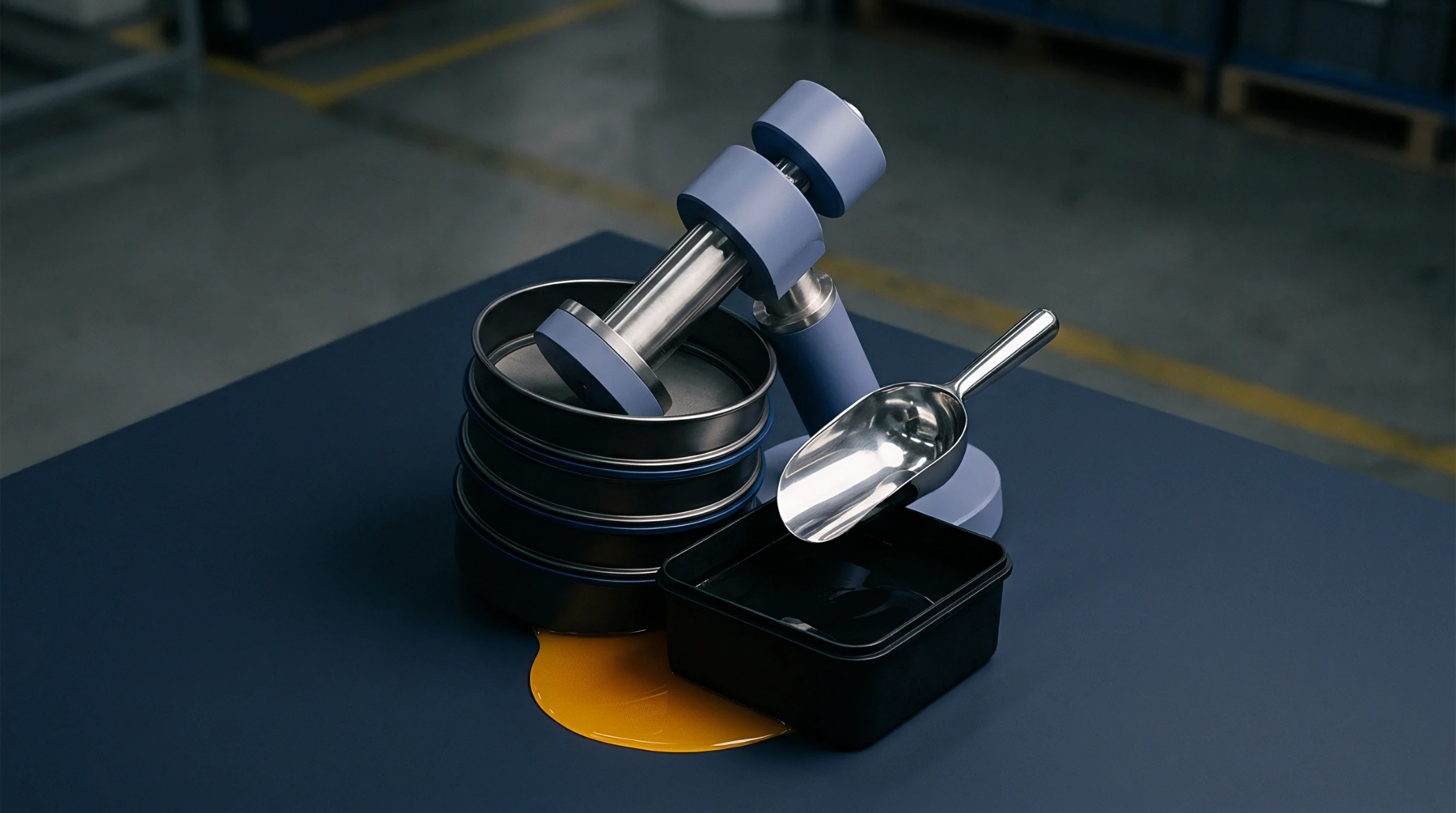
Inert Gas Atomization Basics for Powder Tool Steels
Inert gas atomization of tool steels requires precise superheat control, supersonic argon nozzles, and closed-loop gas recycling to yield dense spherical powders.
Particle size distribution analytics define a d50 diameter as the median value where exactly half of the population of particles by volume remains smaller and the other half sits above that specific threshold. An industrial sample composed of powder or slurry adopts this metric to categorize the central tendency of granular spread within a batch. Production facilities rely on this reference point to ensure consistency across chemical processing steps such as electrode coating or material synthesis.
Measurements stop at the point where particle count takes precedence over volume or mass fractions as this figure describes bulk behavior rather than individual geometry. Laser diffraction equipment usually calculates this value from raw scatter patterns by integrating the full curve into two equal areas.
Technical specifications for anode powders or conductive additives often cite d50 diameter to confirm that material fineness matches required surface area parameters. Procurement teams compare these values to verify if a batch meets the desired slurry rheology during manufacturing. High variation in this figure indicates a lack of control during the milling or sieving stage which degrades final electrochemical performance.
Smaller values correlate with faster dissolution rates while larger values reduce the overall risk of undesired side reactions at the electrode surface. Uniformity defines the validity of the data because a broad distribution renders the single median value less representative of the total material behavior. Stability in this parameter ensures that energy storage units maintain predictable cycling characteristics after initial assembly.
Processing equipment creates specific limitations on how fine a powder remains manageable before clogging filters or complicating dispersion techniques. Engineers monitor the d50 diameter during high speed mixing to detect agglomeration or premature breakdown of primary particles. Changes in solvent chemistry or binder loading often shift this effective size by altering the physical environment of the particles in suspension.
Maintenance crews check the calibration of optical sensors because dirt on the lenses introduces bias into the light scattering model. Constant monitoring protects the integrity of the casting process by flagging deviations before they propagate into the dried sheets. Precise control of this diameter reduces waste by narrowing the tolerance window required for high speed line operation.
Analytical variance occurs when different light source wavelengths or diffraction theories govern the calculation of the result. Different instruments reach varying conclusions on the same powder based on the assumptions applied to non-spherical particles. Testing laboratories standardize their procedures to minimize discrepancies when comparing data across multiple vendors or facilities.
Accuracy depends on the careful preparation of the suspension and the removal of air bubbles from the optical path before measurement starts. Repeatability confirms the validity of the reported median against the actual physical state of the material. A stable d50 diameter acts as a primary control lever for managing the volumetric energy density of finished battery components.
Inert gas atomization of tool steels requires precise superheat control, supersonic argon nozzles, and closed-loop gas recycling to yield dense spherical powders.
Expertise is a utility, not a secret. sentiention™ publishes its working knowledge as open reference: intelligence layer covering the materials it sources, the markets it enters, and the reference that serves both.