Meaning
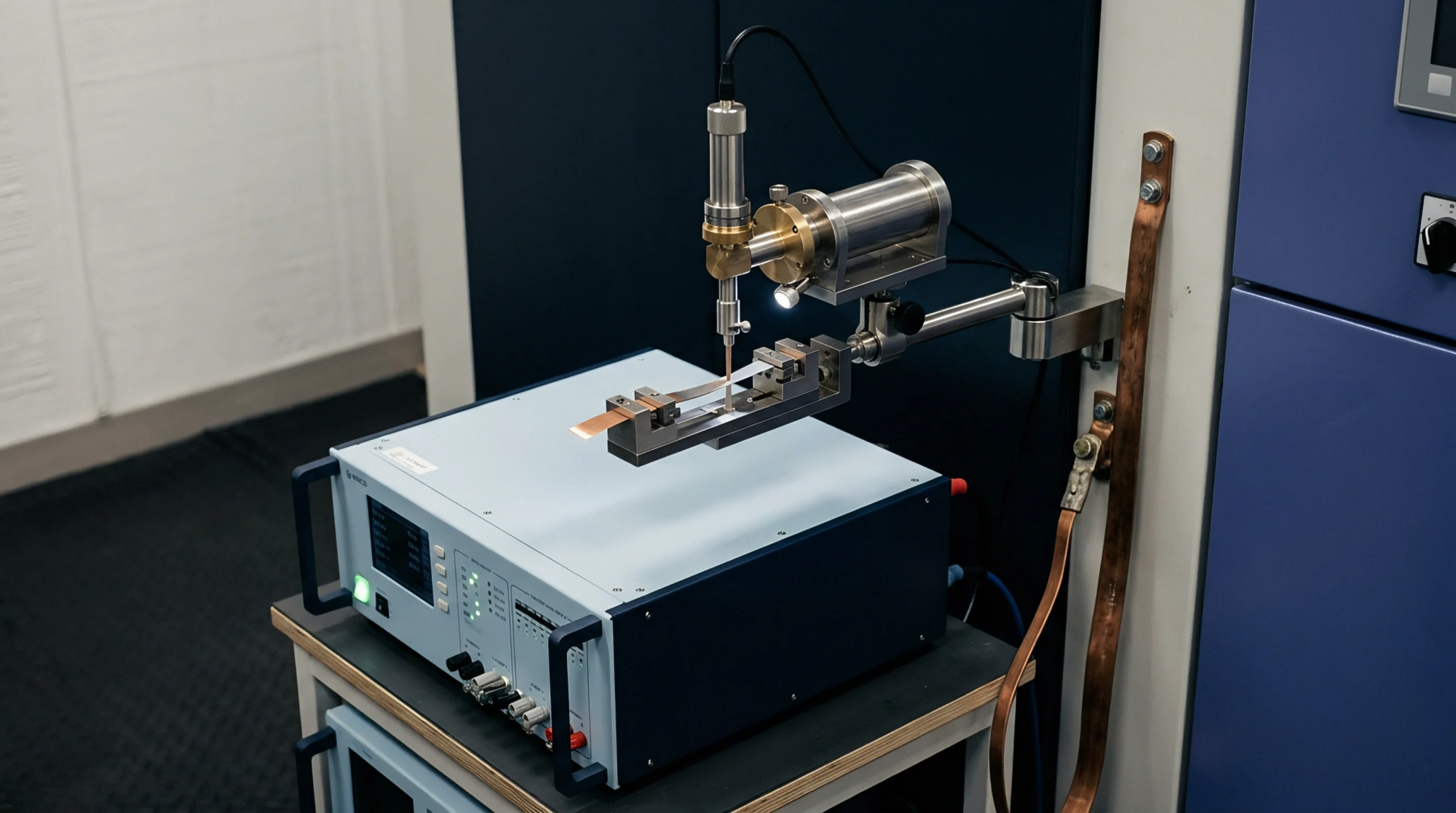
Electrical resistance measurement relies on the separation of current injection and voltage detection paths to eliminate lead resistance errors. In four-point kelvin sensing, two pairs of leads contact the test object independently. One pair carries a precise excitation current while the other pair measures the potential drop across the internal material.
This architecture removes the influence of contact resistance and wire geometry from the final calculation.
Impedance Accuracy
Precision instrumentation utilizes this dual path strategy to ensure that only the ohmic resistance of the sample affects the reported value. When lead wires possess high resistance or variable contact pressure, traditional two-wire methods introduce significant measurement drift. Four-point kelvin sensing bypasses these parasitic elements by ensuring the voltmeter draws negligible current through its sensing leads.
Laboratory testing protocols and battery cycle validation rely upon this method for characterizing cell internal resistance with high repeatability. Consistent data acquisition occurs because the voltage drop across the current-carrying leads does not participate in the reading of the sample resistance.
Measurement Mechanism
Current travels from a source through the outer two probes into the material under investigation. Simultaneously, the inner two probes sense the resulting potential difference without interference from the outer circuit loops. Digital multimeters or source measure units compute the final result by applying Ohms law to the ratio of sensed voltage to injected current.
This configuration proves essential for low-resistance characterizations where contact resistance constitutes a high percentage of total readings.
Systemic Utility
Industrial battery production adopts this protocol to verify electrode connectivity and tab welding quality during high-speed assembly. Engineers select this approach when the objective is to differentiate between material-level resistance and connection-level impedance in stacked energy storage modules. Reliable resistance data supports accurate state-of-health assessments in large capacity systems.
Accurate sensing prevents miscalculation of thermal losses by isolating the electrical path resistance from extrinsic variables.