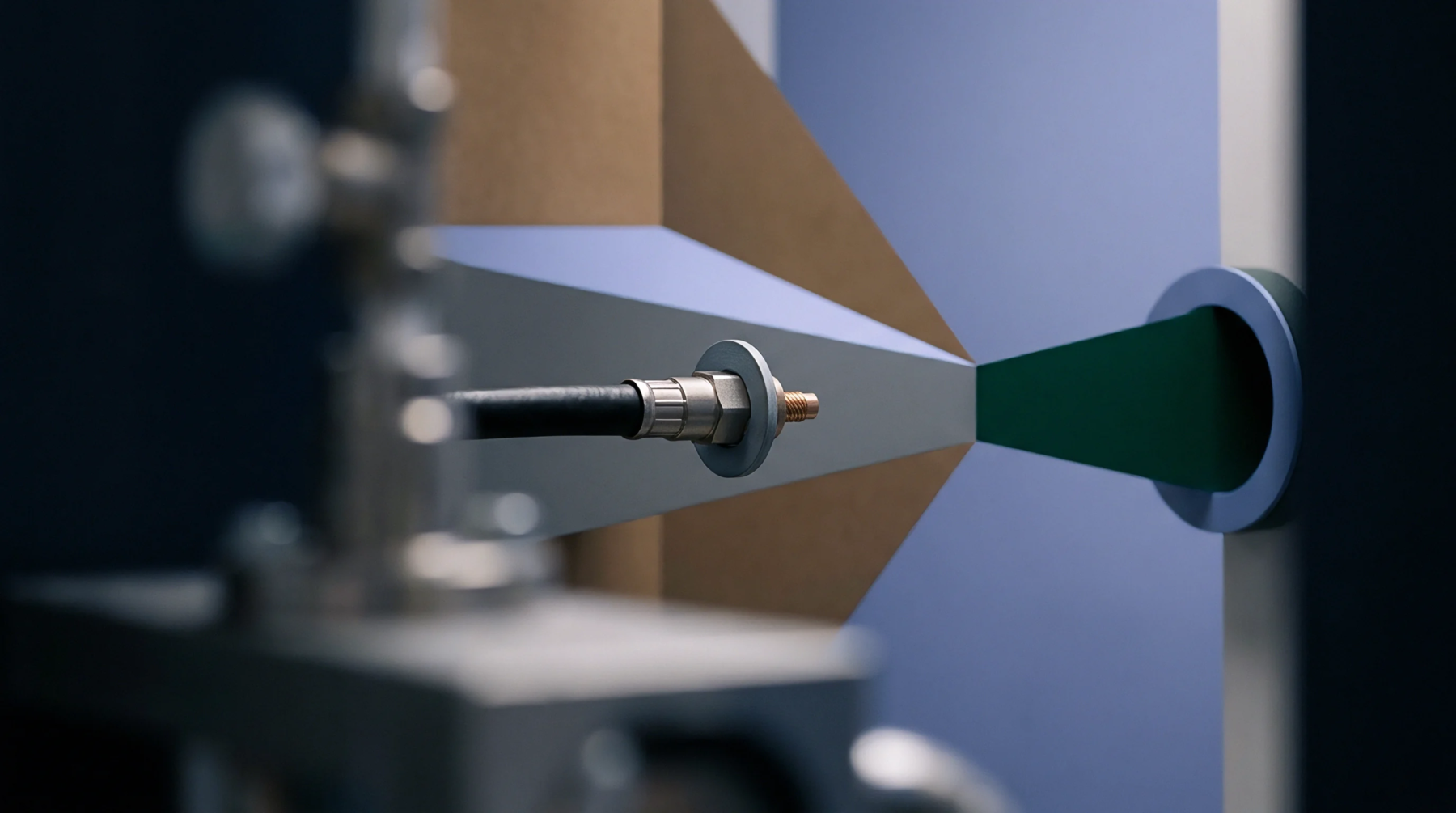
Ultrasonic Testing Protocols for Liquid Cooling Plate Joint Verification
High-frequency ultrasonic C-scan imaging verifies internal cooling plate joints by mapping acoustic impedance mismatches to prevent coolant leaks and bursts.
Destructive material evaluation measuring the ultimate internal fluid pressure an enclosed hollow component withstands prior to catastrophic mechanical rupture defines an essential pressure assessment. Application of hydrostatic burst testing establishes the structural integrity, yield threshold, and failure mechanics of liquid cooling plates, prismatic cell aluminum casings, and cell safety vents. The protocol governs the structural safety margins of fluid-carrying circuits and pressurized cell bodies against rupture, plastic deformation, and leak formation under extreme operating loads.
It stops at fluid-filled mechanical containment structures, offering no assessment of dry electrical performance or external mechanical impact resistance.
High-pressure water or oil serves as the incompressible working medium, pumped progressively into the test piece until complete structural breach occurs. Using an incompressible fluid suppresses the violent pneumatic energy release characteristic of compressed gas failures, enabling accurate pressure logging at the millisecond of structural loss. For battery cooling channels, test sequences log initial elastic expansion, the onset of permanent plastic deformation, and the ultimate rupture pressure.
Prismatic cell cans undergo similar pressurization to verify the exact bursting threshold of integrated stamped safety score lines. The procedure confirms that safety vents activate predictably within certified pressure windows to release gas before the cell wall tears.
Thermal runaways generate rapid gas evolution inside hermetically sealed battery cells, driving internal pressures to extreme values within seconds. Fluid-based burst tests verify that structural cell components exhibit designed mechanical hierarchies, where weak points rupture exclusively at safety vents rather than along perimeter seam welds. Cooling plates must likewise endure pump-stall overpressures and external pack compressive loads without rupturing, as glycol leaks onto energized busbars cause severe short circuits and fires.
Sourcing contracts require production cooling plates to withstand burst pressures exceeding four to five times nominal system pressure, which usually equates to eight to ten bar minimum proof thresholds. The physical failure site must never occur at mounting points or fluid supply couplings.
Statistical process qualification uses burst curves to monitor the mechanical consistency of friction stir welds, continuous laser welds, and brazed seams across production lots. Variations in burst pressure indicate inconsistent penetration depth, shielding gas contamination, or tool wear across automated manufacturing lines. Procurement contracts mandate periodic destructive sampling, requiring vendors to submit burst test logs alongside tensile test coupons.
The resulting pressure-versus-time curves confirm whether cold plate channels split along the parent material or tear along the weld seam. These destructive metrics validate that the mechanical design satisfies high-volume automotive crashworthiness and long-term durability mandates.
High-frequency ultrasonic C-scan imaging verifies internal cooling plate joints by mapping acoustic impedance mismatches to prevent coolant leaks and bursts.
Expertise is a utility, not a secret. sentiention™ publishes its working knowledge as open reference: intelligence layer covering the materials it sources, the markets it enters, and the reference that serves both.