Importer Compliance Verification for Lithium Battery Transport Testing Schedules
Verify UN 38.3 test summaries against accredited lab databases and audit physical batch metrics at receiving to prevent demurrage and cargo seizure.

Dock
A shipping container sits on the customs apron with its seals intact. Border officers check the bill of lading against the cargo manifest, pulling containers flagged under UN 3480 and UN 3481. Port authorities verify the Dangerous Goods Declaration against physical markings on the cargo, checking for matching battery type designations and gross mass declarations.
Every container entering sovereign airspace or territorial waters carries legal accountability for its hazardous contents, and importers take on immediate regulatory custody the moment goods arrive at terminal facilities.
National dangerous goods enforcement teams operate under mandates set by international treaties and domestic transport acts. In the United States, Title 49 of the Code of Federal Regulations, Part 173.185, places legal responsibility for hazardous material transport testing on the initial shipper and the party moving the goods across interstate or international commerce. European Union member states enforce the Agreement Concerning the International Carriage of Dangerous Goods by Road alongside national civil codes, penalizing consignees who accept undocumented dangerous goods into distribution without certified proof of structural and thermal stability.
Acceptance staff at ports and air freight forwarders require verifiable test summary documentation before cargo moves past transfer gates. The document must prove compliance with the United Nations Manual of Tests and Criteria, Part III, subsection 38.3. Without a clear, auditable link connecting container serial numbers to an authenticated testing facility record, port officials impound the consignment.
Demurrage then accumulates daily while cargo sits on bonded concrete.
A missing test summary at customs clearance halts clearance and converts routine container dwell time into commercial demurrage.
Commercial contracts typically assign freight charges to the buyer under Delivered at Place or Free On Board terms. Port storage charges stack up through demurrage fees ranging from several hundred to thousands of dollars per container daily. Customs authorities issue civil penalty assessments against the registered importer of record when hazardous cargo lacks test summaries, and resolving the paperwork becomes far harder once goods sit under administrative hold.
Carriers retain the legal right to discharge non-compliant containers at alternate transit ports to mitigate onboard fire hazards. The International Maritime Dangerous Goods Code gives vessel masters authority to jettison, isolate, or refuse transit to improperly documented lithium battery shipments. Marine insurance underwriters routinely deny claims for damaged or destroyed cargo if the primary policyholder failed to verify statutory dangerous goods transport documentation before lading.
Without initial test evidence, the commercial balance sheet remains completely exposed to catastrophic loss.


Protocol
Subparagraph 38.3 of the United Nations Manual of Tests and Criteria establishes the baseline mechanical, environmental, and electrical test sequence for lithium metal and lithium ion cells and batteries. The standard evaluates cell durability across eight sequences, designated T.1 through T.8. Manufacturers run these evaluations on set quantities of fresh cells, fully cycled cells, and assembled battery modules to isolate failure modes caused by pressure drops, rapid acceleration, thermal shock, short circuits, and overcharging.

Mechanical and Environmental Stress Sequences
Test T.1 evaluates altitude simulation by subjecting samples to a baseline pressure equal to or below 11.6 kilopascals for six hours at ambient temperature. This pressure corresponds to an aircraft cargo hold at an equivalent altitude of 15,000 meters. To pass, units must show no fluid leakage, venting, disassembly, rupture, or fire, and open-circuit voltage after exposure must remain at or above 90 percent of its pre-test measurement.
Test T.2 measures resistance to extreme temperature changes through twenty successive cycles. Samples are stored at 72 degrees Celsius for four hours, then transferred within thirty minutes to negative 40 degrees Celsius, where they remain for four hours. This thermal shock tests case seal hermeticity, internal weld strength, and separator stability; structural failure shows up as seal rupture, electrolyte weeping, or significant voltage drops.
Vibration durability is assessed under Test T.3, which applies a logarithmic frequency sweep from 7 Hertz to 200 Hertz over fifteen minutes, completing twelve sweeps across three perpendicular axes. Peak acceleration reaches 8 times standard gravity for small cells and 2 times standard gravity for large batteries. Immediately after vibration testing, Test T.4 applies half-sine shock pulses, subjecting small units to at least 150 times gravity and larger industrial packs to 50 times gravity across six directions.
Electrical Abuse and Cell Level Limits
External short circuits are tested under Test T.5. Technicians bring the specimen to 57 degrees Celsius before applying an external resistive load of less than 0.1 ohms. The short remains connected until the sample returns to 57 degrees Celsius plus another hour, or for a mandatory twenty-four-hour hold.
The unit passes if exterior casing temperatures stay below 170 degrees Celsius with no explosion or flame within six hours of disconnecting the circuit.
Test T.6 measures crush or impact resistance depending on cell shape and size. For cylindrical cells with a diameter of at least 18 millimeters, a 9.1-kilogram mass drops from 61 centimeters onto a 15.8-millimeter steel bar placed across the cell’s center. Pouch and prismatic cells face a hydraulic press applying a continuous compressive force of 13 kilonewtons until the casing yields, voltage drops by 100 millivolts, or the force target is reached.
Test T.7 stresses integrated battery management electronics by feeding twice the manufacturer’s maximum continuous charge current into the pack for twenty-four hours under continuous monitoring.
Test T.8 subjects individual primary or secondary cells to forced discharge. Technicians connect a discharged cell in series with a DC power supply set to deliver the maximum rated discharge current in reverse polarity for a duration matching the cell’s rated ampere-hour capacity. Across all electrical abuse tests, samples pass only if they show no flame or disintegration during testing and throughout a seven-day observation window.
| Test Designation | Evaluation Vector | Operating Target Parameters | Mandatory Pass Limit |
|---|---|---|---|
| T.1 Altitude | Pressure drop | Pressure equal to or below 11.6 kPa for 6 hours | No fire, zero venting, voltage above 90 percent |
| T.2 Thermal Shock | Rapid thermal cycling | -40 to +72 deg C, 20 cycles, 4-hour holds | No disassembly, zero mass loss, voltage above 90 percent |
| T.3 Vibration | Logarithmic sweep | 7 to 200 Hz, peak acceleration up to 8 g | Hermetic seal preserved, no voltage drop below limit |
| T.4 Shock | Half-sine pulse | 50 g to 150 g peak across 3 principal axes | No structural rupture, no flame, voltage above 90 percent |
| T.5 External Short | External load fault | Resistance below 0.1 ohm at 57 deg C ambient | Case temperature below 170 deg C, zero explosion |
| T.6 Impact / Crush | Mechanical deformation | 13 kN compressive load or 9.1 kg dropped bar | Surface temperature below 170 deg C, zero flame |
| T.7 Overcharge | Over-current charging | Twice maximum continuous charge current for 24 h | Zero fire, no internal module disassembly |
| T.8 Forced Discharge | Reverse current abuse | Reverse polarity at maximum rated discharge current | Zero explosion, zero flame during 7-day observation |
The standard sets sample sizes according to design type, capacity, and cycling history. Primary cells are tested in sets of ten fresh units and ten fully discharged units. Rechargeable lithium ion cells require five fresh samples and five samples that have undergone twenty-five full charge-discharge cycles.
Modular assemblies require four fully conditioned packs to evaluate both initial stability and performance after operational aging.
Engineers determine the scope of retesting based on design modifications made during volume production. Changing internal chemistry, increasing nominal capacity by over 20 percent, altering electrode coating thickness, or substituting external enclosure materials forces a complete re-run of the test sequence. Adding or removing parallel cell strings in a modular pack changes internal fault current capacity and requires new mechanical and short-circuit verification under laboratory supervision.
Under UN 38.3 revision guidelines, an increase in nominal capacity exceeding twenty percent invalidates the parent test summary.
Minor changes to peripheral casing plastics or terminal plating can sometimes bypass mechanical retesting if structural integrity remains mathematically verifiable. However, component changes that affect safety shutdown characteristics in integrated protection circuits require specific partial retesting under T.5 and T.7 protocols. This schedule establishes a fixed compliance baseline for every production iteration across its manufacturing lifecycle.

Provenance
Every commercial movement of lithium batteries depends on a traceable document chain confirming test completion. The primary compliance document is the UN 38.3 Test Summary Report, standardized under Chapter 2.9.4 of the UN Model Regulations. Unlike complete laboratory research dossiers, the test summary functions as an extractable legal instrument designed for verification by customs agencies, freight handlers, and third-party logistics firms.
Importers compile this documentation well before goods reach departure terminals.

Structural Components of the Document Chain
The UN Model Regulations mandate ten specific content points for any valid test summary. Omitting any mandatory field allows transport authorities to refuse cargo at shipping hubs:
- Cell or battery manufacturer information including the full registered corporate name, headquarters address, phone number, and technical email address.
- Independent testing facility credentials detailing the laboratory name, physical address, phone number, email contact, and website URL.
- Unique test report identification number matching the primary audit reference logged in the testing institute’s database.
- Detailed product description listing the exact cell or pack nomenclature, part number, chemistry formulation, total mass, and electrical ratings.
- Physical design category specifying whether the item is a primary lithium metal unit, a secondary lithium ion cell, an assembled battery, or finished equipment.
- Nominal watt-hour rating for secondary cells and batteries, or total lithium content in grams for primary formats.
- Comprehensive test execution matrix documenting results across individual tests T.1 through T.8 along with any applicable exemptions.
- Assembly verification status clarifying compliance under paragraph 38.3.3(f) or 38.3.3(g) for multi-cell modular packs.
- Reference standard revision level noting the specific UN Manual of Tests and Criteria edition, amendment year, and addenda used during testing.
- Authorized signatory validation including the name, title, signature, and execution date of the responsible technical authority.
Importers face significant compliance risks when sourcing from overseas manufacturers through trading companies or intermediaries. Brokers frequently pass along altered test summaries where original manufacturer details have been masked or replaced with third-party distributor brands. A genuine test summary links back to an accreditation number that traces directly to a body recognized under the International Laboratory Accreditation Cooperation Mutual Recognition Arrangement.
Verification requires cross-checking laboratory certificates against national registers, such as CNAS in China, NVLAP in the United States, or DAkkS in Germany.
Fabricated test summaries usually show telltale errors during a detailed audit. Fraudulent records often cite outdated revisions ~ such as referencing the 5th Revised Edition for cells made in 2024, when regulations mandate the 7th Revised Edition, Amendment 1. Document dates that precede the commercial release of the battery chemistry indicate recycled certificates.
Similarly, discrepancies between the watt-hour rating on the summary and the product of rated voltage and capacity printed on the cell itself signal immediate non-compliance.
Suppliers sometimes argue that proprietary concerns prevent sharing test summaries that name internal cell vendors, but international transport law leaves no room for that defense. The UN Model Regulations explicitly require test summaries to be available throughout the supply chain without non-disclosure restrictions. Importers should hold unredacted summaries in technical archives before issuing purchase orders.
When documentation gaps persist, the importer must fund independent laboratory testing to keep cargo moving.

Bench
Physical verification begins on the receiving dock, where incoming cartons, pallets, or custom overpacks are checked against the parameters in the test summary dossier. Compliance engineers cross-reference physical labels on cells and packs with the certificate’s registered values. Any mismatch between physical items and test records halts distribution before inventory reaches downstream operations.
Physical Metrics and Structural Sampling
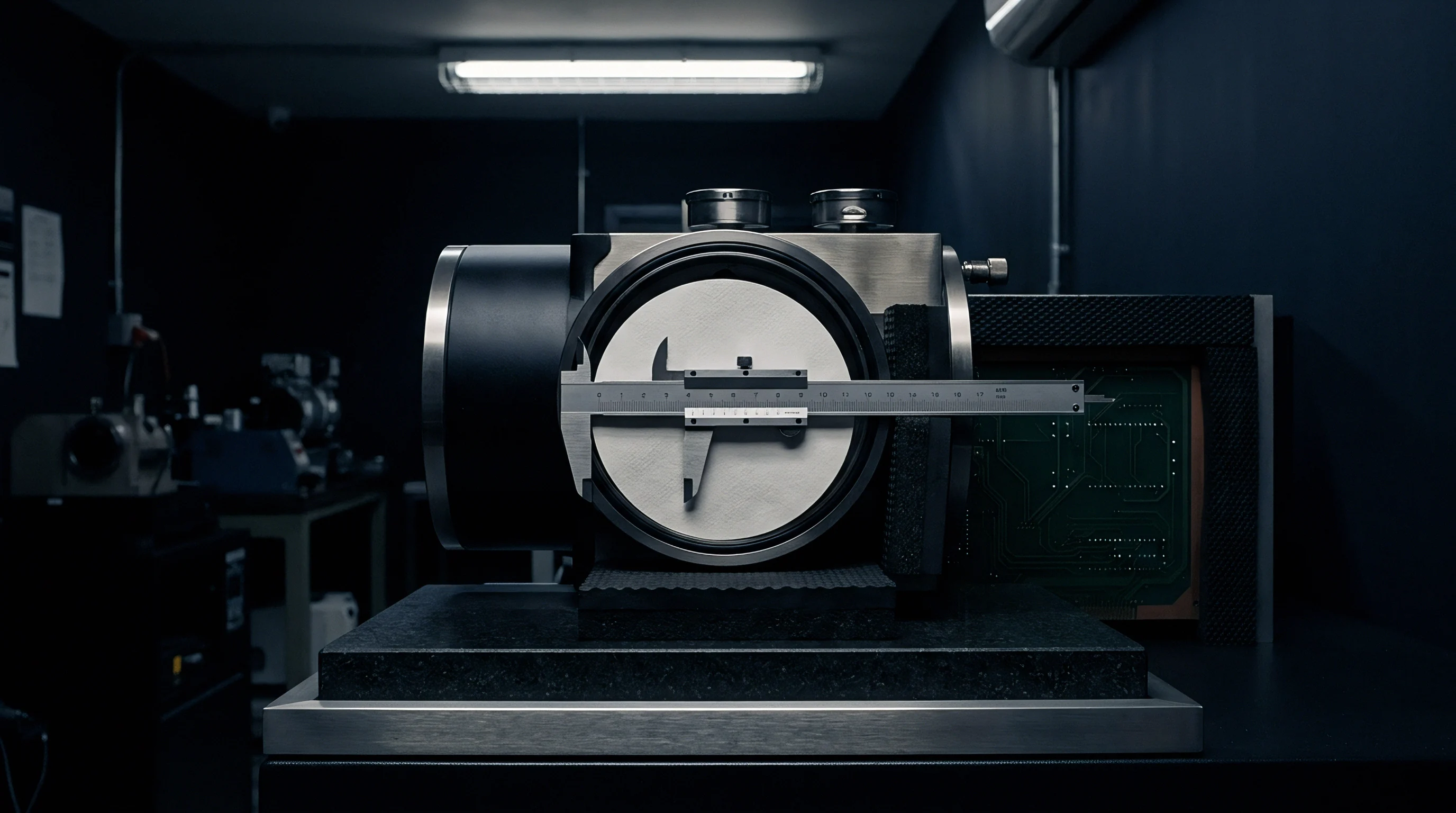
Technicians weigh sample cells on calibrated balances to catch discrepancies in internal construction. A mass variance greater than 3 percent from the UN 38.3 test report indicates material shifts ~ such as changes in current collector foil thickness, electrode coating weight, or electrolyte volume. Calibrated micrometers measure height, width, diameter, and pouch seam thickness; swelling or casing expansion points to internal pressure build-up and premature degradation.
State of charge is a strict compliance requirement for air freight under International Air Transport Association Packing Instruction 965, Section IA and Section IB. Dedicated cargo aircraft may carry standalone secondary lithium ion cells only if the shipment is maintained at or below 30 percent of rated capacity. Inspectors calculate state of charge using open-circuit voltage readings after stabilizing cells at 20 degrees Celsius for twelve hours.
Because lithium iron phosphate chemistries exhibit flat voltage discharge curves, voltage readings alone lack precision, requiring coulometric discharge testing on sample batches.
Destructive physical analysis supplements surface checks for critical components. Technicians open sample cells inside argon-filled gloveboxes to examine winding alignment, separator integrity, and internal construction. High-resolution microscopy reveals defects that bypass electrical screening, such as burrs on cathode edges, uneven active material coating, or delaminated electrode tabs.
During operation, these microscopic flaws cause localized current spikes that trigger internal short circuits capable of bypassing T.5 thermal limits.
| Physical Check Parameter | Inspection Tool | Acceptable Deviation Band | Corrective Escalation Action |
|---|---|---|---|
| Cell Gross Mass | Calibrated analytical scale | Within 2.5 percent of nominal test record | Impound lot, issue corrective action request |
| Open-Circuit Voltage | Digital multimeter, 6.5-digit | Delta below 10 mV across sample tray | Quarantine lot for self-discharge rate monitoring |
| Direct-Current Resistance | Precision milli-ohmmeter | Within 10 percent of specification limit | Perform cycling profile audit across 5 cells |
| Casing Dimensions | Laser micrometer system | Within 0.1 mm of mechanical drawing | Refuse lot acceptance, verify tooling revision |
| Shipping State of Charge | Coulometric cycler | Equal to or below 30 percent rated capacity | Discharge lot, bill freight vendor for non-compliance |
| Label Legibility | Optical measurement camera | 100 percent readable, includes UN marking | Relabel at supplier expense under customs custody |
Electrical impedance spectroscopy offers non-destructive insight into batch consistency. Technicians perform AC resistance tests at 1 kilohertz alongside multi-frequency electrochemical impedance scans across the millihertz-to-kilohertz spectrum. Variations in charge-transfer resistance indicate inconsistencies in separator porosity, poor electrolyte wetting, or degraded passivation films.
Wide impedance spreads within a lot signal poor process control during manufacturing and a higher risk of early field failures.
A disciplined quality team logs every physical variance into a non-conformance tracking system. If cell mass falls outside tolerance or open-circuit voltage shows high self-discharge over thirty days, the importer freezes the inventory and requires the vendor to supply complete material trace records for the raw foil and slurry lots used in that batch. Skipping physical inspection lets factory defects slip through into finished products, where field remediation costs escalate sharply.
A cell lot showing broad impedance distribution at receiving inspection signals irregular internal electrode processing despite holding valid laboratory paperwork.
Documenting batch consistency requires tracking against historical baseline data. Test summaries prove only that a specific prototype passed evaluation at one point in time; they give no visibility into ongoing production variance. Importers need internal audit routines that sample every arriving container with statistical rigor, using physical inspection to bridge the gap between initial qualification and ongoing production quality.


Exposure
Distributing lithium batteries without compliant transport testing documentation carries severe civil, administrative, and financial penalties. The regulatory framework places legal responsibility on the importer who introduces dangerous goods into commerce. Ignorance of test requirements provides no legal defense against citations, and regulators treat missing documentation as a direct violation of dangerous goods safety acts, enforcing penalties that can jeopardize operating licenses.

Financial Liabilities and Administrative Sanctions
The Federal Aviation Administration and the Pipeline and Hazardous Materials Safety Administration assess civil penalties that stack per violation, per day. Transporting undocumented batteries by air carries fines exceeding 80,000 dollars per incident, and aggregate penalties rise quickly if multiple non-compliant packages are discovered on a single pallet. Criminal penalties apply if a shipper knowingly sends uncertified cells that trigger an onboard fire, leading to prosecution of corporate officers, mandatory remediation orders, and potential imprisonment.
Cargo insurance policies contain explicit warranties requiring full compliance with international dangerous goods regulations. When a thermal runaway event involving uncertified batteries destroys cargo, container chassis, or vessel infrastructure, underwriters open subrogation investigations. If adjusters find an invalid or fraudulent UN 38.3 test summary, the insurer invokes policy exclusions for statutory non-compliance, leaving the importer directly liable for infrastructure damage, environmental cleanup, and emergency response costs.
Under European Union Battery Regulation 2023/1542, importer duties extend beyond transport test summaries. Economic operators placing batteries on the European single market must establish due diligence frameworks covering test schedules, carbon footprints, supply chain origin, and structural safety performance. Importers bear statutory liability for market withdrawals and recalls if surveillance authorities identify non-compliant cells in circulation ~ and the cost of a safety recall easily dwarfs the purchase price of the imported inventory.
Marine insurance coverage dissolves when fire investigators establish that cargo lacked authenticated dangerous goods test summaries prior to vessel loading.
Operational disruptions compound quickly when customs detains a shipment. As cargo sits in bonded warehouses, supply chains stall, leaving downstream manufacturing plants unable to meet customer delivery commitments. Liquidated damages for assembly line downtime routinely reach tens of thousands of dollars per day under strict supply contracts.
Sourcing teams that cut compliance corners to save time usually spend tenfold their savings on legal fees, customs fines, and emergency air shipments for replacement stock.
A company’s reputation collapses quickly after a public battery safety failure. Consumer product safety commissions maintain public defect portals where safety notices, stop-sale orders, and recall records remain permanently accessible. The loss of buyer trust and subsequent retail delistings can destroy a technology brand.
Thorough test verification protects corporate balance sheets against catastrophic, uninsurable transit and operational risks.
Audit
Managing ongoing compliance requires structured supplier audit programs to confirm that manufacturing processes stay aligned with certified design baselines. Importers use inspection plans based on ANSI/ASQ Z1.4 sampling procedures to systematically evaluate incoming shipments. This audit regimen ensures that mass-production cells match the electrochemistry, internal architecture, and safety protection mechanisms certified under the original UN 38.3 test submission.
Which Audit Mechanisms Protect Sourcing?
A sound compliance strategy deploys specific verification steps throughout the supplier relationship, turning passive document collection into active technical oversight:
- Pre-production factory floor audits inspect electrode winding tension, dry room moisture controls, and automated separator alignment before commercial assembly begins.
- Direct testing facility cross-verification confirms that laboratory accreditation records are current and that the testing house operates independently of the cell manufacturer.
- Lot-level material certification reviews verify that incoming aluminum and copper foils, separator polymers, and active electrode materials match the chemistry specified in safety filings.
- Statistical process capability index tracking for internal resistance and open-circuit voltage ensures cell production remains tightly controlled within narrow statistical limits.
- Periodic witness testing protocols require importer technical personnel to observe annual UN 38.3 and IEC 62133 recertification runs inside the testing laboratory.
- Dockside finished-goods random sampling pulls shipping cartons directly from completed export pallets and sends them to domestic laboratories for destructive physical analysis.
Importers strengthen their commercial leverage by writing compliance covenants directly into master service agreements and purchase contracts. These clauses establish clear indemnification obligations if a supplier ships uncertified, altered, or improperly documented cells:
Seller warrants that all cells, modules, and battery packs delivered under this agreement strictly conform to the design types tested and certified under UN 38.3, 7th Revised Edition, Amendment 1, and that Seller shall provide an authenticated Test Summary meeting all requirements of UN Model Regulations Chapter 2.9.4 prior to shipment release. Any variation in chemical composition, raw material provenance, internal mechanical construction, or battery management hardware without prior written authorization from Buyer immediately voids lot acceptance, renders Seller entirely liable for all incurred shipping, testing, customs detention, and administrative demurrage costs, and requires Seller to defend, indemnify, and hold harmless Buyer against all resulting regulatory penalties, cargo damage claims, and third-party liabilities.
Procurement teams should tie purchasing terms directly to verification milestones. Payment schedules ought to link final disbursements to document validation and dockside inspection clearance. Withholding a 20 percent balance until goods clear customs and pass physical testing ensures overseas manufacturers remain responsive to documentation issues.
When non-compliance halts payment processing, adherence to testing schedules becomes a priority.
Document management systems should archive complete compliance dossiers for every received lot for at least ten years. A complete dossier links the manufacturer’s original test summary, lab records, customs declarations, bills of lading, and internal inspection reports into a single auditable electronic record. If dangerous goods inspectors audit a facility, compliance teams can produce the full documentary chain for any pallet within minutes, avoiding operational delays and proving due diligence.
Regulations governing lithium battery transport continue to tighten worldwide. Importers who rely on passive trust expose themselves to severe legal, financial, and operational penalties when issues arise. Maintaining direct technical oversight, enforcing disciplined physical receiving checks, and securing strong contractual indemnity clauses turns compliance from an administrative burden into a competitive advantage.
Rigorous verification protects freight movements, safeguards operating margins, and secures supply chain integrity.