Meaning
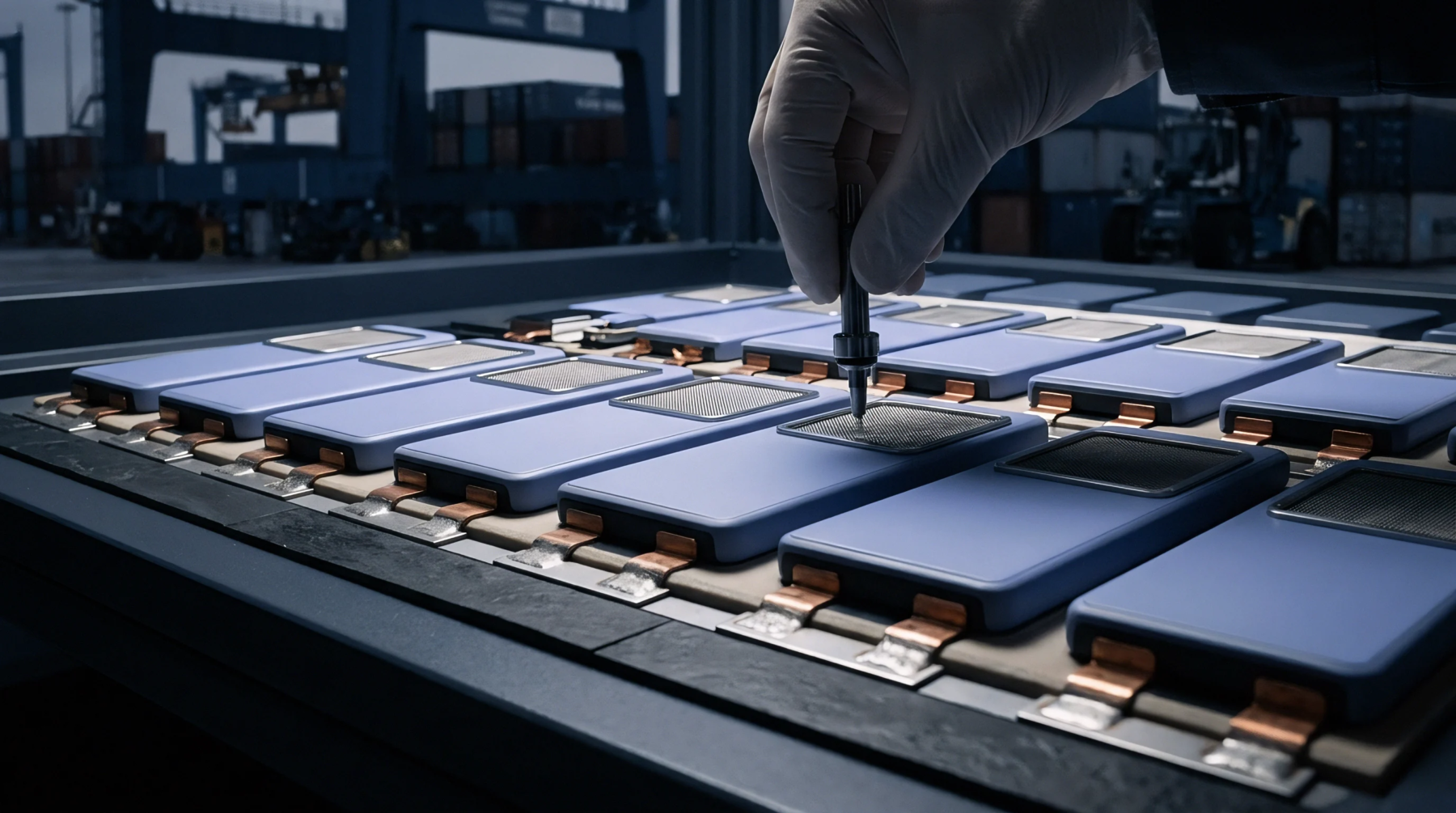
Flexible spacers positioned between adjacent pouch or prismatic cells absorb the volume changes that occur during electrochemical charging and discharging. Designers utilize an inter-cell compression pad to prevent excessive strain on the module enclosure while maintaining necessary pressure on the cell face. This elastomeric sheet acts as a physical cushion within the cell assembly.
Mechanical Performance
Polymer foams must compress without failing under the repetitive swelling forces generated by the cells. The force-deflection curve of the selected material must remain stable across the entire temperature range of the pack to prevent cell dislocation. Engineers evaluate the compression set of the foam to ensure it continues to exert appropriate return force over the lifetime of the battery.
Thermal Insulation
Heat transfer between adjacent cells must be restricted to prevent a single cell failure from propagating to the entire module. Compression materials can double as thermal barriers, utilizing low thermal conductivity to isolate a failing cell. This dual-purpose design improves the safety of the pack by adding a delay to potential cascading thermal events.
Assembly Spacing
Installation parameters determine the initial compression level of the pads, which must be high enough to hold cells in place but low enough to allow for expansion. Sourcing and manufacturing teams coordinate the purchase of accurate thicknesses to prevent assembly stacking errors in the module line. By utilizing precise material dimensions, the module can be built with repeatable tension, reducing structural variations across production lots and ensuring uniform pressure distribution.
This carefully calibrated thickness prevents excessive pressure on the module housing at high states of charge, extending both the structural life of the enclosure and the cycle life of the battery.