Supply Contract Liability Allocation for Transit Delays and Aging Cell Re Certification Gaps
Transit delays drive cell degradation and document expiry, requiring clear contract clauses to shift re-certification and scrap liabilities to suppliers.

Transit
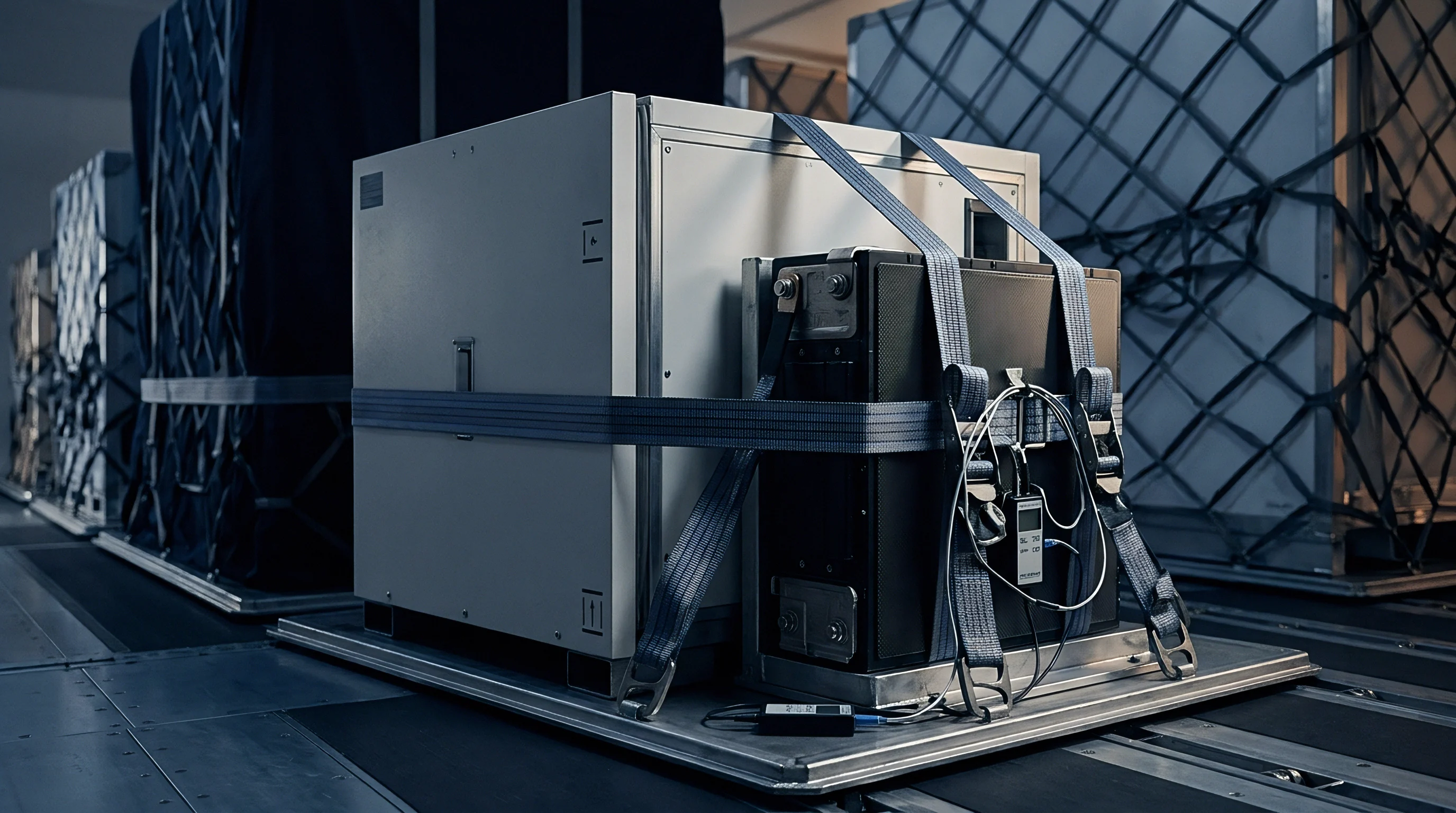
Maritime logistics for lithium-ion cell shipments operate within narrow environmental and regulatory boundaries. When an ocean vessel anchors off a port of entry for forty-five days waiting for a berth, or spends an extra twenty-one days taking an equatorial route around geopolitical chokepoints, cargo inside sealed ISO containers degrades physically and chemically. Both lithium iron phosphate and high-nickel nickel-manganese-cobalt chemistries break down during unconditioned delays.
Deck-level thermal soak cycles regularly push internal container temperatures above 50 °C, accelerating solid electrolyte interphase growth, raising internal ohmic resistance, and driving open-circuit voltage self-discharge. Transport regulations under the UN Recommendations on the Transport of Dangerous Goods Manual of Tests and Criteria mandate valid documentation tying shipped lots to design certifications under Section 38.3. Extended transit delays push cells toward shelf-life limits, creating an immediate mismatch between the shipped state of charge and the entry requirements of destination import authorities.
Cell manufacturers typically dispatch shipments from factory docks at a targeted state of charge between 27% and 30% to conform to international transport directives. Under IATA Dangerous Goods Regulations Packing Instruction 965 and the International Maritime Dangerous Goods Code, keeping the state of charge low limits total enthalpy release during potential thermal runaway events. When sea delays stretch transit from a planned twenty-two days to ninety days, passive self-discharge in cells with elevated baseline K-values (the daily rate of open-circuit voltage decay in millivolts per day) risks driving cell voltage below critical minimum thresholds.
An LFP cell dropping below 2.0 V, or an NMC 811 cell falling below 2.5 V, suffers copper dissolution from the negative electrode current collector into the carbonate electrolyte. Once copper ions enter the liquid electrolyte, subsequent charging deposits metallic copper dendrites across the separator, establishing internal micro-short circuits that render the lot permanently unsafe for pack assembly.
The gap between cell dispatch and physical delivery creates complex risk transfer problems across global supply chains. Contractual frameworks relying on basic Incoterms like Free On Board or Cost, Insurance and Freight allocate physical loss during carriage, but standard marine insurance policies explicitly exclude damage caused by inherent vice, delay, or environmental degradation without localized impact damage. If container seals remain intact and loggers show no external mechanical shock during transport, maritime cargo underwriters routinely reject claims for capacity loss or internal impedance growth experienced in vessel queues.
That leaves the buyer with the legal burden of proving whether cell degradation resulted from improper factory preparation ~ such as inadequate electrolyte wetting or incomplete formation cycles leading to high self-discharge rates ~ or from ambient transit heat exposure that exceeded specified carriage limits.

Physical Mechanisms of Degradation in Delayed Ocean Carriage
Storage temperature profiles inside unventilated ocean shipping containers drive cell degradation during ocean delays. Direct sunlight on container steel roofs creates thermal stratification, exposing upper container tiers to daily temperature swings between 25 °C and 55 °C. Under elevated thermal stress, the passivating solid electrolyte interphase layer on graphite anodes breaks down and continuously reforms. This ongoing breakdown consumes active cyclable lithium ions from the cathode matrix, permanently reducing cell nominal capacity before the shipment reaches incoming quality control inspection.
Parallel to cyclable lithium loss, electrolyte degradation accelerates above 40 °C. Standard electrolyte formulations containing lithium hexafluorophosphate in organic carbonate solvents undergo thermal decomposition, generating trace hydrofluoric acid when moisture is present from electrode binder residual water. Acidic species attack transition metal oxides on cathode surfaces, dissolving manganese, cobalt, or nickel ions into the electrolyte. Free transition metal cations migrate across the porous polyolefin separator to the anode, where they catalyze further breakdown of the protective passivating film.
The landed consequence manifests as a substantial increase in charge-transfer resistance and a drop in rate capability, particularly visible in low-temperature discharge performance.
Gas generation within pouch and prismatic formats represents a secondary physical manifestation of extended high-temperature storage. Carbonate solvent decomposition generates carbon dioxide, carbon monoxide, and low-molecular-weight hydrocarbons. In prismatic cells equipped with mechanical safety vents, internal pressure accumulation strains vent rupture discs.
Pouch cells lack rigid outer housings, allowing internal gas evolution to cause physical swelling that distorts cell stack geometry. When cell thickness expands by more than 2% to 3% over nominal tolerance due to internal gassing, mechanical binding within rigid pack module frames becomes impossible without risking local stress points on separator membranes.
| Cell Chemistry | Transit Duration (Days) | Mean Container Temp (°C) | State of Charge Range (%) | Mean OCV Drop (mV) | Capacity Loss (%) | AC-IR Rise at 1kHz (%) |
|---|---|---|---|---|---|---|
| LFP Prismatic (280 Ah) | 30 (Nominal Baseline) | 22 ± 3 | 28 ~ 30 | 4 ± 1 | 0.15 | 1.2 |
| LFP Prismatic (280 Ah) | 90 (Delayed Ocean) | 42 ± 6 | 24 ~ 28 | 28 ± 5 | 1.40 | 8.5 |
| NMC 811 Cylindrical (21700) | 30 (Nominal Baseline) | 22 ± 3 | 28 ~ 30 | 6 ± 2 | 0.30 | 2.1 |
| NMC 811 Cylindrical (21700) | 90 (Delayed Ocean) | 42 ± 6 | 18 ~ 25 | 62 ± 12 | 3.80 | 19.4 |
| LTO Pouch (20 Ah) | 90 (Delayed Ocean) | 42 ± 6 | 45 ~ 50 | 12 ± 3 | 0.45 | 3.0 |
Self-discharge rates expand non-linearly when container temperatures remain elevated above 40 °C for consecutive weeks. Standard LFP self-discharge rates of roughly 1% to 2% per month at room temperature increase to 5% to 8% per month under marine heat soak conditions. For lots shipped near the lower legal limit of 27% state of charge, a three-month transit duration pushes cell potential down toward the copper dissolution boundary.
Once cell voltage falls below 2.0 V, copper dissolution begins immediately, permanently damaging internal current collectors. Verification of open-circuit voltage distributions upon container unsealing provides the first line of diagnostic defense against receiving compromised inventory.
Freight forwarders reject dangerous goods documentation immediately when test summaries omit the specific manufacturing plant address or laboratory accreditation identifier.
Impedance growth during long holds varies widely across a cell lot. Cells positioned adjacent to container walls absorb direct solar thermal energy, showing charge-transfer resistance increases up to four times higher than cells situated in the insulated interior core of cargo pallets. This localized thermal exposure creates severe capacity and impedance imbalance across a single production lot.
Integrating imbalanced cell lots into high-voltage series strings leads to premature module cut-off during discharge and extended balancing cycles during charging, directly degrading the performance of assembled battery systems.

Regulatory Expiry Windows for Dangerous Goods Documentation
Dangerous goods safety compliance governs global cell transit. Under international dangerous goods transport frameworks, every commercial shipment of standalone lithium-ion cells must travel accompanied by a UN 38.3 Test Summary. Standard requirements mandate that cell designs undergo environmental, mechanical, and electrical testing before entering commerce, including altitude simulation (T.1), thermal testing (T.2), vibration (T.3), shock (T.4), external short circuit (T.5), impact/crush (T.6), overcharge (T.7), and forced discharge (T.8).
While UN 38.3 test summaries do not carry an explicit statutory expiration date under UN regulations, major ocean carriers, air freight operators, and port authorities enforce strict policies regarding document recency.
Ocean carriers routinely refuse carriage or block clearance at destination ports if the underlying UN 38.3 test summary relies on data older than two years, or if the cell manufacturing facility underwent material modifications since original testing. Under Section 38.3.2.2 of the UN Manual of Tests and Criteria, any change in cell mass exceeding 0.1 grams to cathode active material, cathode formulation, separator thickness, or external housing geometry invalidates the original type qualification. When transit delays hold cargo beyond regulatory policy windows or when customs authorities challenge documentation validity, shipments face quarantine within port customs zones, stalling whole vessels carrying hazardous cargo.
Port entry enforcement of dangerous goods standards expanded under the regulatory scope of the EU Battery Regulation (EU 2023/1542). Article 14 of this regulation mandates strict verification of carbon footprint declarations, supply chain due diligence documentation, and state of health data prior to customs release. If shipping delays cause documentation to lapse during transit, importing parties cannot lawfully clear cargo through European ports of entry.
Storage fees in hazardous dangerous goods port holding facilities range from three to five times standard dry container demurrage rates, rapidly building cost exposure for the importer of record.
- UN 38.3 Test Summary Consistency Verification that the physical model number, cell mass, watt-hour rating, and internal electrode formulation match the factory shipment invoice and bill of lading documents exactly.
- ISO 19453-7 Environmental Certification Validates structural integrity and seal durability of cell packages under temperature shock and moisture ingress regimes encountered during marine carriage.
- IEC 62133-2 Secondary Cell Safety Confirms compliance with international safety requirements for portable and stationary lithium cells, including internal short-circuit resistance and thermal abuse tolerance.
- UL 1642 Standard for Lithium Batteries Validates electrical abuse parameters, ensuring cell overcharge and external short-circuit protection circuits prevent thermal runaway propagation.
- IMDG Code Shipper Declaration Compliance Verification of accurate classification under UN 3480, proper dangerous goods packaging markings, and compliance with maritime stowage separation guidelines.
Discrepancies between physical cell markings and documentation certificates trigger immediate cargo seizures. Port authority dangerous goods inspectors routinely cross-examine batch manufacturing dates stamped on cell sleeves against production run timelines listed in test summaries. If ocean transit delays mean cells arrive at destination months after production while carrying a test summary executed for an earlier cell iteration, inspectors classify the cargo as non-compliant dangerous goods.
Rejecting entry forces the cargo back to the shipping port or into specialized industrial hazardous waste destruction facilities at severe expense.
Carrier acceptance practices introduce secondary operational friction during freight delays. Ocean lines reserve the right under standard bills of lading to refuse forward transit if dangerous goods declarations expire or become questionable while vessels lie at anchor. If a carrier declares cargo unfit for forward motion due to aging documentation or suspected internal cell degradation, responsibility for emergency offloading, container transfer, and secure storage shifts entirely to the shipper or consignee depending on the designated Incoterm.

Incoterms Risk Allocation across Extended Port Stays
Commercial contract disputes over delayed cell shipments turn on the exact division between transfer of risk and transfer of title. Standard commercial supply agreements often confuse Delivery Duty Paid, Delivered at Place, and Free On Board terms, exposing buyers to unrecoverable losses when delays occur between port arrival and final warehouse unloading. Under FOB terms (INCOTERMS 2020), risk transfers to the buyer when cargo passes the ship’s rail at the port of origin.
If a vessel anchors for sixty days outside a destination terminal, financial exposure for ambient heat degradation, self-discharge, and mounting port demurrage falls on the buyer, even if the seller retains legal title until final invoice payment.
DDP transfers physical risk and customs clearance duties to the seller until cargo reaches the designated destination facility. However, standard DDP provisions contain ambiguous language regarding excusable transit delays and force majeure events. If port congestion stems from labor actions, canal blockages, or geopolitical re-routing, sellers routinely claim protection under standard force majeure clauses to excuse delivery delays.
While force majeure excuses the seller from financial delay penalties, it leaves unresolved the physical condition of the aging cell inventory sitting inside heat-soaked containers. The buyer remains legally obligated to accept delayed cargo unless the supply agreement explicitly defines maximum allowable transit times and precise cell health thresholds upon receipt.
Maritime delay costs multiply when customs clearance stalls due to paperwork discrepancies or regulatory inspections. Demurrage charges levied by shipping lines for container usage combine with storage fees assessed by terminal operators for space allocation within specialized dangerous goods yards. Hazardous storage yards charge elevated rates because dangerous goods storage requires active flame monitoring, physical isolation zones, and specialized fire suppression equipment.
Under standard ocean bills of lading, carriers hold a legal lien over cargo for unpaid freight, demurrage, and detention fees. While cell suppliers frequently assert delivery completion once containers touch port docks regardless of inspection status, daily storage costs in disputed holds can exceed the shipment’s total economic value within thirty to forty-five days. A poorly drafted supply contract allows the supplier to demand full payment under letter of credit mechanisms while leaving the buyer to negotiate container release with port operators.
Insurance recovery for cell degradation during delayed transit remains rare under standard cargo clauses. Institute Cargo Clauses (A), while providing broad coverage against physical loss or damage, explicitly exclude loss of market value, delay costs, and damage resulting from inherent vice under Clause 4.4. Insurers class passive capacity loss, impedance growth, and self-discharge occurring during transit delays as inherent vice arising from natural cell aging accelerated by ambient temperatures.
Unless the buyer purchases specific, high-cost insurance riders covering delay and temperature variation during transit, cargo insurance offers zero financial recovery for cells damaged purely by extended transit times.
Transit heat exposure and port queues are treated in maritime trade as standard transit risks within normal commercial variance.


Drift
Extended storage alters cell parameter distributions across an entire production lot. When a delayed shipment of lithium-ion cells enters incoming quality verification, baseline electrical metrics no longer align with factory end-of-line test data sheet specifications. Voltage self-discharge rates, internal AC impedance measured at 1 kHz, direct-current resistance calculated via multi-second current pulses, and initial discharge capacity exhibit variance that scales with total transit duration and ambient heat exposure.
Unpack inspection protocols must detect subtle parameter drift before cells enter automated pack manufacturing lines, where compromised units risk severe operational failure.
Cells degrade internally long before showing external physical distortion. Active lithium inventory loss reduces cathode utilization windows, while parasitic side reactions thicken the solid electrolyte interphase layer, increasing total cell internal impedance. As internal resistance increases, heat generation during high-rate discharge accelerates according to Joule’s law, raising cell operating temperatures within battery packs and driving premature thermal throttling.
If incoming inspection fails to screen for impedance growth across delayed lots, assembled battery systems suffer from capacity imbalance, reduced power density, and shortened operational cycle life.
Determining whether an aged cell lot requires formal laboratory re-certification depends on measuring parametric statistical metrics against strict safety boundary conditions. Under international standards such as IEC 62133-2 and UL 1642, cell safety margins depend on structural separator integrity, internal electrode alignment, and active material passivating films. Extended storage and self-discharge alter these safety boundaries.
When cell voltage falls below manufacturer minimum thresholds, mechanical separator shrinkage or chemical degradation increases susceptibility to micro-short circuits. Re-certification testing validates whether an aged lot retains sufficient design margins to operate safely throughout its intended service life.

Electrochemical Consequences of Extended Inactive Storage
Extended storage without active cycling induces distinct chemical degradation mechanisms compared to active operational aging. While an active cell undergoing charge and discharge cycles mechanically stresses the solid electrolyte interphase as graphite host structures expand and contract, prolonged static storage is dominated by chemical aging. Solvent reactions with graphite continue at a slow rate at fixed state of charge, consuming active lithium and generating gaseous products.
This passive growth forms a non-uniform passivating film that increases charge-transfer resistance across the anode interface.
Simultaneously, the cathode matrix undergoes structural transformation during prolonged high-temperature storage. In high-nickel chemistries such as NMC 811 or NMC 622, surface transition metals undergo reduction, shifting from active layered structure to inactive rocksalt phases. This surface phase transition creates an insulating boundary layer on cathode particles, increasing overall cell ohmic resistance and hindering lithium-ion diffusion rates during high-current pulses.
The physical result presents as severe DC-IR growth, reducing the peak power discharge capability of the cell.
Copper dissolution represents the most critical safety failure mechanism associated with extended self-discharge during delay events. When high K-value cells self-discharge below 2.0 V, the electrical potential of the anode copper current collector rises toward the dissolution potential of metallic copper (roughly 3.5 V versus Li/Li+). Copper oxidizes into soluble ions, dissolving into the electrolyte matrix.
When the cell is subsequently charged, dissolved copper ions reduce back to metallic copper, precipitating on the anode surface in micro-crystalline formations. These metallic copper dendrites grow across the porous separator during subsequent charge cycles, establishing localized internal short circuits that trigger self-discharge, localized heating, or catastrophic thermal runaway.
Severe self-discharge variations across a single shipping lot create wide parameter distributions within received cargo. A single cell exhibiting abnormal self-discharge (an elevated K-value) will continuously drop in state of charge relative to surrounding units in a module. In series-connected pack architectures lacking active cell balancing, module usable capacity becomes strictly limited by the lowest-capacity cell.
A single degraded unit degrades the functional energy density of the entire battery system.
Gas evolution during static storage alters internal physical pressure dynamics within sealed cell casings. In prismatic cells, gas accumulation increases internal pressure against mechanical current interrupt devices (CIDs). If static pressure shifts a CID diaphragm close to its mechanical actuation point, minor operational pressure rises during initial customer charge cycles can prematurely trigger the CID, permanently disconnecting the cell and disabling the module.
For pouch formats, internal gas swelling alters physical electrode layer alignment, creating local mechanical pressure points that accelerate localized lithium plating during subsequent fast-charging operations.

Laboratory Verification Frameworks for Aged Cell Requalification
Incoming quality assurance for cell shipments subject to transit delays requires a structured, multi-tier laboratory qualification sequence. Standard factory batch certificate reviews prove insufficient for delayed lots because static baseline numbers no longer represent current physical cell state. Re-qualification begins with non-destructive statistical sampling of open-circuit voltage, AC impedance at 1 kHz, and DC resistance across a mathematically significant sample size determined by ANSI/ASQ Z1.4 sampling standards.
- Receiving inspection isolates cargo pallets within temperature-controlled holding zones, verifying container seal integrity and recording internal data logger records before unpacking.
- Sample extraction draws representative cell quantities across top, middle, and bottom pallet layers to capture localized environmental thermal history.
- Electrical baseline screening measures open-circuit voltage and 1 kHz AC impedance using calibrated micro-ohmmeters at a controlled temperature of 25 °C ± 1 °C.
- K-value calculation tracks OCV decay across a mandatory seven-day holding interval, identifying cells exhibiting abnormal micro-short self-discharge rates.
- Capacity verification executes three full charge-discharge baseline cycles under specified datasheet parameters, establishing actual usable energy retention.
- DC-IR pulse testing measures voltage drop under high-current discharge steps, determining internal power delivery capability.
- X-ray micro-computed tomography screens internal electrode overhang alignment, ensuring separator position and negative-to-positive capacity ratios remain within design tolerances.
Destructive safety screening represents the final mandatory tier of re-qualification for severely delayed lots. If electrical baseline screening shows parameter drift exceeding 5% from original factory certificates, sample units must undergo destructive safety abuse testing under UN 38.3 and UL 1642 specifications. High-temperature thermal chamber exposure tests validate whether the passive solid electrolyte interphase layer maintains adequate thermal stability to prevent runaway below 130 °C. Mechanical crush testing verifies that internal structural integrity has not been compromised by electrolyte breakdown or internal pressure rise.
| Test Identifier | Governing Standard | Sample Size (% Lot) | Passing Acceptance Criteria | Test Duration | Destructive Status |
|---|---|---|---|---|---|
| K-Value Self-Discharge | Internal Baseline | 100% Screening | K < 0.8 mV/day (LFP) / < 1.5 mV/day (NMC) | 7 to 14 Days | Non-Destructive |
| Capacity Retention | IEC 61960-3 Clause 7.3 | 1.0% (AQL 0.40) | Usable Capacity ≥ 98.0% of Nameplate | 48 Hours | Non-Destructive |
| DC Resistance (DC-IR) | IEC 61960-3 Clause 7.7 | 1.0% (AQL 0.40) | DC-IR ≤ 110% of Factory EOL Certificate | 4 Hours | Non-Destructive |
| Thermal Abuse (Hot Box) | UL 1642 Clause 17 | 5 Units per Lot | No Fire, No Explosion at 130 °C for 10 min | 2 Hours | Destructive |
| Overcharge Abuse | UN 38.3 Test T.7 | 8 Units per Lot | No Fire or Disassembly within 7 Days | 7 Days | Destructive |
| Electrode Overhang CT | Internal Audit | 0.1% (Min 3 Units) | Anode-to-Cathode Overhang Deficit < 0.5 mm | 12 Hours | Non-Destructive |
Testing costs scale with lot size, adding significant financial expense and lead time. Third-party accredited battery testing laboratories charge between $15,000 and $45,000 for a comprehensive re-certification suite covering electrical performance, K-value screening, and destructive safety testing for a single manufacturing batch. When transit delays hold multi-megawatt-hour shipments containing tens of thousands of individual cells, testing costs rapidly accumulate.
The buyer must establish clear contractual mechanisms to shift these re-testing costs onto the responsible party.
Electrode overhang displacement verification using X-ray micro-CT scanning provides vital structural safety data for pouch and prismatic cells delayed under maritime conditions. Dynamic thermal exposure causes physical expansion and contraction of electrode stacks within cell casings. If separator shrinkage occurs alongside electrode misalignment, cathode active area can overhang the negative anode boundary during charging, driving localized metallic lithium plating on separator margins.
Lithium plating drastically increases internal short-circuit risk during subsequent operational cycling, creating severe long-term product liability exposure.

What Triggers Mandatory Recertification under International Standards?
International regulatory frameworks specify exact physical and operational parameters that trigger mandatory cell re-qualification before units can enter commercial transit or pack integration streams. Under UN 38.3 regulations, any alteration in cell mass, mechanical geometry, cathode formulation, or protective circuit design requires complete re-testing under the entire T.1 through T.8 sequence. When extended shipping delays expose cells to severe environmental stress resulting in visible pouch swelling, mechanical vent distortion, or parameter drift exceeding 10% from original design type definitions, regulatory authorities view the lot as a modified cell design requiring full re-qualification.
IEC 62133-2 Clause 5.6 establishes explicit shelf-life limits for secondary cells held in inactive storage. Cells stored for periods exceeding twelve months from the date of final factory cell formation must undergo complete electrical safety recertification prior to module assembly. If marine delays and port quarantines extend total time-since-formation beyond six months, major automotive and grid storage original equipment manufacturers enforce internal requalification protocols.
These protocols require testing open-circuit voltage, internal resistance, and mechanical dimensions before releasing lots to production lines.
Prismatic 280 Ah LFP cells stored at 45 degrees Celsius at 50 percent state of charge experience a zero-point-four percent monthly capacity loss and a three percent increase in charge-transfer resistance every thirty days.
EU Battery Regulation 2023/1542 imposes strict legal obligations on importers placing battery cells onto European markets. Article 14 requires continuous verification that cells maintain safety parameters and state of health metrics corresponding to their digital Battery Passport entries. If transit delays alter internal state of health metrics, causing capacity or impedance values to deviate from published Battery Passport data, the importer must update the digital passport record and re-verify compliance through a notified body certification process.
Failure to execute re-certification exposes the importer to heavy legal fines and mandatory product market recall orders.
Post-arrival impedance screening across delayed ocean freight lots operates within a strict 14-day window. If screening identifies a statistically significant shift in the lot’s normal distribution curve, the entire shipment undergoes isolation. Physical evidence of electrolyte leakage, trace chemical venting detected by VOC gas sensors inside shipping containers, or open-circuit voltage readings below manufacturer absolute minimum levels invalidates original factory test summaries.
When original certification documentation lapses due to parameter shifts, maritime and aviation transport authorities classify the inventory as uncertified dangerous goods, legally prohibiting forward commercial transit.
Operating on the baseline that aged cells without documented re-certification represent immediate exposure avoids downstream failures. Feeding unverified stock into manufacturing lines risks internal shorts, cell destruction, and costly field recalls.

Covenant
Supply contract liability allocation for cell sourcing requires precise legal drafting to bridge the gap between technical electrochemistry and commercial trade law. Generic purchasing terms, standard commercial sales agreements, and basic Incoterms fail to protect buyers against the complex risks introduced by ocean transit delays and cell aging degradation. A robust supply contract must define explicit parameter thresholds, establish clear financial liability triggers, assign re-certification testing costs, and establish precise mechanisms for scrap credit recovery when delayed shipments fail quality assurance standards.
The commercial goal shifts from merely securing delivery to ensuring that delivered inventory retains full technical utility and legal compliance.
Contractual liability allocation begins with establishing measurable physical parameters that define acceptable inventory condition upon arrival. Cell datasheets published by manufacturers represent nominal baseline performance under ideal laboratory conditions, not contractual delivery standards. Supply agreements must convert technical data sheet parameters into enforceable commercial covenants.
These covenants specify maximum allowable changes in open-circuit voltage drop, 1 kHz AC impedance growth, DC resistance expansion, and total usable capacity retention as a function of transit duration and measured container ambient environmental history. The buyer must explicitly tie contract acceptance to passing post-transit verification testing.
The allocation of financial risk during maritime delay hinges on defining contractual default triggers. While standard delay clauses focus on liquidated damages for late delivery dates, cell sourcing contracts must treat parametric drift as a distinct performance failure. If a cell shipment arrives within the contracted calendar delivery window but exhibits severe self-discharge or impedance growth due to high-temperature ocean transit, the contract must treat the event as a material quality default rather than an excusable transport delay.
Tying non-conforming inventory directly to seller quality warranties prevents suppliers from shifting degraded inventory costs onto the buyer.

Commercial Clause Mechanics for Transit Delay Allocation
Drafting effective delay liability allocation clauses requires separating transport risk from product quality warranties. Sellers routinely push for contract terms that transfer all transit-related risks to the buyer once cargo leaves the factory dock, leveraging standard Free On Board or Cost, Insurance and Freight terms. To counter this exposure, buyers must insert specific transit warranty riders that guarantee cell health parameters for a defined period following physical delivery at the final destination warehouse, regardless of the underlying Incoterm selected for freight logistics.
A key clause mechanism involves establishing a transit environmental parameter envelope. The supply agreement must define maximum allowable ambient heat exposure limits, typically stipulating that container temperatures must not exceed 35 °C for more than seventy-two consecutive hours during transit. Incorporating mandatory continuous temperature, humidity, and 3-axis shock data logging within every shipping container provides objective physical evidence of transit conditions.
If data loggers record thermal exposure exceeding specified limits, the contract must shift the burden of proof onto the seller to demonstrate that internal cell structural and electrochemical health remains uncompromised.
Liquidated damages clauses for transit delay must integrate cell degradation costs alongside standard production line downtime expenses. Standard delay penalties capped at 0.5% of shipment value per week of delay prove entirely inadequate when extended heat exposure permanently degrades cell nominal capacity or triggers copper dissolution risk. Supply contracts should incorporate escalating liquidated damages structures that scale with total transit delay duration, reflecting the non-linear acceleration of electrochemical aging under elevated container storage conditions.
Calculating the financial exposure of extended holding periods requires comprehensive landed-cost models that integrate inventory carrying fees, demurrage costs, third-party laboratory testing fees, and scrap disposal expenses. If a supply agreement lacks explicit terms assigning delay re-certification expenses to the seller, the buyer absorbs these substantial financial burdens unilaterally. Structuring contract terms with clear cost-shifting triggers ensures that parties bearing operational control over shipping schedules and carrier selection retain direct financial responsibility for transit delay outcomes.
Title transfer timing establishes a critical legal lever in supply contract disputes. Deferring title transfer until the buyer completes incoming quality control inspection and formally accepts the lot provides significant commercial leverage. If cells exhibit parametric drift or document non-compliance upon container unsealing, retaining title with the seller prevents the inventory from becoming an asset on the buyer’s balance sheet, simplifies customs rejection protocols, and strengthens the buyer’s legal standing to demand immediate replacement shipments or letter of credit refund drawings.
Aligning title transfer directly with formal quality acceptance protects buyer capital.
Warranty Boundary Adjustments for Aged Micro-Cell Lots
Cell cycle life and warranty terms are written around the assumption that cells begin active commercial operation shortly after manufacturing formation cycles. Extended transit delays and prolonged warehouse storage disrupt this assumption, creating severe warranty alignment gaps between cell suppliers, pack integrators, and end customers. A standard manufacturer cycle-life warranty, such as 6,000 cycles at 80% capacity retention under 25 °C operating conditions, becomes mathematically unachievable if cells spend six months in static high-temperature storage prior to pack integration.
Supply agreements must incorporate explicit shelf-life warranty clauses that adjust baseline performance guarantees based on total elapsed time between factory formation and customer commissioning. Shelf-life clauses should stipulate that any static capacity loss or internal resistance growth incurred during transit delays offsets nominal warranty baseline metrics. If a delayed lot suffers a 2% permanent capacity loss during extended transit, the contract must either reset the initial warranty capacity baseline downward or mandate that the supplier supply additional cell units to compensate for total usable energy deficits across assembled battery systems.
Pass-through warranty structures represent a common area of commercial contract failure. Pack integrators selling completed battery systems to grid storage or electric vehicle customers execute long-term performance guarantees backed by underlying cell supplier warranties. If ocean transit delays consume six months of the supplier’s initial warranty window before cells are installed into battery modules, the pack integrator carries unhedged financial exposure for that missing six-month period.
Supply contracts must mandate that cell warranty time clocks commence only upon final battery pack commissioning or physical delivery to the end customer, rather than upon initial factory dock dispatch.
- Parametric Drift Acceptance Boundaries Explicit limits defining maximum allowable deviations in open-circuit voltage, 1 kHz AC impedance, and initial discharge capacity retention post-transit.
- Data Logger Verification Protocol Requirement for mandatory continuous temperature, humidity, and shock monitoring records attached to bill of lading documentation.
- Mandatory Re-Testing Cost Assignment Contractual clause shifting third-party laboratory re-certification expenses to the supplier if transit duration exceeds contracted thresholds.
- Warranty Clock Commencement Trigger Clause stipulating that supplier performance warranties begin upon physical battery pack commissioning rather than factory dispatch.
- Scrap Disposition and Duty Drawback Mechanisms Legal procedure assigning scrap disposal costs and customs duty recovery rights for non-conforming cell lots rejected at destination.
Supplier warranty exclusions frequently cite improper storage conditions as a primary defense against performance claims. Standard supplier documentation stipulates that cells must be stored between 15 °C and 25 °C at 30% state of charge in clean, dry environments. When marine delays expose shipping containers to equatorial ambient conditions exceeding 40 °C, suppliers routinely invoke these storage clauses to void underlying performance warranties.
The buyer’s purchasing contract must explicitly exclude international transit periods from standard storage climate limitations, forcing the supplier or contracted carrier to carry environmental risks during transport.
The cell owner bears the loss when warranty exclusion terms remain ambiguous. Establishing clear legal definitions within supply agreements prevents suppliers from invoking broad environmental exclusions to disclaim liability for aging cells. Contracts must specify that physical delivery is complete only when cargo reaches designated destination facilities and passes comprehensive parameter inspection.
Clear contract language eliminates legal gaps between transport risk and warranty coverage.

Drafting Allocation Formulas for Recertification and Scrap Costs
When an aged cell shipment fails incoming parameter inspection, the supply contract must provide unambiguous financial allocation formulas governing re-certification testing, inventory quarantine, return freight, and scrap disposition. Ambiguous dispute resolution terms lead to prolonged legal standoffs while non-conforming cells sit in expensive dangerous goods storage yards, consuming capital and accumulating demurrage fees. Contracts should define precise, step-by-step financial remedies that execute automatically upon verification failure.
Re-testing cost allocation formulas must scale based on initial quality audit findings. Contracts should stipulate that if initial sample screening shows parameter drift within acceptable standard deviation bands, the buyer absorbs basic receiving inspection costs. However, if initial screening reveals K-value self-discharge failures, AC-IR growth exceeding 5%, or voltage drops below specified minimum thresholds, the contract must automatically shift all expanded third-party laboratory testing expenses, including destructive safety testing and CT scanning, directly to the seller’s account.
| Logistics Failure Scenario | Primary Root Cause | Governing Contract Clause | Responsible Party | Financial Remedy Mechanism |
|---|---|---|---|---|
| Port Congestion > 45 Days (Heat Degradation) | Vessel Scheduling Queue | Transit Environmental Envelope Rider | Seller (under DDP) / Buyer (under FOB) | Liquidated Damages + Shelf-Life Baseline Reset |
| UN 38.3 Test Summary Paperwork Rejection | Expired / Incomplete Certs | Dangerous Goods Warranty Covenant | Cell Supplier / Manufacturer | Full Invoice Refund + Port Demurrage Absorption |
| Self-Discharge below 2.0V (Copper Dissolution) | High Initial K-Value / Extended Delay | Latent Defect Quality Warranty | Cell Supplier | Immediate Batch Scrap + Replacement Delivery |
| Pouch Cell Swelling > 3% Thickness | High-Temp Storage Gas Generation | Parametric Non-Conformance Clause | Cell Supplier | Return Freight at Seller Expense + Re-testing Credit |
| Customs Hold due to EU Battery Passport Deficit | Regulatory Non-Compliance | Regulatory Import Compliance Covenant | Importer of Record / Supplier | Storage Fee Indemnification + Duty Drawback Recovery |
Scrap allocation clauses require specific attention to local legal and environmental disposal regulations. Damaged or degraded lithium-ion cells cannot be deposited in municipal waste streams; they represent hazardous industrial waste requiring specialized recycling or thermal destruction facilities. Industrial battery recycling facilities charge process fees ranging from $1.50 to $3.50 per kilogram of cell mass, plus specialized dangerous goods land transport costs.
The supply contract must explicitly state that all recycling, hazardous waste processing, and local transportation costs for rejected inventory fall entirely on the seller, accompanied by a mandatory credit offset against outstanding purchase order invoices.
Customs duty drawback mechanisms must be integrated into rejection and scrap provisions within international contracts. When cells enter a destination country under DDP or DAP terms, import customs duties and value-added taxes are paid upon customs entry clearance. If subsequent laboratory re-qualification reveals that the shipment is unusable and must be scrapped or returned to origin, the buyer or seller must execute formal duty drawback applications with national customs agencies to recover paid import taxes.
Contracts should stipulate that the seller must provide all necessary export declarations, certificates of destruction, and manufacturing bill of materials documentation required to complete successful duty drawback claims.
Legal dispute resolution provisions within international cell supply contracts should mandate binding technical arbitration rather than general court litigation. When parameter drift or transit delay liability is contested, resolving disputes through standard commercial court litigation can take years, during which time aging cell inventory becomes entirely worthless. Supply contracts should designate specialized arbitration panels, such as the International Chamber of Commerce or specialized maritime and technology dispute venues, operating under expedited rules with mandatory technical experts assigned to evaluate electrochemical test evidence within thirty days of dispute filing.
The contract line that resolves this exposure reads: “In the event that ocean transit duration exceeds forty-five calendar days from bill of lading issuance, or continuous container temperature data loggers record temperatures exceeding 35 °C for more than ninety-six cumulative hours, seller guarantees that total batch capacity loss shall not exceed 1.0% of nominal rating, and AC impedance growth at 1 kHz shall not exceed 5.0% over factory end-of-line certificate values upon arrival inspection; failure to meet these parametric boundaries grants buyer the immediate right to reject the shipment under full purchase price refund and seller-funded local hazardous scrap disposition.” This explicit operational covenant converts complex electrochemical degradation kinetics into a clear legal rule, establishing precise commercial allocation for transit delays and aging cell re-certification gaps.