Meaning
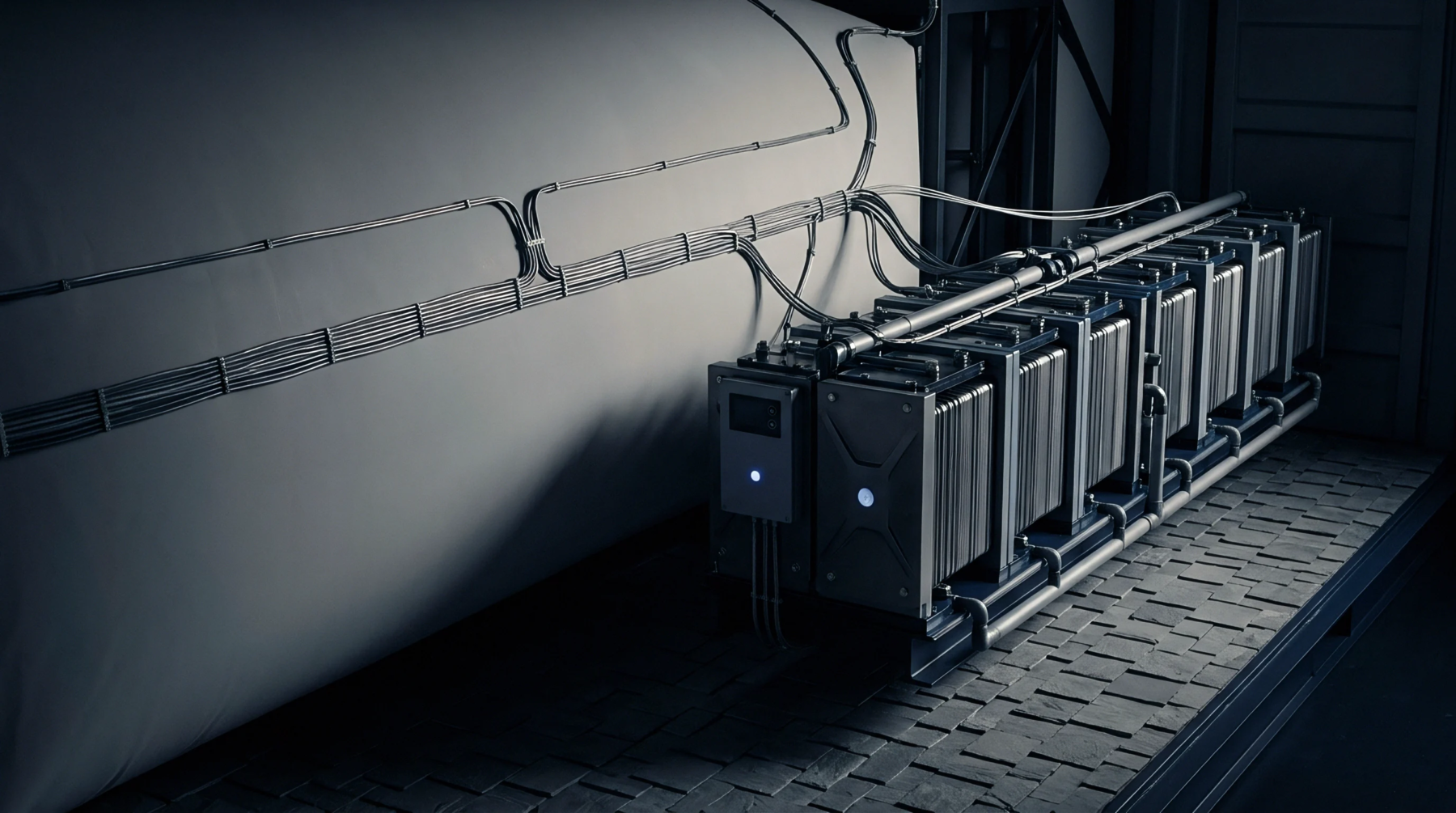
Mechanical compression represents the physical force applied to the electrolyte and electrode interfaces within a multi-cell battery module to prevent contact degradation. Inter cell stack pressure governs the electrical resistivity across the internal boundaries of the unit while inhibiting the physical expansion of active materials. Proper maintenance of this load ensures consistent ionic flow throughout the discharge cycle.
This parameter applies strictly to constrained battery geometries and ceases to hold relevance in designs using flexible housings without mechanical rigid clamping. Excessive load eventually crushes the separator films or causes short circuits by forcing particles through insulating layers. Insufficient force allows for the growth of lithium dendrites between surfaces that eventually breach the cell casing.
Mechanical Requirement
Designers adjust this force to accommodate the swelling of active materials that occurs as ions move between the anode and cathode. Components inside the module expand during operation and exert force against the outer chassis. Engineers calculate the initial torque applied to the enclosure fasteners based on the expansion coefficients of the specific materials contained inside.
Precise control over this compression prevents the loss of surface contact that creates local hot spots. These areas damage the separator and reduce the total energy density of the module over its operational life.
Operational Consequence
Consistent load profiles minimize the internal impedance of the module by locking the laminated layers in place against vibrations or thermal cycling. When the force deviates from the specification, the cell shows increased internal resistance and reduced power delivery capability. Monitoring devices inside large energy storage systems track these variations to predict the end of service life for the module.
Variations result in uneven current distribution across the surface of the plates. Uneven distribution forces some parts of the electrode to cycle faster than others and accelerates the arrival of failure modes.
Validation Method
Manufacturers determine the set point for this assembly variable by measuring the force output of individual modules under varying temperature and charge states. Bench testers compress a production sample while measuring the displacement of the cell housing under simulated expansion forces. Data from these tests inform the torque settings for the automated assembly lines that construct the final battery units.
Verification occurs by measuring the electrical performance of a stack before and after the application of the mechanical load. Stable values during testing demonstrate that the compression system maintains the geometry of the electrodes without inducing stress fractures in the fragile collector foils. Proper calibration of the clamping mechanism prevents structural failures by matching the force to the known elasticity of the internal materials.