Hazardous Goods Regulatory Audit Frameworks for Air and Maritime Cell Shipments
Hazardous goods audit frameworks require verified UN 38.3 test summaries, strict state of charge caps, and compliant packaging to ensure legal transport authorization.

Taxonomy
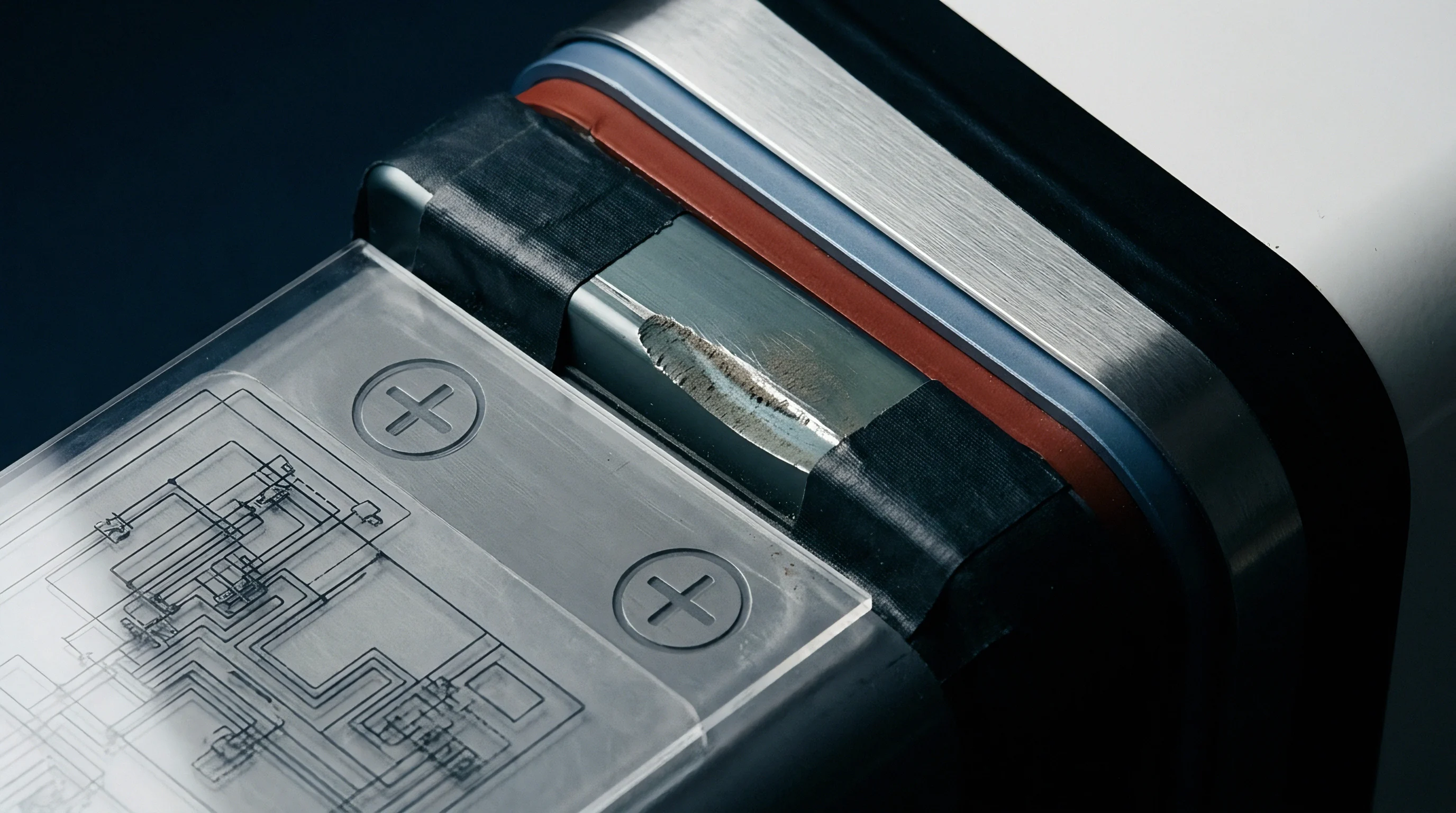
Transport safety rules treat both rechargeable lithium ion and non-rechargeable lithium metal chemistries as active energy hazards capable of thermal runaway. For international freight, compliance turns on assigning the exact Dangerous Goods classification under the United Nations Model Regulations before an air pallet or shipping container is accepted for transit. Every cell consignment moves under specific UN numbers that dictate state-of-charge limits, packaging performance standards, and outer marking mandates.
UN 3480 covers lithium ion cells shipped loose or in bulk trays; UN 3481 applies when cells are packed with or integrated into equipment. Primary non-rechargeable lithium cells fall under UN 3090 when loose and UN 3091 when enclosed with or installed in devices. Misdeclaring loose cells as contained in equipment is a primary federal violation across transport authorities, leading directly to administrative detentions and criminal penalties.
Audits draw a sharp line between small excepted cells and fully regulated Class 9 dangerous goods based on watt-hour ratings or lithium content. Lithium ion cells remain excepted up to 20 Watt-hours per cell and 100 Watt-hours per battery pack. For lithium metal, the threshold is 1 gram of lithium content per cell or 2 grams per pack.
Cells staying within these boundaries bypass formal dangerous goods declarations, provided the outer packaging passes a 1.2-meter drop test and displays the standard lithium battery mark with the relevant UN numbers. Anything exceeding these limits requires full Class 9 documentation, certified UN-specification packaging bearing formal UN performance specification codes, and carrier hazard labels.

Regulatory Matrix for Cell Classifications
Compliance frameworks separate dangerous goods entries by physical form, outer packaging configuration, and transport mode restrictions. Carrier acceptance depends on presenting verification files that match physical cell configurations to assigned UN entries.
| UN Code | Proper Shipping Name | Energy Boundary | Air Packing Instruction | Maritime Provision |
|---|---|---|---|---|
| UN 3480 | Lithium ion batteries | >20 Wh cell / >100 Wh pack | PI 965 Section IA / IB | IMDG SP 230 / SP 384 |
| UN 3480 | Lithium ion batteries (Excepted) | ≤20 Wh cell / ≤100 Wh pack | PI 965 Section II | IMDG SP 188 |
| UN 3481 | Lithium ion batteries packed with equipment | >20 Wh cell / >100 Wh pack | PI 966 Section I | IMDG SP 230 / SP 348 |
| UN 3090 | Lithium metal batteries | >1g Li cell / >2g Li pack | PI 968 Section IA / IB | IMDG SP 230 / SP 384 |
| UN 3091 | Lithium metal batteries in equipment | ≤1g Li cell / ≤2g Li pack | PI 970 Section II | IMDG SP 188 |
State of charge at handover determines whether air cargo can legally fly. Technical instructions from the International Civil Aviation Organization enforce a strict 30 percent state of charge cap on loose lithium ion cells shipped under UN 3480 on cargo aircraft. Verifying compliance requires auditing factory discharge logs and recorded open-circuit voltage curves at packing stations.
Standard open-circuit voltage measurements vary across cathode chemistries, so auditors must cross-check voltage tables against cell datasheets. Nickel Manganese Cobalt chemistries typically read 3.50 volts per cell at a 30 percent state of charge, whereas Lithium Iron Phosphate cells settle between 3.20 and 3.25 volts per cell across their flat discharge plateaus. Moving cells above a 30 percent state of charge without written state authority approval invalidates air transport compliance immediately.
UN 38.3.4.5 impact test failures eliminate the carrier liability exemption granted under IMDG Special Provision 188.
Auditors must confirm that every cell design underwent mandatory UN 38.3 transport testing prior to commercial release. UN Manual of Tests and Criteria Section 38.3 sets out eight discrete environmental, mechanical, and electrical stress evaluations: altitude simulation, thermal cycling, vibration, mechanical shock, external short circuit, impact or crush testing, overcharge, and forced discharge. Passing these tests establishes baseline structural integrity under ambient pressure drops in flight and container deck vibrations at sea.
Audit teams also check that test samples match current production engineering change orders, as alterations in anode coating thickness, separator porosity, or casing material invalidate existing test reports and demand re-qualification.

UN Test Suite Scope and Parameters
Understanding test conditions allows auditors to catch incomplete or fraudulent test summaries presented by suppliers. Each sub-test targets specific stress parameters encountered during air cabin depressurization, sea-container temperature spikes, or handling impacts.
| Test Code | Test Description | Stress Parameter | Pass Criteria |
|---|---|---|---|
| T.1 | Altitude Simulation | 11.6 kPa pressure, 6 hours at 20°C | No mass loss, no leakage, no venting, V > 90% |
| T.2 | Thermal Test | 72°C to -40°C cycles, 10 cycles total | No mass loss, no rupture, no fire, V > 90% |
| T.3 | Vibration | 7 Hz to 200 Hz sinusoidal sweep over 3 hours | No mass loss, no structural deformation, V > 90% |
| T.4 | Shock | 150 gn acceleration, 6 ms pulse half-sine | No mass loss, no disassembly, no fire |
| T.5 | External Short Circuit | 55°C ambient, external resistance <0.1 ohm | Case temperature <170°C, no thermal runaway |
| T.6 | Impact / Crush | 9.1 kg mass drop from 61 cm or 13 kN crush | External temperature <170°C, no fire or explosion |
Suppliers frequently present partial test reports conducted on early engineering prototypes rather than production samples. In some instances, manufacturers argue that casing thickness revisions fall within existing family certifications to avoid running fresh T.6 impact evaluations on modified cylindrical cell lines.

Flight
Air transport regulations for dangerous goods are strict because an uncontained in-flight thermal event is catastrophic. The International Air Transport Association Dangerous Goods Regulations, incorporating International Civil Aviation Organization technical instructions, restrict loose UN 3480 lithium ion cells strictly to cargo aircraft payloads, prohibiting passenger carriage entirely. Packaging audits follow Packing Instruction 965, which divides consignments into Section IA, Section IB, and Section II based on net battery weight and energy thresholds.
Section IA governs cells exceeding 20 Watt-hours or packages with a net quantity above 35 kilograms. These shipments require full UN-certified packaging with rigid outer boxes, class 9 hazard labels, cargo aircraft only marks, and completed Shipper’s Declarations for Dangerous Goods.
Checking air freight documentation turns up regular errors in Section IB processing. Section IB covers small cells under 20 Watt-hours shipped above excepted package limits but under 10 kilograms net mass per box. The section permits strong outer packaging without full UN specification markings, though it still requires electronic dangerous goods declarations, lithium battery marks with UN 3480, and class 9 hazard labels.
Every package must withstand a 1.2-meter drop test without cell shifting, short circuits, or damaged outer walls. On the tarmac, auditors inspect incoming pallets for compression damage, moisture ingress, and excessive stacking height, as ground staff enforce strict rejection rules at acceptance desks.
Air cargo handlers deploy strict acceptance checklists to identify physical package deformities and document discrepancies before loading. Carrier acceptance audits check several high-risk failure points across packaging and paperwork:
- Document Inconsistencies trigger ground detentions when declared cell net weights diverge from actual scale measurements by over two percent.
- State of Charge Non-Compliance brings immediate shipment rejection when open-circuit voltage tests indicate energy levels exceeding 30 percent nominal capacity.
- Damaged Outer Boxes exhibiting edge crushing, punctures, or water softening are pulled from build-up pallets for safety isolation.
- Missing Operator Variations cause transit halts when shipments pass standard IATA guidelines but violate carrier-specific provisions like Federal Express or Cargo Lux rules.
- Improper Cell Orientation within inner packaging allows terminal friction, causing insulation abrasion and short-circuit hazards during turbulence.
Air forwarders apply specific operator variations that tighten baseline international standards. Several commercial carriers reject UN 3480 Section IB consignments entirely, taking only fully documented Section IA dangerous goods cargo. Others restrict state of charge levels to 20 percent for high-energy density cells or mandate secondary foil barriers to contain gas release.
Cargo audits must cross-reference destination carrier operator codes, such as FX-05 for FedEx or CX-02 for Cathay Pacific, against packaging manifests prior to dispatch to prevent airport quarantines.
Handling cell shipments that fail airport cargo checks imposes severe operational costs on logistics operations. Improper inner blister isolation identified on three pallets of 21700 cells generated twelve thousand dollars in airport warehouse detention fees and hazardous material repackaging charges.
Groundings often stem from routine packaging errors like loose tape or illegible UN numbers on outer cartons. Airline auditors scan barcoded shipping documentation against hazardous cargo databases to confirm test summary details match the physical carton markings. Discrepancies between the cell model printed on the carton and the model listed in the UN 38.3 test summary trigger mandatory reporting to national aviation authorities.
Airlines maintain dangerous goods safety desks authorized to blacklist shippers who repeatedly lodge non-compliant consignments.


Deck
Ocean transport of lithium cell consignments operates under the International Maritime Dangerous Goods Code, enforced globally by national coast guards and port authorities. Maritime logistics move substantial cargo volumes inside intermodal freight containers, exposing shipments to prolonged deck vibrations, dramatic humidity shifts, and elevated temperature spikes inside container holds. Cell shipments travel under IMDG Code classification rules, where proper stowage, container packing, and thermal segregation dictate vessel safety.
UN 3480 cargo loaded into ocean containers falls under IMDG Special Provision 230, which mandates compliance with UN 38.3 test protocols and UN-certified outer packaging built to Packing Instruction P903 standards.
Maritime auditors evaluate container load configurations to prevent thermal runaway propagation during long sea transits. Special Provision 188 allows small cell shipments to bypass full Class 9 container placarding if individual packages stay under 20 Watt-hours and total gross container weight guidelines are met. However, consolidated freight containers carrying multiple excepted shipments must display outer container marks indicating lithium battery contents on all four external container walls.
Containers carrying fully regulated Class 9 lithium batteries require four distinct Class 9 dangerous goods placards alongside proper UN number markings, alerting vessel crews to deck placement restrictions.
Which Special Provision Applies to Prototype Cell Shipments?
Prototype cell designs and small pre-production runs lack full UN 38.3 test summary certification, precluding standard commercial carriage under IMDG Special Provision 230. Maritime regulations provide a specific regulatory pathway under IMDG Special Provision 310, which governs the carriage of untested production runs or prototype cell batches shipped for testing purposes. Special Provision 310 mandates packaging under Packing Instruction P910, requiring individual inner packaging surrounded by non-combustible, electrically non-conductive thermal insulation materials like vermiculite or expanded glass granules.
Outer packaging must meet UN Packing Group I performance standards, ensuring maximum containment integrity if a prototype cell undergoes thermal runaway during transit. Ocean carriers demand advance technical review of prototype packaging designs before granting booking approvals for Special Provision 310 shipments.
Stowage decisions made by shipmasters rely on strict segregation categories detailed in IMDG Code Section 7.1.4. Dangerous goods shipping documents dictate whether cell containers settle on deck or under deck. On-deck stowage provides atmospheric cooling and facilitates emergency fire mitigation access, while under-deck stowage protects packaging from sea spray but increases thermal containment risks.
Vessel operators isolate lithium battery containers away from living quarters, ship machinery, and direct heat sources such as engine room bulkheads or fuel tanks. Audit checks confirm that vessel stowage manifests match dangerous goods container manifest placements prior to port departure.
| Audit Parameter | Air Transport (ICAO / IATA) | Maritime Transport (IMDG Code) |
|---|---|---|
| Primary Framework | IATA DGR / ICAO TI | IMDG Code Amendment 41-22 |
| State of Charge Limit | Mandatory 30% SOC maximum for UN 3480 | No strict SOC cap; 30% recommended |
| Container Placarding | Pallet marks / Overpack labels | 4-Side Class 9 Placards on containers |
| Damaged/Defective Units | Forbidden on all air transport | Permitted under SP 376 with specialized packaging |
| Packaging Standards | PI 965 to PI 970 (UN PG II minimum) | P903, P908, P910, LP906 |
| Vessel Stowage Category | Cargo Aircraft Only for loose cells | Category A (On deck or under deck isolated) |
Damaged, defective, or recalled cells present acute maritime fire hazards and require specialized containment protocols under IMDG Special Provision 376. Cells identified as prone to thermal venting, mechanical failure, or electrical short circuits cannot enter standard maritime transport pathways. Shippers must pack defective units in custom flame-proof containers certified under Packing Instruction P908 or Large Packaging LP906.
These containers integrate fire-suppression linings and thermal containment barriers capable of absorbing high internal energy releases without outer surface temperatures exceeding 100 degrees Celsius. Audit protocols for damaged cell transit require explicit coast guard authorization certificates alongside third-party thermal hazard evaluations.
Contractual agreements between cell importers and ocean freight forwarders must incorporate specific carriage terms to enforce safety compliance across international waters. The standard bill of lading clause must state: “Shipper certifies that all lithium ion cells contained in this consignment fully comply with UN 38.3 test requirements and are packed in strict accordance with IMDG Code Special Provision 230 and Packing Instruction P903.”
Dossier
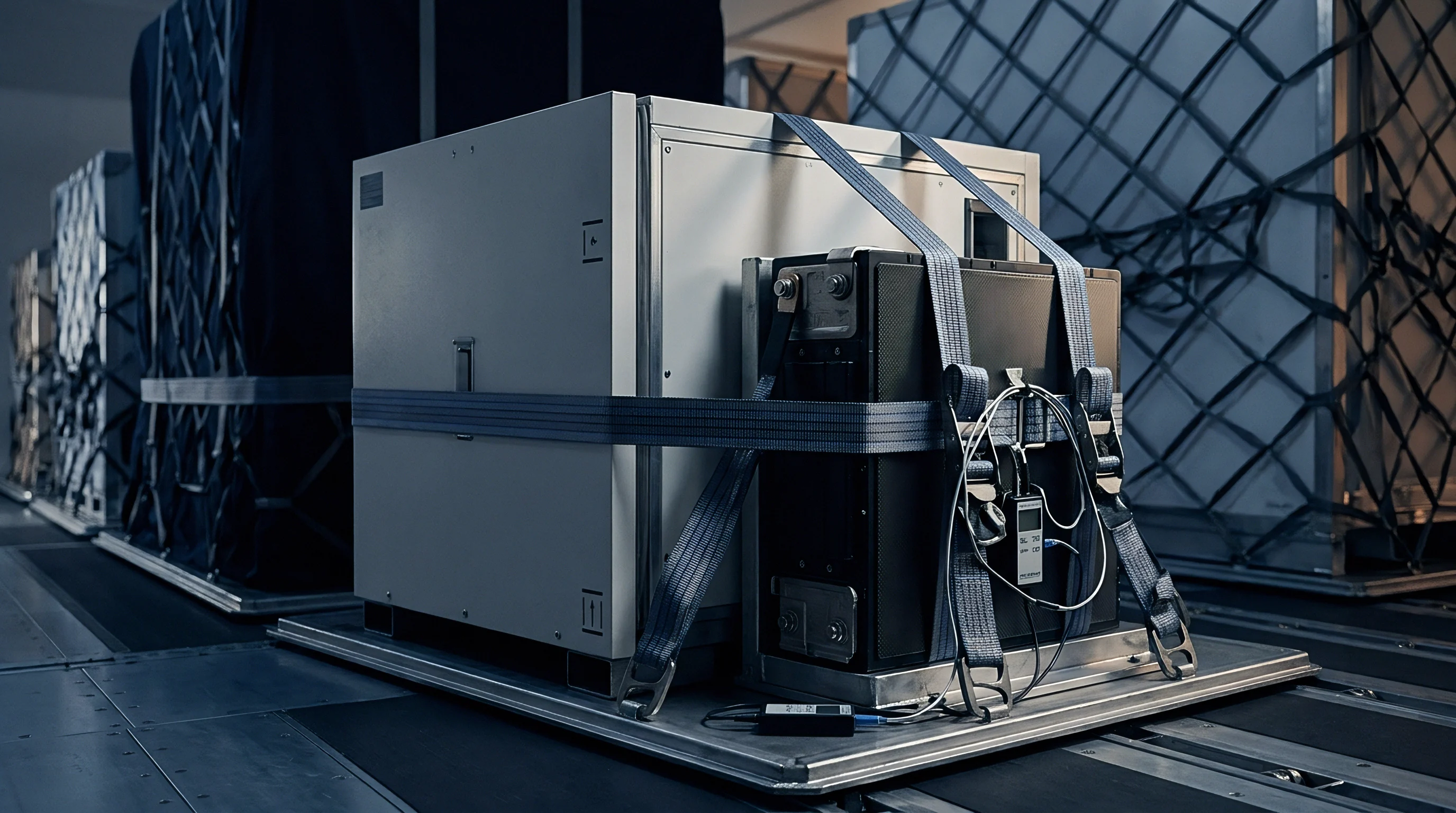
Building a robust safety audit framework requires assembling a complete regulatory safety dossier prior to dispatching cell shipments from manufacturing facilities. The safety file functions as an auditable compliance chain that proves product safety to customs agents, port state inspectors, and carrier dangerous goods specialists. The UN 38.3 Test Summary forms the anchor of this compliance file.
Under revised international regulations, manufacturers and distributors must make the UN 38.3 Test Summary available across the entire supply chain without request. Standardized test summaries replace proprietary test reports, consolidating technical evidence into an easily auditable format containing verified laboratory credentials, test execution dates, and cell specification details.
Verifying UN 38.3 Test Summary documents demands rigorous scrutiny to detect forged certificates, incomplete laboratory scopes, and expired testing cycles. Auditors follow a structured verification sequence when auditing incoming vendor compliance files:
- Confirm that the test summary explicitly names the cell manufacturer, including full legal business address, phone number, and official corporate email contact details.
- Cross-reference the exact cell model number and physical dimensions listed in the test summary against physical product samples pulled from incoming warehouse pallets.
- Verify that the testing laboratory holds ISO 17025 accreditation, confirming national accreditation body registration numbers against online databases.
- Validate that all eight UN 38.3 sub-tests show explicit pass results, verifying that T.6 impact and T.8 forced discharge evaluations match the specific cell cathode formulation.
- Check that the document features a named, authorized corporate officer signature alongside a verified issuing date corresponding to current production revisions.
A test summary lacking ISO 17025 accreditation stamps shifts regulatory liability directly onto the importer of record.
Factory quality management systems must tie directly into transport audit frameworks to maintain ongoing lot conformity. Holding a valid UN 38.3 test summary for a design type does not guarantee that daily production lines generate compliant cell batches. Regulatory frameworks mandate that cell production occurs under documented quality management programs such as ISO 9001.
Quality audits examine factory-floor traceability controls, confirming that automated cell sorting systems catch internal short circuits, electrode misalignment, and electrolyte fill variations before cells advance to final packaging lines. Traceability systems must map individual cell serial numbers back to electrode slurry mixing batches and separator raw material lots.
Audit frameworks must also cross-reference transportation safety declarations against material safety data sheets to verify chemical consistency. Safety data sheets provide detailed hazardous material disclosures, including exact electrolyte solvent ratios, lithium salt concentrations, and heavy metal contents needed for proper emergency response planning. Discrepancies between safety data sheet declarations and physical cell chemistries undermine dangerous goods filings, exposing importers to border seizures and customs audits.
The compliance dossier consolidates the UN 38.3 test summary, safety data sheet, drop test verification records, ISO 9001 quality certificates, and state-of-charge calibration logs into a single digital file tied to the shipment manifest.
Audit teams face persistent challenges when verifying third-party assembly streams, where contract manufacturers source cells through intermediate trading brokers who re-wrap cell casings. Identifying whether a re-wrapped cell retains its original manufacturer UN 38.3 qualification or requires full re-testing under the pack assembler’s name remains an open compliance question across international dangerous goods enforcement agencies.

Default
Non-compliance with dangerous goods regulations introduces severe commercial, legal, and operational exposure across international battery supply chains. When unauthorized cell shipments suffer thermal runaway events aboard cargo aircraft or ocean vessels, enforcement authorities trace legal responsibility back to the named shipper and importer of record on transport documentation. Legal liability frameworks treat dangerous goods violations under strict liability standards, meaning authorities do not need to prove intentional negligence to levy fines or initiate legal proceedings.
Financial consequences encompass cargo destruction costs, vessel diversion expenditures, port demurrage penalties, and carrier blacklisting, potentially threatening commercial solvency.
Enforcement patterns across major trade corridors show escalating regulatory scrutiny driven by new legislative mandates. The European Union Battery Regulation introduces mandatory supply chain due diligence frameworks, holding commercial importers responsible for environmental, labor, and safety compliance across their entire supplier tier. Under these provisions, importers face market access suspensions and product recall mandates if imported cells lack complete, verified compliance files tracing back to original cell component suppliers.
Border customs authorities deploy automated screening algorithms to flag high-risk hazardous goods shipments, targeting consignments with incomplete UN numbers or missing test summary data.
Failure to present complete regulatory files during customs audits leads to immediate shipment impoundment and formal administrative enforcement actions. Commercial contracts between cell buyers and cell factories must include explicit regulatory compliance indemnities to mitigate these financial risks. The indemnification framework assigns financial accountability to the factory for all costs resulting from regulatory non-compliance, including cargo detentions, secondary testing charges, port storage fees, and legal representation expenses resulting from incomplete UN 38.3 documentation or fraudulent state-of-charge certifications.
Integrating regulatory compliance verification into procurement workflows protects battery sourcing operations from costly logistics disruptions. Audit frameworks must operate as active gates within purchasing contracts, withholding milestone payments until vendor compliance dossiers pass independent technical audits. Sourcing teams reduce supply chain vulnerability by maintaining active oversight over cell testing, packaging execution, and dangerous goods filings across air and sea pathways.
A compliance file verified before vessel loading prevents costly cargo detentions at destination ports.