Inbound Lithium Cell Quality Verification and Acceptance Sampling Protocols
Verify inbound cell compliance using ISO 2859-1 sampling, microvolt OCV screening, K-value decay tracking, and UN 38.3 audit chains before pack assembly.

Dock

Physical Containment and Container Intake Inspection
Before any unloading starts at an inbound warehouse, freight containers require immediate physical and paper validation. Ocean containers or air cargo skids carrying loose lithium-ion cells fall under strict international dangerous goods regulations. Inspectors cross-check container bolt seal numbers against the bill of lading and manifest before cutting the lock.
Any external container damage ~ crushed box corners, punctured corrugated walls, broken wooden pallet runners ~ points to transport shocks that may have damaged internal cell structures.
Verifying container seal numbers against shipping documentation ensures the cargo remained untampered throughout transit.
Environmental loggers inside ocean containers track temperature and relative humidity for the whole journey. Sustained heat above 45 °C accelerates solid-electrolyte interphase degradation and self-discharge in lithium-ion cells. At the other extreme, temperatures dropping below -20 °C condense electrolyte solvents and stress internal cell seals.
On the dock, inspectors pull logger data right away to verify temperatures stayed inside the required 15 °C to 35 °C transport window.
Outer labeling must align with UN 3480 classifications for stand-alone lithium-ion cells. Each cardboard carton should show the UN packaging code ~ like 4G for fiberboard boxes ~ along with Class 9 dangerous goods hazard labels and cargo aircraft forbidden markings if arriving by sea. Any mislabeling or missing orientation arrows sends the lot straight to quarantine before it reaches the active receiving aisle.

State of Charge Verification and Thermal Profiling
Compliance with regulatory packaging standards limits thermal and mechanical risks during transit.
International Civil Aviation Organization and International Maritime Organization rules cap the transport state of charge for standalone lithium-ion cells at 30% of nominal capacity. Shipping above 30% makes thermal runaway far more severe if an internal short occurs. As soon as container doors open, receiving crews scan each pallet using calibrated infrared pyrometers or handheld thermal cameras.
Spotting a localized rise 5 °C above ambient baseline flags active micro-shorting or external load paths inside a master carton.
Quick open-circuit voltage spot-checks at the door confirm whether the 30% state of charge cap was respected. With lithium iron phosphate cells, which have a flat open-circuit voltage curve, anything over 3.28 V at 25 °C signals an over-charged transport state. For nickel manganese cobalt chemistry, a voltage reading above 3.65 V means the cell exceeds the 30% limit.
These initial readings go straight into the inbound quality ledger.
External packaging deformation exceeding ten millimeters on master cartons correlates directly with internal electrode foil wrinkling and elevated mechanical risk.

Documentary Reconciliation at the Receiving Platform
Freight must match its dangerous goods paperwork before passing into incoming inspection. The shipper’s declaration outlines the net cell quantity, packing instructions (PI 965 Section IA or IB for air freight), emergency contact details, and UN 38.3 test summary tracking numbers. Any mismatch between carton counts and listed gross weights stops the load cold.
Incoming dock reviews require verifying every container seal before authorizing release.
Palletized loads need structural checks so bottom cartons don’t crush or tip over. Stretch wrap must cover the whole stack with at least a four-layer overlap, binding outer boxes to the wooden or plastic base. Inside the moisture-barrier foil bags, indicator cards show if relative humidity crossed 30%.
Any moisture leaking through compromised vacuum seals triggers lithium hexafluorophosphate salt hydrolysis, forming hydrofluoric acid that eats away at cathode materials and current collectors during storage.
Missing physical damage or high transit temperatures at intake lets damaged cells drift into production inventory, raising the risk of thermal events during pack assembly later on.
Sampling

Statistical Acceptance Frameworks and ISO Standards
Statistical quality control turns bulk shipments into defined risk calculations without needing to test every single cell. Receiving inspection relies on ANSI/ASQ Z1.4 and ISO 2859-1 attribute sampling standards. A valid lot means cells built under identical conditions ~ single slurry batches, uniform raw materials, and continuous roll-to-roll coating runs.
Mixing different factory production lots into one receiving sample breaks the math behind the acceptance calculation.
Objective statistical sampling replaces informal quality assumptions during shipment evaluation.
Acceptance Quality Limit (AQL) parameters mark the maximum acceptable defect percentage in a production lot. Setting these thresholds depends on categorizing defect severity by safety and operational impact. The table below outlines standard sampling parameters across lot size tiers and defect categories used in utility and automotive cell qualification.
| Lot Quantity Range | Inspection Level | Sample Size | Critical AQL 0.010 (Ac / Re) | Major AQL 0.25 (Ac / Re) | Minor AQL 1.00 (Ac / Re) |
|---|---|---|---|---|---|
| 501 to 1,200 | General II (G-II) | 80 | 0 / 1 | 0 / 1 | 1 / 2 |
| 1,201 to 3,200 | General II (G-II) | 125 | 0 / 1 | 1 / 2 | 3 / 4 |
| 3,201 to 10,000 | General II (G-II) | 200 | 0 / 1 | 1 / 2 | 5 / 6 |
| 10,001 to 35,000 | General II (G-II) | 315 | 0 / 1 | 2 / 3 | 7 / 8 |
| 35,001 to 500,000 | General II (G-II) | 500 | 0 / 1 | 3 / 4 | 10 / 11 |

Defect Classifications and Severity Thresholds
Defects found during incoming qualification fall into three operational categories. Critical defects involve direct safety hazards like fire, explosion, or chemical leaks. Major defects cover functional issues that hinder module assembly or drag pack cycle life below contract specs.
Minor defects are simple cosmetic flaws that don’t affect electrical performance or structural integrity.
- Critical Defects ~ Signs of thermal runaway, active electrolyte leaks, reversed polarity markings, swelling over five percent of nominal thickness, or cell casing punctures cause immediate lot rejection under an Accept Zero (Ac = 0) standard.
- Major Defects ~ Out-of-spec Direct Current Internal Resistance, capacity deficits over two percent of nominal, open-circuit voltage deltas greater than fifteen millivolts from the lot median, or out-of-tolerance tab dimensions mandate lot containment.
- Minor Defects ~ Scuffed shrink sleeves, illegible secondary lot codes, minor tray tears, or light oxidation on nickel-plated steel tabs trigger supplier notification rather than automatic lot rejection.
Elevated impedance measurements flag physical anomalies within internal cell structures.
Sampling rules shift based on supplier history. Initial shipments from a new plant start at Normal Inspection under General Inspection Level II. If two out of five consecutive lots fail under normal inspection, the system automatically escalates to Tightened Inspection.
That raises the sample size without changing acceptance numbers, protecting the buyer against shaky production runs. Getting back to normal inspection takes five clear lots in a row under tightened sampling.

Switching Rules and Mathematical Risk Boundaries
Operating Characteristic curves lay out the balance between producer risk and consumer risk. Producer risk is the chance of turning away a lot that actually meets quality targets. Consumer risk is the probability of accepting a bad lot with defect rates above the stated AQL.
Choosing sample sizes under General Level II balances the cost of screening against consumer risk.
Running a receiving sample selection protocol follows a clean sequence across the intake bay:
- Isolate the entire shipment in the designated quarantine lane, checking master carton counts against the manifest.
- Assign pseudo-random numbers to each master carton using computer-generated tables mapped to pallet positions.
- Pull sample cartons evenly across top, middle, and bottom layers to avoid spatial sampling bias.
- Extract individual cells from egg-crate trays using anti-static gloves inside an ESD-protected work area.
- Attach unique serial tracking stickers to every sampled cell to maintain data lineage through testing.
Special Inspection Levels (S-3 and S-4) apply only to destructive tests like cell teardowns, tab crush checks, and full cycle-life runs. Since these tests destroy high-value components, sample sizes shrink down to small groups ~ usually 8 to 13 cells per lot. If destructive testing uncovers a single critical failure within an S-3 sample, the entire parent lot goes straight into quarantine for engineering review.
Under Section 6.4 of ISO 2859-1, if incoming shipments stay on tightened inspection for five consecutive lots without clearing back to normal status, the buyer has the contractual right to halt intake completely.

Screening

Non-Destructive Electrical and Electrochemical Testing
Non-destructive testing evaluates individual cells without breaching package seals or electrolyte integrity. Screenings happen inside temperature-controlled chambers held at 25 °C ± 1 °C. Open-circuit voltage measurement is the first baseline check: after a four-hour thermal soak, microvolt-resolution multimeters capture cell potential to flag anything drifting from the lot median.
Sudden drops in potential often point to underlying structural or chemical defects within the cell.
1 kHz Alternating Current Internal Resistance isolates ohmic resistance ~ electrode tab welds, collector foil contacts, and bulk electrolyte resistance. Four-wire Kelvin probe fixtures remove contact resistance errors during testing. Any spike in 1 kHz ACIR across a sample batch points to bad tab welds, internal foil burrs, or incomplete electrolyte wetting inside the jellyroll.
Direct Current Internal Resistance tests check charge-transfer resistance and mass transport behavior. The DCIR protocol applies a calibrated 1C discharge pulse for ten seconds, taking voltage drops at 0.1 seconds (ΔV1) and 10 seconds (ΔV2). Calculating DCIR via R = ΔV / I exposes subtle flaws in cathode material loading, separator porosity, and solid-electrolyte interphase resistance.
| Parameter | Test Condition | Target Range (LFP / NMC) | Rejection Threshold | Underlying Electrochemical Failure |
|---|---|---|---|---|
| Open-Circuit Voltage (OCV) | 25 °C ± 1 °C, post-equilibration | 3.250 V – 3.280 V / 3.620 V – 3.650 V | > 15 mV delta from median | Self-discharge, internal micro-shorting |
| AC Impedance (1 kHz ACIR) | Four-wire Kelvin, 25 °C | 0.40 mΩ – 0.60 mΩ (prismatic) | > 15% above lot mean | Tab weld failure, delamination |
| DC Resistance (10s DCIR) | 1C pulse at 30% SoC, 10 sec | 1.20 mΩ – 1.80 mΩ (21700 cell) | > 20% above lot mean | SEI thickness growth, dry electrolyte |
| K-Value (Self-Discharge) | 14-day quarantine, 25 °C | 0.05 mV/day – 0.15 mV/day | > 0.35 mV/day | Metallic burr bridging, separator breakdown |
| Dimensional Swell | Pneumatic plate (100 kPa) | Nominal thickness ± 0.15 mm | > 0.30 mm expansion | Gas generation, internal delamination |

Self-Discharge Kinetics and K-Value Quantification
Fluctuations in ambient temperature directly impact baseline electrochemical measurements.
Tracking self-discharge rates exposes hidden micro-shorts caused by transition metal contaminants or metal foil burrs. The K-value marks open-circuit voltage decay over time: K = (OCV1 – OCV2) / Δt, measured in millivolts per day. Receiving protocols mandate a seven- to fourteen-day quarantine between OCV1 recorded at the factory and OCV2 measured on arrival.
Cells with normal self-discharge show K-values between 0.05 mV/day and 0.15 mV/day at 25 °C. Anything exceeding 0.35 mV/day points to micro-dendrite growth or local separator punctures. Automated intake lines run high-speed voltage checks on thousands of cells, dropping elevated K-value units straight into quarantine bins.
A fourteen-day quarantine window tracking open-circuit voltage decay isolates self-discharge rates above 0.35 millivolts per day caused by metallic particulate contamination.
Tracking voltage decay across a fourteen-day window isolates self-discharge anomalies.
Unchecked self-discharge causes imbalances inside module strings. When wired in series, cells with high self-discharge trigger premature under-voltage cutoffs, choking pack capacity and causing localized degradation.

When Does Internal Micro-Shorting Bypass High-Voltage Isolation Checks?
High-potential dielectric testing evaluates insulation between live terminals and the outer aluminum container or steel case. Applying 500 V DC between the positive tab and the external pouch foil or prismatic sleeve measures leakage current. Readings over 10 microamps flag sleeve tears, anodization flaws, or wrap degradation.
Internal micro-shorts slip past high-voltage insulation tests when metal particles sit buried entirely inside the jellyroll matrix. Since the particles don’t touch the outer cell casing, peripheral dielectric tests register zero leakage to the shell. Over repeated charge cycles and thermal expansion, though, these embedded specks can push through the polymer separator, forming a direct bridge between anode and cathode coatings that triggers localized heating and thermal runaway.
Dimensional Profile and Physical Volumetric Swell
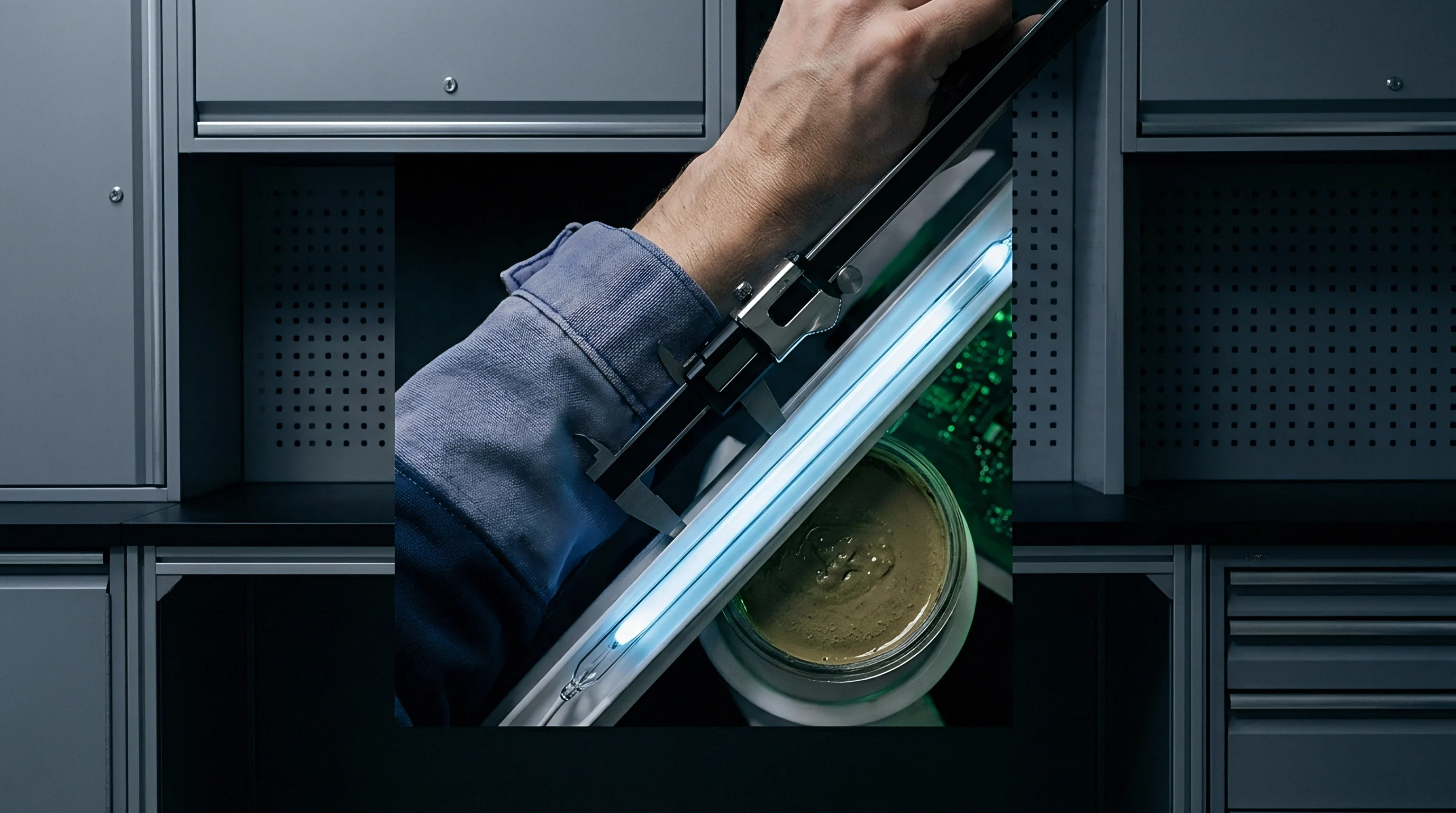
Prismatic and pouch cells undergo dimensional profiling to check envelope tolerances. Swelling comes from initial formation gassing, electrolyte breakdown, or internal mechanical stress in the stack. Pneumatic pressure plates apply 100 kPa of uniform clamping force during prismatic cell thickness checks to match module bay pressures.
Thickness growth exceeding 0.30 mm over nominal signals internal delamination or heavy gassing. Pouch cells get scanned with non-contact laser profilometry across nine grid points. Variations over five percent across the pouch surface mean uneven electrode coating thickness or poor pressure distribution during factory formation cycling.
Cells with uneven surface profiles create unequal pressure distributions when clamped in rigid pack frames, building local high-current-density zones that trigger early lithium plating.
Cell verification protocols require tight threshold management across every incoming batch.
The list below outlines the primary electrochemical non-conformance modes identified during incoming non-destructive screening:
- Anomalous OCV Depression ~ A voltage drop exceeding fifteen millivolts from the lot median, caused by trace copper or iron specks bridging the separator.
- Elevated 1 kHz ACIR ~ Impedance spikes caused by cold-welded tabs or poor electrolyte wetting across cathode pores.
- DCIR Pulse Non-Linearity ~ Excessive voltage drop during 10-second discharge pulses, signaling thick solid-electrolyte interphase growth or low electrolyte conductivity.
- Accelerated K-Value Decay ~ Voltage drop exceeding 0.35 millivolts per day over fourteen quarantine days, driven by separator degradation.
- Volumetric Envelope Swell ~ Thickness expansion beyond drawing limits from trapped gas generated during formation.
- Dielectric Insulation Leakage ~ Current leaking to the outer cell casing under 500 V DC testing due to damaged outer PET wrapping.
A cell showing stable open-circuit voltage can still harbor internal structural burrs that make it dangerous under heavy cycling.


Compliance

Regulatory Clearance Frameworks and UN 38.3 Verification
Dangerous goods clearance depends on strict paper traceability across borders and logistics hubs. International rules require every lithium-ion cell design to pass the UN Manual of Tests and Criteria, Part III, subsection 38.3, before entering commercial transport channels. Inbound verification teams make sure receiving cell lots match valid UN 38.3 Test Summaries from ISO/IEC 17025 accredited labs.
Incomplete or inconsistent documentation delays regulatory release at transit hubs.
UN 38.3 testing involves eight safety tests simulating transport hazards. Tests T.1 through T.5 cover altitude simulation (11.6 kPa pressure for 6 hours), thermal shock (-40 °C to +72 °C over 10 cycles), sinusoidal vibration (7 Hz to 200 Hz), mechanical shock (150 g acceleration), and external short circuits at 55 °C. Tests T.6 through T.8 evaluate impact/crush, overcharge resistance, and forced deep discharge. The table below outlines the documentary compliance requirements for inbound commercial shipments.
| Document Type | Governing Standard | Mandated Content Elements | Audit Verification Check | |
|---|---|---|---|---|
| UN 38.3 Test Summary | UN Manual of Tests Part III 38.3 | Lab accreditation, cell mass, chemistry, test results T1-T8 | Match factory serial numbers to lab test report ID | Unaccredited internal lab signatures invalidate transport clearance |
| CB Test Certificate | IEC 62133-2:2017 | National differences, internal short circuit test, thermal abuse | Verify active status on IECEE online certificate database | Expired certificates freeze warehouse release |
| Safety Data Sheet (SDS) | GHS / OSHA 29 CFR 1910.1200 | 16 mandatory sections, CAS numbers, spill response, transport codes | Confirm revision date within current 3-year window | Generic SDS lacking specific CAS numbers triggers customs hold |
| UL Safety Listing | UL 1642 / UL 1973 | Component mark, shock/fire resistance, protective circuit evaluation | Cross-check UL Directory card against physical tab stamp | Unlisted cell variants void downstream pack insurance coverage |
| EU Battery Passport | EU Regulation 2023/1542 | Carbon footprint, recycled content, supply chain due diligence | Scan QR code payload to validate blockchain ledger entry | Non-compliant carbon declarations block European port entry |

International Safety Standard Integration
Compliance audits verify cell safety against key international standards. IEC 62133-2:2017 sets requirements for portable sealed lithium cells, including internal short-circuit simulations, thermal abuse exposure at 130 °C for 10 minutes, and forced internal short testing for high-density cells. Engineers match test reports against the specific cell model number, chemistry, and casing revision sitting on the dock.
Under Section 7.2 of IEC 62133-2, cell certification becomes void if electrode chemistry modifications alter total cobalt or nickel ratios by more than two percent without re-testing.
UL 1642 covers user-replaceable and technician-replaceable lithium cells. Verification checks confirm that individual cells bear the UL mark on their outer sleeve or steel jacket, backed by an active UL Listing Card. Trying to import unlisted cell variants under a master pack certification creates major legal issues during customs inspections.

European Union Battery Regulation and Digital Passports
European Battery Regulation EU 2023/1542 brings strict supply chain due diligence and environmental tracking to inbound shipments. Starting in 2027, industrial and EV battery cells entering the EU will require a Digital Battery Passport accessible through a QR code engraved on the casing. Auditors check documentation for verified carbon footprint declarations covering raw material extraction, refining, cell manufacturing, and shipping.
A complete paper audit for an inbound shipment follows a simple step-by-step process:
- Pull the bill of lading, dangerous goods declaration, and master invoice from the manifest file.
- Cross-reference the lot code printed on the shipping crates against the batch code on the supplier’s certificate of analysis.
- Retrieve the official UN 38.3 test summary from the manufacturer portal to verify matching lab accreditation credentials.
- Check the IECEE database to confirm that IEC 62133-2 CB reports are active and unsuspended.
- Audit the Safety Data Sheet to verify Chemical Abstracts Service numbers for cathode materials, electrolyte salts, and organic solvents.
- Archive verified compliance documents in the enterprise quality system for customs recordkeeping.
Due diligence records confirm that cobalt, natural graphite, lithium, and nickel meet OECD Guidance for Responsible Supply Chains. Inspection teams reject shipments missing this documentation to keep non-compliant material out of active inventory.
Certifications are sometimes assumed to cover all cell variants when raw material vendors remain constant, though regulatory standards require re-testing for major specification shifts.


Teardown

X-Ray Computed Tomography and Destructive Physical Analysis
Destructive physical analysis reveals internal flaws hidden behind steel cans or laminated aluminum foils. Before cutting any cell open, X-ray Computed Tomography builds 3D volumetric images of internal electrode geometries. High-resolution CT scans evaluate anode-to-cathode overhang dimensions around the full perimeter of the jellyroll or pouch stack.
Bypassing thorough material screening increases the likelihood of integrating unstable cells into final battery assemblies.
Maintaining a proper cathode-to-anode overhang ratio prevents localized lithium plating at electrode edges during high-rate charging. CT scanning measures overhang distances down to ten micrometers. Anode overhang below 0.50 mm triggers an immediate non-conformance hold: insufficient anode coverage lets metallic lithium dendrites grow at cathode borders, creating catastrophic internal short circuits.
CT scans highlight structural defects across multiple focal planes:
- Jellyroll Telescoping ~ Vertical shift of inner electrode layers from high winding tension or core pin extraction stress.
- Cathode Tab Fold-over ~ Bending of internal current collector tabs near the top cap assembly, which threatens surrounding insulation wraps.
- Pin-hole Void Distribution ~ Trapped gas bubbles or uneven electrolyte distribution in the cathode matrix layers.
- Separator Wrinkling ~ Buckling of polyolefin separators caused by uneven thermal contraction during vacuum drying.
Glovebox Teardown Protocols and Burr Metrology
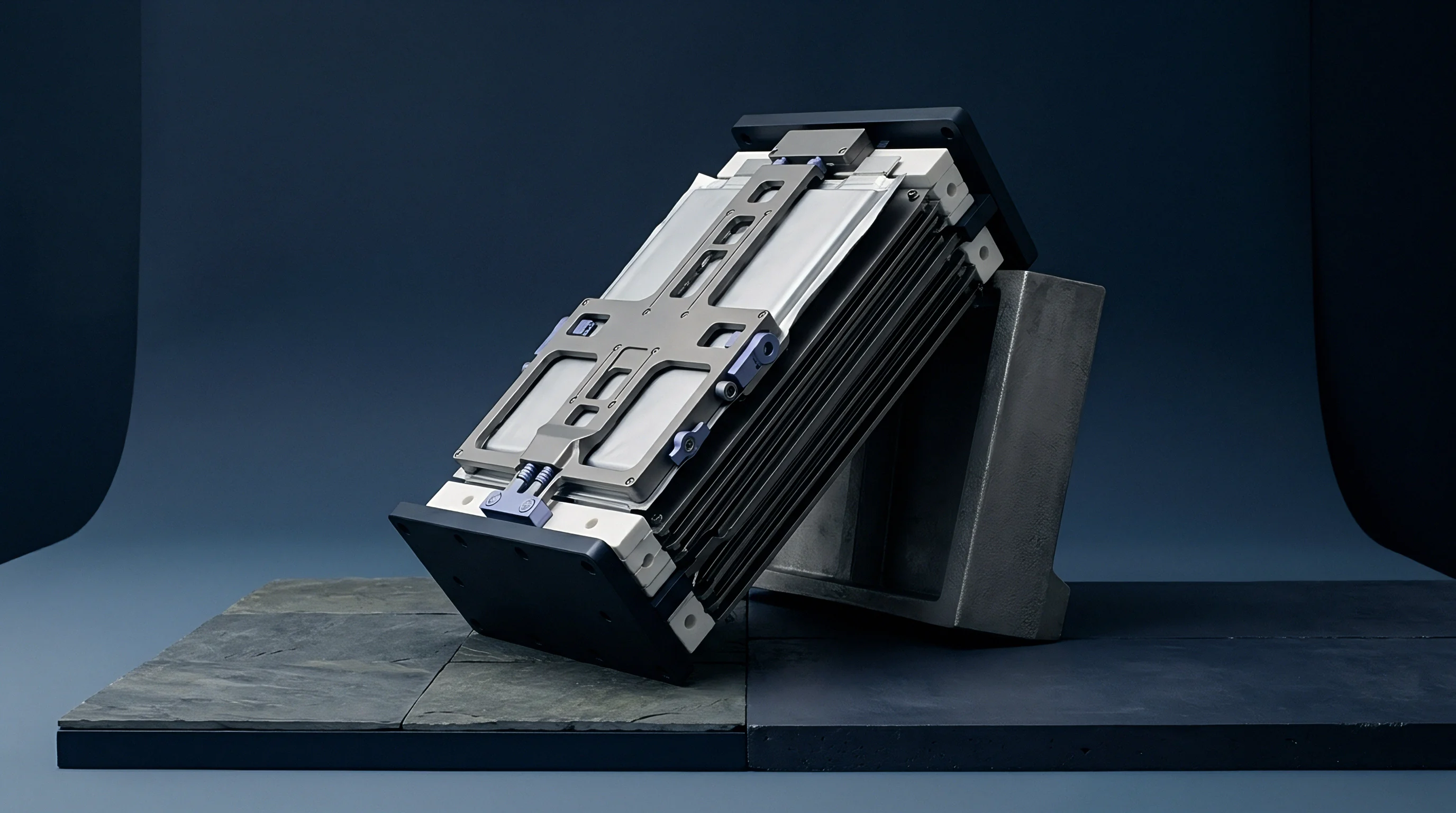
Destructive teardowns take place in dry rooms or argon gloveboxes kept at ultra-low moisture levels (dew point below -40 °C, oxygen under 1 ppm). Dry environments prevent reactive lithium metal and moisture-sensitive salts (LiPF6) from reacting with humidity to form hydrofluoric acid or toxic gas.
Initial qualification audits reject any production lot exhibiting separator shrinkage above five percent.
Engineers carefully de-crimp steel cans or cut pouch heat-seals using non-sparking ceramic tools. Unrolling the jellyroll exposes cathode and anode coatings, aluminum and copper current collector foils, and microporous separators. Scanning Electron Microscopy then measures burr heights along slitted foil edges.
Slitting burrs on current collectors cannot exceed 10 micrometers in height. Anything over 10 µm can pierce delicate 12-micrometer ceramic-coated separators during thermal expansion, causing latent shorts that slip past factory electrical screening. Cathode coating uniformity is checked by punching electrode disks across five points along the roll and weighing dry active material on microbalances calibrated to 0.001 mg precision.
Separator Thermal Stability and Mechanical Integrity
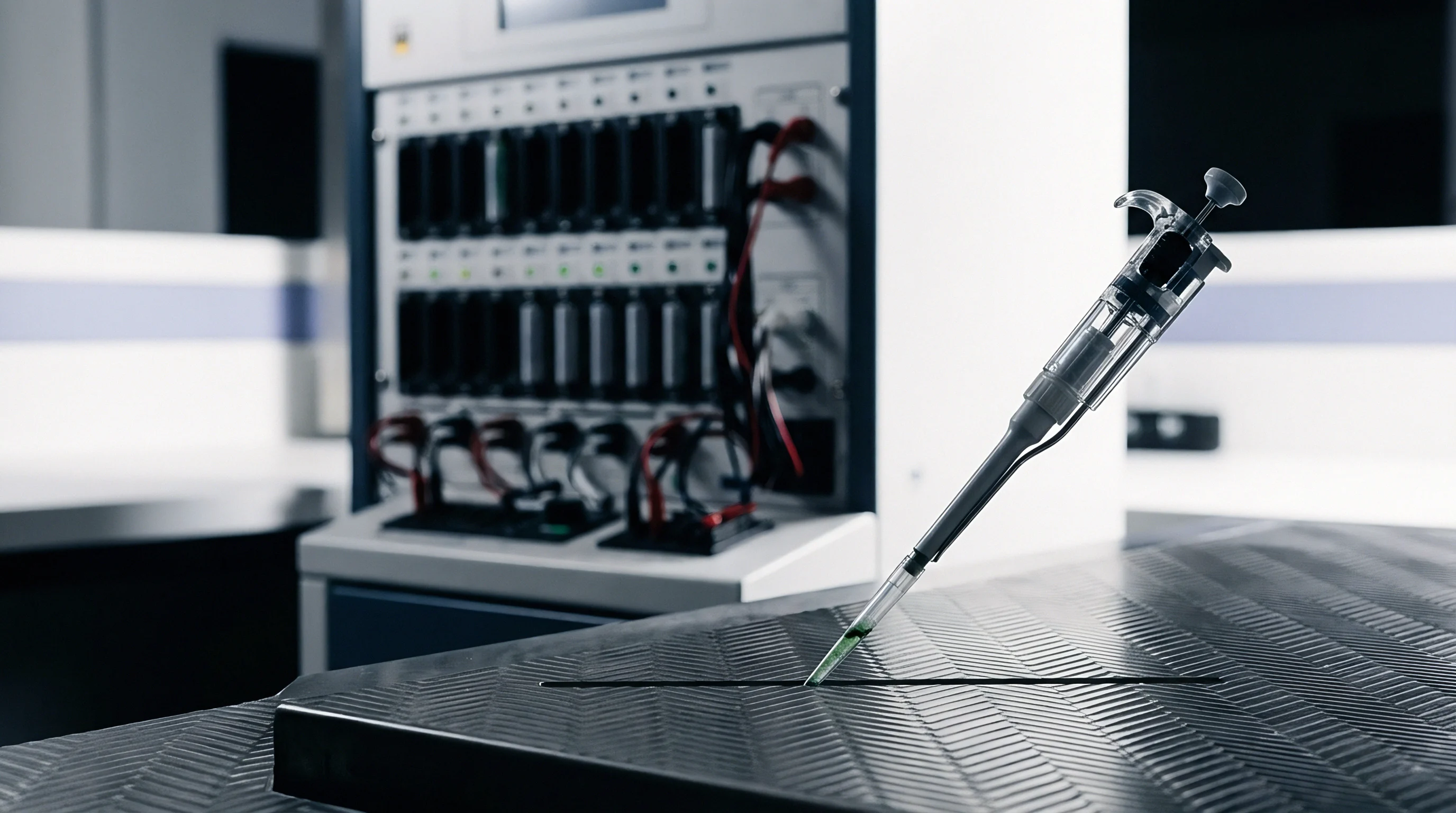
Separator performance sets the limits for thermal runaway containment. Extracted separator samples undergo thermal shrinkage testing at 130 °C for 60 minutes. Polyolefin separators shrinking more than five percent in either machine or transverse directions fail qualification, since shrinkage exposes electrode edges during localized hot spots.
Testing mechanical puncture resistance involves pressing a 1.0 mm radius spherical needle probe into the ceramic-coated separator using a micro-tensile rig. Resistance below 3.5 N indicates weak mechanical integrity, leaving the cell vulnerable to puncture by material agglomerates or metal debris.
Inadequate electrode overhang alignment significantly raises the risk of localized shorting during operation.
Measuring separator porosity via Gurley air permeability timing ensures consistent electrolyte uptake across incoming lots. Gurley values above 250 seconds per 100 cc of air point to tight pore structures that increase ionic resistance and cause localized overheating during fast charging.
What internal stress thresholds determine whether a micro-burr will pierce a ceramic-coated separator after thousands of mechanical expansion cycles?
Disposition
Commercial Defect Disposition and Quality Remediation
Commercial recovery starts the moment an inbound lot fails inspection. Quality teams issue formal Non-Conformance Reports (NCRs) within 72 hours of quarantine, backing them with defect statistics, raw metrology data, and CT or teardown images. An NCR locks parent lots inside the ERP system so non-conforming cells cannot move into pack assembly.
Isolating compromised cell lots keeps defective hardware out of downstream module production.
Return Material Authorization protocols govern how rejected cell lots are handled physically. Under Incoterms 2020 Delivered Duty Paid (DDP) contracts, agreements put full financial responsibility for quarantine storage fees, hazardous repacking, and return freight on the vendor. Suppliers can either retrieve rejected lots using licensed dangerous goods carriers or authorize certified local hazardous waste disposal.
Local destruction requires third-party environmental certification. Specialized recyclers shred rejected cell lots under an inert gas atmosphere, recovering black mass containing lithium, nickel, and cobalt salts while issuing formal Certificates of Destruction. Importers use these certificates for customs filings and duty drawback claims on rejected goods.
Customs Duty Drawback and Landed-Cost Recovery
Imported lithium cells carry substantial customs duties under harmonized tariff schedules (HTS 8507.60). When an inbound lot is rejected and either destroyed or re-exported, importers can file for Customs Duty Drawback under U.S. Title 19 CFR Part 190 or matching national codes. Drawback rules let importers recover up to 99% of total duties, taxes, and fees paid on non-conforming foreign goods.
Securing customs duty refunds depends on providing official certificates of disposal or re-export documentation.
Claiming duty drawback requires matching customs entry summaries (CBP Form 7501), commercial invoices, inspection rejection logs, and recycler destruction certificates. Losing traceability between dock intake records and final disposal receipts forfeits duty recovery, adding unnecessary landed costs to non-conforming shipments.
Landed-cost models account for overall non-conformance risks rather than relying solely on initial purchase prices.
Supply contracts include cap-and-collar remedies to protect pack assemblers from systemic defects. Standard terms state that if lot rejection rates top three percent over a rolling quarter, the manufacturer pays liquidated damages for downtime, line changeover labor, and third-party lab testing.
Quarantine Management and Warranty Risk Allocation
Quarantine storage requires specialized safety controls to manage containment risks. Isolated lanes keep at least a ten-meter buffer from active racks, backed by deluge fire suppression and local gas extraction systems. Thermal cameras monitor quarantine pallets continuously to catch early off-gassing or temperature spikes long before smoke becomes visible.
Extended storage of non-conforming shipments accumulates significant holding costs over time.
Contracts handle long-term liability when latent cell defects slip past incoming screening and trigger field failures. Supplier agreements typically include indemnification terms that require manufacturers to absorb recall costs, property damage claims, and legal defense fees tied to documented cell defects. Maintaining thorough quality dossiers gives buyers the legal leverage needed to enforce these indemnification clauses.
Setting clear receiving protocols, standardizing sampling math, running thorough non-destructive screening, and auditing compliance files protects battery assembly operations from financial loss and field reliability failures.