Meaning
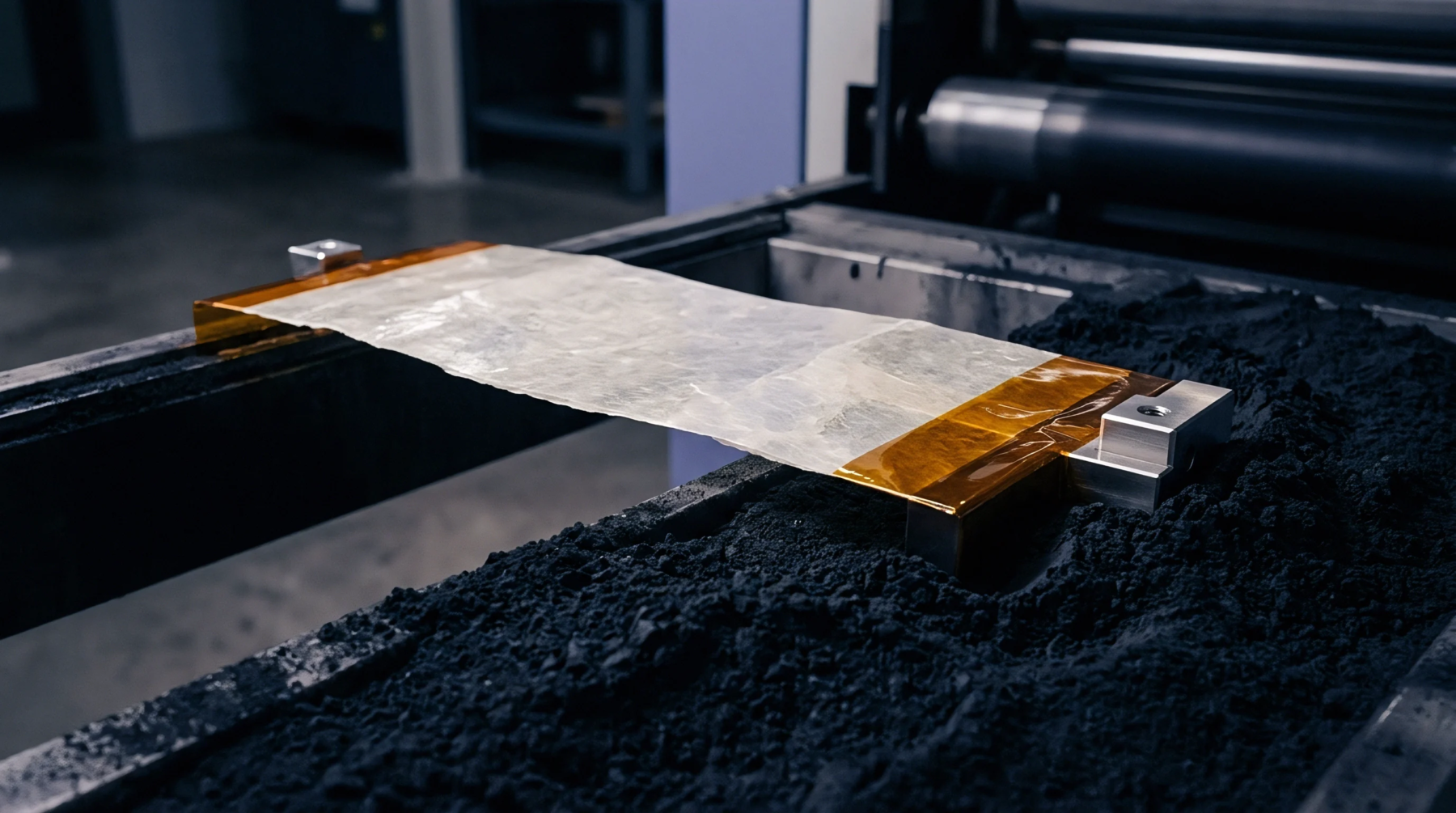
Physical separation of solid electrolyte particles occurs when intergranular pore expansion generates outward mechanical stress during repeated lithium insertion cycles. This degradation mechanism compromises interfacial contact across solid state battery layers and accelerates impedance growth within composite cathodes. Solid electrolyte films experience microstructural fracturing whenever volumetric dilation exceeds elastic deformation limits during high rate charging routines.
Structural Degradation
Mechanical strain propagates through ceramic grain boundaries whenever local lithium concentration gradients exceed threshold values for particle accommodation. Particle cracking reduces active conduction pathways and isolates adjacent reactant domains from the primary ionic network. Repeated cycling widens microcracks and eventually destroys the percolation pathways required for efficient charge transport.
Impedance Growth
Resistance rises sharply as interfacial separation limits effective contact area between active materials and solid electrolytes. Charge transfer kinetics deteriorate because localized current constriction forces higher local overpotentials across remaining intact interfaces. Elevated polarization reduces delivered capacity during discharge steps and shortens usable operational lifespan under high current loads.
Mechanical Constraint
Cell designers mitigate volumetric degradation by applying external stack pressure to maintain physical contact across contracting boundaries. Housing fixtures absorb a portion of particle dilation forces but add parasitic mass to commercial module assemblies. Proper mechanical preload suppresses microcrack propagation and preserves long term ionic conductivity within high energy density cells.