Hard Carbon Anode Closed Pore Structure Analysis
Closed pores dictate low-voltage plateau capacity in hard carbon; verify skeletal density via pycnometry and scattering to stop plating defects.

Topology
Hard carbon matrices store alkali ions through distinct electrochemical stages that correlate directly with internal carbon architecture. In sodium-ion battery chemistry, galvanostatic charge-discharge profiles divide into a high-potential sloping region above 0.10 V against Na/Na+ and a flat low-potential plateau region below 0.10 V. The sloping capacity originates from sodium-ion adsorption at defect sites, heteroatoms, and exposed graphene sheet edges. The plateau capacity tracks the filling of subnanometer closed pores embedded within disordered turbostratic domains.
These internal cavities remain inaccessible to external gas probe molecules during conventional physical adsorption tests while remaining electrochemically active for sodium metal cluster condensation or intercalation.
Pore accessibility marks the line between usable energy and irreversible capacity loss. Pores classified as open connect directly to the particle exterior through channels wider than 0.3 nanometers. Electrolyte solvent molecules enter these open channels during initial cell formation.
Liquid electrolyte reduction across the extensive internal surface area of open pores consumes active sodium and forms an excessively thick solid electrolyte interphase. This parasitic reaction depresses initial Coulombic efficiency to unacceptable commercial levels, frequently below 75 percent. Conversely, closed pores possess narrow necks pinched shut during high-temperature thermal processing.
Their outer walls shield internal microvoids from solvent co-intercalation, preserving electrolyte integrity while allowing desolvated sodium ions to tunnel through graphene defect boundaries under cathodic polarization.
A closed pore network isolates the inner void volume from electrolyte solvent breakdown while enabling high-density alkali storage below one hundred millivolts.
The volumetric efficiency of a hard carbon electrode depends on the precise sizing and distribution of these closed microcavities. When closed pores exhibit diameters between 0.8 and 1.5 nanometers, sodium fills the space as quasi-metallic clusters, yielding capacities exceeding 300 mAh/g at stable packing densities. Cavities exceeding two nanometers cause poor structural reversibility during cycling.
Large internal voids collapse under repetitive sodiation stress, generating localized mechanical fracture and exposing fresh carbon facets to electrolyte attack. Electrode coating density suffers when the closed porosity volume expands uncontrollably, reducing the volumetric energy density of the finished pouch or cylindrical cell.
Plateau Storage Mechanism
Electrochemical charge transfer within the flat low-potential plateau involves a progressive phase transition of stored sodium species. At cell potentials approaching zero volts versus Na/Na+, the chemical potential of desolvated sodium matches the condensation threshold within confining carbon micropores. The stored species exhibits chemical shifts in solid-state nuclear magnetic resonance spectra indicative of localized metallic character, distinct from the ionic state observed along the sloping potential profile.
The plateau slope remains exceptionally flat, providing steady operational voltage for cell discharge, yet the low operating potential introduces operational constraints regarding local overpotentials.
Hard carbon raw materials dictate the baseline pore geometry achieved after thermal conversion. Biomass feedstocks like coconut shells and walnut husks generate naturally oxygenated, rigid polymeric networks that create extensive closed cavities upon volatile extraction. Synthetic polymers, including phenolic resins and polyacrylonitrile, permit tighter control over crosslinking densities, yielding narrow cavity size distributions centered at one nanometer.
Petroleum and coal pitches contain aromatic fractions that self-assemble into fluid phases during carbonization; these require oxidative chemical stabilization to crosslink the polycyclic aromatic chains, preventing graphitic alignment and forcing the creation of turbostratic closed pores during subsequent firing cycles.
Optimizing hard carbon for commercial sodium-ion cells requires maximizing the volume of closed pores while eliminating external open porosity.

Beam
Scattering diagnostics resolve internal structural features that remain entirely blind to classical gas adsorption techniques. Conventional Brunauer-Emmett-Teller nitrogen adsorption at 77 Kelvin detects only pores with entrances accessible to the 0.364-nanometer nitrogen molecule. When pore entrances neck down below this dimension, nitrogen diffusion halts due to kinetic limitations.
Carbon dioxide adsorption at 273 Kelvin probes ultra-micropores down to 0.35 nanometers, but completely sealed cavities yield zero gas uptake regardless of equilibration duration. Small-angle X-ray scattering and small-angle neutron scattering penetrate the solid carbon skeleton, measuring spatial electron density variations between the solid carbon wall and the internal void phase.
Quantifying closed pore volume via small-angle X-ray scattering requires measuring the differential scattering cross-section across a broad momentum transfer vector range, typically between 0.01 and 1.0 reciprocal inverse angstroms. The total invariant, obtained by integrating the area under the scattering curve weighted by the square of the scattering vector, directly relates to the mean square electron density fluctuations within the hard carbon particulate, where absolute scattering intensity establishes overall pore volume. Porod analysis identifies the total specific surface area of both open and closed pores combined.
Subtracting the open surface area obtained from gas physisorption isolates the hidden internal interface. Absolute calibration against a secondary standard like glassy carbon or water establishes the absolute volume fraction of closed micropores within the material.
Small-angle scattering combined with helium displacement isolates true skeletal density from enclosed microvoid fractions.
Contrast matching neutron scattering isolates open from closed voids with unmatched precision. Neutrons interact with atomic nuclei, yielding substantial scattering contrast differences between protium and deuterium. Immersing hard carbon powder in a liquid mixture of deuterated and protonated toluene adjusted to match the scattering length density of the solid carbon matrix renders all accessible, open pores completely invisible to the neutron wavefront.
Any residual scattering intensity originating from the sample under matched conditions arises exclusively from closed pores containing no solvent. Deuterated fluid immersion eliminates open pore interference, providing direct measurement of closed pore diameter distributions, average radius of gyration, and total closed void volume per unit mass.
What Governs Pore Detection Limits under Radiation Scattering?
Instrumental geometry and radiation wavelength define the lower and upper spatial boundaries of structural resolution. Laboratory-source small-angle X-ray equipment with copper K-alpha radiation probes structural heterogeneity from 1 to 50 nanometers. Detecting subnanometer closed pores below 0.8 nanometers pushes into the wide-angle scattering regime, where the scattering profile blends into the diffuse (002) carbon diffraction peak.
Distinguishing genuine subnanometer cavities from inter-graphene layer spacing requires paired fitting of the wide-angle diffraction background and the high-vector tail of the small-angle scattering curve. Synchrotron radiation sources provide photon flux intensities several orders of magnitude higher than benchtop laboratory tubes, resolving weak scattering signals from closed pores in hard carbons fired above 1500 degrees Celsius where matrix electronic conductivity increases parasitic X-ray absorption.
Complementary pycnometry confirms scattering calculations through simple volumetric displacement. Helium gas pycnometry measures the skeletal volume of the carbon matrix because the small helium atom penetrates open interstitial networks, causing measured skeletal density to drop as closed volume expands. Pure graphite exhibits a skeletal density of 2.26 grams per cubic centimeter.
Hard carbons containing high volumes of closed pores yield skeletal helium densities between 1.45 and 1.95 grams per cubic centimeter. The difference between the theoretical carbon matrix density, derived from X-ray diffraction lattice parameters, and the helium pycnometry density directly quantifies the closed void volume per gram of powder.
| Measurement Method | Probe Medium | Measurable Pore Window | Closed Pore Response | Primary Operational Constraint |
|---|---|---|---|---|
| Nitrogen Physisorption (77 K) | Molecular N2 gas | 0.4 nm to 50 nm | Zero detection capability | Kinetic limitation below 0.4 nm pore diameter |
| Carbon Dioxide Adsorption (273 K) | Molecular CO2 gas | 0.35 nm to 1.5 nm | Zero detection capability | Incapable of probing neck-pinched cavities |
| Helium Pycnometry | Helium gas atom | Total accessible skeletal volume | Indirect volume quantification | Assumes ideal solid carbon matrix density |
| Small-Angle X-ray Scattering (SAXS) | X-ray photons (8 keV to 20 keV) | 0.8 nm to 100 nm | Direct detection via electron contrast | Demands accurate two-phase electron density assumptions |
| Contrast-Matched SANS | Thermal / cold neutrons | 1.0 nm to 80 nm | Absolute isolation of sealed voids | Requires access to research reactor or spallation source |
Because neutrons penetrate dense electrode coatings cleanly, high-flux neutron beams allow operando evaluation of commercial-format cells during cycling, mapping how closed pore scattering signals attenuate as sodium progressively populates internal cavities during the low-voltage plateau stage.
The operational dispute centers on whether radiation scattering measures true empty pore space or detects localized regions of low-density disordered carbon rings that remain impermeable to sodium ions.
Heat
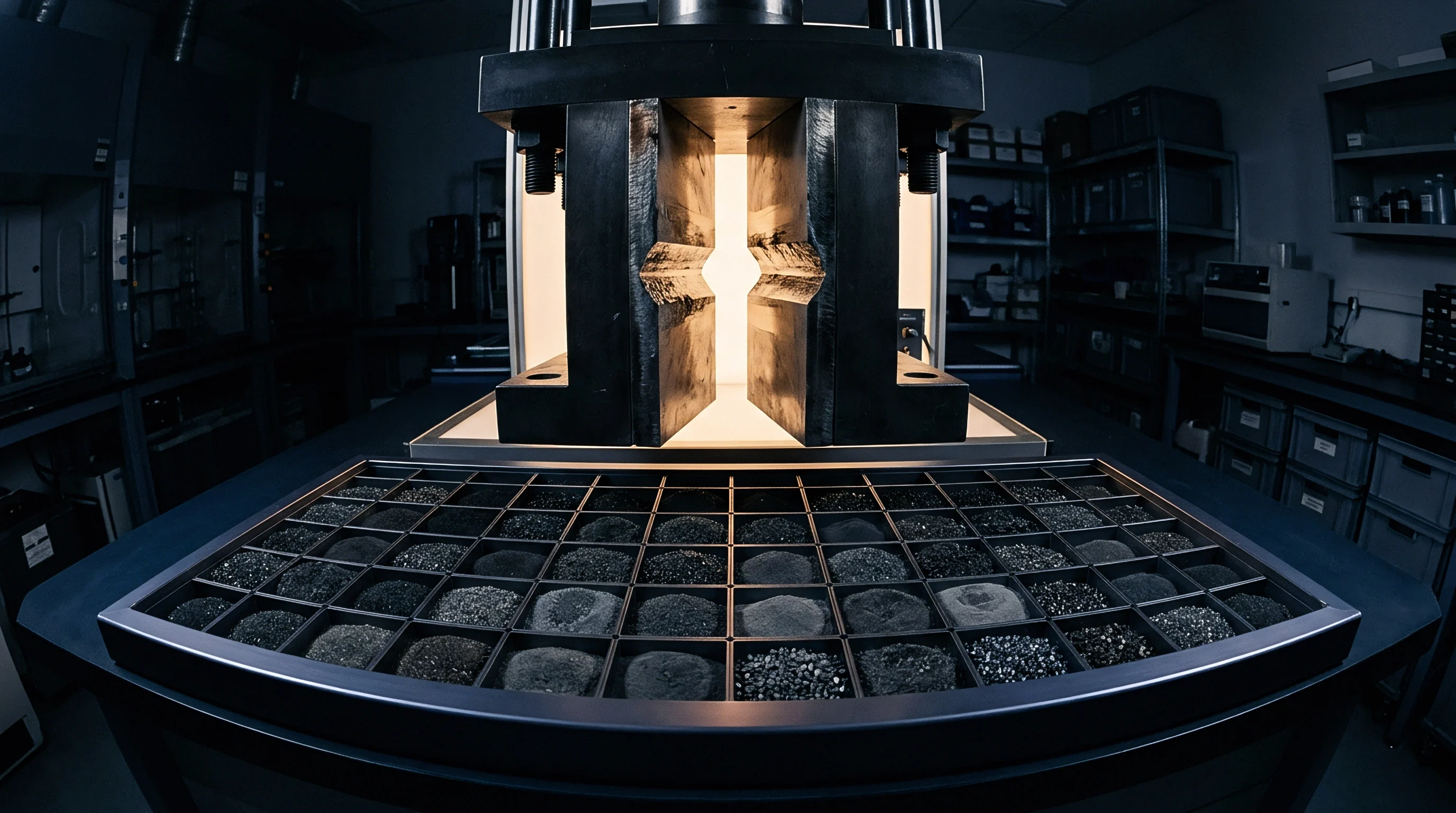
Thermal treatment controls the structural transitions that close open pore networks within amorphous carbon precursors. During early carbonization stages between 600 and 900 degrees Celsius, volatile organic compounds decompose, liberating methane, carbon monoxide, water vapor, and hydrogen. This mass loss creates an extensively connected network of open micropores and mesopores, reflected in high specific surface areas often exceeding 400 square meters per gram.
At these low temperatures, the carbon skeleton consists of fragmented, highly disordered polycyclic aromatic clusters heavily terminated with peripheral oxygen and hydrogen functional groups. The plateau capacity of hard carbon fired in this regime remains negligible, while the sloping capacity dominates the discharge curve.
Elevating the carbonization temperature from 1000 to 1400 degrees Celsius initiates continuous crosslinking, atomic rearrangement, and pore contraction. Peripheral heteroatoms volatilize, allowing adjacent aromatic fragments to coalesce into small turbostratic graphene domains as pore necks contract under thermal exposure. As hexagonal carbon networks align, the entrances to open microcavities narrow progressively until they fall below the diameter of gas molecules, becoming completely sealed.
The specific surface area measured by nitrogen physisorption drops below five square meters per gram. Concurrently, closed pore volume peaks within this temperature band, producing a corresponding surge in low-potential plateau capacity during sodiation.
A processing temperature window between 1250 and 1350 degrees Celsius optimizes closed pore volume while suppressing graphitic crystallization.
Exceeding 1500 degrees Celsius reverses structural benefits through excessive graphitization and structural densification. High thermal kinetic energy drives small graphene domains to straighten, stack, and fuse into thicker crystalline packets, eliminating the internal structural misorientations that support closed pores. The true skeletal density increases toward that of synthetic graphite, while the closed pore volume measured by small-angle scattering drops toward zero.
The electrochemical consequence is a sharp contraction of low-potential plateau capacity, accompanied by a modest increase in electronic conductivity.
| Processing Temperature | Specific Surface Area | Helium Skeletal Density | SAXS Closed Pore Volume | First Cycle Coulombic Efficiency | Plateau Capacity Ratio |
|---|---|---|---|---|---|
| 900 °C | 385 m²/g | 1.98 g/cm³ | 0.012 cm³/g | 58.2 % | 12 % |
| 1100 °C | 42 m²/g | 1.74 g/cm³ | 0.048 cm³/g | 76.4 % | 38 % |
| 1300 °C | 2.8 m²/g | 1.52 g/cm³ | 0.125 cm³/g | 88.7 % | 68 % |
| 1500 °C | 1.4 m²/g | 1.88 g/cm³ | 0.062 cm³/g | 84.1 % | 42 % |
| 1700 °C | 0.9 m²/g | 2.10 g/cm³ | 0.018 cm³/g | 80.5 % | 19 % |
Controlling heating rates and soak durations prevents non-uniform skin effects across bulk furnace loads. Rapid thermal ramping causes thermal gradients within graphite crucibles, yielding particles with over-densified, graphitized outer shells and highly porous, under-carbonized cores. Maintaining an inert atmosphere of high-purity nitrogen or argon with oxygen contamination below five parts per million prevents oxidative etching of pore mouths, ensuring that physical pore closure proceeds strictly via carbon network reorganization.
Sourcing agreements govern these thermal thresholds by establishing explicit processing envelopes:
- Thermal Profile Certification requires furnace logging records verifying soaking within ten degrees of the target temperature across every heating zone.
- BET Surface Area Cutoff rejects any production lot exceeding 5.0 square meters per gram to prevent unsealed open pore networks from degrading cell efficiency.
- Residual Hydrogen Ratio mandates elemental analysis ratios below 0.008 to ensure complete removal of slope-inducing surface termination groups.
- Helium Skeletal Density Band establishes an acceptable incoming density range between 1.48 and 1.62 grams per cubic centimeter to verify sufficient internal void volume.
Supply contracts referencing standard ASTM D2854 for apparent density enforce structural consistency across incoming metric-ton deliveries.

Deposition
Sodium ions migrating into closed pores during the low-potential plateau stage encounter steep energy barriers at internal pore interfaces, causing desolvation impedance to spike at pore mouths. Solvated sodium ions must shed their coordinated solvent shells at the outer particle surface or within narrow transport defects before entering the neutral internal cavities. The transport of bare sodium ions through defect channels within graphene layers demands an activation energy between 0.2 and 0.4 electron-volts.
Once inside the cavity, sodium atoms aggregate into quasi-metallic clusters, a process that operates at a thermodynamic potential merely 20 to 50 millivolts above the dynamic plating threshold of pure metallic sodium.
High charging rates exacerbate concentration polarization across the electrode thickness, pushing the localized surface potential below zero volts versus Na/Na+. Instead of entering the closed pores through activated solid-state diffusion, incoming sodium ions reduce directly onto the exterior carbon surface as metallic dendrites, creating irreversible cell short circuits. This surface plating degrades cell safety and nucleates rapid capacity loss through dead sodium formation.
The risk scales inversely with closed pore diameter: smaller pore entrances restrict ion flux, causing severe charge-transfer overpotentials at current densities exceeding 1C.
Excessive charging rates force sodium to deposit as hazardous external dendrites instead of filling protective closed cavities.
Low-temperature operation severely contracts the safe operational window for closed pore sodium storage. At temperatures below zero degrees Celsius, the desolvation kinetics of sodium salts in carbonate and ether electrolytes decelerate drastically. The charge-transfer resistance across the carbon boundary layer increases by an order of magnitude for every twenty-degree drop in ambient temperature.
Consequently, the low-voltage plateau shifts downward into negative overpotentials even at modest 0.2C charge rates, causing immediate metallic sodium plating across the outer electrode face long before closed pores reach saturation capacity.

Where Does Quasi Metallic Storage Cross into Dangerous Plating?
Distinguishing safe quasi-metallic cluster condensation from destructive surface dendrite growth requires close examination of voltage relaxation curves during current interruption. When charging current halts during genuine closed pore filling, the open-circuit cell potential rebounds rapidly to a stable resting potential between 30 and 60 millivolts above Na/Na+, reflecting the chemical potential of confined sodium clusters. If metallic sodium has plated onto the exterior carbon surface, the resting voltage displays a protracted plateau pinned precisely at zero millivolts until the plated layer slowly dissolves into the carbon matrix via chemical self-discharge.
Operando nuclear magnetic resonance and differential electrochemical mass spectrometry confirm that external plating triggers persistent side reactions with electrolyte solvents, liberating ethylene and hydrogen gases that swell prismatic cell housings.
Cell design parameters must account for mechanical expansion resulting from closed pore filling. Hard carbon anodes undergo volumetric lattice expansion of roughly 1.5 to 4 percent during sodiation, substantially less than the 10 percent expansion observed in graphite lithium-ion anodes or the 300 percent expansion in alloy anodes. However, when closed pores fill with quasi-metallic sodium, localized internal stress builds within the disordered turbostratic framework.
Over thousands of cycles, continuous microscopic stress cycles can rupture thin carbon walls separating adjacent pores, merging subnanometer cavities into larger mesopores that bridge to the outer particle boundary. This structural fatigue exposes internal sodium surfaces to fresh electrolyte ingress, initiating sudden impedance growth and capacity rollover.
Inadequate closed pore morphology results in sudden field failure from internal short circuits when localized overpotentials drive dendritic growth through the separator.
Intake
Incoming quality inspection for commercial hard carbon lots requires analytical procedures that expose structural variations invisible on standard certificates of analysis. Suppliers frequently report only basic metrics: D50 particle size, moisture content, pH, and single-point nitrogen BET surface area. A material lot can meet a tight BET specification below three square meters per gram while possessing completely collapsed closed pore volumes due to furnace overheating or improper precursor crosslinking.
Relying solely on supplier-provided BET data guarantees substantial lot-to-lot capacity variation in downstream cell manufacturing.
A rigorous incoming inspection sequence employs helium pycnometry as a rapid primary screening gate, supported by periodic small-angle X-ray scattering verification. Helium displacement tests take under twenty minutes per sample and provide a direct indicator of skeletal density. When the measured helium density of an incoming lot rises above 1.65 grams per cubic centimeter for a grade specified at 1.52 grams per cubic centimeter, the shipment contains deficient closed pore volume, signaling an immediate risk of low plateau capacity.
Qualifying materials requires establishing clear parameter thresholds across physical, chemical, and electrochemical domains.
| Test Parameter | Governing Standard | Target Range | Rejection Action Limit |
|---|---|---|---|
| Specific Surface Area | ISO 9277 (Multi-point BET) | 1.5 to 3.5 m²/g | Greater than 4.5 m²/g |
| Skeletal Helium Density | ASTM D5550 | 1.48 to 1.58 g/cm³ | Greater than 1.65 g/cm³ |
| Particle Size Distribution (D50) | ISO 13320 (Laser diffraction) | 6.5 to 8.5 µm | Outside 5.5 to 9.5 µm |
| Tap Density | ASTM B527 | 0.85 to 1.05 g/cm³ | Less than 0.80 g/cm³ |
| Closed Pore Volume (SAXS) | Custom QA Protocol | 0.10 to 0.14 cm³/g | Less than 0.08 cm³/g |
| First Cycle Plateau Capacity | Half-cell test (0.1C to 0.005 V) | 180 to 220 mAh/g | Less than 165 mAh/g |
Procurement teams must address the economic balance between tap density, closed pore volume, and cell packaging limits. Maximizing closed pore volume inevitably lowers particle density, reducing electrode tap density and volumetric coating weights. An electrode with low tap density requires thicker coatings to match areal capacity targets, increasing cell winding thickness and restricting electrolyte wetting rates during high-speed factory filling lines.
Conversely, highly densified hard carbons with low closed pore fractions yield excellent volumetric packaging efficiency but deliver insufficient plateau capacity, forcing battery packs to carry excess weight to fulfill energy targets.
Execution of supply agreements hinges on enforceable technical criteria that prevent suppliers from substituting cheaper, high-density carbons lacking developed closed microstructures:
- Pre-Shipment Sample Retention requires the supplier to pull composite samples from the master lot prior to packaging, shipping split aliquots to an independent testing lab for SAXS invariant verification.
- Coin-Cell Benchmark Testing conditions lot acceptance on achieving an initial Coulombic efficiency above 87 percent paired with a minimum plateau capacity of 180 mAh/g at a C/10 discharge rate.
- Moisture Barrier Packaging Inspection verifies that every one-ton bulk bag contains sealed aluminum barrier foil with internal desiccant packs, maintaining material moisture levels below 200 parts per million upon delivery.
When shipments fail incoming density checks, testing discrepancies often stem from differing degassing temperatures during pycnometry measurements that artificially alter skeletal displacement calculations.