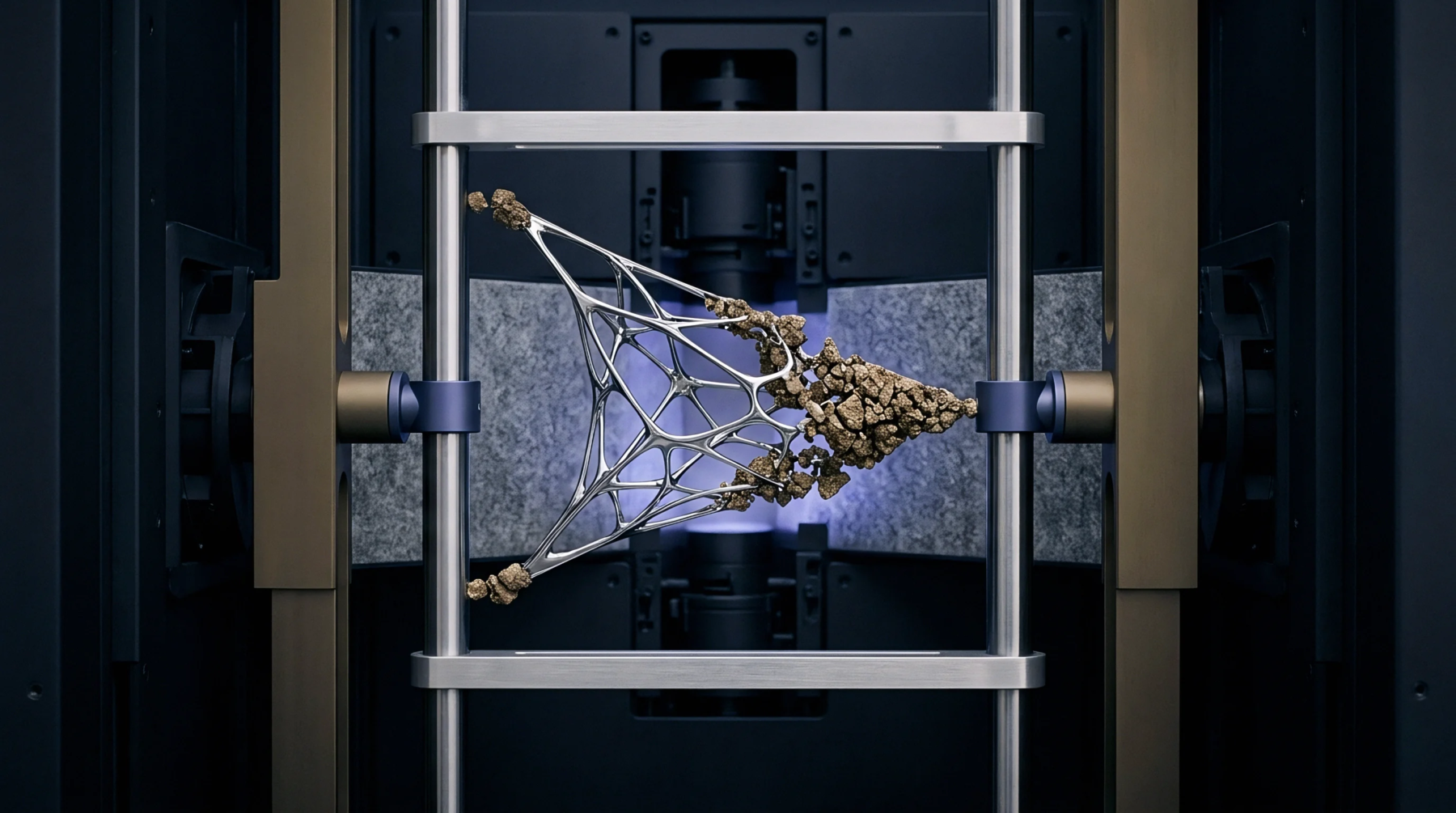
Meaning
Number of high-amplitude mechanical or thermal strain cycles a component can withstand before failure governs the durability of battery casings and electrical interconnects under operational stresses. Evaluating low cycle fatigue life is essential for components that experience plastic deformation during rapid charging or extreme temperature changes. These events occur less frequently than vibrations but cause greater physical damage.
Cycling Limit
Plastic strain accumulation determines the structural limits of metal busbars and cell housings during the lifetime of the vehicle. If the low cycle fatigue life of a welded connection is shorter than the design life of the battery pack, the connection will fail prematurely under normal driving conditions. The cycle budget is dictated by the depth of the thermal cycles.
Structural Degradation
Micro-cracks begin to propagate through the grains of the metal joint when the material is subjected to repeated plastic deformation. When the component reaches the limit of its low cycle fatigue life, these cracks coalesce into a macro-fracture, causing a loss of mechanical support or an electrical open circuit. This degradation is accelerated in the presence of corrosive electrolytes or when the operating temperature is kept close to the material’s softening point, which reduces the force needed to cause cracking.
Predictive Analysis
Strain-controlled fatigue tests run on raw material samples establish the relation between strain amplitude and cycles to failure. This data calculates the expected low cycle fatigue life.