Sub-Zero Battery Plating Mechanisms and Low-Temperature Intercalation Kinetics
Sub-zero battery charging induces severe kinetic overpotentials, forcing metallic lithium plating over intercalation and demanding strict thermal step-down controls.

Potential
Operating a lithium-ion cell below freezing alters the energy landscape for ion movement across the electrode-electrolyte interface. At room temperature, lithium ions intercalate into synthetic or natural graphite with minimal kinetic hindrance. Drop the temperature to minus twenty degrees Celsius, however, and charge-transfer resistance increases by more than two orders of magnitude.
This kinetic bottleneck forces the anode potential below zero volts versus the lithium reference electrode during fast charging, creating the thermodynamic conditions for metallic deposition to compete directly with intercalation.
Under standard conditions, the equilibrium potential of graphite intercalation compound stages sits between 80 millivolts and 200 millivolts above the metallic lithium redox potential. When high charging currents pass through a cold electrode, cumulative ohmic drops across electrolyte pores and the solid electrolyte interphase push local reaction potentials into negative values. Once this overpotential shift crosses the thermodynamic threshold, lithium reduction onto the graphite surface becomes energetically favorable, and metallic deposition outpaces intercalation as charge-transfer overpotential dominates total cell polarization.

Thermodynamic Equilibrium and Overpotential Shifts
Pinpointing the threshold where metallic reduction overtakes host insertion requires dividing the cell voltage under load into three contributions: open-circuit potential defined by the lithiation state of the carbon lattice, concentration polarization driven by ion depletion in electrolyte channels, and activation overpotential required to strip solvent molecules from the cation shell. At sub-zero temperatures, activation overpotential represents the largest share of cell impedance. Charging at half C-rate at minus fifteen degrees Celsius, for instance, often produces an activation polarization exceeding 150 millivolts, eliminating the thermodynamic buffer that prevents metallic deposition.
Although temperature dependence follows Arrhenius behavior, the activation energy for interfacial charge transfer remains substantially higher than for bulk liquid conduction. Charge-transfer resistance across the graphite surface climbs from approximately two ohms per square centimeter at twenty-five degrees Celsius to nearly three hundred ohms per square centimeter at minus thirty degrees Celsius. Consequently, even nominal charging currents produce severe potential drops across the interface, forcing dissolved cations to accept electrons on the outer surface of the graphite active material rather than migrating into interstitial spaces between graphene layers.

Charge Transfer Dynamics and Desolvation Barriers
Shedding the solvation shell from a lithium ion represents the primary kinetic bottleneck during cold cell operation. In standard carbonate electrolytes containing ethylene carbonate and dimethyl carbonate, six solvent molecules coordinate around each charge carrier. Breaking these coordination bonds requires an activation energy between 50 and 70 kilojoules per mole depending on salt concentration and solvent mixture.
As thermal energy declines within the cell, fewer ions possess sufficient kinetic energy to clear this desolvation barrier, backing up solvated ions at the solid electrolyte interphase boundary.
This accumulation of solvated ions at the outer edge of the interphase layer creates a steep electrical double-layer voltage drop. Cations that fail to desolvate cannot enter the narrow interstitial channels of the graphite crystal structure, which measure approximately 0.335 nanometers between sheets. Electrically neutral metallic atoms coalesce into micro-scale crystallites on graphite particle surfaces when forced to accept electrons outside the host crystal matrix.
This competing reaction pathway accelerates rapidly once local overpotential drops below minus 50 millivolts relative to the lithium metal reference standard.
| Temperature (°C) | Desolvation Barrier (kJ/mol) | Exchange Current Density (mA/cm²) | Solid-State Diffusion (cm²/s) | Charge Transfer Resistance (Ω·cm²) |
|---|---|---|---|---|
| 25 | 52.4 | 1.85 | 2.1 × 10⁻¹¹ | 2.4 |
| 0 | 55.1 | 0.42 | 4.5 × 10⁻¹² | 18.6 |
| -10 | 58.8 | 0.18 | 8.2 × 10⁻¹³ | 54.1 |
| -20 | 62.3 | 0.06 | 1.2 × 10⁻¹³ | 182.0 |
| -30 | 66.7 | 0.01 | 9.5 × 10⁻¹⁵ | 510.5 |
Exchange current density determines how much current an electrode accepts before severe polarization sets in. At minus twenty degrees Celsius, exchange current density falls to less than five percent of its room-temperature value, narrowing safe charging currents to negligible levels. Datasheet CC-CV charging profiles reflect performance measured at room temperature; running those identical profiles under freezing conditions guarantees severe electrode degradation within twenty charge cycles.
Uncertainty remains regarding the precise contribution of individual solvent species to the interfacial desolvation energy barrier under high-field conditions. Spectroscopic measurements reveal distinct coordination states near the electrode interface, but operational cell models currently rely on empirical fitting factors to predict exact transition thresholds between intercalation and surface plating across wide temperature windows.

Pore
Mass transport within the internal void structure of the porous electrode determines how lithium ions distribute during sub-zero operation. While charge transfer occurs at active particle surfaces, ions must first move through tortuous liquid channels spanning the separator and the active material coating. As temperature drops, electrolyte viscosity increases exponentially, drastically reducing liquid-phase ionic conductivity and salt diffusion coefficients inside the anode’s micro-scale channels.
These liquid-phase diffusion limitations produce severe salt concentration gradients across the thickness of the electrode layer. During sub-zero charging, lithium ions near the current collector face depletion because the flux of incoming ions through the porous network falls behind electron arrival from the external circuit. Salt concentration spikes near the separator interface while dropping toward zero deep inside the electrode.
This non-uniform concentration profile concentrates local current density at the front face of the electrode, triggering localized metallic deposition right at the separator boundary.
Tortuosity and Liquid Phase Diffusion Limits
The geometric arrangement of active material particles creates a tortuous path that lengthens effective liquid-phase diffusion distances. The MacMullin number ~ the ratio of porous medium resistivity to pure liquid electrolyte resistivity ~ climbs sharply when active material coatings undergo heavy calendering to maximize volumetric energy density. Electrodes calendered to densities above 1.6 grams per cubic centimeter display MacMullin numbers exceeding 4.5, severely limiting liquid transport as electrolyte viscosity rises at sub-zero temperatures.
Viscosity of a standard carbonate mixture increases by roughly 400 percent when cooled from twenty degrees Celsius to minus twenty degrees Celsius. This drop in mobility slows ionic conduction through tortuous pores, driving transport-limited saturation currents far below the nominal rating of the cell. Cations build up at outer boundaries of the electrode sheet while internal pore surfaces remain underutilized, effectively shrinking the anode’s active volume during cold charging cycles.
The salt diffusion coefficient inside electrode channels drops from 3.2 × 10⁻⁶ cm²/s at room temperature to less than 1.8 × 10⁻⁷ cm²/s at minus twenty degrees Celsius under standard commercial electrolyte formulations.

Solid State Transport in Graphite Electrodes
Diffusion inside the solid graphite host lattice presents a secondary physical barrier operating in series with liquid-phase transport. Solid-state diffusion coefficients for lithium within pristine graphite range from 10⁻¹⁰ to 10⁻¹¹ square centimeters per second under ambient room conditions. Sub-zero temperatures reduce this transport rate by three orders of magnitude, causing intercalated ions to accumulate in the outer shell of carbon particles faster than they can diffuse into particle cores.
These core-shell concentration gradients within individual active material grains build immense localized stresses and drive surface saturation. Once the surface layer of a graphite particle reaches its maximum stoichiometric lithiation state, designated as LiC6, no additional cations can enter without prior internal relaxation. Extra charge arriving at the particle surface finds no vacant intercalation sites, leaving metallic reduction as the only remaining electrochemical pathway for electron consumption.
- Active material particle packing density determines the baseline tortuosity index, directly modifying the maximum sustainable liquid diffusion rate across the electrode cross section.
- Electrolyte salt concentration drops severely in deep electrode pores, causing localized overpotentials that exceed the threshold for metallic surface deposition.
- Particle surface saturation reaches complete stoichiometry rapidly at cold temperatures, blocking further internal ion insertion and diverting current toward metallic crystal nucleation.
- Interfacial film impedance increases exponentially under low thermal energy, converting applied electric fields into extreme localized overpotentials across the solid-electrolyte boundary layer.
Graphite particle sizing dictates the diffusion distance required for internal solid-state equilibration. Smaller mean particle diameters shorten internal transport paths, allowing faster relaxation of surface concentration spikes during operation. However, reducing particle size increases specific surface area, expanding the total area requiring solid electrolyte interphase coverage and elevating baseline self-discharge rates.
Balancing particle size distribution against cold transport capability remains a central trade-off in anode engineering.
Thick electrode architectures designed for high energy density suffer far worse low-temperature degradation than thin, high-power designs. In coatings exceeding 80 micrometers in thickness, liquid depletion near the current collector forces nearly the entire charging current into the first 15 micrometers adjacent to the separator. This concentration of current density produces concentrated bands of metallic deposit along the outer boundary of the anode sheet, creating severe safety risks during prolonged sub-zero charging cycles.
Proper cell selection for low-temperature applications ultimately requires matching electrode pore architecture and coating thickness directly to the anticipated operational thermal profile.

Deposition
The nucleation of metallic lithium onto graphite particle surfaces marks the transition from controlled intercalation to destructive degradation. Once localized anode potential drops below zero volts against the reference state, metallic deposits begin forming as nanoscale nuclei. These initial crystallites grow preferentially at high-energy surface sites, defect zones, and regions of high local electrical field strength, rapidly morphing into continuous metallic structures during sustained charging.
Morphological characteristics of deposited metal vary dramatically based on temperature, current density, and local electrolyte composition. Cold conditions favor mossy, high-surface-area electrodeposits and needle-like dendritic structures. Microstructural growth propagates outward from graphite particle surfaces, penetrating through the porous separator film and creating direct electrical pathways toward the positive electrode.

Metallic Lithium Nucleation and Morphological Evolution
Initial nucleation requires an overpotential driving force to overcome the thermodynamic surface energy penalty of creating a new solid metallic phase. At temperatures below minus ten degrees Celsius, this critical nucleation overpotential ranges between 20 and 80 millivolts. Once stable nuclei form, subsequent deposition occurs at lower overpotentials, driving rapid lateral and vertical growth across the anode surface.
Microstructural analysis of cold-plated anodes reveals a mixture of dense mossy structures at moderate overpotentials and sharp dendritic filaments under high-current regimes.
Dendritic growth presents an immediate severe failure mode for energy storage systems operated in cold climates. Filaments grow along preferential electrical field lines, forcing their way through the pore network of polymeric separators. Upon reaching the cathode surface, these metallic bridges trigger localized internal short circuits, causing rapid thermal discharge, localized heating, and sudden unexpected cell failure.
Cells subjected to repeated sub-zero charging routinely develop microscopic short circuits long before showing obvious capacity loss on external monitoring channels.

Dead Lithium Formation and Capacity Degradation
Not all deposited lithium remains electrochemically active after the cell warms up or transitions to a discharge state. When charging ceases and temperature rises, a fraction of the metallic deposit chemically reacts with liquid electrolyte, consuming active solvent molecules and forming a thick, irregular secondary interphase layer. Concurrently, electrochemical stripping of the metallic deposit occurs unevenly, dissolving the base of microscopic filaments and electrically isolating the tips.
Electrically isolated metallic deposits are formally designated as dead lithium. This material loses metallic connection to the conductive anode network, rendering it permanently incapable of taking part in subsequent charge or discharge cycles. Dead lithium represents an irreversible loss of active charge carriers, causing permanent capacity fade that cannot be recovered through thermal annealing or low-rate cycling protocols.
Continuous consumption of liquid electrolyte during secondary interphase formation simultaneously increases internal cell resistance, accelerating power fade over the operational life of the battery pack.
| Parameter / Metric | Intercalation Regime (+25°C) | Sub-Zero Plating Regime (-20°C) | Diagnostic / Verification Method |
|---|---|---|---|
| Primary Failure Mechanism | Slow SEI thickening, transition metal dissolution | Dendritic growth, dead lithium isolated phase formation | Differential capacity analysis, post-mortem disassembly |
| Coulombic Efficiency | 99.92% to 99.98% | 82.0% to 94.5% | High-precision coulometry cycling channels |
| Anode Expansion Mechanics | Reversible lattice expansion (approx 10%) | Irreversible metallic film buildup, mechanical swelling | Operando dilatometry, pouch thickness gauges |
| Impedance Growth Pattern | Linear, slow charge-transfer increase | Exponential, rapid interfacial resistance growth | Electrochemical Impedance Spectroscopy (EIS) |
| Reversibility of Lost Capacity | Irreversible (lattice loss/SEI integration) | Partially reversible via warm high-temperature stripping | Voltage relaxation profile analysis during rest periods |
Quantifying the balance between reversible stripping and permanent dead lithium formation defines the degradation rate of cold-charged cells. Reversible lithium can re-intercalate into the graphite host during subsequent rest periods or low-rate discharge, provided thermal energy allows ionic movement before full passivation occurs. However, if the cell is discharged immediately at sub-zero temperatures, the chemical reaction between metallic deposits and liquid electrolyte dominates, converting up to 60 percent of the deposited layer into unrecoverable dead material within hours.
Failure to manage metallic deposition mechanics results in rapid cell capacity loss, severe internal resistance spikes, and violent thermal runaway hazards when internal dendrites compromise separator integrity.
- Dendritic Separator Penetration Microscopic metallic filaments grow vertically through separator pores, creating localized direct micro-shorts that trigger rapid self-discharge and localized thermal events.
- Active Lithium Isolation Electrochemical stripping severs the structural base of surface deposits, generating unrecoverable dead lithium that permanently lowers cell energy capacity.
- Electrolyte Dry-Out Continuous chemical reaction between newly exposed metallic surfaces and liquid solvents depletes active electrolyte, causing sudden exponential spikes in internal resistance.
- Irreversible Anode Swelling Accumulation of low-density metallic films and secondary interphase reaction products causes permanent physical expansion of the electrode stack, inducing mechanical stress on module housing.
Sub-zero operational profiles must account for these microstructural degradation channels through real-time monitoring and strict charge-rate capping protocols enforced by the battery management architecture.

Detection
Identifying metallic surface deposition without destructive cell teardown remains a mandatory requirement for safe battery pack management. Traditional voltage and current telemetry cannot directly isolate the onset of metallic reduction because cell terminal voltage simply reflects the sum of all internal potential drops. Advanced non-destructive diagnostic methods exploit unique electrochemical signatures generated when deposited metal reacts, relaxes, or dissolves during post-charge rest phases.
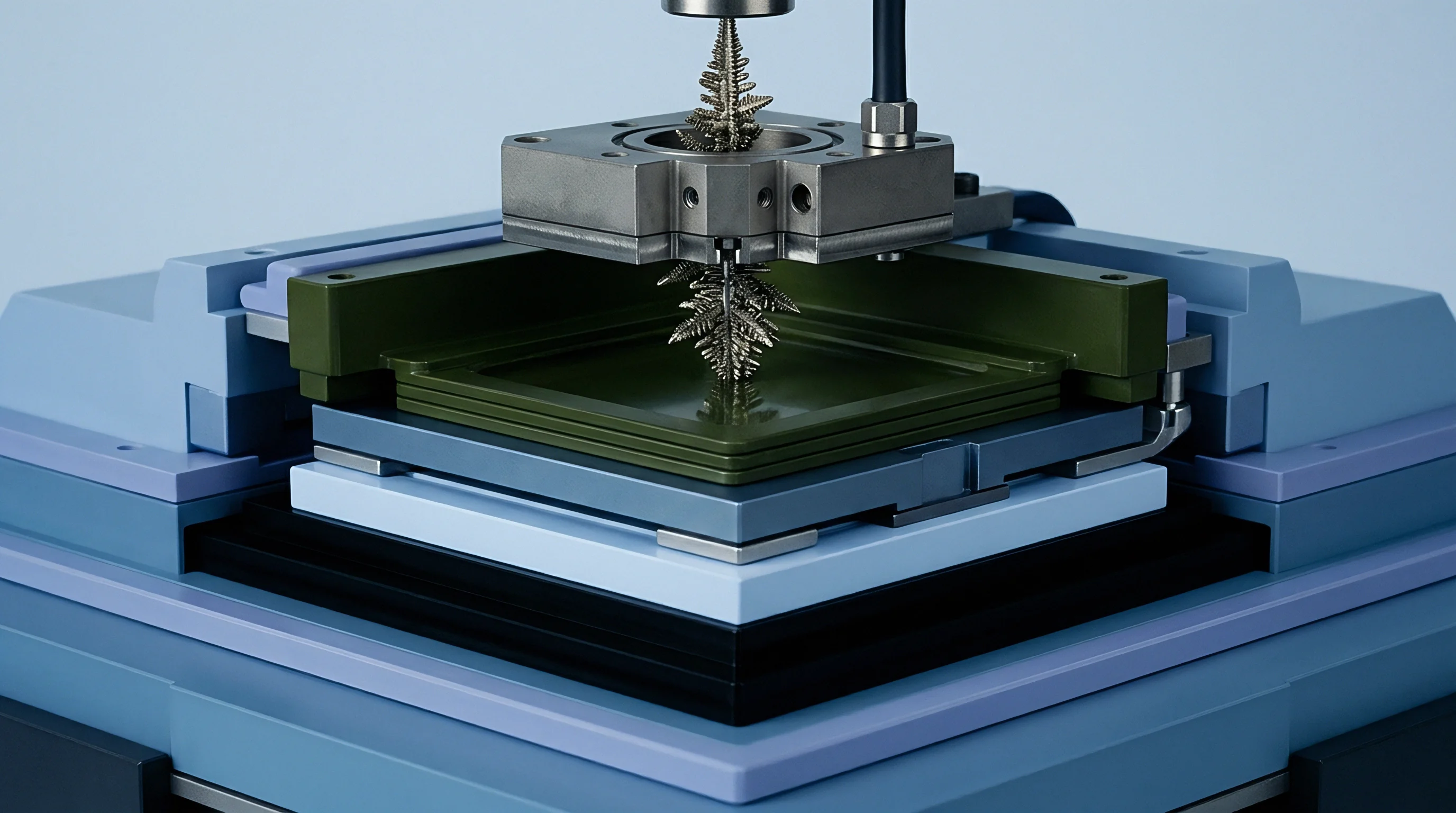
Voltage relaxation monitoring represents the most accessible online diagnostic technique for field applications. When charging current stops at sub-zero temperatures, terminal voltage drops rapidly due to the elimination of ohmic and charge-transfer overpotentials. If metallic deposits exist on the anode surface, the open-circuit voltage displays a characteristic inflection point or prolonged mixed-potential plateau as the metallic phase chemically re-intercalates into the underlying graphite lattice.
Operational Voltage Relaxation Signatures
Analysis of differential voltage curves during post-charge rest periods provides direct evidence of surface metal dynamics. During the initial relaxation phase, a coexisting two-phase state ~ consisting of metallic surface lithium and partially lithiated graphite ~ fixes the anode potential near zero volts versus the reference electrode. This thermodynamic pinning produces a flattened voltage plateau in the overall cell relaxation curve.
The duration of this plateau correlates directly with the total mass of reversible metallic deposit present on the electrode sheets.
Differentiating relaxation voltage with respect to time yields a distinct peak corresponding to the exact moment when the metallic surface phase completely disappears. The time required to reach this peak, known as the relaxation time constant, increases linearly with the quantity of plated metal. Processing these relaxation signals inside the battery management system enables automated detection of sub-zero plating events, allowing system controllers to automatically modify charging parameters before permanent damage occurs.
Standard contract clauses governing cell supplier warranties require documented proof that terminal voltage relaxation derivatives were continuously monitored during any sub-zero charging operational window.
What Quantitative Threshold Signals Reversible Stripping versus Permanent Plating?
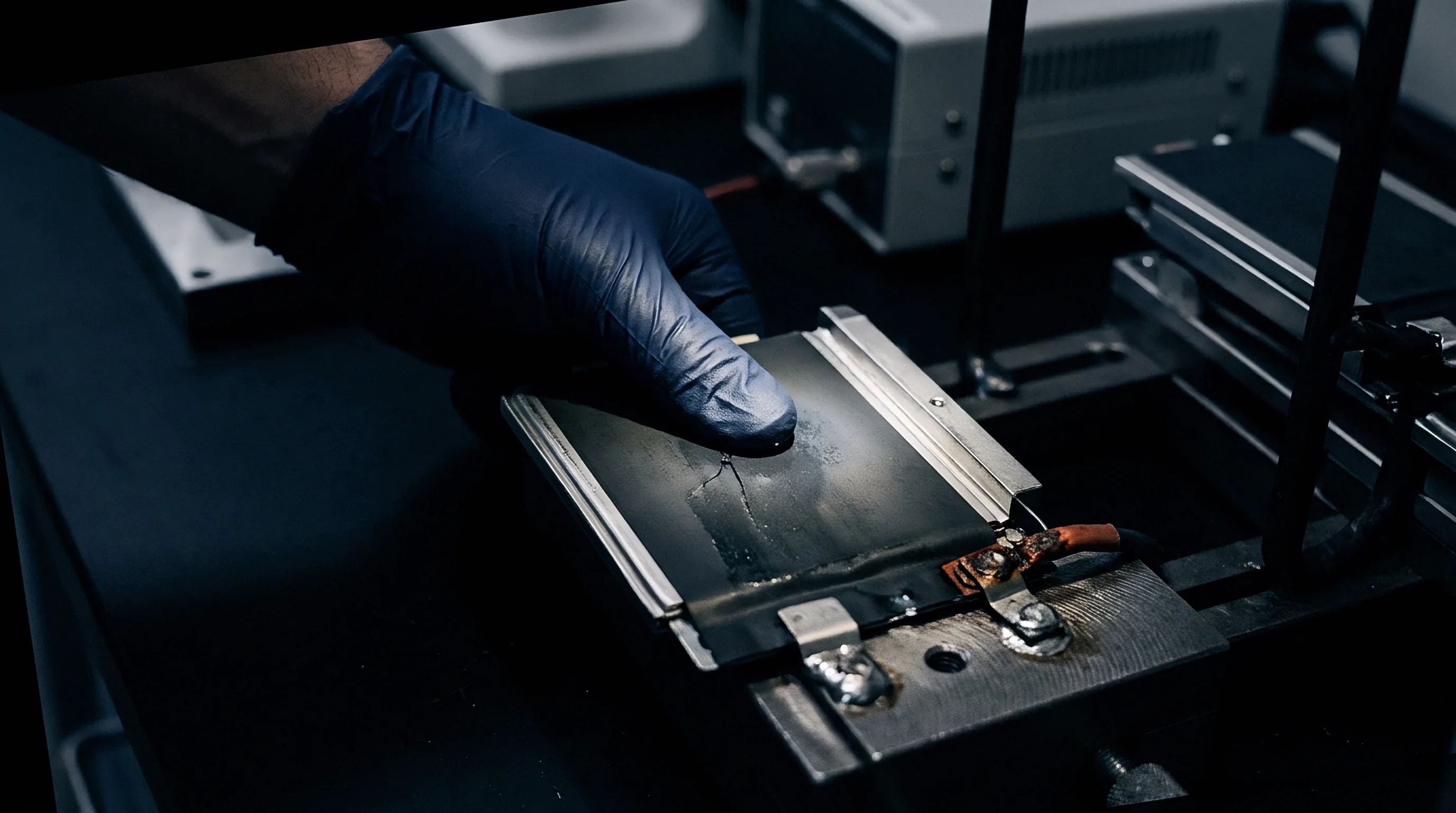
High-precision coulometry offers an accurate quantitative method for evaluating low-temperature plating kinetics in laboratory testing environments. By measuring the precise ratio of discharge capacity to charge capacity during controlled sub-zero cycles, analysts can isolate the exact current thresholds that trigger non-intercalative reactions. Coulombic efficiency drops abruptly below 98 percent when metallic reduction begins dominating the electrode surface balance.
In addition to coulometric measurement, operando electrochemical impedance spectroscopy provides clear real-time structural diagnostic signatures. At low temperatures, the appearance of a secondary high-frequency semicircle in the Nyquist plot indicates the presence of a distinct metallic surface film overlaying the native solid electrolyte interphase. Tracking the growth and decay of this specific impedance arc during relaxation phases allows researchers to measure the exact rate at which surface deposits re-intercalate into the host carbon matrix.
Acoustic emission monitoring has surfaced as another powerful non-destructive verification tool. The physical nucleation and growth of metallic deposits, combined with structural cracking of the original interphase layer under mechanical strain, generates distinct micro-acoustic pulses within the cell envelope. Piezoelectric sensors mounted on the exterior casing of pouch or prismatic cells detect these high-frequency acoustic events, providing real-time warning of structural micro-damage during aggressive low-temperature charging routines.
While localized heating is often cited as mitigating brief sub-zero voltage spikes beyond thermodynamic boundaries, high-precision laboratory testing demonstrates that transient overpotential dips lasting less than thirty seconds still initiate metallic nucleation sites that persist and grow during subsequent standard charging regimes.
Deploying robust diagnostic algorithms within operational battery systems requires balancing computational overhead against the sampling frequency needed to capture subtle voltage relaxation derivatives accurately.

Chemistry
Modifying cell chemistry provides a direct path toward reducing interfacial impedance and expanding the safe operational window for low-temperature charging. Tailoring liquid electrolyte formulations, adjusting active material surface coatings, and integrating alternative anode active materials alter the fundamental thermodynamic and kinetic barriers governing sub-zero performance. Sourcing engineers must evaluate these chemical options against baseline trade-offs in room-temperature cycle life, elevated-temperature stability, and total cell manufacturing cost.
Electrolyte engineering focuses on lowering solvent freezing points, decreasing room-temperature viscosity, and altering the cation solvation shell structure. Standard carbonate mixtures dominated by ethylene carbonate display high melting points and strong coordination bonds with cations. Replacing high-melting-point bulk solvents with low-viscosity linear esters or fluorinated carbonates significantly boosts ionic mobility and lowers desolvation energy requirements under freezing ambient conditions.
Low Viscosity Solvent Formulations and Additive Packages
Incorporating co-solvents such as ethyl acetate, methyl propionate, or fluorinated cyclic carbonates lowers the glass transition temperature of the bulk liquid phase, allowing efficient ion transport down to minus forty degrees Celsius. These specialized solvents reduce the hydrodynamic radius of solvated ions and weaken the electrostatic attraction within the cation-solvent complex. The activation energy required for desolvation drops by up to 35 percent in optimized low-temperature formulations, maintaining higher exchange current densities at the graphite interface.
Functional electrolyte additives play an equally important role by altering the chemical composition of the solid electrolyte interphase. Fluorinated additives, including fluoroethylene carbonate and difluoroethylene carbonate, form an inorganic-rich interphase film dominated by lithium fluoride and lithium carbonate species. This inorganic-rich layer exhibits a significantly lower activation barrier for ion transport compared to organic-dominated interphase films, facilitating rapid cation passage into the anode structure even under severe sub-zero thermal stress.

Alternative Anode Materials and Lattice Intercalation Kinetics
Sub-zero charge acceptance can also be enhanced by changing the underlying anode active material structure. Substituting standard graphite with hard carbon, silicon-carbon composites, or lithium titanate completely alters the thermodynamic reaction landscape. Hard carbon materials feature expanded interlayer spacing and amorphous structural domains that remove the high kinetic barrier associated with classic graphite staging transitions.
Lithium titanate operates at a nominal intercalation potential of 1.55 volts versus the metallic lithium reference state. Because this equilibrium potential sits more than one full volt above the metallic reduction threshold, lithium titanate cells can undergo extremely aggressive fast charging at minus thirty degrees Celsius without experiencing any thermodynamic risk of metallic surface plating. The low volumetric energy density of lithium titanate limits its commercial viability in space-constrained applications, forcing system designers to carefully balance energy density constraints against low-temperature operational mandates.
- Electrolyte Solvent Selection Formulations utilizing low-viscosity carboxylate esters maintain high liquid ionic conductivity down to minus forty degrees Celsius, directly lowering liquid-phase mass transport resistance within porous electrodes.
- Interphase Modulating Additives Inclusion of fluoroethylene carbonate generates a highly conductive inorganic lithium-fluoride surface layer that reduces interfacial charge-transfer impedance under low thermal conditions.
- Anode Surface Coatings Applying nano-thin layers of amorphous carbon or atomic-layer deposited oxides onto graphite particles reduces catalytic solvent breakdown and creates artificial fast-conduction channels for incoming cations.
- Alternative Active Materials Transitioning to hard carbon or lithium titanate anode chemistries alters thermodynamic potential boundaries, eliminating the fundamental driver of sub-zero metallic reduction.
Manufacturing costs increase substantially when integrating specialized low-temperature electrolyte mixtures and advanced surface-coated active materials into production lines. Fluorinated solvents and high-purity additives command significant price premiums over commodity carbonate solvents, directly elevating the baseline cost per kilowatt-hour at the cell level. Procurement specifications must clearly quantify the operational environment to avoid over-specifying expensive chemical packages for applications that operate primarily within climate-controlled enclosures.
Electrolyte additives optimized exclusively for low-temperature transport frequently destabilize the electrode interphase during high-temperature storage phases, leading to accelerated gas generation and severe capacity loss above fifty degrees Celsius.
Specification
Translating sub-zero electrochemistry principles into robust commercial procurement documents requires translating kinetic parameters into enforceable testing mandates and clear warranty boundaries. Standard manufacturer datasheets rarely specify safe charging current limits across sub-zero temperature intervals, often providing only generic operating ranges that obscure high-stress degradation risks. Sourcing practitioners must construct strict testing protocols and explicit contractual performance definitions to protect financial investments in cell inventory.
Cell qualification programs designed for cold-climate applications must evaluate maximum continuous and peak charging currents across ten-degree temperature intervals from plus twenty-five degrees Celsius down to minus thirty degrees Celsius. Relying on room-temperature capacity retention metrics to project sub-zero operational lifespan guarantees high field failure rates, as sub-zero degradation modes operate under distinct kinetic rules and display non-linear accelerated capacity loss curves.

Procurement Protocols for Low Temperature Performance
A comprehensive cell specification must mandate explicit step-down charging matrices within the battery management system software guidelines. Charging profiles must enforce progressive current reductions as cell internal temperature drops, matching applied current density to the calculated exchange current density of the specific anode chemistry. Qualification testing mandates require baseline cells to undergo a minimum of 300 continuous sub-zero charge-discharge cycles at the lower limit of the specified operating window followed by destructive physical post-mortem examination to verify the complete absence of surface plating.
Post-mortem verification protocols must require optical and scanning electron microscopy of harvested anode sheets extracted from fully charged cells at low temperatures. Inspection parameters dictate that any visible metallic surface deposits, micro-dendritic structures, or localized gray-white surface discoloration constitute an automatic qualification failure, regardless of whether the cell maintained its nominal electrical capacity during the preceding cycle regime.
| Standard / Protocol | Standard Test Conditions | Field Failure Blind Spot | Mandated RFQ Specification Enhancement |
|---|---|---|---|
| UN 38.3 (Transport) | Thermal cycling (-40°C to +75°C, open circuit) | Evaluates passive thermal shock, not low-temperature charge plating | Mandate active high-current charging cycles at -20°C prior to mechanical vibration testing |
| IEC 62660-3 (EV Safety) | Cold ambient discharge, crush/impact testing | Does not quantify metallic lithium accumulation during low-temp charge | Include post-charge differential capacity and relaxation voltage analysis requirements |
| UL 2580 (EV Batteries) | Environmental chamber charge/discharge per OEM spec | OEM specs often omit long-term sub-zero micro-dendrite growth checks | Specify mandatory destructive physical post-mortem teardown after 300 sub-zero cycles |
| ISO 12405-4 (EV Systems) | Low-temperature performance characterization | Focuses on available power output, ignoring irreversible capacity loss | Add high-precision coulometry and lifetime differential capacity retention metrics |
Supply agreements must explicitly allocate warranty liability arising from low-temperature operational degradation. Cell manufacturers routinely attempt to exclude sub-zero capacity loss from standard warranty coverage by classifying cold-temperature degradation as operational abuse or unauthorized fast charging. Sourcing contracts must firmly define valid operational parameters based on verified BMS telemetry records, binding the supplier to full performance guarantees whenever operating logs demonstrate compliance with agreed thermal step-down charging matrices.
Warranty Risk Allocation and Sub-Zero Operation Clauses
Structuring commercial contracts to cover low-temperature performance liabilities requires precise definitions of thermal boundaries and clear measurement protocols. Warranty clauses should specify that cell capacity degradation or internal resistance growth occurring under verified sub-zero operational profiles constitutes a product defect if the cell operating logs prove that applied charging currents remained within the contracted step-down limits. The clause must clearly detail the arbitration procedure, including the selection of an independent testing laboratory authorized to perform teardown analysis and electrochemical impedance diagnostics.
Risk management frameworks must also account for landed cost impacts associated with low-temperature failure rates. Premature pack failure in cold-climate deployments triggers substantial field service, warranty replacement, and logistics expenses that far exceed the initial cell purchase cost. Integrating rigorous sub-zero qualification requirements into the initial RFQ stage ensures that chemistry trade-offs, thermal management system costs, and long-term warranty exposures are fully quantified before issuing purchase orders to manufacturing partners.
Standard master supply agreements executed for cold-climate battery integration shall incorporate Schedule C Sub-Zero Operating Limits, specifying that any unrecoverable capacity loss exceeding five percent within 200 continuous cycles conducted at minus fifteen degrees Celsius under agreed step-down charging profiles automatically triggers full vendor reimbursement for affected cell lots and associated field replacement labor costs.