Meaning
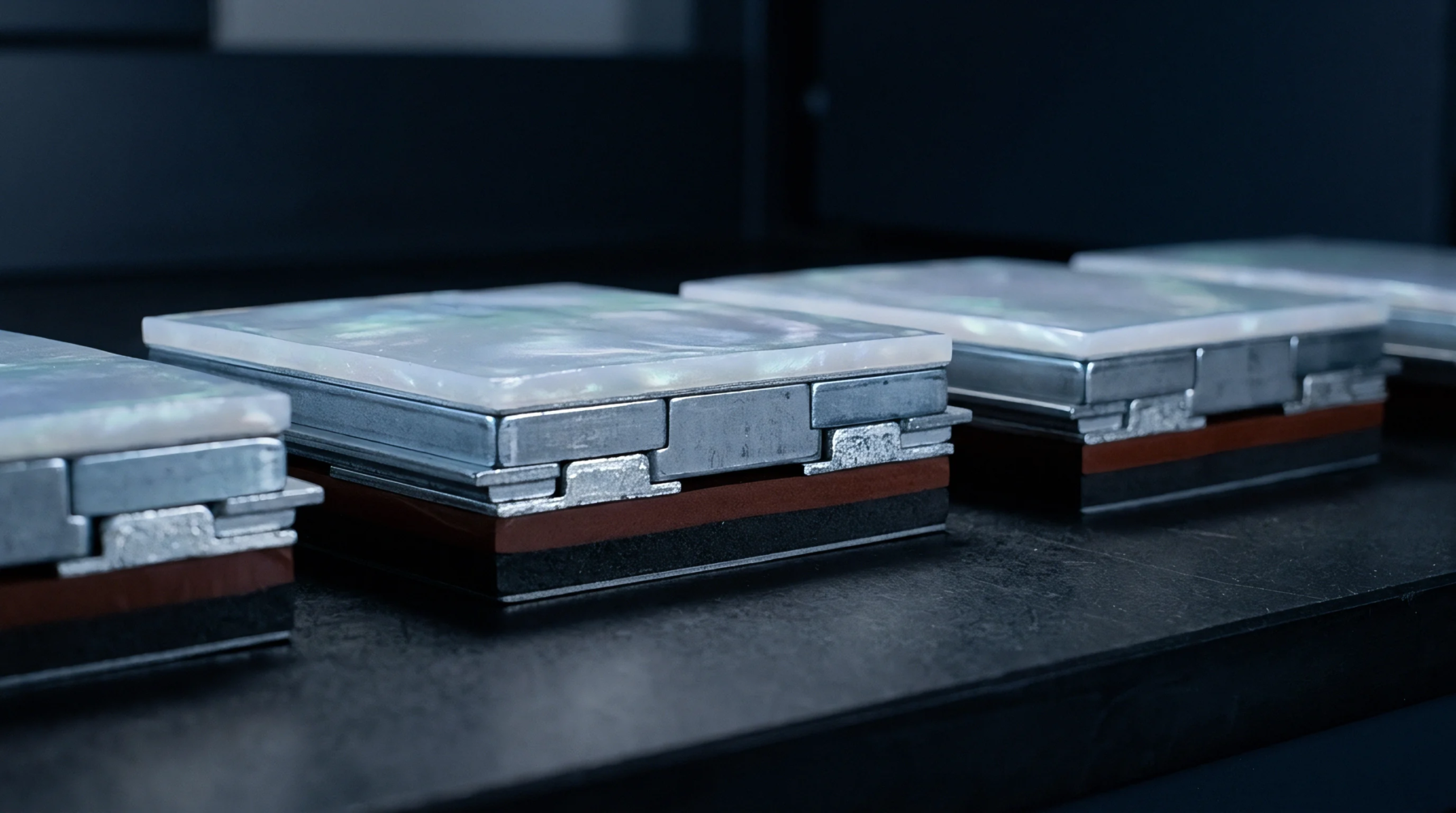
Cyclic stress application degrades structural materials over repeated loading sequences below their ultimate tensile strength. In battery pack manufacturing, mechanical fatigue causes micro-cracking within current collectors and tab welds subjected to continuous road vibration and repeated thermal expansion. The mechanism governs progressive mechanical damage in thin metallic foils and structural housing adhesives exposed to fluctuating stress amplitudes over prolonged service lifetimes.
This physical limit stops applying when loads exceed yield strength in a single static load event.
Crack Initiation
Localized plastic deformation generates microstructural dislocations along crystallographic slip bands during initial vibration cycles. As mechanical fatigue advances through the material lattice, microscopic voids coalesce to form surface cracks that concentrate localized stress. Ultrasonic welding zones near pouch cell tabs exhibit high susceptibility due to microstructural changes induced during join operations.
Structural Assessment
Accelerated vibration testing applies sinusoidal and random power spectral density profiles to battery modules on electrodynamic shakers. Test protocols track electrical resistance increases across joints to detect early fatigue damage before complete structural separation occurs. Finite element analysis models local strain distributions to identify stress concentration points in copper and aluminum current collectors.
Lifetime Prediction
Stress-life curves establish the endurance limit where components withstand indefinite cyclic loading without failure. Incorporating mechanical fatigue data into mechanical design tools prevents early field failure of high-voltage interconnects in electric vehicles. Materials selection balances yield strength against ductility to maximize operational life under cyclic loading environments.