Meaning
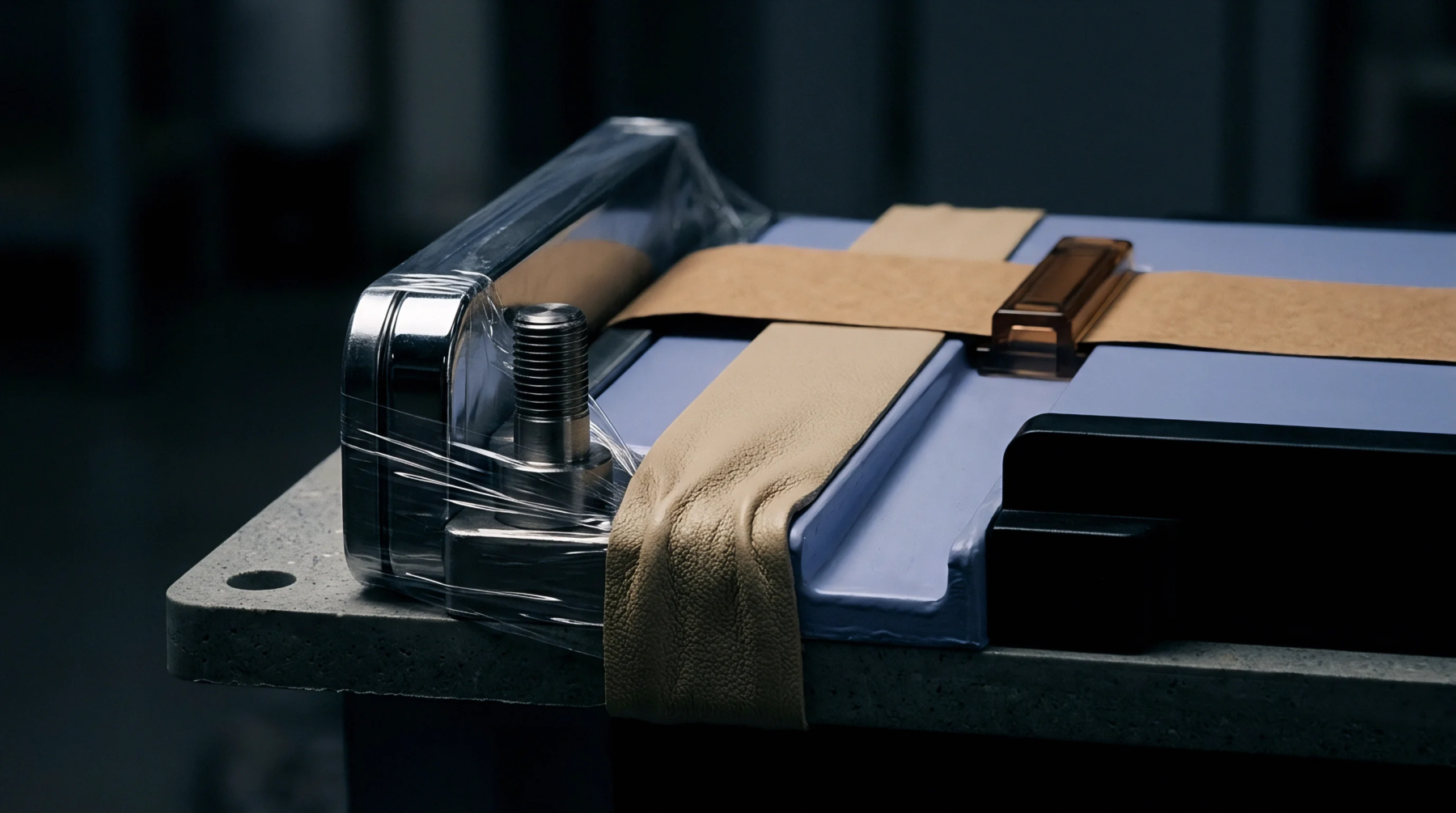
Compressive force is applied to battery modules during the assembly process to maintain continuous contact between components and limit cell expansion. This initial compression, referred to as mechanical pre-load, is established by tightening the end plates and side bands around the cell stack. It holds the cell assembly securely against vibrations while ensuring that internal electrical contact remains uniform.
Compressive Strain
Spring-loaded clamps or elastomeric sheets are compressed during module construction to achieve the target load. This initial mechanical pre-load is designed to fall within a safe window that prevents the foam pads from bottoming out during cell expansion. If the initial force is too low, the foam will not exert enough pressure, allowing the cells to move and delaminate over time.
Sourcing managers must purchase elastomeric pads with consistent spring rates to ensure that the assembly line can repeatably achieve this target force.
Cell Degradation
Excessive pressure on the cell face accelerates the degradation of the anode and cathode structure. Applying the correct mechanical pre-load prevents localized areas of high current density, which would otherwise lead to lithium plating and rapid capacity loss. The compression must be uniform across the cell face to avoid creating high-stress areas that could puncture the separators.
Design Integration
Module housing brackets must be rigid enough to withstand the increased force as the cells swell over years of use. Engineers use structural steel or aluminum bands to maintain the mechanical pre-load without flexing. This design ensures that the compression remains stable through the full operating temperature range of the vehicle.