Meaning
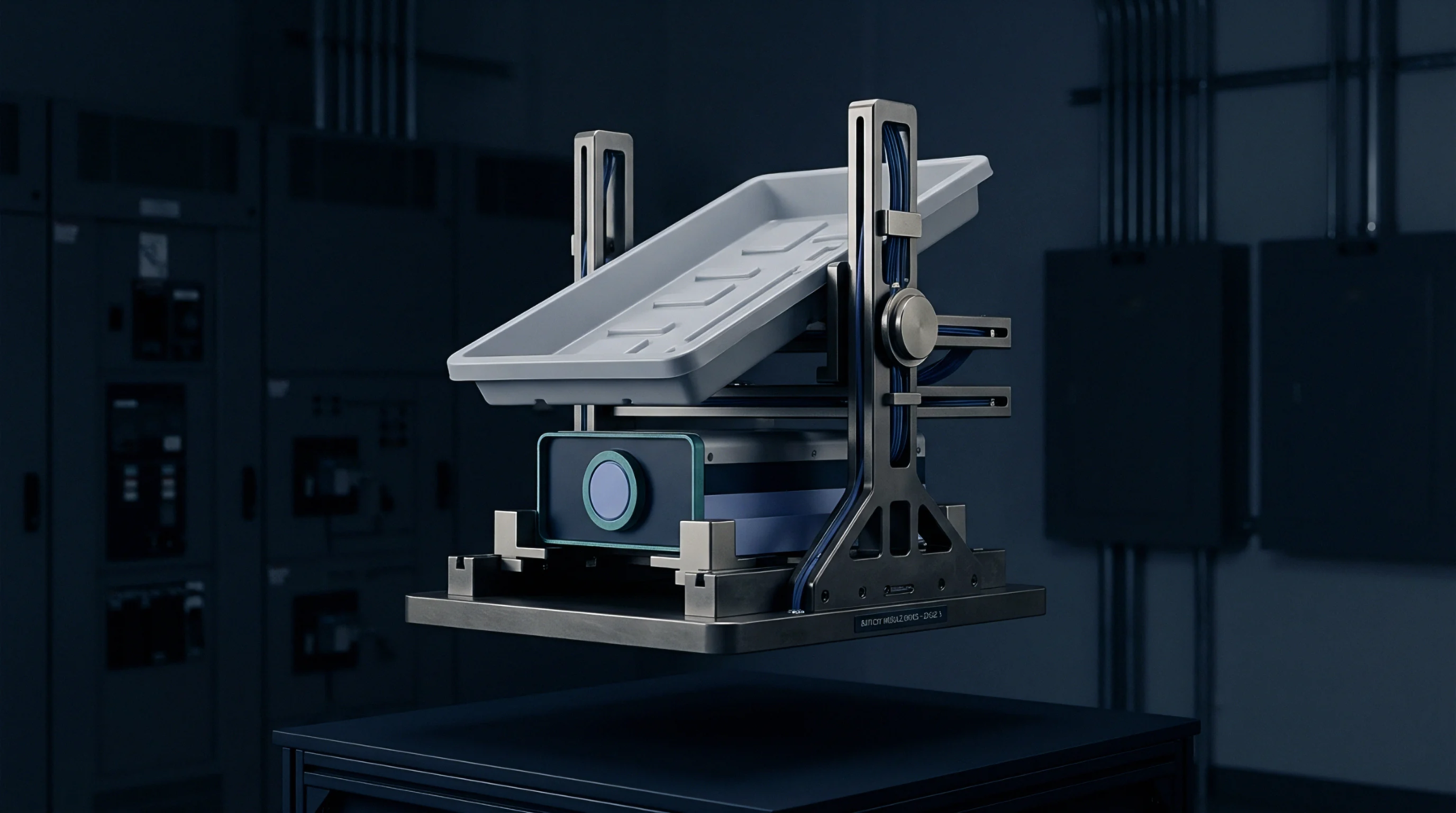
Advanced diagnostic technique utilizes light signals transmitted through embedded fibers to monitor internal battery conditions during cycling. Through operando fiber optic sensing, researchers capture real-time temperature and strain changes inside the sealed cell. The application requires specialized fiber lines that survive the harsh chemical environment of the electrolyte.
This method provides direct insight into the physical changes that drive degradation.
Sensing Mechanism
Light passing through a fiber Bragg grating is reflected at specific wavelengths that shift with temperature and physical stretch. These shifts are measured with high frequency to map the internal state of the cell. The data distinguishes between mechanical expansion and thermal changes during fast charging.
This real-time separation is impossible with external sensors.
Integration Challenge
Inserting delicate glass fibers into a pouch cell requires specialized sealing techniques to prevent electrolyte leakage. The fibers must not react with the active materials or disrupt the normal ion flow. Engineers must ensure the seal remains intact throughout the cycling lifetime of the test cell.
This high-level complexity limits the technique to research and development labs.
Strategic Value
The detailed internal data allows manufacturers to optimize cell chemistry and mechanical structural designs. Sourcing groups rely on these insights to select the most robust battery architectures for next-generation platforms. This testing reduces the development cycle by identifying failure modes early.
It ensures that only proven designs move to mass production.