Meaning
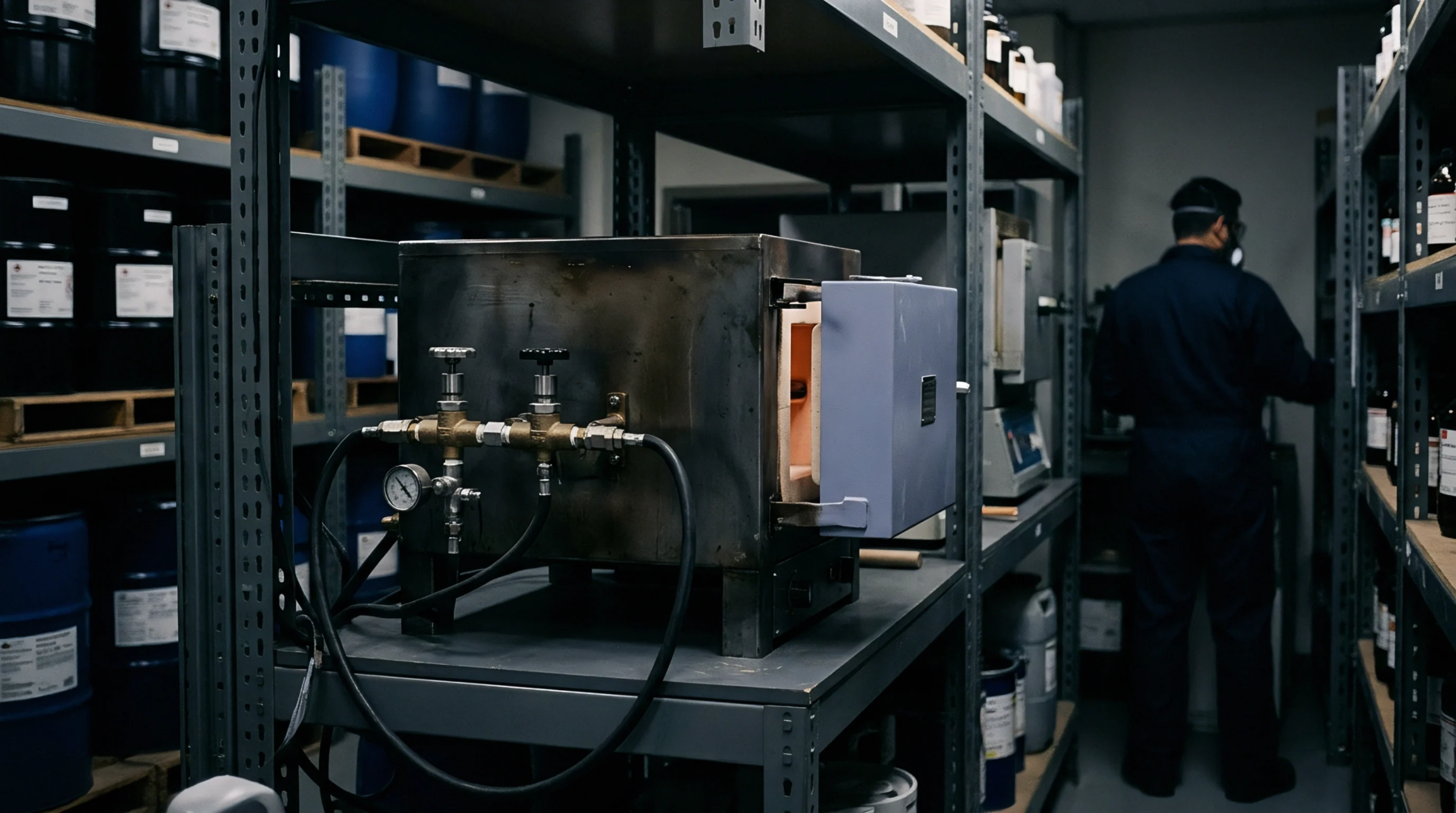
High-temperature conditioning of raw chemical precursors stabilizes the structural lattice of cathode active materials before they undergo lithiation. Precursor thermal processing governs the removal of volatile contaminants and the phase adjustment of metal hydroxides or oxides to prevent structural defects in the finished battery powder. It establishes the particle density and moisture content required for subsequent synthesis stages.
Thermal Dynamics
Controlled heat application drives the conversion of nickel, cobalt, and manganese precursors into a uniform crystalline arrangement. This mechanism relies on precise atmospheric management to prevent premature oxidation of metal ions while moisture exits the lattice structure. Cooling rates following the heat soak determine the grain boundaries inside each individual particle.
Stable cooling prevents stress fractures that otherwise damage the ionic conductivity of the finished electrode.
Production Logic
Equipment operators utilize kiln residence time to ensure the complete breakdown of precursors into refined intermediate solids. Consistent throughput depends on the temperature uniformity across the reactor chamber rather than simply increasing the furnace energy. Variations in the kiln heat distribution force shifts in the particle morphology which complicates the later blending process.
Optimized energy delivery reduces the frequency of batch rejections for impurity spikes.
Quality Control
Analytical checks for residual hydroxide groups provide verification that the reaction environment achieved the intended mineral state. Technicians confirm that the physical properties of the treated powder fall within the specified porosity range for electrolyte absorption. Proper heat management minimizes the presence of loose surface debris that triggers parasitic reactions inside the assembled cell.
Tight control over the calcination window ensures the consistency of the electrochemical performance of the battery.