Meaning
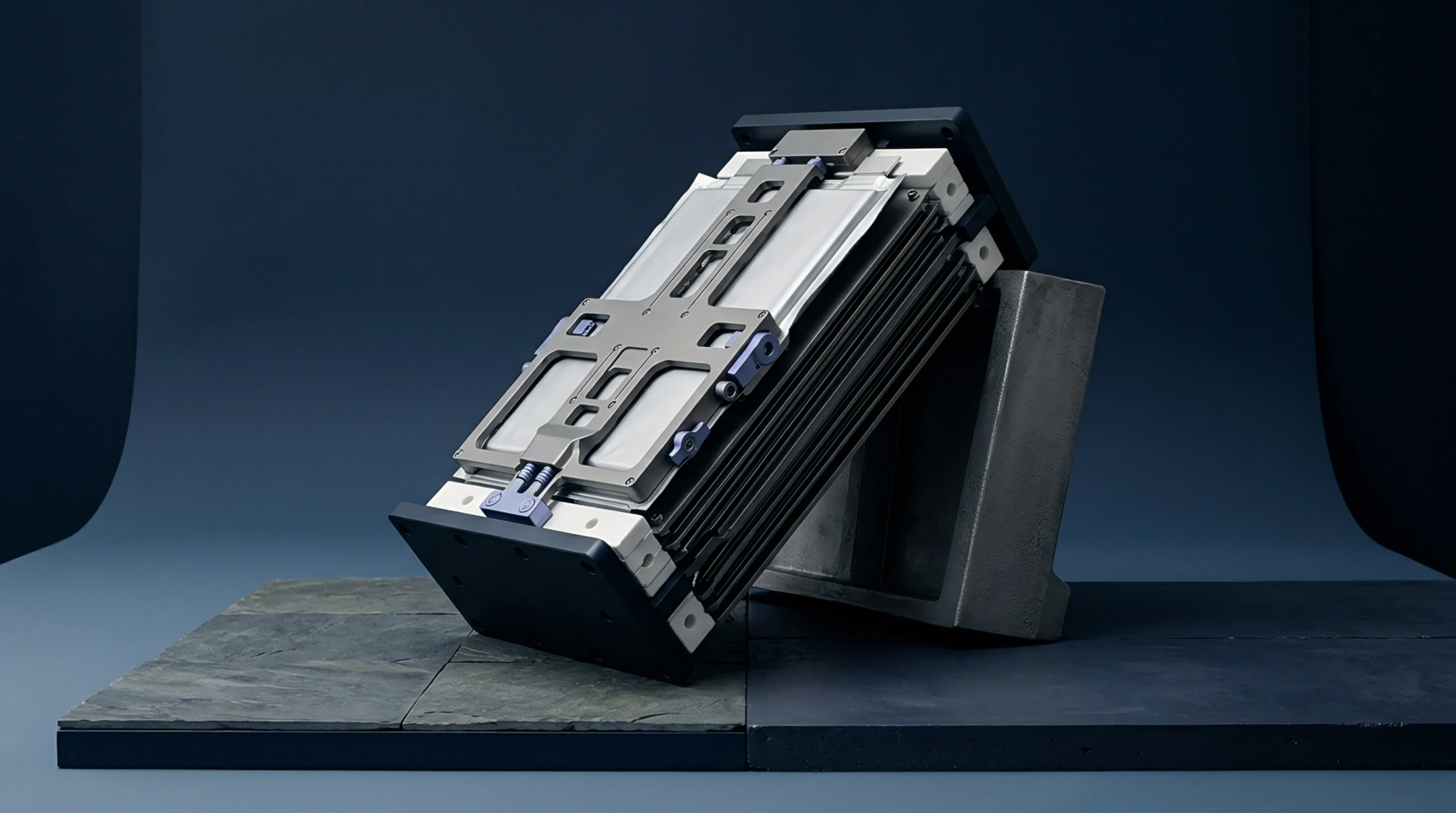
Prismatic cell compression identifies the mechanical constraint applied to the wide, flat faces of a rectangular battery housing to maintain internal electrode alignment during repeated charge and discharge cycles. This prismatic cell compression ensures that the interior stack of layers remains under a consistent load to prevent delamination of the anode and cathode surfaces. Proper application of force limits the expansion of internal components which otherwise leads to decreased ion transport efficiency or internal short circuits.
Mechanical constraints are calculated based on the maximum thickness increase the cell experiences when lithium ions intercalate into the graphite anode.
Physical Requirement
Design engineers define the necessary force in newtons per square centimetre based on the specific chemistry and current collector geometry of the battery unit. Excessive pressure damages the separator material and triggers thermal runaway incidents. Insufficient pressure allows the stack to vibrate or bow during transport and operational use, which accelerates degradation.
Procurement teams require verification of this force threshold from suppliers to ensure pack integration safety.
Structural Constraint
Battery pack frames provide the necessary rigid boundaries to keep the cells in place while accounting for thermal expansion and gaseous buildup. Engineers select materials for the module chassis that resist the outward force of the cells over the entire service life of the energy system. Rigid end plates and high strength fasteners perform the task of holding the stack at the desired dimension.
These structures convert the swelling energy into static load without deforming the pack enclosure.
Performance Limitation
Electrochemical capacity retention relies on the uniform application of load across the entire surface of the cell housing. Nonuniform pressure creates localized areas of high current density which promote lithium plating and premature cycle failure. Advanced monitoring systems sometimes measure the load at the end plate to detect abnormal swelling that signals internal degradation.
Uniform compression remains the primary method for extending the operational longevity of large format lithium ion battery modules.