Meaning
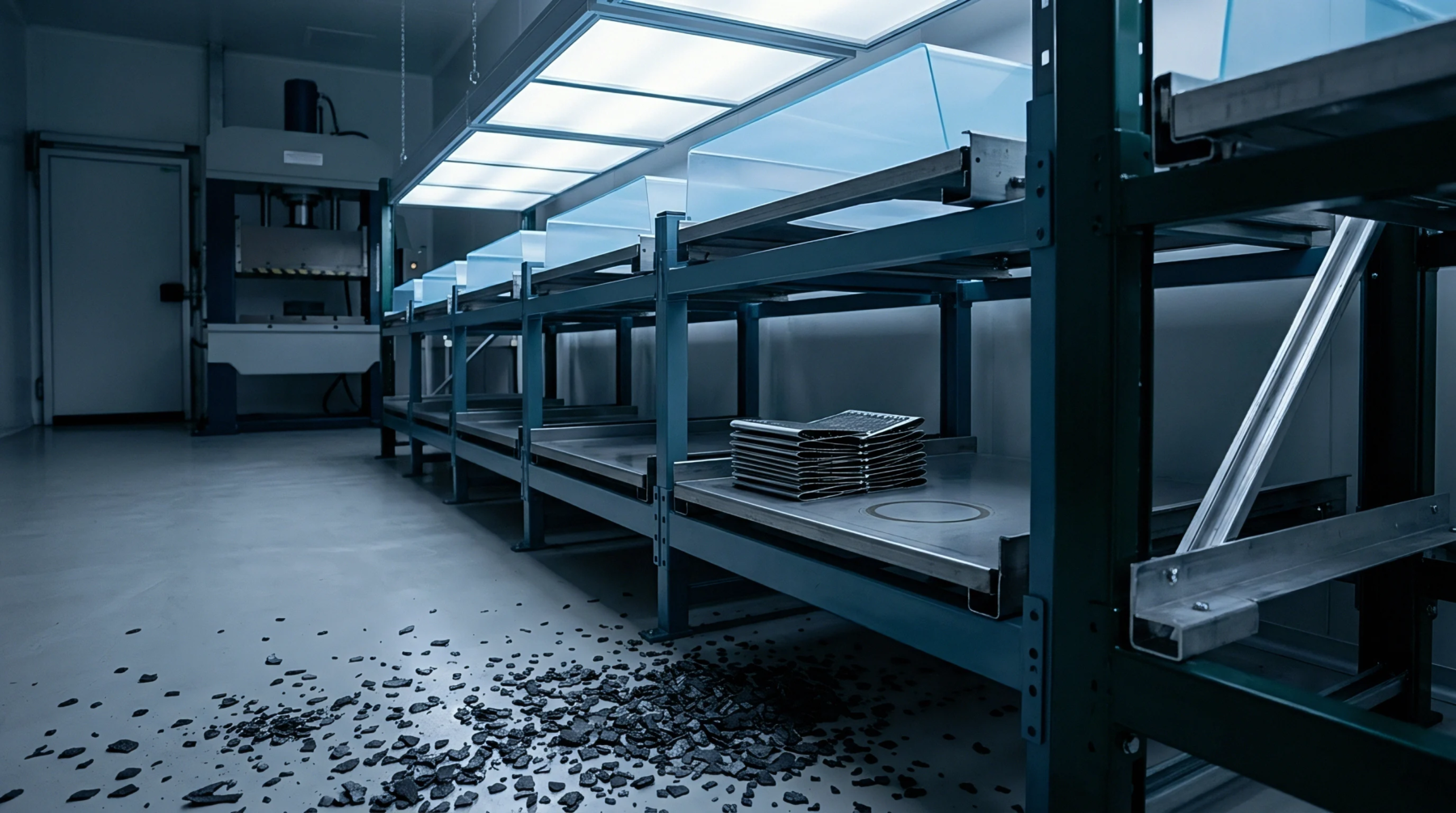
Hazardous industrial byproducts consisting of extremely small, highly reactive metallic particles generated during battery cell processing and recycling define the safety protocols of production facilities. These hazardous materials, known as pyrophoric fines, can spontaneously ignite upon contact with air due to their high surface area and reactivity. The term applies to particulate metals like lithium and lithium-intercalated carbon during mechanical shredding or dry milling but does not cover stable oxide powders.
Controlling the accumulation of these particles is essential to prevent factory fires and explosions.
Combustion Hazard
Oxygen exposure is the primary trigger for the spontaneous combustion of these reactive metallic particles. When pyrophoric fines are exposed to ambient air, the rapid oxidation reaction generates intense heat that can ignite nearby combustible materials. This hazard is particularly acute during the shredding phase of lithium-ion battery recycling, where lithium metal or active carbon-lithium compounds are exposed.
Shredding machines are operated under an inert gas blanket to prevent this contact. Dust extraction systems must continuously draw these particles away from the active processing area.
Mitigation Protocol
Wet scrubbing and liquid submersion represent the standard methods for neutralizing these reactive particles before disposal. The recovery systems direct the collected fines into a water or oil bath, which stabilizes the materials and prevents them from coming into contact with oxygen. Nitrogen purges are also maintained in the collection hoppers to ensure that any dry particles remain in a non-reactive environment.
This continuous inerting prevents the formation of explosive dust clouds. Specialized chemical treatments can also be used to convert the reactive metals into stable oxides. When the moisture levels in the storage area are kept below the critical threshold, the risk of hydrogen gas generation from reaction with moisture is also mitigated.
Facility Safety
Facility designs must incorporate specialized explosion-proof ventilation and automated fire suppression systems in areas where reactive dust is generated. Sensors detect changes in oxygen concentration and temperature to trigger emergency gas purges. Employees working in these zones wear anti-static clothing to prevent spark generation.
These measures are necessary to ensure the safety of the workforce and protect the facility.