Meaning
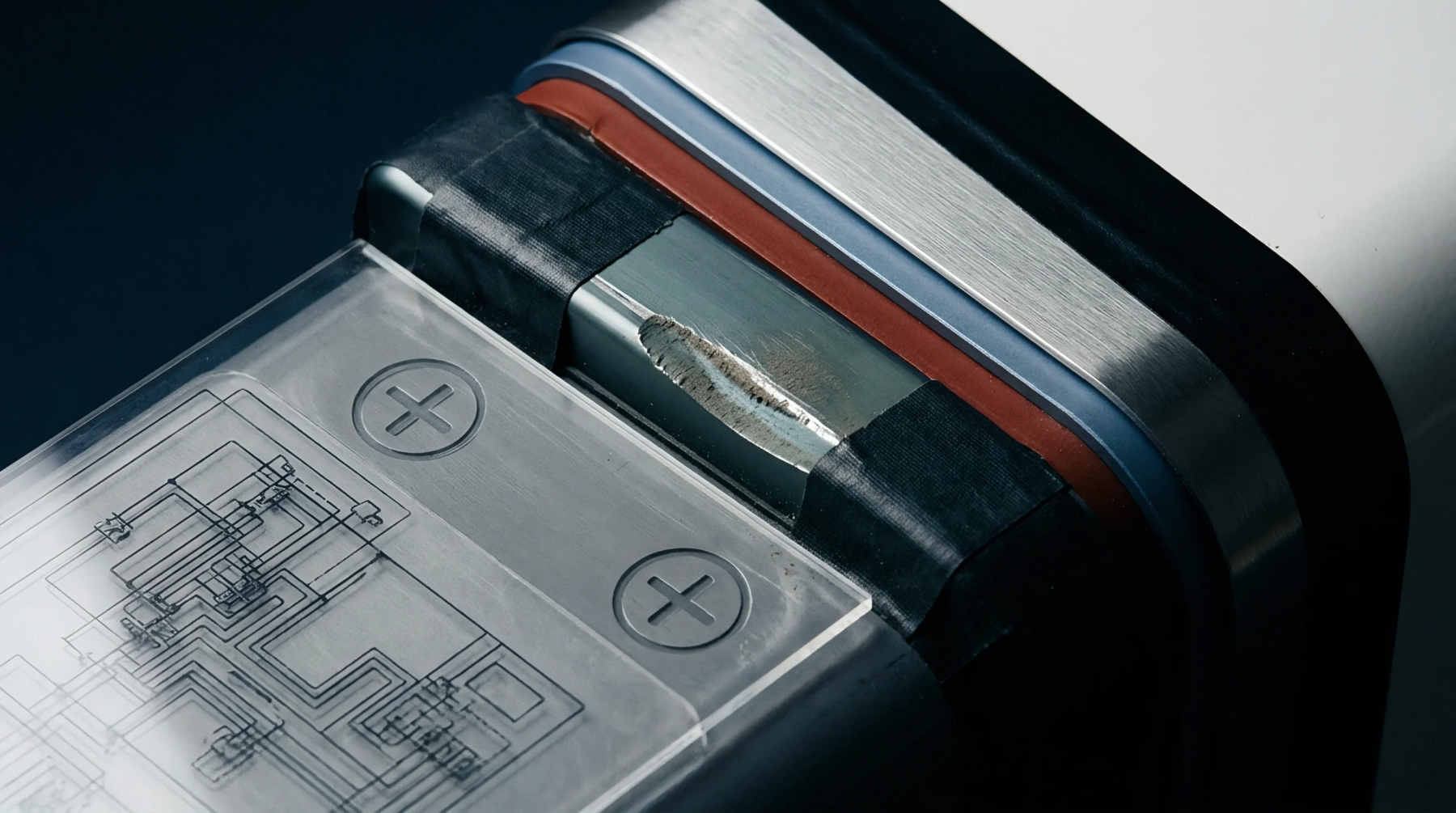
Controlled thermal, mechanical, or chemical relaxation eliminates internal locked-in stress fields formed during manufacturing, welding, cutting, or rapid thermal quenching processes. In the fabrication of battery enclosures, busbars, and pack structural trays, residual stress relief restores dimensional stability, improves fatigue life, and mitigates susceptibility to stress corrosion cracking. The metallurgical scope covers heating cycles below phase transformation thresholds or controlled plastic deformation that rebalances microstructural lattice strains.
This processing boundary stops at the relief of bulk macro-stresses, leaving original chemical composition unaltered.
Relaxation Mechanism
Thermal annealing allows localized dislocation climb and glide, converting high internal elastic strains into microscopic plastic creep deformation. Heating structural aluminum pack trays or steel casings to specific holding temperatures reduces the material yield strength, allowing internal stresses to relax against surrounding structures. Cooling ramps must follow controlled rates to avoid reintroducing thermal gradient stresses across varying component wall thicknesses.
Vibratory stress relief applies sub-resonant cyclic loads that mobilize localized dislocations without modifying surface coatings or material temper. Mechanical stretching provides stress relief for heavy rolled aluminum plates prior to extensive Computer Numerical Control machining.
Machining Stability
Unrelieved internal stresses cause distortion, warping, and dimensional drift when material is removed during high-speed milling operations. Battery enclosure sealing faces require flat surfaces to ensure liquid-tight ingress protection against water and environmental contaminants. Machining components with high residual stresses releases internal moments, pulling critical sealing surfaces out of specified geometric tolerances.
Pre-machining thermal relief steps preserve part dimensions, preventing expensive scrap rates during multi-axis machining of structural battery trays. Laser-welded battery pack covers require stress relief to prevent slow post-assembly distortion that stresses internal busbar joints.
Sourcing Verification
Procurement specifications mandate stress relief processing for cast, welded, or stamped structural battery components subjected to cyclic road loads. Process verification involves destructive hole-drilling strain gauge tests or non-destructive X-ray diffraction measurements to quantify remaining surface stress levels. Sourcing contracts outline required furnace run profiles, thermocouple placement requirements, and cooling gas standards to prevent uncontrolled alloy softening.
Failure to execute validated stress relief cycles leads to delayed structural fatigue cracking and pack enclosure breaches under field vibration environments. Certified residual stress limits remain mandatory validation checkpoints in battery mechanical hardware procurement contracts.