Meaning
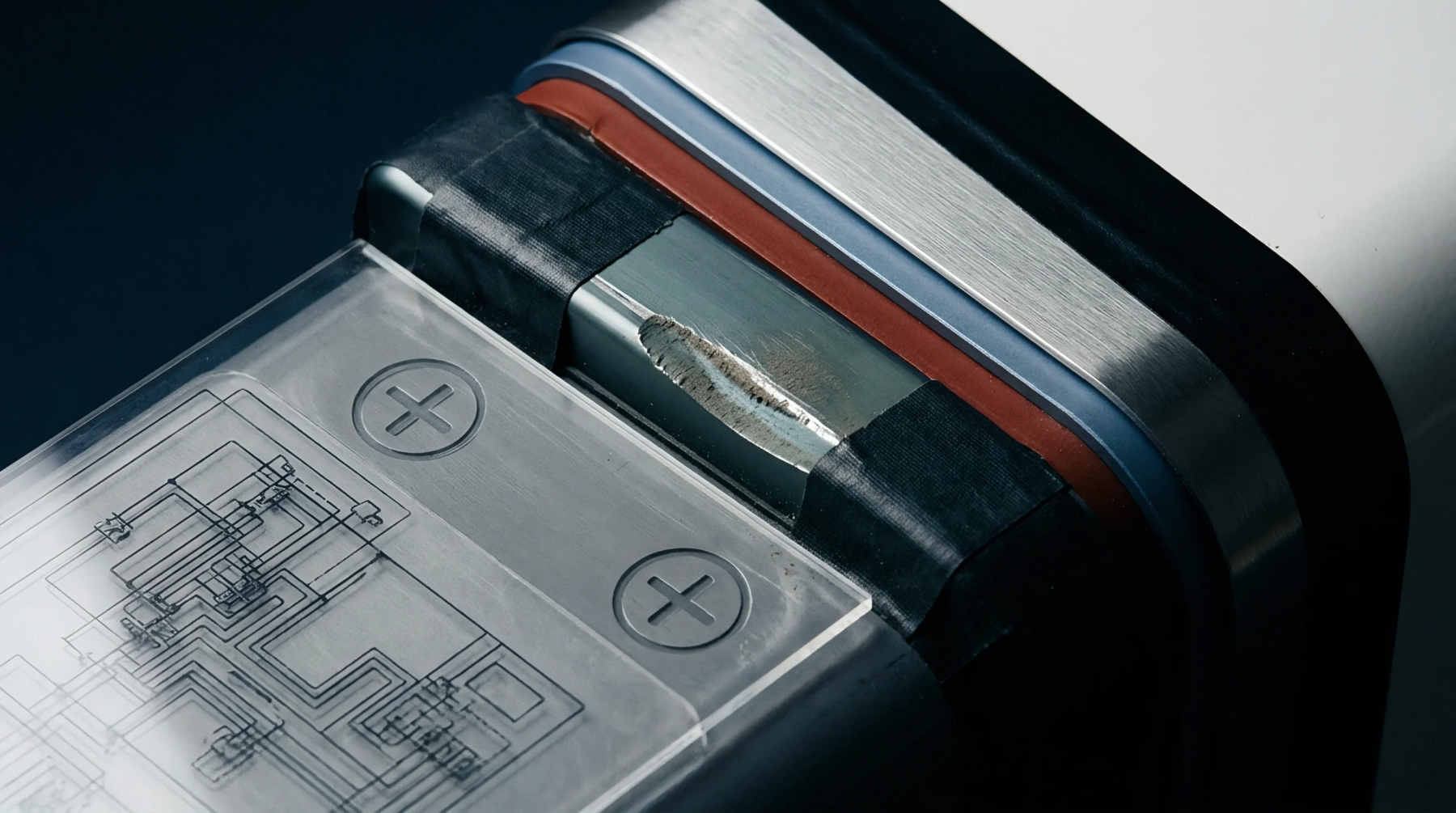
Localized dielectric breakdown in a battery cell refers to the electrical bridge formed when a conductive particle or burr penetrates the polymer isolation layer. This event, known as a separator puncture short, allows direct contact between the positive and negative electrodes. The resulting current spike generates rapid localized heating that can trigger thermal runaway if not controlled by the shutdown properties of the separator.
Failure Progression
Internal pressure from swelling electrodes pushes microscopic contaminants into the thin polymer film. Once a separator puncture short is established, the discharge of stored electrical energy generates intense heat at the microscopic contact point. This heat melts the surrounding polymer, expanding the defect area.
Safety Testing
Standardized cell trials evaluate the resilience of the membrane under extreme mechanical stress. To simulate a separator puncture short, technicians run nail penetration tests or apply localized mechanical loads to the cell casing. These tests verify whether the safety features can suppress a fire.
Material Optimization
Ceramic coatings applied to the polymer base substrate improve the thermal and mechanical strength of the layer. To prevent a separator puncture short, newer cell designs use thicker ceramic layers that resist penetration from metal burrs. This modification increases the mechanical puncture resistance without reducing ionic conductivity.