Separator Pore Structure Modification to Inhibit Cathode Metal Ion Transport
Sub-nanometer pore constriction and chelating coatings halt transition metal crossover to preserve graphite anodes without exceeding cell impedance limits.

Sieve
Dissolved manganese migrates directly toward the graphite anode. In lithium-ion cells running nickel-manganese-cobalt (NMC) or lithium manganese iron phosphate (LMFP) cathode chemistry, high-voltage excursions and elevated storage temperatures cause divalent manganese ions (Mn2+) to detach from the positive electrode. Once solvated in the liquid electrolyte, these ions diffuse across the porous separator and reach the lithiated graphite interface.
Direct reduction of Mn2+ on the negative electrode destabilizes the solid electrolyte interphase (SEI) by displacing lithium ions from their coordination sites. Reconstructing this passivation layer consumes active lithium inventory, increases cell impedance, and accelerates capacity fade.
Cathode metal cross-contamination drives accelerated capacity loss. Standard microporous polyolefin separators, whether wet-process polyethylene (PE) or dry-process polypropylene (PP), feature nominal pore diameters between 30 and 100 nanometers. Solvated manganese ions measure approximately nine angstroms across, meaning the solvated species passes through commercial separator pores without physical resistance.
Even with its hydrodynamically bound solvation sheath of ethylene carbonate and dimethyl carbonate molecules coordinated around the central transition metal ion, the outer diameter remains well below 1.5 nanometers. Relying solely on standard polyolefin pore distributions offers zero steric impediment to dissolved transition metals.
A separator pore structure scaled above the solvation radius permits unhindered transition metal transport across the internal cell cavity.
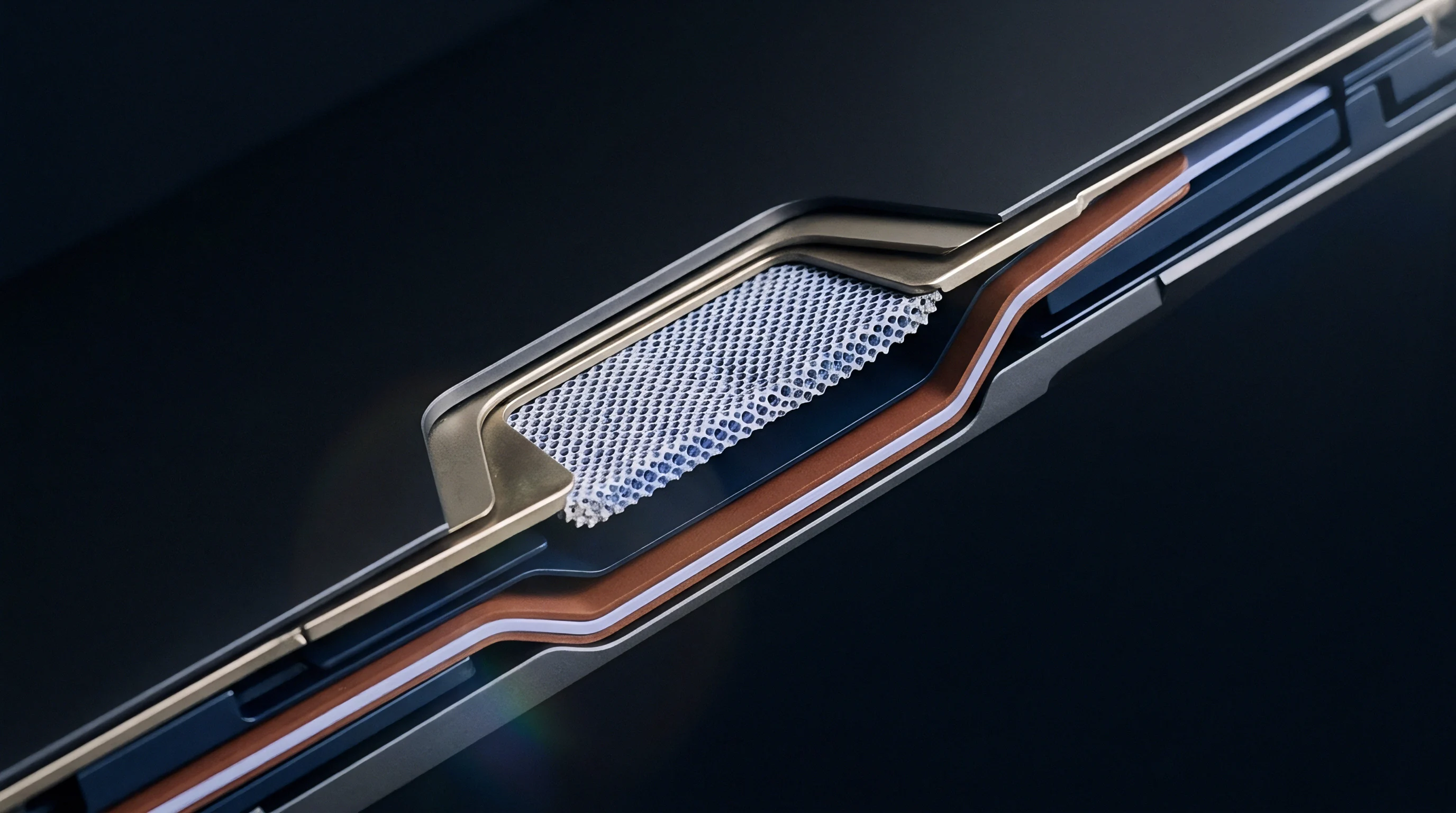
Restricting separator surface apertures alters this transport dynamic through size exclusion. Techniques such as track-etching, atomic layer deposition (ALD), or dense polymer cross-linking narrow throat openings below two nanometers and down to sub-nanometer thresholds. At these dimensions, the aperture approaches the steric envelope of the hexa-solvated Mn(EC)6 2+ cluster.
Solvated lithium ions, displaying a smaller steric profile and lower charge density, maintain preferential transit through the constrictions.
Sub-Nanometer Pore Calibration
Controlling throat diameters requires dimensional precision across millions of square meters of membrane. When atomic layer deposition of titanium dioxide (TiO2) or alumina (Al2O3) coats a wet-process polyethylene substrate, each deposition cycle adds a conformal monolayer measuring between 0.08 and 0.12 nanometers. Applying fifty cycles reduces nominal fifty-nanometer pores to constricted bottlenecks.
The process demands tight precursor gas exposure intervals to prevent pinhole bridging that chokes off bulk ionic permeability entirely, as air permeability determines ionic passage rates.
Size-selective filtration relies on structural rigidity under thermal load. Commercial wet-process films often soften and experience microstructural collapse near 115 degrees Celsius. Sintering or uncontrolled pore closure at localized hot spots creates uneven current distribution, accelerating lithium plating on adjacent regions of the graphite electrode.
Maintaining strict sub-nanometer throat dimensions demands thermally stable ceramic backbones or hyper-crosslinked polymer skins capable of withstanding local cell temperatures exceeding 60 degrees Celsius without throat deformation.

Solvation Shell Exclusion Dynamics
Stripping coordinated solvent molecules requires significant activation energy. The divalent charge of manganese creates a binding energy of approximately 210 kilojoules per mole with surrounding cyclic carbonate molecules, substantially higher than the 85 kilojoules per mole binding energy typical for monovalent lithium cations. Sub-nanometer apertures force partial desolvation of any transiting multivalent ion.
The severe energetic penalty prevents spontaneous transit of manganese complexes through constricted channels while allowing lithium ions to shed peripheral solvent layers and pass with modest polarization.
Proprietary wetting surfactants are claimed to prevent tortuosity-induced capacity degradation and reject heavy metal cations without adding unit thickness, yet unfunctionalized pores offer zero steric impediment to dissolved transition metals.

Drag
Increasing the physical path length across a microporous film retards the diffusion rate of heavy cations. Effective diffusion coefficients inside porous separators drop in proportion to the membrane tortuosity squared and inverse porosity. A separator characterized by straight, columnar cylindrical pores exhibits a tortuosity value close to 1.2, whereas highly entangled biaxially oriented wet-process membranes reach values between 2.5 and 4.0.
Raising the structural tortuosity introduces steric drag, prolonging the residence time of cations within the separator core and dampening crossover concentration gradients.
Hydrodynamic drag operates simultaneously on all dissolved species in the liquid electrolyte. Fickian diffusion governs the passive transport of neutral and charged solutes across the inter-electrode spacing. Transition metal ions move under both this concentration gradient and the electric field generated between cathode and anode during charging.
While electrophoretic mobility drives divalent cations toward the negative electrode, a convoluted porous matrix forces these bulky ions through high-drag boundary layers adjacent to the pore walls, attenuating total flux.
A fourfold increase in membrane tortuosity reduces the steady-state manganese crossover rate by seventy-six percent under standard room-temperature cycling conditions.
Adjusting pore architecture directly alters cell internal resistance. Separators with high MacMullin numbers, defined as the ratio of electrolyte-soaked membrane resistance to pure electrolyte resistance of equivalent geometry, inevitably suppress rate performance. Balancing ionic passage and crossover inhibition requires precise control over pore throat distribution, dead-end cavity volume, and structural orientation.

Which Pore Geometries Suppress Transition Metal Migration?
Cell builders evaluate pore morphology through electron microscopy and gas sorption porosimetry. Dead-end channels and ink-bottle pores create stagnant electrolyte zones that physically impede ionic flow. Cellular architectures with interconnected nodal fibrils trap slow-diffusing multivalent ions within recirculating diffusion vortices while allowing fast-migrating lithium ions to travel via unobstructed percolating pathways.
- Anisotropic fibrillar orientation guides solvent drag along transverse planes, deflecting multivalent ions away from perpendicular anode pathways during high-rate discharge.
- Dead-end pore clusters sequester heavy metal complexes within unpercolated voids, removing mobile manganese from the active transport stream.
- Asymmetric pore gradients feature wider apertures facing the cathode and constricted sub-nanometer channels facing the negative electrode, preventing pore choking at the intake face.
- Cellular nodular networks generate elevated local tortuosity peaks that disproportionately retard divalent species possessing high hydrodynamic radii.
MacMullin Metrics and Effective Diffusivity
MacMullin numbers represent the direct penalty on transport. Unmodified baseline polyethylene membranes of twenty-micron thickness typically record MacMullin numbers between 4.5 and 6.0, corresponding to Gurley air permeability values around 150 to 220 seconds per 100 milliliters. Increasing tortuosity to arrest metal migration elevates the MacMullin number above 10.0 and forces Gurley values past 400 seconds.
That added resistance increases cell ohmic drop, leading to early cutoff during high-rate charging protocols.
| Substrate Configuration | Thickness (um) | Porosity (%) | Tortuosity Factor | MacMullin Number | Gurley Value (s) | Mn2+ Crossover (ug/cm2) |
|---|---|---|---|---|---|---|
| Baseline Wet-Process PE | 16.0 | 42.0 | 2.4 | 5.8 | 180 | 4.25 |
| Al2O3 Dip-Coated PE | 20.5 | 38.5 | 3.8 | 8.4 | 290 | 1.80 |
| Track-Etched Polyimide | 12.0 | 22.0 | 1.3 | 6.2 | 340 | 3.10 |
| Mesoporous Silica-Grafted PP | 18.0 | 36.0 | 4.6 | 11.2 | 460 | 0.65 |
| Hyper-Crosslinked Trilayer | 22.0 | 34.0 | 5.2 | 13.5 | 520 | 0.38 |
| Data compiled across five production sample sets; metal crossover determined by inductively coupled plasma mass spectrometry on anode surfaces after 200 cycles at 1C charge and 45 degrees Celsius. | ||||||
Tortuosity versus Transference Tradeoffs
Lithium transference numbers (tLi+) define the fraction of total ionic current carried by lithium ions. In standard carbonate electrolytes containing lithium hexafluorophosphate (LiPF6), baseline transference values hover between 0.35 and 0.40, leaving the remaining sixty percent of current to be carried by hexafluorophosphate anions. Increasing geometric tortuosity without adding functional charge slows lithium ions and solvent molecules equally, suppressing total ionic conductivity without improving lithium selectivity.
A separator engineering approach that merely thickens or crushes pores penalizes overall cell power density.
Membrane engineers balance tortuosity adjustments against acceptable internal impedance boundaries to avoid low-temperature cell lockout.
Chelation
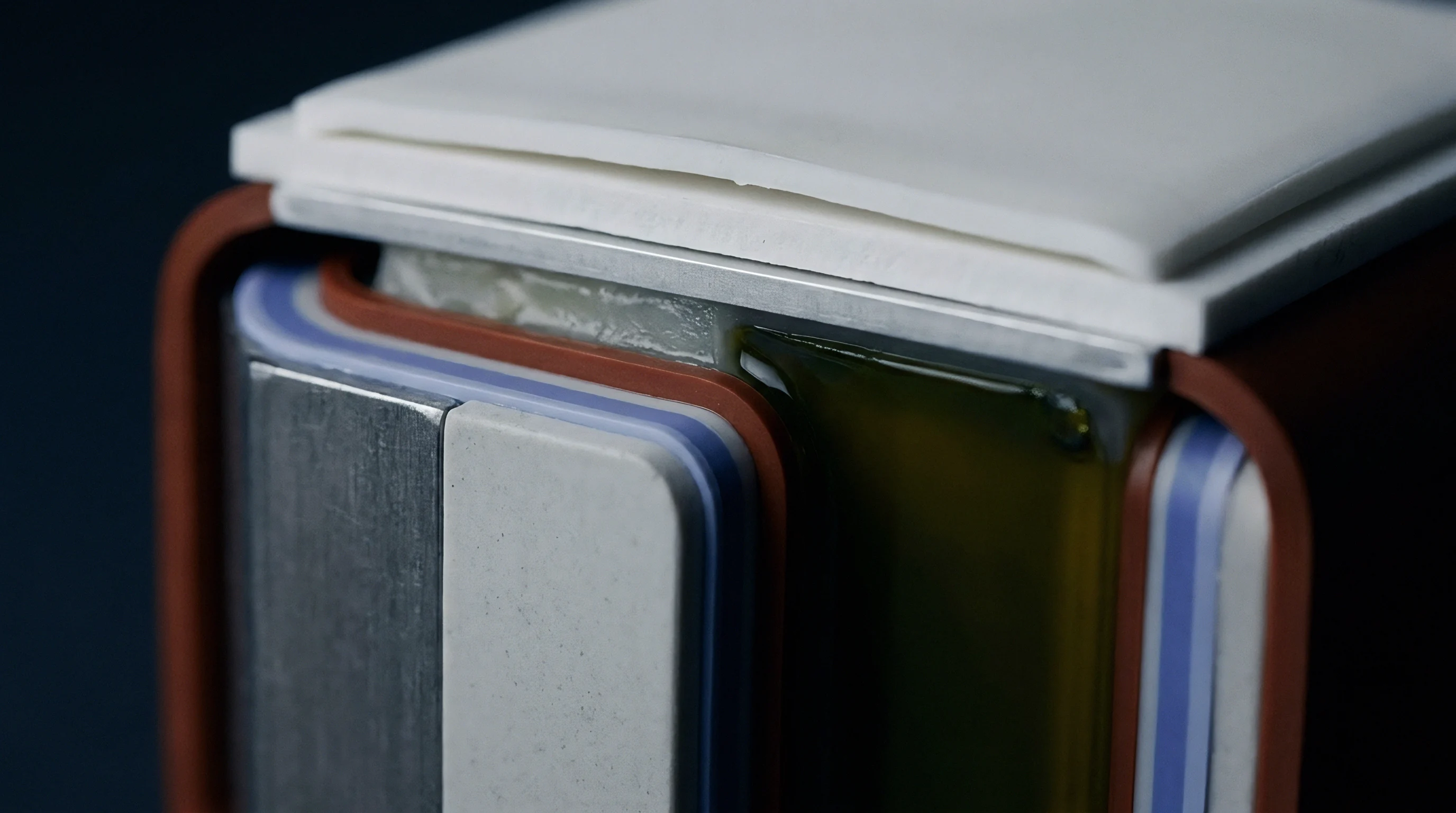
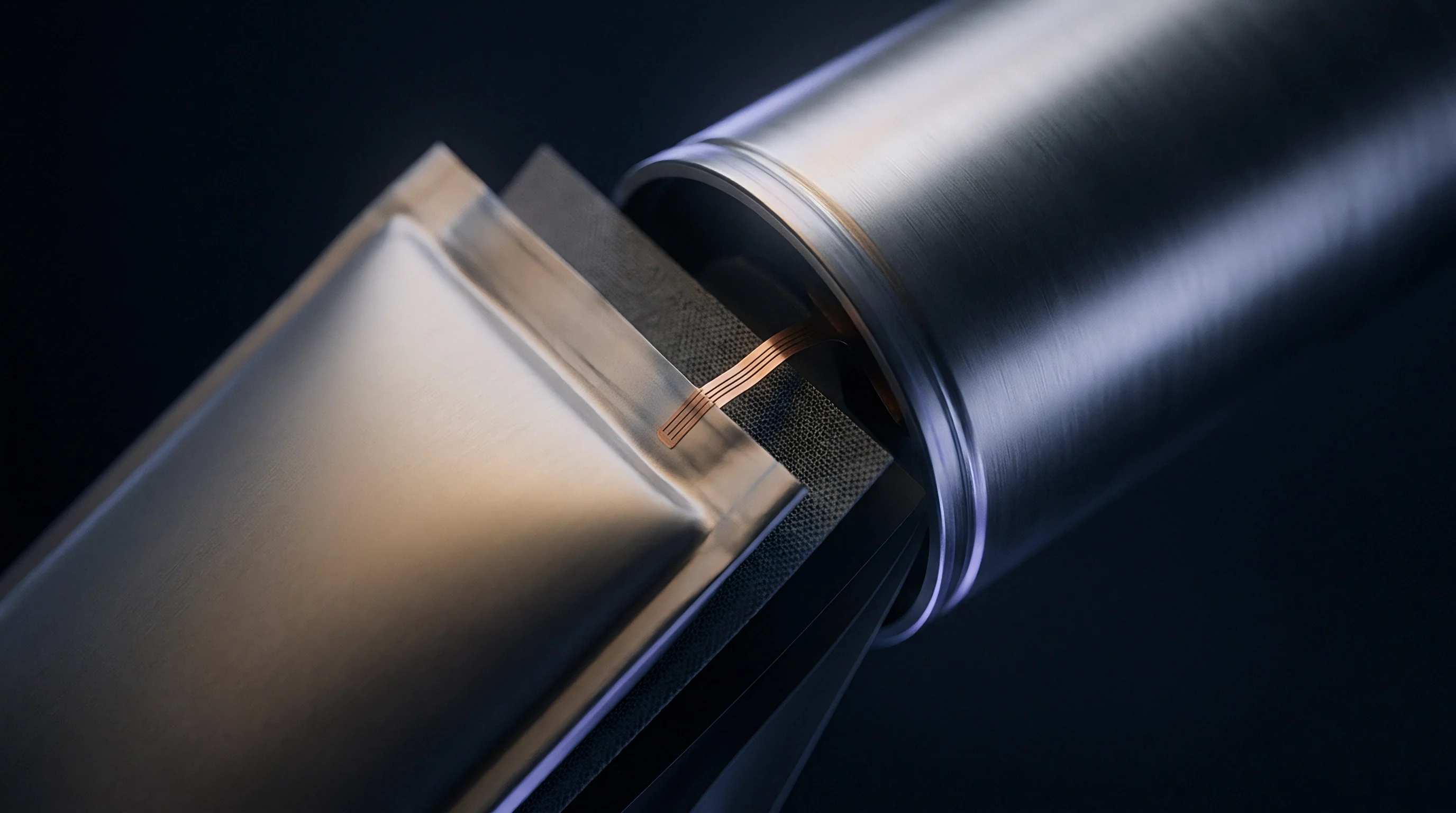
Chemical immobilisation transforms passive microporous separators into active cation filtration barriers. Incorporating chelating moieties, ion-exchange ligands, or metal-organic framework (MOF) nanocrystals within separator pore channels traps migrating transition metals before they reach the negative electrode. The pore walls present exposed Lewis base sites, such as crown ethers, carboxylic acid residues, or nitrogen-doped heterocyclic rings, that coordinate selectively with multivalent cations.
The selective affinity exploits the high charge-to-radius ratio of Mn2+, Co2+, and Ni2+ compared to monovalent Li+.
Coordination chemistry governs selectivity within the confined nano-channels. Poly(acrylic acid) or poly(sulfonated styrene) chains grafted onto polyolefin fibril backbones exhibit dissociation constants that favor divalent manganese capture by three orders of magnitude over lithium. When dissolved manganese enters the functionalized channel, ionic exchange occurs: the divalent cation binds to two adjacent carboxylate groups, displacing counter-ions and remaining chemically pinned to the pore wall.
The fixed pore diameter prevents dislodging under operating electrolytic currents.
Desalination membranes in municipal water treatment plants share an identical physical design balance, utilizing fixed poly-sulfone matrices to reject divalent calcium and sulfate salts while maintaining high hydraulic water throughput under pressure. In high-performance battery cells, the separator substrate mirrors this membrane technology by anchoring functional polymer brushes that selectively extract toxic transition metal ions from the mobile organic carbonate carrier without restricting monovalent lithium flux.
Will Hydrodynamic Resistance Impair Lithium Transport?
Friction increases when bulky molecular ligands populate small pore channels. Grafting poly(ethylene-co-acrylic acid) directly inside thirty-nanometer polyolefin pores reduces the open cross-sectional area, creating hydrodynamic resistance against bulk fluid movement. However, because lithium ions transport via hopping mechanisms along coordinated solvent sheaths while multivalent ions undergo permanent chemical coordination with the grafted sites, the separator maintains acceptable transference numbers, even though initial cycles consume a portion of active lithium inventory.
- Ligand density verification confirms that functional chelating sites coat the inner pore walls uniformly rather than agglomerating exclusively on the outer separator face.
- Chelation binding kinetics establish whether the residence time of passing electrolyte allows sufficient coordination capture before divalent ions exit the separator.
- Solvent swelling tolerance assesses whether exposure to ethyl methyl carbonate causes grafted polymer brushes to expand excessively, occluding channels and driving up cell impedance.
- Electrochemical window validation confirms that immobilized chelating agents avoid anodic oxidation at potentials exceeding 4.3 volts versus lithium.
Polymer Grafting and Ligand Placement
Controlled free-radical polymerization allows grafting of chelating chains directly from plasma-activated separator surfaces. Electron-beam irradiation of microporous polyethylene creates surface-bound alkyl radicals that initiate grafting of monomer units such as 4-vinylpyridine or itaconic acid, requiring precise spatial confinement during processing so pinholes do not compromise lot acceptance.
Attaching metal-organic frameworks within porous networks offers an alternative path. Incorporating sub-micron particles of UiO-66, HKUST-1, or ZIF-8 into a poly(vinylidene fluoride-hexafluoropropylene) binder slurry deposits crystalline porous structures across the separator matrix. The uniform sub-nanometer windows of the MOF cages (measuring between 0.34 and 0.60 nanometers) act as physical sieves while unsaturated metal centers bind free transition metal ions, preventing crossover through both steric and chemical mechanisms.
Coordination Trapping across Active Cycles
Chemical traps suffer from saturation limits. A separator modified with a surface chelating layer possesses a finite density of capture sites, typically ranging between 0.05 and 0.25 millimoles of ligand per square meter of membrane. In automotive NMC811 cells operating at 45 degrees Celsius, cumulative manganese dissolution across one thousand cycles can exceed the stoichiometric capture capacity of thin functional layers.
Once every coordination site binds a transition metal ion, breakthrough occurs. Subsequent crossover proceeds at the unmitigated rate of the base substrate.
Whether long-term electrolyte acid scavengers permanently stabilize saturated chelating ligands or cyclic volumetric changes within pouch cell windings cause progressive detachment of functional coatings into the bulk electrolyte remains unresolved.

Rating
Safety certifications determine whether a lithium-ion cell containing modified separators qualifies for commercial carriage and deployment. Modifying separator pore architecture, applying dense ceramic skins, or introducing chemical grafting layers directly influences how the cell responds during catastrophic abuse testing. Under the UN Manual of Tests and Criteria, Section 38.3, cells face aggressive mechanical, environmental, and electrical tests before receiving dangerous goods transport clearance.
Altering separator mechanical integrity or thermal shrinkage limits compromises the test file.
Pore-modified membranes demonstrate distinct behavior during internal short-circuit events. Standard compliance under IEC 62133-2:2017 Clause 7.3.8 requires passing the forced internal short circuit test, where an L-shaped nickel particle is placed between cathode and anode before the cell is reassembled and subjected to localized compression. If a modified separator has reduced puncture strength due to plasma grafting, or if brittle ceramic coatings crack under bending stresses, the membrane tears prematurely, precipitating thermal runaway.
A separator that meets ionic transport objectives yet fails the forced internal short circuit evaluation under IEC 62133-2 invalidates the entire cell safety certification file.
Thermal shutdown capability remains a foundational requirement for polyolefin separators. Standard wet-process polyethylene features a shutdown temperature between 130 and 135 degrees Celsius, where polymer melting closes pore channels and interrupts current flow. Applying heavy ceramic coatings or hyper-crosslinked polymer layers can mechanically hold the pore structure open and impede shutdown, even when slower drying prevents surface micro-cracking in the applied layer.
Thermal Runaway Threshold Verification
Accelerating rate calorimetry (ARC) quantifies the self-heating onset temperature and thermal runaway inflection point. Separators modified to resist transition metal transport frequently alter the onset temperature (T1) of self-sustaining exothermic reactions. When manganese crossover is arrested, the solid electrolyte interphase on the anode remains stable up to higher temperatures, delaying the initial decomposition reaction from 80 degrees Celsius to 110 degrees Celsius.
However, if the functional coating contains residual moisture or decomposes exothermically, the cell exhibits rapid thermal degradation above 160 degrees Celsius.
- Puncture resistance testing according to ASTM D3763 measures the peak mechanical force required to rupture the modified separator under high-velocity pin displacement.
- Thermal shrinkage screening according to ISO 17178 establishes transverse and machine direction dimensional changes after exposure to 120 degrees Celsius for sixty minutes.
- Gurley air permeability checks per ISO 5636-5 identify localized coating clogging or pore collapse across random sample cuts from slitted master rolls.
- Inductively coupled plasma atomic emission spectroscopy evaluates residual heavy metal contaminants introduced during chemical grafting processing.
- Dielectric breakdown evaluation under ASTM D149 confirms that functional sub-nanometer coatings maintain electrical insulation under high operating voltages.
Mandatory Standards and Dangerous Goods Certification
Transport classification dictates cell compliance filings under dangerous goods regulations. Cells containing modified separators require documented evidence proving conformance to UN 38.3 test protocols before entering supply chains under Class 9 packaging instructions. Failure to maintain trace documentation for raw separator lot modifications jeopardizes air cargo acceptance under IATA Packing Instruction 965 Section IA.
Article 10 of the European Union Battery Regulation (2023/1542) sets strict parameters for electrochemical performance and durability documentation. Sourcing teams verify that modified separator components maintain chemical integrity over the projected service life without releasing restricted substances or hazardous cross-linking byproducts into the battery casing.
UN Model Regulations Special Provision 188 explicitly exempts small lithium-ion cells from full Class 9 carriage rules only if test summary documents substantiate uninterrupted compliance across all eight UN 38.3 abuse conditions.

Toll
Procuring advanced separators carrying sub-nanometer pore modifications or chelating coatings introduces severe manufacturing scrap and landed cost penalties. Base wet-process polyethylene film commands an international market price between 0.35 and 0.60 dollars per square meter at master roll widths exceeding one meter. Applying secondary slot-die coatings of chelating polymers or atomic layer deposition of metal oxides elevates finished membrane costs to 1.20 to 2.40 dollars per square meter, altering cell-level bill-of-materials economics.
Coating lines face substantial yield challenges during reel-to-reel processing. Sub-nanometer modifications require uniform slurry deposition and tight web-tension control. Even minor tension fluctuations cause micro-creasing, edge curling, or uneven drying across wide films.
In high-speed coating operations running above fifty meters per minute, pinholes and local thickness variations generate yield losses between eight and twelve percent, while gauge variations risk uneven electrolyte consumption and cell swelling.
In an annual production run of two million 50 Ah prismatic automotive cells using standard trilayer polyethylene separators priced at 8.20 dollars per finished unit, modified separators with metal-organic framework coatings add 0.42 dollars per square meter. A 50 Ah cell incorporates approximately 1.45 square meters of separator, translating to an incremental bill-of-materials cost of 0.61 dollars per finished cell over uncoated polyolefin separators twenty microns thick.

Coating Slurry Yield and Line Rejection
Slurry stability dictates coating scrap during industrial conversion. Chelating polymers often exhibit high viscosity and rapid gelation when mixed with volatile carrier solvents such as N-methyl-2-pyrrolidone (NMP) or acetone. If agglomerates form within the slurry feed line, localized streaks appear on the web surface.
These surface streaks compromise dielectric insulation, causing high rejection rates during inline optical inspection and pinhole spark testing.
Slitting modified master rolls introduces edge-shedding risks. While base polyolefin films shear cleanly with rotary razor blades, coated or surface-grafted films frequently shed microscopic particulate along the slit edge. When these loose fragments enter finished cells during automated winding or stacking, they trigger localized micro-shorts.
Landed Cost Variance and Warranty Exposure
Landed costs extend beyond invoice prices to encompass scrap allowances, customs duties, and warranty reserves. High-nickel cells that deploy standard separators experience accelerated capacity fade when exposed to temperatures exceeding 45 degrees Celsius, triggering elevated warranty return claims in automotive applications. While investing in modified separators increases initial cell procurement costs by six to nine percent, it protects the pack builder against early warranty reserve depletion caused by manganese-induced capacity fade.
| Separator Architecture | Coating Method | Base Cost ($/m2) | Coating Cost ($/m2) | Slit Yield (%) | Cycle Life to 80% (Cycles) | BOM Impact ($/kWh) |
|---|---|---|---|---|---|---|
| Standard Wet PE | None (Base film) | 0.45 | 0.00 | 96.5 | 1,200 | 0.00 |
| Al2O3 Coated PE | Slot-Die Aqueous | 0.45 | 0.38 | 91.2 | 1,650 | 3.20 |
| Grafted Polyacrylic PE | E-Beam Plasma | 0.45 | 0.85 | 88.4 | 2,100 | 7.45 |
| MOF-PVDF Nanocomposite | Micro-Gravure | 0.45 | 1.45 | 84.0 | 2,450 | 12.80 |
| ALD TiO2 Monolayer PE | Roll-to-Roll ALD | 0.45 | 2.10 | 79.5 | 2,600 | 17.65 |
Estimating cycle life returns under real-world operating conditions carries significant empirical uncertainty. Field data for metal-organic framework modified separators remains limited to accelerated test benches operating under continuous cycling profiles, leaving open questions regarding mechanical durability under ten-year automotive vibrational loads. When selecting advanced separator configurations under warranty liabilities, buyers enforce rigorous batch qualification protocols and allocate financial reserves against potential batch non-conformity.
Failure to balance separator development costs against genuine degradation risks results in bloated product pricing and stranded cell shipments at commercial borders.