Meaning
Mechanical strain arises when ion transport causes volumetric expansion within a dense ceramic layer. Solid electrolyte swelling refers to the physical deformation observed in inorganic battery separators during the migration of metallic species. Such dimensional shifts generate internal stress concentrations at the interface between the anode and the ceramic host.
Internal pressure from this migration frequently leads to micro-cracking or localized contact loss if the housing lacks the appropriate compensatory force.
Material Mechanism
Ionic current drives the continuous redistribution of metal ions through the lattice structure of the separator. Solid electrolyte swelling often occurs during lithium plating where metallic filaments exert outward force against the grain boundaries of the material. A dense ceramic architecture resists this intrusion to a specific threshold before the structure yields to the accumulation of material.
Accumulation at the grain boundaries creates a permanent increase in the thickness of the separator layer.
Performance Impact
Operational stability degrades as the internal resistance rises due to the formation of fractures from repeated mechanical stress. Solid electrolyte swelling dictates the maximum permissible cycle life because cumulative deformation eventually ruptures the ionic pathway. Energy density suffers when engineers implement heavy spring-loaded fixtures to maintain consistent pressure against the expanding component.
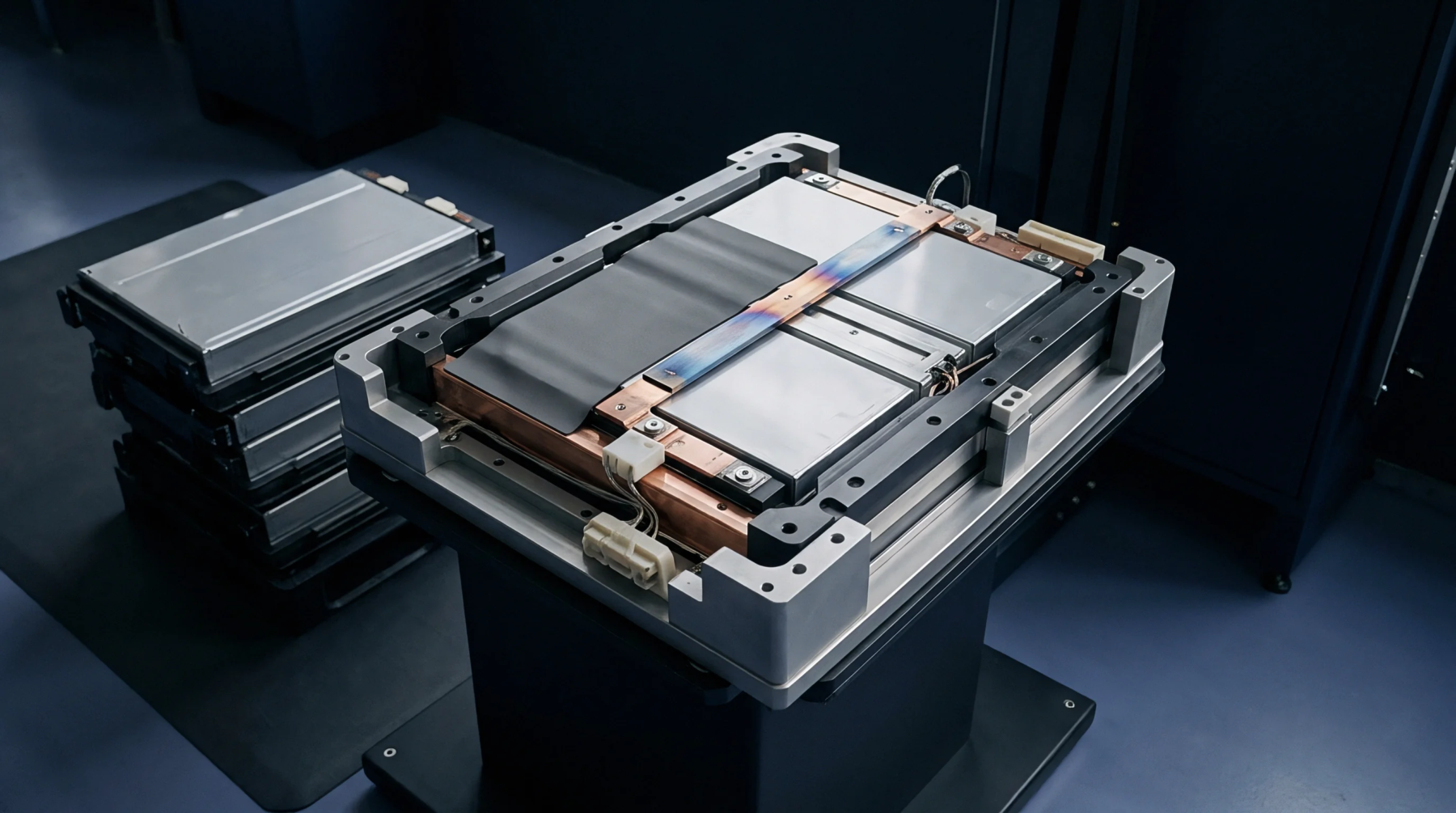
Proper containment strategies require a precise balance between clamping force and the inherent flexibility of the cell housing.
Containment Standard
Design specifications limit the allowable expansion percentage to preserve the integrity of the interface. Solid electrolyte swelling warrants verification under accelerated charge rates to ensure the mechanical constraints withstand the most rapid ion flux. Evaluation protocols determine the threshold of force that prevents delamination without inducing brittle failure in the ceramic.
Consistent pressure management ensures the long term reliability of the solid state configuration.