Stress Coupled Amorphous Phase Stability in Silicon Alloy Anodes
Controlled stack pressure suppresses terminal crystalline phase transitions in silicon alloy anodes, doubling cell cycle life through mechanical containment.
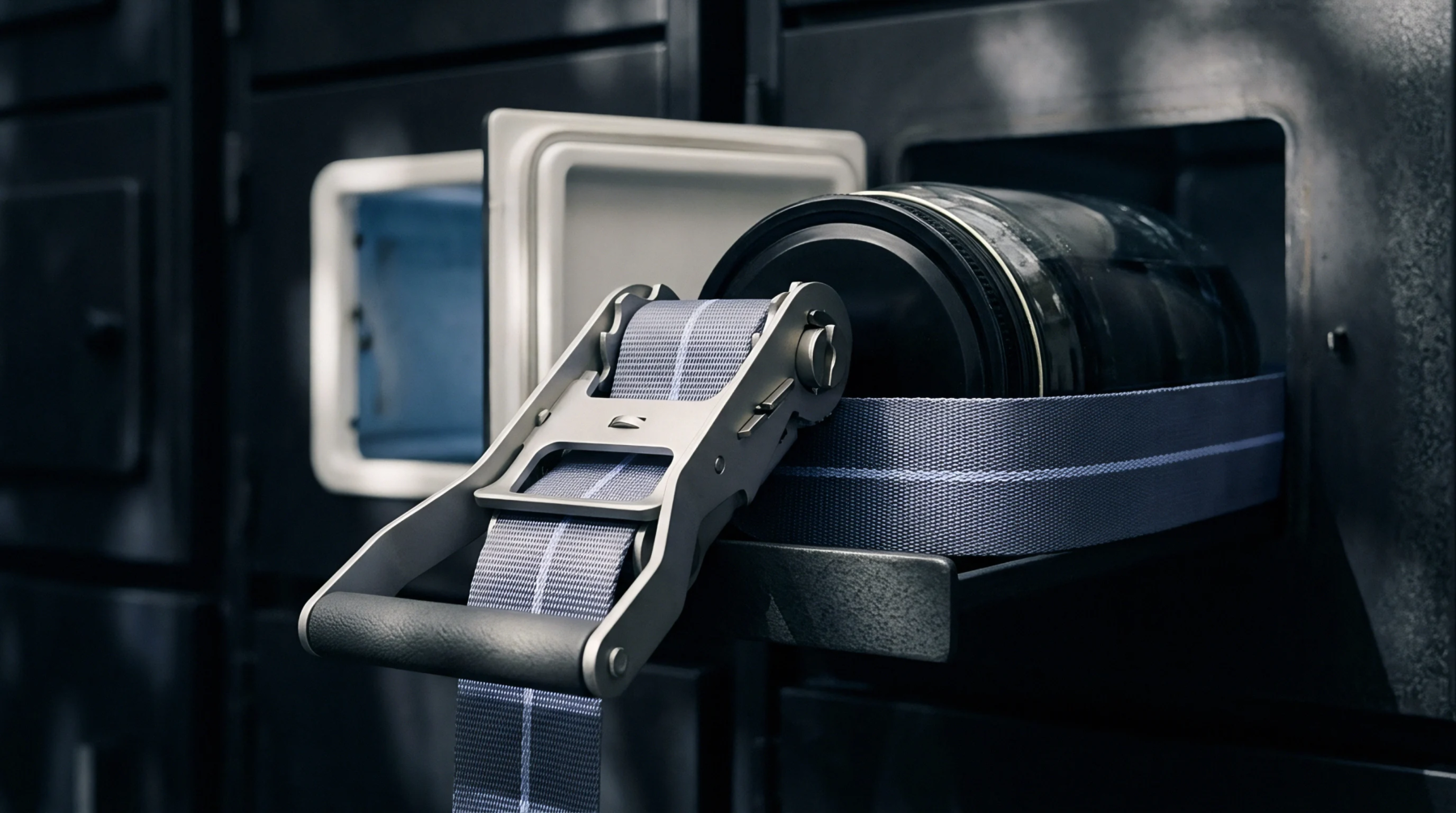
An elastic mechanical component maintains continuous mechanical preload across stacked battery electrodes and separators within large format prismatic cells. A spring pressure pad absorbs internal dimensional growth generated by repetitive lithium intercalation during cycling. Such expansion forces normal vectors outward against rigid module endplates, meaning that continuous counterforce limits physical delamination of active material coatings from current collectors.
Material creep and cyclical separator thinning would otherwise cause stack relaxation, creating localized impedance hotspots and accelerating localized degradation. High nickel cathode chemistries require exact mechanical clamping because lattice parameter changes during charge and discharge are particularly severe.
Dimensional stability depends upon maintaining predictable stress gradients throughout the operating lifespan of a prismatic lithium ion module. Cell housings experience cyclic breathing movements as lithium ions move between electrodes, shifting the physical geometry of the internal jellyroll or stacked layers. A spring pressure pad counteracts this deformation by storing mechanical energy during expansion phases and releasing that energy as cells contract during subsequent discharge cycles.
Engineers calculate required compression force curves using elastic moduli data provided by raw material suppliers to prevent both over compression and loss of contact pressure. Over compression damages porous separator membranes by squeezing out liquid electrolyte, while insufficient pressure permits physical separation of electrode sheets and reduces active surface area utilization.
Manufacturing variations in separator thickness and electrode coating weight accumulate across multi layer cell stacks, altering the total internal displacement space inside a module. A spring pressure pad compensates for these dimensional stacking stackups by compressing variably during final enclosure sealing. Production lines measure initial stack resistance against calibrated load cells before fixing module endplates into permanent positions.
Component designers specify compression percentage ranges rather than absolute thickness dimensions to accommodate normal batch to batch fluctuations in active material slurries. Thermal expansion coefficients further complicate the dimensional equation because aluminium housings and copper current collectors expand at different rates during high rate discharge events.
Internal resistance rises when mechanical contact between adjacent layers deteriorates due to cyclic fatigue or binder degradation inside battery electrodes. A spring pressure pad delays this failure mode by preserving uniform interfacial pressure across current collector foils throughout thousands of charge and discharge cycles. Acoustic emission testing during accelerated aging tests confirms that constant mechanical preload suppresses micro cracking within brittle metal oxide cathode particles.
Long term electrochemical impedance spectroscopy data demonstrates that modules equipped with elastic retention hardware retain higher capacity retention percentages after thermal shock testing than rigidly bolted designs without compliant layers.
Controlled stack pressure suppresses terminal crystalline phase transitions in silicon alloy anodes, doubling cell cycle life through mechanical containment.
Expertise is a utility, not a secret. sentiention™ publishes its working knowledge as open reference: intelligence layer covering the materials it sources, the markets it enters, and the reference that serves both.