Meaning
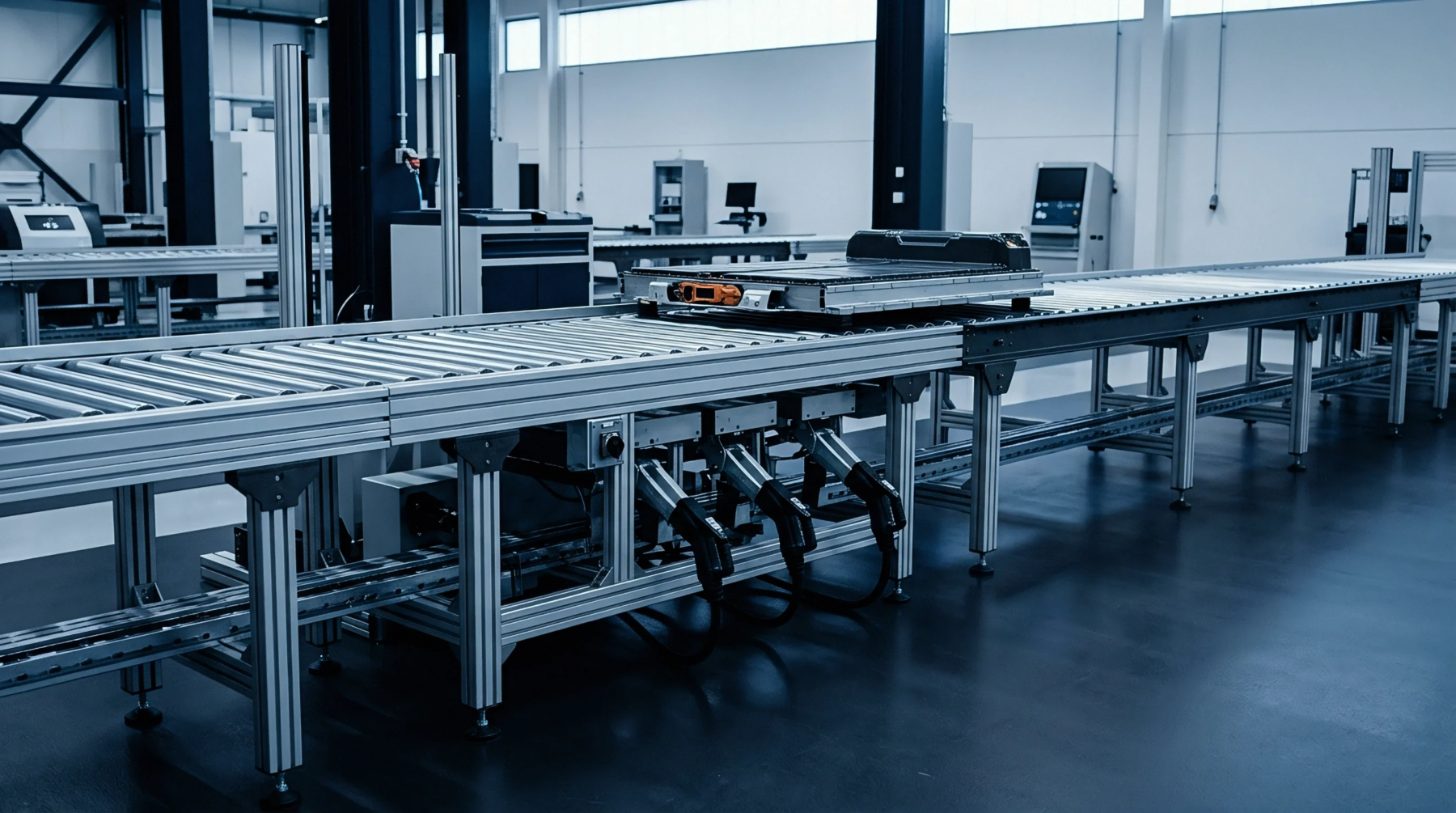
Rigid skeletal assemblies hold individual cells in a fixed orientation while providing the primary load path for the battery system. The structural module frame provides the interface between the energy storage units and the vehicle or grid-scale enclosure. It must withstand vibration and thermal expansion without allowing the cells to shift or disconnect.
Material Choice
Lightweight alloys are selected to minimize the parasitic weight of the housing. A structural module frame often utilizes these materials to reduce the overall mass of the battery pack.
Impact Resistance
Safety engineering ensures that external forces are diverted around the sensitive internal components through the high-strength members of the assembly. A structural module frame is designed to crush in a controlled manner during a collision to absorb energy. This sacrificial deformation prevents the sharp edges of broken components from piercing the cell casings and causing a fire.
Assembly Integration
Precision machined surfaces allow for the mounting of busbars and sensing wires directly to the perimeter. The structural module frame ensures that the stack remains under the correct compression throughout the life of the product. End plates and side rails are bolted or welded together to create a torsionally stiff unit that facilitates rapid installation.