Meaning
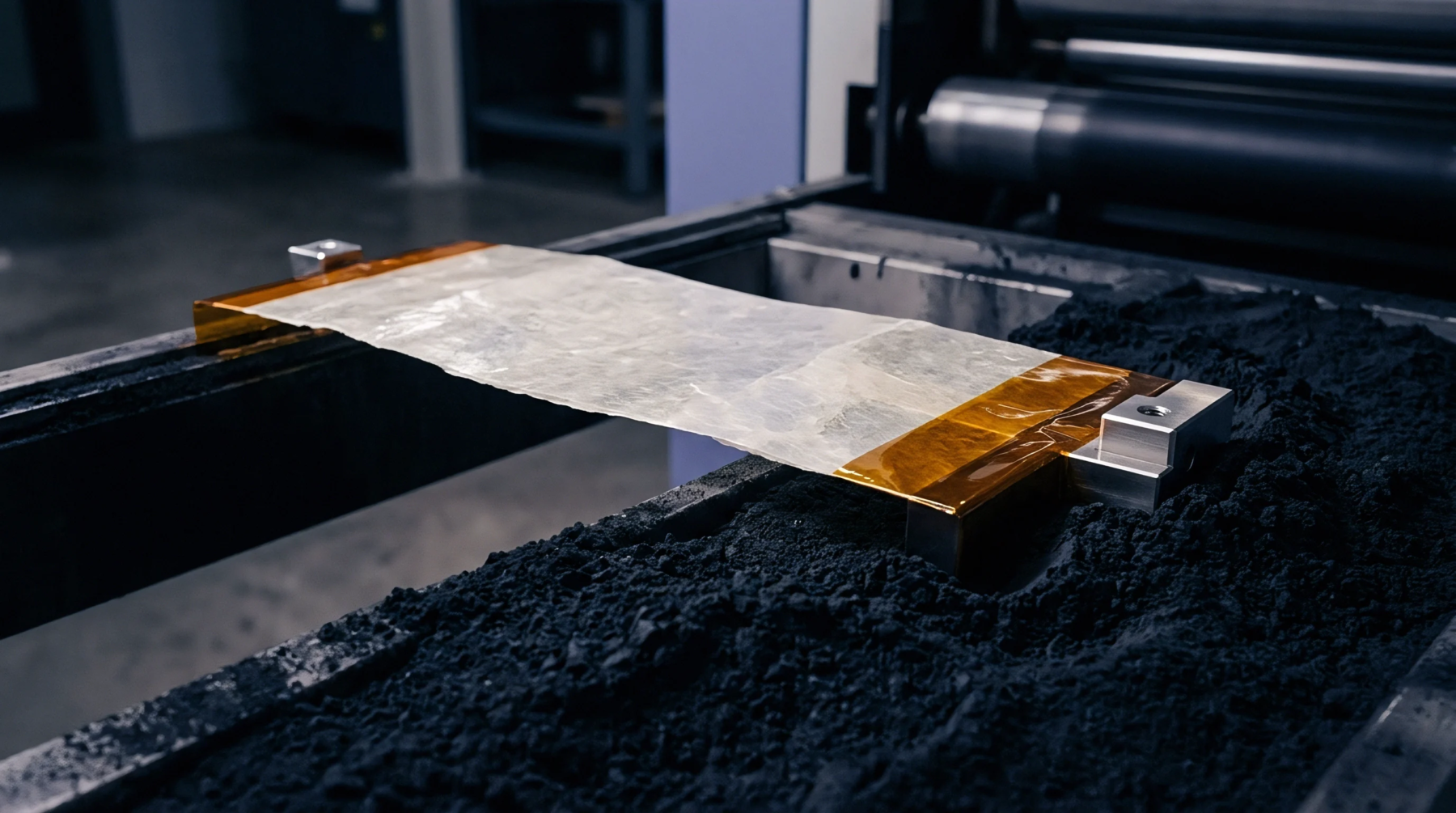
An internal structural defect occurring in lithium ion battery separators when excessive temperature shifts create microscopic voids within the polymer matrix. Thermally induced porosity describes the uncontrolled expansion and physical degradation of the separator membrane during high heat exposure. This degradation alters the electrical resistance of the cell and compromises the insulating function between the anode and cathode.
It occurs when crystalline regions of the polymer melt and rearrange, leaving behind empty spaces that permit ion flux to become non-uniform or allow direct contact between electrodes. This phenomenon marks the boundary between safe operation and thermal runaway.
Thermal Sensitivity
The structural stability of polyolefin separators depends on the alignment of polymer chains and the consistency of the cooling process during original extrusion. Thermally induced porosity develops as heat energy breaks the molecular bonds holding these chains in a semi-crystalline state. Once these bonds release, the material shrinks or distorts, creating larger channels that lose their intended uniformity.
Testing this effect requires heating samples in controlled ovens while observing changes in the Gurley number or air permeability metrics. Excessive porosity indicates a failed separator that lacks the mechanical integrity to prevent short circuits. Each individual cell design must account for these limits to ensure that standard charging cycles do not trigger unwanted membrane shifts.
When the internal temperature exceeds the design threshold, the membrane loses the strength required to maintain the required gap between battery components.
Process Control
Quality assurance engineers monitor this behavior to determine the maximum operating temperature of a battery pack. Manufacturing protocols include specific annealing steps to reduce the risk of future voids forming during routine power delivery. These steps stabilize the molecular weight distribution across the film surface.
When heat dissipation capacity falls below the rate of internal generation, the risk of rapid membrane distortion rises. Suppliers provide sheets that have been pre-shrunk to minimize contraction during cell assembly. Producers evaluate the baseline air permeability before and after exposure to elevated heat levels to determine the total change in pore density.
Large variance in these measurements signals inconsistent raw material quality.
Performance Consequence
Higher rates of these internal voids accelerate the failure of battery electrolytes and reduce the cycle life of the pack. Ion pathways that grow too large allow excessive current flow through concentrated areas, which generates localized hot spots. These hot spots further degrade the separator material in a feedback loop that eventually ends in total electrical failure.
Separator durability dictates the maximum power output allowed before the heat generated by ohmic resistance causes structural collapse. Systems that prioritize safety often limit the peak current to prevent reaching the temperature at which this distortion begins. Stable separators maintain consistent ion transport channels even when the surrounding environment fluctuates during operation.
Final verification of cell safety requires demonstrating that thermally induced porosity remains within a narrow range under all predicted load conditions.