Predictive Microstructural Damage Modeling for Carbide Segregation in Thermally Fatigued Tool Steel Castings
Predictive microstructural damage modeling couples solute segregation profiles with thermal fatigue laws to prevent premature die cracking in cast tool steels.


Partition
Solidification dynamics in heavy tool steel castings govern how alloying elements distribute across interdendritic domains. As hot-work tool steels like AISI H13 and AISI H11 cool from liquid to solid, carbide-forming elements are rejected by the advancing solid front into the remaining melt. Solute partition coefficients dictate that vanadium, molybdenum, and chromium concentrate heavily in the final liquid volumes freezing between primary dendrite arms.
This localized enrichment builds sharp chemical gradients across distances of fifty to two hundred micrometers, leaving behind interdendritic networks packed with primary eutectic carbides.

Solidification Microsegregation in Cast Hot Work Tool Steels
Heavy tool steel castings freeze with marked chemical heterogeneity across their primary dendritic structures. Scheil-Gulliver modeling of non-equilibrium solidification shows that elements with equilibrium partition coefficients below unity enrich the interdendritic liquid exponentially as freezing proceeds. In iron-based melts, vanadium has an equilibrium partition coefficient near zero point five, driving intense local enrichment during the final stages of solidification.
Molybdenum and chromium behave similarly, with partition coefficients near zero point five five and zero point eight two, shifts in solute concentration that ultimately alter local matrix transformation temperatures.
As growing primary dendrites push vanadium outward and the solid fraction approaches unity, the interdendritic liquid hits solubility limits for carbon and carbide-forming metals, precipitating coarse primary M7C3, M23C6, and vanadium-rich MC carbides. Rather than dispersing uniformly, these eutectic structures form continuous or semi-continuous networks along prior dendrite boundaries. In heavy-section castings with primary dendrite arm spacings above one hundred micrometers, the local microsegregation index ~ the ratio of maximum interdendritic solute concentration to minimum dendrite core concentration ~ frequently exceeds two point zero for vanadium and one point five for molybdenum.

Thermodynamic Partitioning Coefficients and Dendritic Enrichment
During liquid-to-solid phase transformations, equilibrium distribution values force carbide-forming solute elements into the remaining liquid fraction. Cooling rates in the foundry directly dictate the physical scale of these segregated zones: rapid cooling tightens primary dendrite arm spacing and compresses solute gradients into narrower channels, while slow cooling in thick casting sections widens dendrite spacing and produces macroscopically coarse carbide bands.
CALPHAD-based thermodynamic calculations show that interdendritic liquid in an AISI H13 casting can accumulate vanadium concentrations above three weight percent alongside carbon levels exceeding zero point eight weight percent. On cooling, these local chemistry spikes form stable primary eutectic carbides that survive standard austenitizing heat treatments. The surrounding matrix is left either depleted of solute or holding pockets of soft, untempered austenite, creating a highly heterogeneous microstructure before the tool ever sees service.
Whether sub-solidus homogenisation holds can fully eliminate vanadium microsegregation without triggering excessive prior austenite grain growth remains an open empirical question for foundry metallurgists.

Crack
Cyclic thermal loading creates sharp localized stress gradients in cast tool steels wherever alloy content varies across microstructural zones. During die casting or hot forging, the tool surface alternates rapidly between ambient lubricant temperatures and molten metal contact temperatures above six hundred degrees Celsius. This severe thermal shock sets up steep transient temperature gradients through the die wall, driving constrained expansion and contraction cycles that generate cyclic mechanical strain.

Thermo Mechanical Stress Fields around Segregated Inclusions
Temperature swings between ambient lubrication sprays and molten metal contact create differential thermal expansion across phase boundaries. Primary vanadium and chromium carbides have thermal expansion coefficients between six times ten to the negative sixth and eight times ten to the negative sixth per Kelvin, while the surrounding tempered martensite matrix sits near twelve times ten to the negative sixth per Kelvin. This mismatch generates significant hydrostatic tensile stress at the carbide-matrix interface during the heating phase of every cycle.
When thermal gradients drive macro-level compressive strains into the hot surface, rigid, non-yielding primary carbides act as microscopic stress raisers, initiating voids and directing crack growth along eutectic boundaries. Secondary stress peaks develop at the sharp corners of interdendritic eutectic networks, raising local stress amplitudes far above the nominal macroscopic stress calculated for the tool body.
Interdendritic vanadium enrichment exceeding two weight percent lowers local solidus temperatures by forty degrees Celsius during thermal cycling.

Interdendritic Micro Crack Nucleation Mechanics
High local strain concentrations trigger microscopic separation at brittle carbide interfaces long before macro-scale yield occurs. Depending on carbide morphology and spatial orientation relative to the principal thermal stress axis, damage initiates through two dominant physical pathways, with interfacial debonding accelerating subsequent fatigue growth.
Large, blocky primary MC carbides tend to cleave directly under the high peak tensile stresses caused by rapid spray cooling. By contrast, continuous networks of smaller M23C6 eutectic carbides undergo decohesion along the matrix interface. Once nucleated, these microscopic voids coalesce along interdendritic channels where local matrix yield strength is already compromised by solute depletion or retained austenite.
Continued cyclic thermal loading links individual micro-voids along the dendritic boundary network, forming the fine surface craze cracking known as heat checking.
- Eutectic Matrix Cleavage occurring when coarse primary M7C3 carbide particles split under peak tensile thermal stresses during surface cooling cycles.
- Interfacial Cavitation developing along the boundary between molybdenum-rich M6C carbides and the tempered martensitic matrix due to thermal expansion coefficient divergence.
- Grain Boundary Micro-Cracking driven by thin films of continuous secondary carbides precipitated during slow cooling of heavy section casting centers.
- Thermal Craze Coalescence resulting from the link-up of microscopic interdendritic cracks under repeated temperature excursions above six hundred degrees Celsius.
Regardless of overall matrix hardness, coarse interdendritic carbide networks ultimately dictate thermal fatigue life.


Fatigue
Predictive microstructural modeling combines thermodynamic segregation profiles with continuum constitutive equations to forecast die failure. Coupling CALPHAD diffusion calculations with continuum damage mechanics allows material degradation to be treated as an evolving field variable driven by local stress, temperature, and chemical composition. Multi-scale computational frameworks translate solute concentration fields directly into local mechanical property distributions, replacing uniform baseline assumptions with spatially variable material parameters.

Are Crystal Plasticity Models Viable for Production Tooling?
Microstructural finite element simulations resolving individual grain orientations and carbide morphology demand immense computational power. Representing a complete die casting insert at the sub-micron scale using crystal plasticity finite element methods requires solving systems with tens of millions of degrees of freedom, restricting these techniques to small representative volume elements. Production tool design relies instead on continuum damage models modified by a local segregation factor.
The Neu-Sehitoglu thermo-mechanical fatigue framework splits total damage per cycle into mechanical fatigue, environmental oxidation, and creep deformation components while accounting for how thermal cycles and phase transformations alter localized yield and grain-boundary stresses. Integrating a localized microsegregation index into the mechanical damage component scales the local plastic strain energy density based on primary carbide fraction and dendrite arm spacing.
| Model Formulation | Primary Governing Parameter | Segregation Input | Computational Cost | Prediction Error Range |
|---|---|---|---|---|
| Manson-Coffin Strain-Life | Plastic Strain Amplitude | Global Hardness Offset | Low (Seconds) | 35 to 50 Percent |
| Neu-Sehitoglu TMF | Mechanical, Creep, Oxidation Damage | Local Carbide Volume Fraction | Moderate (Minutes) | 12 to 20 Percent |
| Lemaitre Continuum Damage | Effective Stress and Strain Energy | Segregation Index Scale Factor | Moderate (Minutes) | 10 to 18 Percent |
| Crystal Plasticity FEM | Resolved Shear Strain on Slip Systems | Explicit 3D Grain and Phase Mesh | High (Days) | 5 to 10 Percent |
| Methods note: Evaluation assumes out-of-phase thermal fatigue cycling between 200 degrees Celsius and 650 degrees Celsius on cast AISI H13 steel with primary dendrite arm spacing of 75 micrometers. | ||||

Continuum Damage Mechanics Integration for Segregated Domains
Phenomenological damage accumulation models use a scalar variable to track material degradation from zero up to critical fracture. Lemaitre continuum damage formulations express effective stress as nominal stress divided by one minus this scalar damage variable. In segregated tool steel castings, the rate at which this damage variable evolves couples directly to local alloy concentration.
Equations governing the damage evolution rate incorporate a spatial multiplier derived from electron probe microanalysis maps or Scheil solidification models. Regions containing primary carbide bands accumulate damage faster during each thermal cycle because of elevated local strain energy density. Solving these coupled constitutive equations within commercial finite element solvers identifies high-risk crack initiation sites inside die cavities long before any tooling is poured.
- Primary Segregation Index calculated from electron probe microanalysis scans across dendrite arm cores and interdendritic spaces.
- Thermal Expansion Differential measured across temperature bands from twenty to seven hundred degrees Celsius for both carbide phases and matrix.
- Cyclic Strain Hardening Exponent determined through isothermal low-cycle fatigue testing of homogenized laboratory specimens.
- Oxidation Kinetic Constants extracted from high-temperature thermogravimetric exposure tests in atmospheric conditions.
Standard NADCA 207 quality guidelines penalize tool steel shipments exhibiting band segregation severity scores above level three.
Ignoring microsegregation gradients during die stress analysis leads to premature thermal shock cracking, forcing unbudgeted tooling replacements and production line shutdowns.


Bench
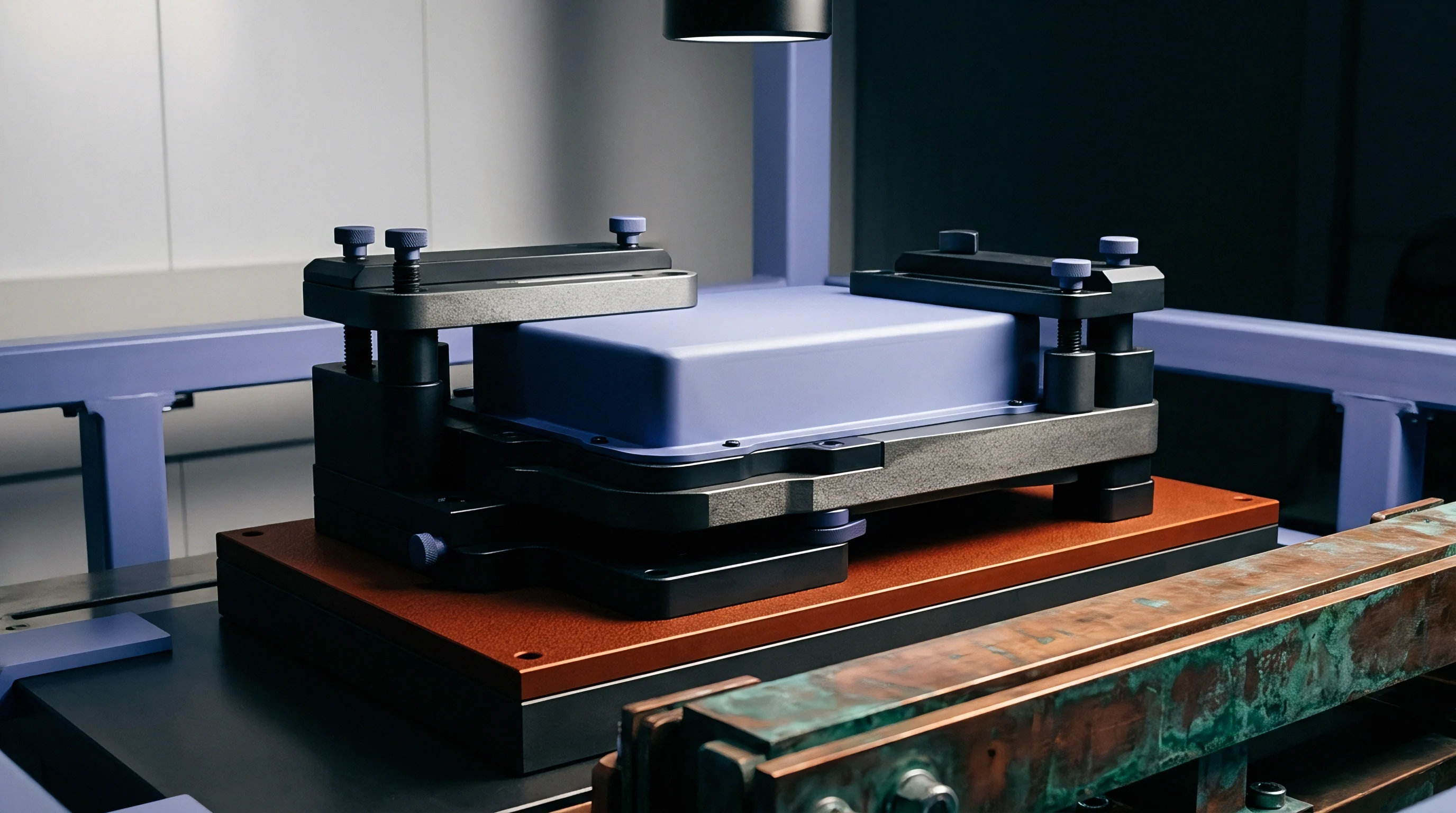
Laboratory qualification of damage algorithms requires precise physical simulation of thermal shock and mechanical strain. Out-of-phase thermo-mechanical fatigue testing systems use servo-hydraulic frames equipped with high-frequency induction heating and internal cooling channels to apply simultaneous temperature and strain cycles to machined specimens. Physical testing validates the damage evolution rates predicted by numerical segregation models under controlled thermal regimes.
Thermo Mechanical Fatigue Bench Testing Protocols
Specialized servo-hydraulic testing rigs use high-frequency induction coils and direct internal air quenching to replicate die casting thermal cycles. Test specimens machined from heavy-section H13 tool steel castings retain natural interdendritic segregation profiles aligned parallel or perpendicular to the loading axis. Temperature cycles rapidly swing between two hundred degrees Celsius and six hundred fifty degrees Celsius while the actuator applies controlled mechanical strain amplitudes from zero point two percent to zero point eight percent.
Out-of-phase strain profiles enforce maximum tensile strain at the minimum cycle temperature, maximizing stress intensity across brittle primary carbides ~ which act as inclusions within regions where solute segregation lowers local solidus temperatures and thermal gradients create strain mismatches ~ just when the matrix reaches its highest tensile strength and lowest ductility.
| Segregation Level | Segregation Index (Ks) | Mechanical Strain Range (%) | Peak Tensile Stress (MPa) | Cycles to Crack Initiation |
|---|---|---|---|---|
| Homogenized Electro-Slag Remelt | 1.08 | 0.45 | 780 | 28,400 |
| Moderate Cast Segregation | 1.42 | 0.45 | 820 | 16,100 |
| Severe Interdendritic Network | 1.85 | 0.45 | 890 | 9,200 |
| Extreme Primary Banding | 2.15 | 0.45 | 940 | 5,400 |
Microstructural Calibration and Strain Mapping
High-resolution digital image correlation captured during mechanical testing tracks strain localization around brittle primary phase particles. Electron backscatter diffraction maps acquired before testing establish crystal orientations and initial kernel average misalignment values. Comparing pre-test microstructures with post-fatigue crack paths confirms that fatigue cracks nucleate preferentially inside high-segregation zones containing coarse eutectic carbides.
Consider a die insert cavity operating under thermal cycles between two hundred degrees Celsius and six hundred twenty degrees Celsius with a peak mechanical strain amplitude of zero point four five percent. Assuming a baseline fatigue strength coefficient of twelve hundred fifty megapascals, a plastic strain exponent of zero point one eight, and a segregation acceleration function where the scale factor equals the segregation index raised to the power of two point two: for a fully homogenized casting with a segregation index of one point ten, the acceleration multiplier is one point two three, predicting a fatigue life of twenty-eight thousand four hundred cycles before micro-crack initiation. For a conventional cast insert with primary carbide segregation at an index of one point five five, the acceleration multiplier jumps to two point six two, cutting predicted fatigue life to thirteen thousand three hundred cycles under identical conditions ~ a fifty-three percent reduction in predicted thermal fatigue resistance.
- Extract tensile and fatigue test coupons from representative thick-section tool steel castings at specified distances from the mold chill wall.
- Perform quantitative wavelength-dispersive X-ray spectroscopy mapping across fifty adjacent primary dendrite arm spaces to determine the distribution of chromium, molybdenum, and vanadium.
- Conduct out-of-phase thermo-mechanical fatigue testing at mechanical strain amplitudes ranging from 0.3 percent to 0.8 percent under thermal cycles matching field die operations.
- Measure surface micro-crack growth rates using interrupted optical microscopy and high-resolution digital image correlation at five-thousand-cycle intervals.
- Fit damage accumulation parameters by non-linear regression using the observed crack initiation cycles against local solute segregation indices.
High temperature homogenisation holds above eleven hundred degrees Celsius reduce solute gradients but increase prior austenite grain diameters.
Although post-cast annealing is often expected to eliminate primary alloy banding, micro-probe chemical maps consistently reveal residual vanadium enrichment.


Continuum
Writing predictive damage models directly into procurement contracts sets clear metallurgical metrics for tool acceptance. Quality criteria based solely on macro-hardness or bulk chemistry fail to catch the microscopic segregation networks that trigger premature thermal fatigue. Incorporating microstructural modeling requirements into foundry supply agreements obliges suppliers to control solidification rates and perform thorough solid-state homogenization anneals.
Foundry Process Control for Dendrite Arm Spacing
Accelerating local cooling through strategic mold chill positioning limits interdendritic segregation during solidification. Placing high thermal conductivity copper-chromium or graphite chills against mold surfaces forming heavy tool cavities reduces primary dendrite arm spacing from one hundred twenty micrometers to under forty-five micrometers. Tighter dendrite spacing redistributes solute elements over much finer spatial intervals, shortening the diffusion distances required during subsequent homogenization anneals.
Because tooling life depends on carbide distribution and avoiding micro-void coalescence before macrocracks can form, castings poured with chill-assisted directional solidification demonstrate uniform, finely dispersed primary carbides that resist micro-void nucleation under severe thermal shock regimes.
- Maximum Primary Dendrite Arm Spacing specified at less than forty-five micrometers measured within twenty millimeters of the active molding cavity surface.
- Segregation Severity Score restricted to level two or lower according to standard microstructural rating charts for primary carbide networks.
- Soaking Temperature Verification recorded via calibrated thermocouples embedded inside the center of the casting during heat treatment cycles above eleven hundred degrees Celsius.
- Non-Destructive Ultrasonic Cleanliness certified to pass flat-bottom hole inspections of one millimeter diameter throughout the working volume of the casting.

Homogenization Heat Treatments and Solute Diffusion
Extended high-temperature soaking cycles promote solid-state atomic migration to smooth alloy composition spikes across dendrite arms. Diffusion annealing between eleven hundred sixty degrees Celsius and twelve hundred twenty degrees Celsius for holds exceeding sixteen hours drives interstitial carbon and substitutional chromium into a homogeneous matrix distribution. Molybdenum and vanadium diffuse far slower, requiring sustained thermal energy to break down primary eutectic networks.
Primary eutectic carbide networks cannot be dissolved by standard austenitizing treatments once casting solidification completes.
Homogenization schedules balancing time, temperature, and prior austenite grain growth can be optimized through Fickian diffusion simulations coupled with grain boundary pinning models. Soaking at twelve hundred degrees Celsius for twenty-four hours reduces the vanadium segregation index in a seventy-five micrometer dendrite arm spacing casting from two point ten to one point fifteen. This microstructural refinement prevents localized low-melting-point eutectic pockets from forming during service, significantly extending crack initiation life.
Incorporating ASTM E1268 segregation banding ratings directly into die procurement contracts grants buyers the right to reject cast tooling blocks exceeding level two microsegregation severity without paying cancellation penalties.


Ledger
Commercial evaluation of cast tool steel tooling hinges on balancing initial pattern costs against long-term thermal fatigue survival. Cast tool inserts offer clear upfront cost advantages over conventional forged blocks by lowering rough machining labor and cutting scrap rates. Uncontrolled microsegregation in cast stock, however, can lead to early thermal fatigue cracking that quickly wipes out initial purchasing savings through lost production uptime.

Landed Tooling Costs and Machining Amortization
Near-net-shape foundry techniques significantly reduce initial metal removal volumes compared to machining solid forged blocks. Machining a complex die casting insert from a solid block of premium H13 tool steel often generates scrap rates exceeding sixty percent of original block weight. Casting to near-net geometry reduces rough electrical discharge machining and milling hours by thirty-five percent, lowering initial non-recurring engineering costs per cavity.
High-temperature homogenization cycles add approximately one dollar and eighty cents to two dollars and fifty cents per kilogram to the casting purchase price. Amortizing this heat treatment cost over the production lifespan of a high-volume aluminum die casting tool reveals a favorable economic return, preventing early failure driven by microsegregation.
| Processing Route | Raw Material & Casting Cost ($) | Machining & EDM Labor ($) | Homogenization & Heat Treat ($) | Expected Die Life (Cycles) | Tooling Cost per 1,000 Parts ($) |
|---|---|---|---|---|---|
| Standard Forged H13 Block | 14,500 | 22,000 | 3,200 | 110,000 | 360.91 |
| Un-Homogenized Cast H13 | 8,200 | 14,100 | 2,100 | 45,000 | 542.22 |
| Optimized Cast H13 (Chilled + Homogenized) | 9,800 | 14,100 | 4,600 | 105,000 | 271.43 |

Lifecycle Economics of Microstructurally Optimized Castings
Investing in high-temperature solid-state diffusion anneals increases initial casting purchase prices while sharply lowering the cost per manufactured part. Un-homogenized castings with severe primary carbide segregation tend to fail around forty-five thousand shots due to thermal craze cracking along interdendritic networks. Inserts cast with chill-controlled dendrite spacing and given twenty-four-hour homogenization anneals achieve thermal fatigue lives matching forged blocks while keeping total tooling expenses lower.
When tool steel castings undergo verified high-temperature homogenization to suppress microsegregation, the resulting extended thermal fatigue life turns higher initial heat treatment expenses into a direct reduction of landed tooling costs over production runs.