Meaning
Physical stress-strain measurements in the linear elastic regime determine the fundamental axial stiffness of solid engineering materials. In battery cell and pack mechanical design, young modulus quantifies how electrodes, separators, busbars, and structural housings deform under applied mechanical forces. The property defines the proportional relationship between tensile or compressive stress and axial strain before permanent plastic deformation occurs.
Material stiffness governs elastic deflection under mechanical pre-load. Its application boundary stops at the yield point, beyond which plastic flow and irreversible material deformation govern structural response.
Elastic Behavior
Material selection balances elastic stiffness against allowable displacement under dynamic thermal and swelling loads. Polyolefin separators feature relatively low values around one gigapascal, permitting flexibility while resisting mechanical puncture. Aluminum busbars and steel module straps possess much higher values near seventy and two hundred gigapascals respectively.
High modulus components restrict structural deflection under load, maintaining tight spatial tolerances in dense pack layouts.
Material Measurement
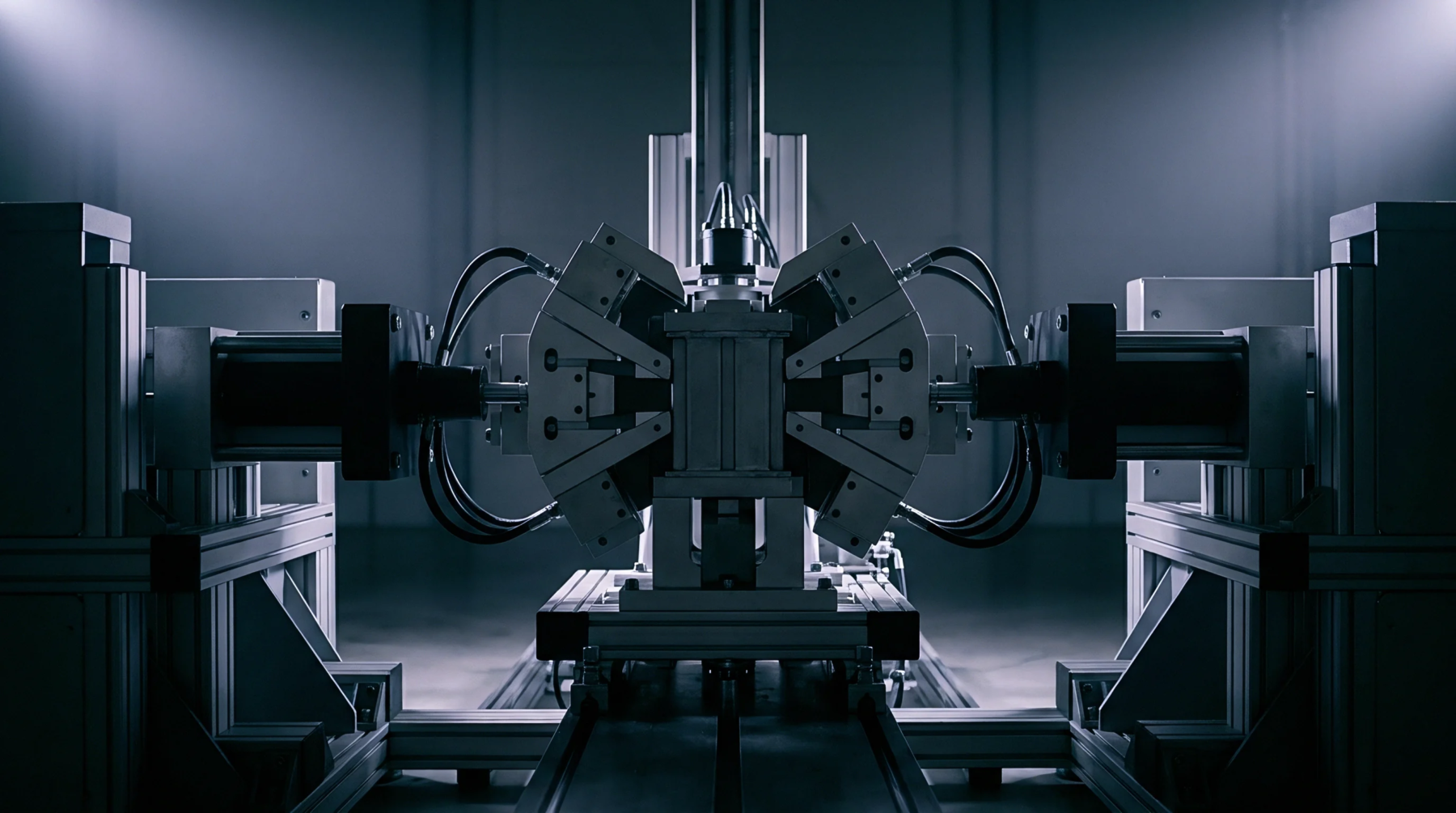
Tensile testing equipment applies controlled extension rates to standardized dog-bone specimens while load cells measure force response. Standard elastic calculations divide axial stress by strain within the linear initial region of the resulting force curve. Temperature variations influence measured values, as elevated temperatures soften polymeric separators and structural adhesives.
Acoustic resonance and dynamic mechanical analysis provide non-destructive alternative methods for evaluating elastic modulus across broad temperature spectra.
Structural Application
Finite element simulations rely on accurate elastic properties to predict mechanical stress distributions across pack enclosures during crash impacts. Miscalculating material stiffness leads to inaccurate predictions of module deflection or busbar bolt loosening. Sourcing engineers specify allowable modulus ranges for raw copper and structural polymers to verify batch-to-batch consistency.
Precise material values ensure structural models match physical crash test results.