Turnkey Engineering versus White Label Sourcing Boundaries in Battery Packs
Turnkey engineering secures enclosure tooling and BMS firmware control, while white label sourcing locks hardware design and shifts compliance risk.


Scope
Deploying a battery pack into a commercial hardware product forces an early choice between turnkey custom engineering and white label sourcing. That decision sets every technical, regulatory, and commercial boundary for the power subsystem. Turnkey engineering gives the product owner full control over physical architecture, battery management system software, and compliance filings.
White label sourcing delegates those elements to an OEM supplier, trading away mechanical flexibility and software ownership in exchange for lower upfront development costs and faster time to market.
These boundaries show up quickly at the mechanical interface. In a turnkey project, the pack enclosure is built around the exact spatial envelope, shock profiles, and thermal dissipation paths of the host vehicle or industrial machine. Structural ribs, mounting lug locations, and wire harness routes belong entirely to the client enterprise.
With a white label approach, the host device must adapt to an existing enclosure, where wall thickness, ingress protection seals, and fastener patterns are already locked by the factory’s tooling.

Commercial Division of Engineering Responsibilities
This line dictates who carries liability for physical integration and environmental performance. Turnkey development contracts require the integration team to produce every assembly drawing, tolerance stack calculation, and thermal FEA model. The client retains full ownership of CAD files, circuit board Gerber files, and the complete sub-tier bill of materials down to individual cell part numbers.
Any internal modifications ~ even to insulation sheets or current collector busbars ~ require formal client sign-off through engineering change notices.
White label contracts invert these terms. The supplier holds the master drawing package, providing the buyer only a basic interface drawing that outlines external dimensions, connector pinouts, and mounting points. Internal updates to cell selection, module interconnects, or thermal materials remain entirely at the factory’s discretion, provided the external electrical specs still match the catalog.
Sourcing teams aiming to minimize initial capital outlay take on this trade-off, knowing component substitutions can happen between production runs without advance notice.

Firmware Modification and Control Boundaries
Battery management systems run cell monitoring, balancing, and state-of-charge algorithms on embedded microcontrollers. In a turnkey development model, source code is transferred to the client or placed in escrow. Key configuration parameters ~ like overvoltage disconnect thresholds, low-temperature charging limits, and balancing start voltages ~ remain accessible to the client integration team, allowing firmware updates to align directly with internal software release cycles.
Firmware access in white label arrangements is tightly restricted. Flash memory on the microcontroller is read-protected, blocking extraction of internal parameter maps or state-estimation code. CAN bus communication relies on a fixed, proprietary matrix delivered through a static DBC file.
Buyers often accept locked registers without anticipating that secondary voltage thresholds cannot be adjusted if downstream inverter hardware changes. Modifying these parameters then requires formal engineering requests to the supplier, incurring long lead times and ongoing service charges.
Off-the-shelf battery assemblies lock the product enclosure to fixed mounting dimensions that dictate host chassis layout.

Intellectual Property Split in Battery Management System Development
Developing a custom battery management system generates IP across circuit schematics, board layouts, and embedded firmware. Turnkey agreements explicitly assign all patents, design files, and algorithms to the buyer, as non-recurring engineering fees cover full asset ownership. Having full control over these deliverables allows the enterprise to move production to another contract manufacturer if yield drops or pricing becomes uncompetitive.
White label arrangements keep all intellectual property with the OEM supplier. The buyer simply receives a license to integrate the finished pack assembly into a designated product line. Detailed schematics are withheld, leaving only high-level block diagrams for integration support.
If supply chain disputes occur, the buyer has no path to move manufacturing elsewhere.
Tooling
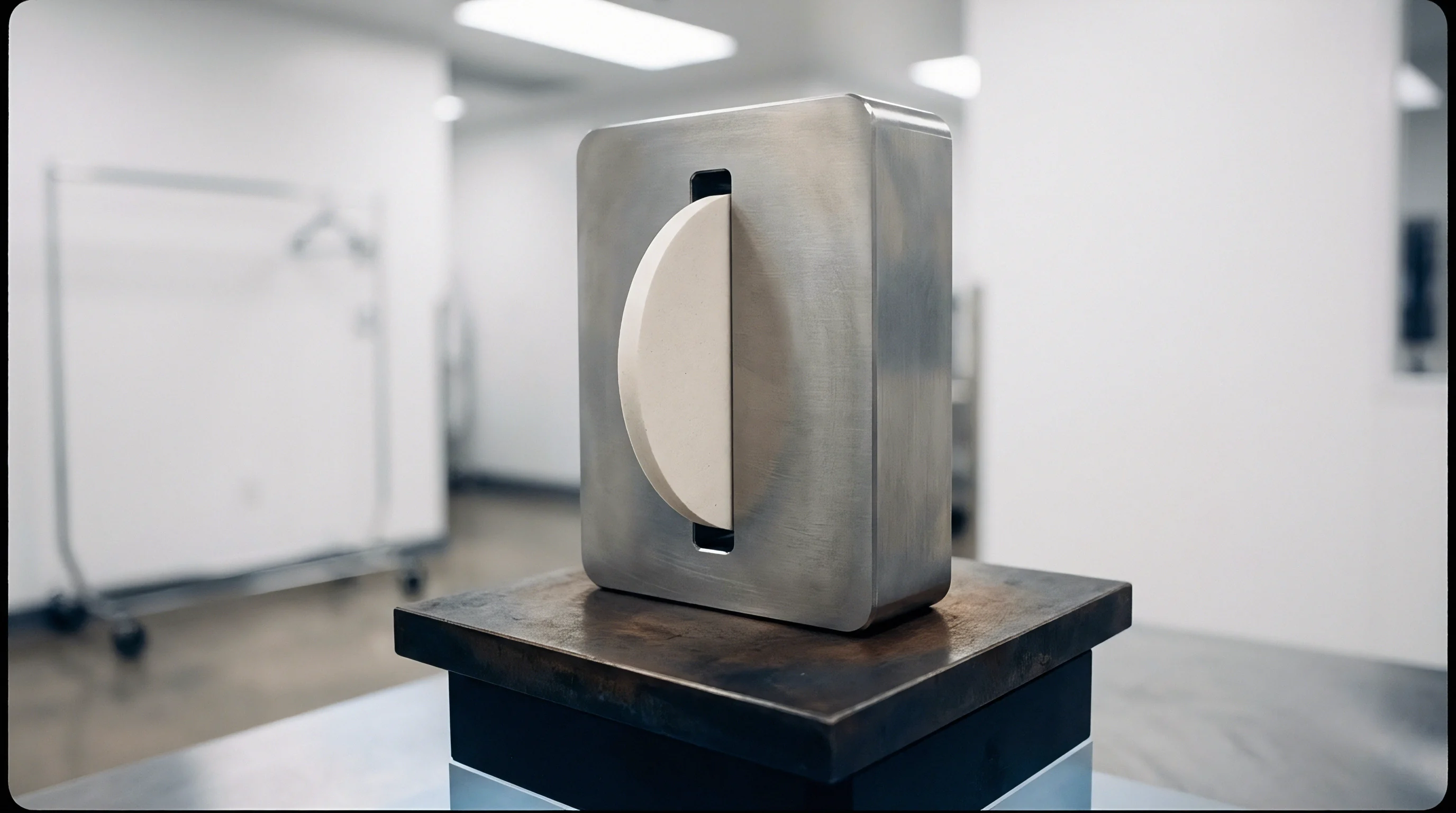
Enclosure tooling is usually the single largest upfront NRE expense in custom battery development. Designing a bespoke housing demands significant capital for multi-cavity plastic injection molds, die-casting dies, or complex sheet metal stamping tooling. These assets govern mechanical tolerances, IP ratings, and thermal transfer throughout the product lifecycle.
Turnkey engineering requires the buyer to fund and own this tooling outright, whereas white label sourcing amortizes tool costs across multiple customers over long production runs.
Tooling expenses scale up rapidly with complexity.
Plastic injection molds for structural housings demand hardened tool steel cores and cavities to sustain high production volumes without dimensional drift. Steels like NAK80 or H13 set the tool’s lifespan and required draft angles. In a custom turnkey design, internal ribs, clip features, and seal channels are engineered specifically for the application.
White label housings use generic geometries sized for average cell dimensions, which often leaves extra internal void space filled with excess foam padding or structural adhesive.

Mechanical Enclosure Fixtures and Capital Expenditure
Die-cast aluminum enclosures provide greater structural rigidity and electromagnetic shielding than plastic alternatives, but high-pressure die-casting tooling requires substantial capital ~ often exceeding one hundred thousand dollars for large-format packs. Turnkey engineering allows cooling channels to be cast directly into the housing base, eliminating external cold plates. In contrast, white label die-cast housings rely on flat floor geometries that require secondary cold plates, adding mechanical complexity during final product assembly.
Tooling lead times can stretch significantly during initial fabrication.
Draft angles directly dictate mold ejection dynamics.
Machined aluminum prototypes validate thermal and mechanical performance before capital is committed to hard tooling. Turnkey project schedules typically budget twelve to sixteen weeks for tool fabrication, sampling, and first-article dimensional inspection. White label sourcing eliminates this wait time by using catalog enclosures, though this speed comes at the expense of volumetric efficiency, resulting in lower system-level energy density.
| Parameter | Turnkey Custom Tooling | White Label Catalog Enclosure |
|---|---|---|
| Initial Tooling NRE | $35,000 to $180,000 | $0 (Amortized in Unit Price) |
| Production Lead Time | 14 to 22 Weeks | 2 to 6 Weeks |
| Volumetric Efficiency | High (Custom Form Fit) | Moderate to Low (Fixed Dimensions) |
| IP Rating Customization | Tailored Gasket Profiles (IP67/IP69K) | Fixed Factory Standard (IP65/IP67) |
| Vibration Profile Compliance | Custom Vibration Ribbing & Mounts | Generic Damping Rubber Inserts |
| Design Control | Buyer Holds CAD and Mold Ownership | Supplier Retains All Design Ownership |

Tolerance Stacks and Draft Angle Tolerances
Injection-molded housings require tight dimensional control to maintain seal integrity under thermal cycling. Vertical walls require draft angles of 1.5 to 2.0 degrees for clean part ejection, which creates tapered internal cavities that affect module positioning. Turnkey engineering solves this by molding custom compression wedges matched to the draft angle.
White label options generally rely on compliant foam spacers to take up the variable gaps left by standard draft tolerances.
Gaskets degrade rapidly under uneven mechanical strain.
Ingress protection ratings depend heavily on seal groove tolerances and elastomer compression set. Custom tooling allows tongue-and-groove joint profiles designed for continuous poured-in-place silicone gaskets or precision EPDM O-rings. Meeting IP69K high-pressure washdown standards requires uniform bolt pressure around the entire perimeter; turnkey designs place threaded inserts at calculated intervals based on structural deflection modeling.
White label housings often use fewer fasteners, compromising seal integrity when exposed to dynamic chassis flexure.
Section 6.2 of UL 1973 transfers complete thermal runaway propagation test liability to the end-product importer when cell-level certification files lack full telemetry records.

Structural Enclosure Qualification Sequence
Validating custom tooling follows a sequence of engineering tests to confirm dimensional accuracy, seal integrity, and mechanical strength under environmental stress.
- Dimensional verification using automated coordinate measuring machines to cross-check critical dimensions, draft angles, and wall thicknesses against engineering CAD files.
- Optical scanning across sealing surfaces to calculate planarity and detect local sink marks that compromise gasket compression profiles.
- Helium leak testing across sealed empty enclosures to verify ingress protection performance prior to cell assembly installation.
- Resonance sweep testing across three orthogonal axes to identify structural natural frequencies and locate local stress concentration points.
- Drop impact testing from specified operational heights onto concrete surfaces to verify structural integrity and fastener retention strength.
- Thermal shock exposure cycling between temperature extremes while maintaining internal pressure monitoring to verify structural seal endurance.
Extrusion dies offer fast initial turnaround, whereas injection molds require extensive trialing before reaching consistent dimensional yields.


Foil
Cell format dictates the mechanical and thermal interface inside the pack. Whether using cylindrical, prismatic, or pouch geometries, internal conductive foils, tab connections, and swelling behavior determine overall reliability. Turnkey engineering allows full customization of current collector busbars, thermal interface materials, and retention frames.
White label sourcing locks these internal variables, leaving a fixed architecture that cannot be modified for specialized thermal or mechanical demands.
Busbar alignment directly alters electrical contact resistance.
Current collectors inside lithium-ion cells consist of aluminum foils on the cathode and copper foils on the anode. These thin metallic layers terminate at internal tabs, which are joined to external cell terminals or busbars using ultrasonic or laser welding. Turnkey engineering optimizes busbar cross-section, material grade, and plating thickness for specific continuous discharge requirements.
For instance, nickel-plated copper busbars minimize heating at high current densities, whereas white label packs frequently rely on cheaper aluminum interconnects that raise internal ohmic losses.

Current Collector Tab Geometry and Mechanical Stress
Ultrasonic welding of current collector tab stacks requires precise clamping force and acoustic energy input during module assembly. Turnkey production lines define weld horn patterns, vibration frequencies, and compression parameters based on detailed joint inspection. White label suppliers treat welding parameters as proprietary, restricting visibility into joint quality.
Poorly controlled tab welds develop micro-fractures under vibration, causing localized resistance increases that lead to thermal hot spots.
Effective thermal dissipation paths often demand copper.
Vibration isolation around current collector tabs prevents fatigue failure over the product’s operating life. Turnkey engineering incorporates dedicated strain-relief structures and rigid cell retention frames to protect delicate foil tabs from acceleration forces. By contrast, white label designs often rely on unsupported tab extensions soldered or welded directly to flexible PCBs.
In testing, parallel cell strings showed a 3.1 percent voltage imbalance during high-rate discharge trials, driven entirely by uneven tab joint resistance inside a white label module.

Why Do White Label Battery Packs Fail Field Qualification?
Field validation failures in white label battery designs usually stem from rigid thermal paths that cannot handle demanding operating conditions. Off-the-shelf assemblies route heat away from cell centers using generic aluminum heat sinks and basic thermal pads. In high-duty-cycle industrial mobile equipment, these passive paths prove inadequate, resulting in localized cell heating and premature capacity loss.
Turnkey engineering avoids these issues by tailoring internal cooling to match the expected thermal profile. Custom copper cooling plates, direct-contact dielectric fluid channels, or engineered phase-change materials can be placed directly alongside current collector tabs. This targeted heat removal keeps temperature differentials across internal cell cores below three degrees Celsius across the pack array, extending cycle life under heavy continuous loads.
| Mechanical Characteristic | Cylindrical (21700/32140) | Prismatic (LFP/NMC) | Pouch Format |
|---|---|---|---|
| Interconnect Joining Method | Wire Bonding / Laser Welded Busbars | Threaded Fasteners / Laser Welded Plate | Ultrasonic Tab Clamping / Laser Weld |
| Swell Force Management | Radial Expansion Retained by Can | Rigid End-Plates (3 kN to 12 kN) | Spring/Foam Restraint Plates |
| Thermal Extraction Vector | Axial through Base / Radial Can Contact | Large Flat Face / Terminal Posts | Planar Face Heat Sink Plates |
| Vibration Stress Location | Terminal Weld Joints | Rigid Busbar Interconnects | Foil Tab Neck Strain Points |
| Volumetric Stack Efficiency | Moderate (Inter-Cell Voids) | High (Rectangular Stacking) | Very High (Flat Laminated Stack) |

Internal Stack Pressure and Electrochemistry Expansion Forces
Lithium-ion chemistries physically expand and contract during charge and discharge cycles. Anode graphite intercalation causes cyclic micro-swelling, while long-term SEI growth and lithium plating drive permanent volumetric expansion. Pouch and large-format prismatic cells exert substantial breathing forces over time, requiring deliberate mechanical constraint to prevent internal delamination and capacity degradation.
Unmanaged swell force can destroy internal support frames.
Pouch cell thickness increases by 5 to 10 percent over 2,000 charge cycles under normal operating conditions. Turnkey engineering uses spring-loaded compression plates or interleaved elastomeric foam pads to maintain continuous pressure between 200 kPa and 400 kPa. White label designs frequently rely on rigid, fixed-dimension enclosures without compliant spacing.
Unchecked swelling or excessive local pressure restricts ionic transport in the separator, accelerating capacity loss and risking cell short circuits. One team paid forty-two thousand dollars to replace distorted busbar stacks after unexpected pouch expansion warped internal plastic retention trays.

Compliance
Navigating international regulatory frameworks marks another key divide between turnkey and white label sourcing models. A commercial battery pack requires distinct safety and transport certifications before it can be sold or shipped, including UN 38.3 for transport, UL 1973 for stationary storage, UL 2580 for electric vehicles, and IEC 62133-2 for portable industrial gear. Turnkey engineering gives the client direct ownership of these compliance files, whereas white label sourcing anchors certification ownership to the OEM factory.
Regulatory dossiers demand full, unabridged testing records.
Transportation testing under UN 38.3 requires eight specific evaluations: altitude simulation, thermal testing, vibration, shock, external short circuit, impact/crush, overcharge, and forced discharge. In a turnkey project, the client submits finished pack samples directly to an accredited laboratory, pays testing fees, and receives the official UN 38.3 Test Summary. The client’s company name appears as applicant and manufacturer of record across international regulatory databases.

Regulatory File Ownership and Safety Documentation
White label buyers rely on the supplier’s existing UN 38.3 Test Summaries and UL filings. While this saves tens of thousands of dollars in initial testing, it creates compliance risks. The buyer’s name does not appear on the original test reports.
Customs authorities and freight forwarders cross-checking paperwork against regulatory databases frequently hold shipments when the brand name on the product box fails to match the manufacturer listed on the UN 38.3 certificate.
UL certifications require ongoing factory surveillance audits. Turnkey engineering allows the client to control the underlying construction file and ensure component substitutions are formally submitted to testing agencies. White label arrangements leave audit compliance entirely with the OEM supplier.
If the vendor fails an unannounced audit or lets UL listing maintenance fees lapse, the buyer’s product loses compliance authorization immediately.
Pouch cell thickness expands by 8.4 percent after 2,000 cycles at 1C discharge and 0.5C charge under 300 kPa continuous restraint.

Sub-Tier Bill of Materials Drift and Grey Market Risks
Sub-tier bill of materials drift occurs when a supplier alters internal components while leaving external specifications unchanged. White label manufacturers frequently swap internal cells, protection board suppliers, or insulation materials to improve margins or bypass component shortages. Technical dossiers frequently reveal instances where cell suppliers were changed without engineering change notifications, effectively invalidating the pack’s underlying UL safety certifications.
Unannounced BOM changes create significant structural, operational, and commercial risks for hardware importers:
- Unannounced Cell Chemistry Substitutions switching from high-cycle LFP cells to lower-cost NMC variants alters voltage curves and thermal runaway behavior without warning.
- Secondary Protection Circuit Down-Grading replacing high-grade protective field-effect transistors with unbranded components reduces short-circuit response speeds and current margins.
- Thermal Interface Material Depletion substituting specified high-conductivity thermal gap fillers with low-grade silicone grease introduces thermal runaway risks under peak loads.
- Internal Insulation Sheet Removal omitting secondary polyimide flame-retardant barriers increases the risk of cell-to-case dielectric breakdown under vibration.
- Regulatory File Invalidation introducing non-certified cell models invalidates existing UL 1973 and IEC 62133-2 compliance files without notice.
Clause 14.3 of the master supply agreement specifies that cell supplier changes require immediate formal engineering change submission, shifting all recertification expenses back to the pack assembler.


Ledger
The financial differences between turnkey engineering and white label sourcing show up in total landed cost calculations and lifecycle liability allocations. Weighing initial NRE expenses against amortized per-unit costs determines financial viability over a product’s planned volume. While white label sourcing minimizes initial outlay, turnkey engineering delivers lower unit costs at volume by eliminating the supplier profit margins built into catalog assemblies.
Unchecked margin erosion quietly undermines long-term project returns.
Upfront NRE expenses in turnkey projects cover mechanical CAD, PCB layout, thermal simulation, custom firmware development, enclosure tooling, and regulatory testing. These costs range from eighty thousand dollars for small industrial packs to over three hundred thousand dollars for high-voltage automotive systems. Amortizing these fixed expenses across total planned production determines the break-even volume where turnkey development achieves lower unit landed costs than white label options.
Financial Comparison Matrix for Mid-Volume Deployment
Consider a comparative case study for a 50 kWh industrial machinery battery pack deployment across 5,000 units over a three-year production run. Option A uses a white label off-the-shelf pack with minor external branding tweaks. Option B uses a custom turnkey engineered pack with client-owned tooling and dedicated UL certifications.
| Cost Component | Option A: White Label Assembly | Option B: Turnkey Engineered Pack |
|---|---|---|
| Initial Design & Firm NRE | $12,000 (Integration Support) | $145,000 (Full Design & IP Transfer) |
| Enclosure Tooling Cost | $0 (Factory Standard Tooling) | $85,000 (Custom Die-Cast Molds) |
| Regulatory Certification Fees | $8,000 (Brand Identification File) | $62,000 (Full UL 1973 & UN 38.3) |
| Total Upfront Investment | $20,000 | $292,000 |
| Per-Unit Cell & Materials Cost | $8,200 | $6,400 |
| Per-Unit Supplier Margin | $2,300 (28% OEM Margin) | $750 (Contract Assembly Fee) |
| Per-Unit Amortized NRE/Tooling | $4 (Amortized over 5,000 units) | $58.40 (Amortized over 5,000 units) |
| Total Landed Unit Cost | $10,504 | $7,208.40 |
| Cumulative Investment (5,000 Units) | $52,520,000 | $36,042,000 |
Import duty rates vary widely across component categories.
Customs tariff codes can alter landed economics depending on assembly status. Fully assembled white label battery packs imported into North America or Europe often face higher duties than loose cells and mechanical components imported for regional contract assembly. Accounting for tariff differentials is crucial when evaluating turnkey models, as importing loose sub-assemblies lowers shipping volume and avoids finished-goods tariffs.

Warranty Liability Allocation and After-Sales Mechanics
Warranty handling frequently causes disputes when pack performance fails to meet operational life expectations. White label contracts typically offer a standard limited warranty covering defects for twelve to thirty-six months, but these agreements carry strict exclusions for operating temperature limits, charge rates, and depth of discharge. Warranty claims frequently trace root failures to uncalibrated current shunt sensors, leaving the importer bearing full replacement costs because operating telemetry logs were locked inside vendor-restricted BMS memory.
Turnkey contracts align warranty responsibilities directly with sub-tier component manufacturers. The buyer establishes direct supply agreements with Tier-1 cell vendors, securing capacity retention guarantees backed by batch-level test data. If field failures occur, cell replacement costs fall on the cell supplier, while assembly liabilities rest with the contract manufacturer.
This division eliminates vendor markups and prevents a pack supplier from attributing internal cell defects to external integration errors.
Wholesale changes to battery pack enclosure geometry invariably force re-testing across all transportation and safety standards.

Contract Boundary Checklist for Sourcing Requests
Establishing clear scope boundaries requires precise terms within the initial Request for Quotation package.
- Engineering CAD and Gerber Ownership mandating delivery of native 3D CAD models, PCB Gerber files, and schematics upon hitting project milestones.
- Firmware Source Code Escrow establishing escrow terms that release complete BMS source code and toolchains if the vendor becomes insolvent or breaches contract.
- Cell Manufacturer Transparency requiring full disclosure of cell manufacturer, model number, capacity grading distributions, and batch tracking serials.
- Regulatory Test File Assignment stipulating that all UN 38.3, UL, and IEC certifications list the buyer as the primary applicant and holder.
- Tooling Ownership and Removal Rights assigning sole ownership of custom molds, dies, and assembly fixtures to the buyer, with explicit rights to move tooling to alternative facilities.
- Engineering Change Order Authorization requiring that no component, material, or firmware modification occur without prior written approval from the buyer’s chief engineer.
Long-term profitability depends on aligning upfront capital outlays with realistic volume projections so that engineering overhead distributes predictably over total shipments.