Forensic Telemetry Auditing for Cold Chain Battery Pack Asset Impairment Warranty Disputes
Forensic auditing of high-frequency BMS current and voltage telemetry pinpoints cold-charging lithium plating to arbitrate fleet battery warranty impairment claims.


Shunt
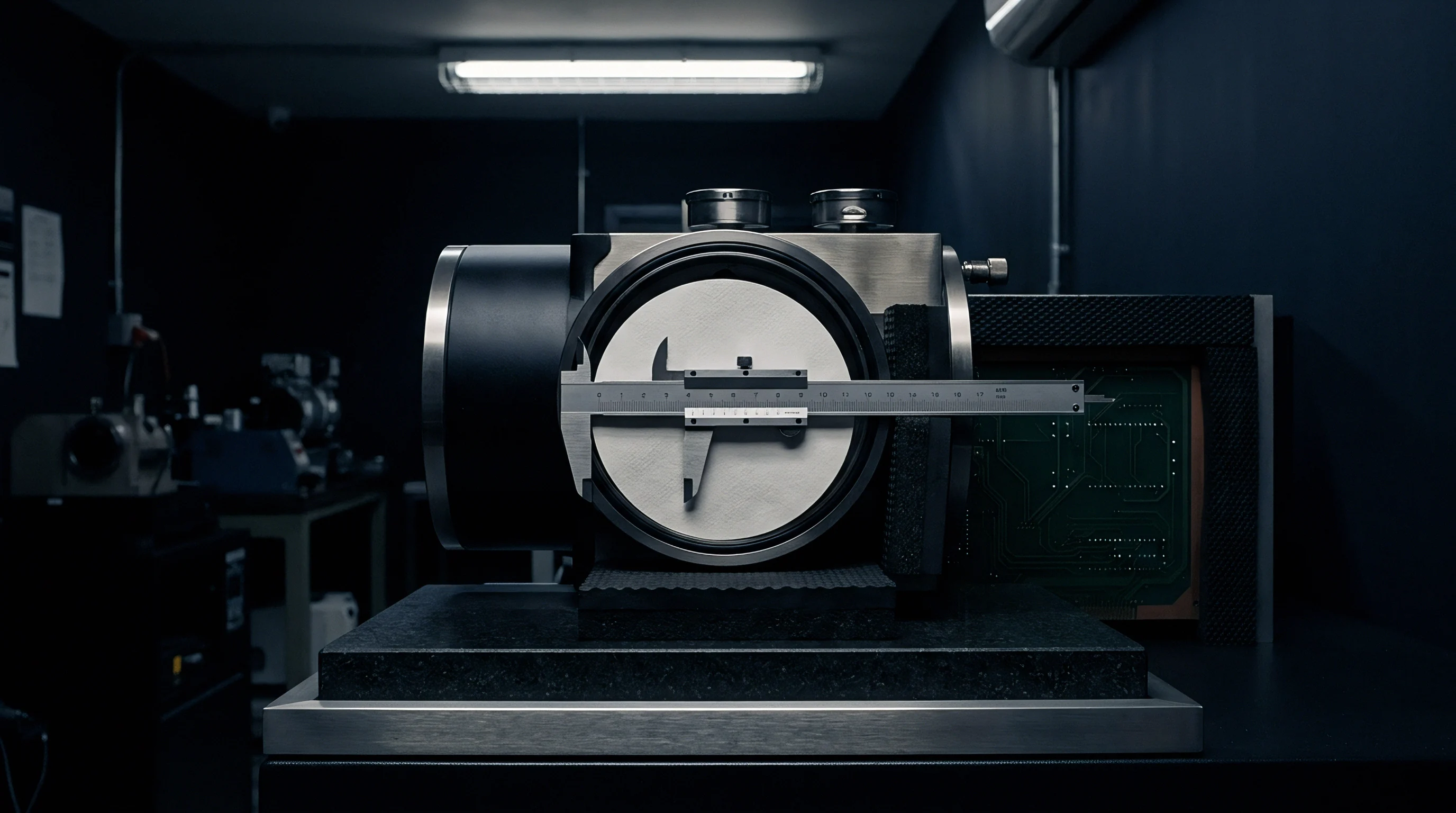
Current sensors deployed inside refrigerated transport battery packs experience severe thermal gradients between the internal busbar environment and subzero ambient air. Resistance values across manganin shunts drift when ambient temperatures plunge to minus thirty degrees Celsius without continuous firmware calibration. A current measurement error of two percent at cold temperatures compounds into an unrecorded ten ampere-hour discrepancy across a single long-haul transport cycle.
Fleet operators attempting to prove cell degradation find their telemetry files questioned when analog front-end temperature compensation registers show uncalibrated offsets.
Current Integration Drift and Sampling Jitter
Battery management systems logging to internal memory often throttle telemetry sampling rates to conserve onboard flash storage during extended transit windows. Analog-to-digital converters sampling pack current at one hertz fail to record sub-second regeneration spikes from transport refrigeration units. High-frequency pulse currents entering cold cells during mechanical compressor cycling cause localized overpotentials without triggering standard overcurrent alarms.
Auditing the raw telemetry log requires cross-referencing analog-to-digital converter clock drift against GPS time stamps from the telematics gateway.
Pack current logging at sample intervals exceeding two seconds omits transient regenerative voltage spikes that accelerate anode degradation at minus twenty degrees Celsius.
When telemetry logs downsample pack data, integration math distorts state-of-charge tracking. Coulomb counting algorithms drift rapidly under dynamic loads at subzero temperatures because charge acceptance drops while internal impedance surges. Unrecorded energy throughput leads to phantom degradation figures during retrospective fleet audits.
Auditors reconcile these discrepancies by running synchronized current logs against independent refrigeration unit engine logs.
| Hardware Subsystem | Nominal Sampling Rate | Low-Temperature Drift Coefficient | Dispute Exposure Risk |
|---|---|---|---|
| Manganin Shunt Resistor | 10 Hz to 1 kHz | plus or minus 15 ppm per Kelvin below zero Celsius | Cumulative Coulomb counting divergence |
| Analog Front-End ADC | 1 Hz logged (throttled) | 0.5 percent gain error at minus 20 Celsius | Undetected regenerative overpotential excursions |
| NTC Thermistor Harness | 0.1 Hz to 1 Hz | plus or minus 1.2 degrees Celsius at pack boundaries | Delayed thermal protection intervention |
| Hall-Effect Current Transducer | 100 Hz logged | 1.8 percent zero-point offset drift below zero Celsius | Phantom continuous discharge during idle cold soak |
A persistent measurement error invalidates downstream warranty calculations before legal teams ever review the pack warranty contract.

Lithium
Graphite anode kinetics slow dramatically as core temperatures fall below freezing. Lithium ions moving through the liquid electrolyte face elevated charge-transfer resistance at the solid-electrolyte interphase. When charging current arrives before heating blankets raise cell temperatures above five degrees Celsius, metallic plating occurs on the graphite particle surfaces.
Plated metal reacts with organic solvent, consuming active inventory and causing rapid, irreversible capacity fade.

Where Do Fleet Telematics Mask Micro-Plating Signatures?
Superficial data logging hides the early electrochemical signatures of cold charging damage. Standard telematics platforms summarize telemetry into five-minute average cell voltages, which flattens the subtle voltage relaxation plateau that marks reversible stripping. High-resolution time-series data captured at ten hertz reveals an extended open-circuit voltage relaxation knee immediately following cold charge termination.
Absence of this high-frequency log leaves asset owners unable to prove whether capacity loss stemmed from manufacturing cell defects or unauthorized cold fast-charging events.
- Voltage Relaxation Signature reveals metallic re-intercalation kinetics during the sixty minutes immediately following current cessation.
- Differential Voltage Analysis tracks phase transition shifts between graphite stages to isolate cyclable lithium loss from active material isolation.
- Impedance Trajectory Mapping flags charge-transfer resistance growth resulting from dead lithium accumulation on electrode surfaces.
IEC 62660-1 test schedules establish that charging lithium iron phosphate cells below zero degrees Celsius without current derating causes immediate five to twelve percent asset impairment.
Cell manufacturers defend warranty rejections by identifying distinctive capacity fade slopes in warranty claim submissions. The transition from linear calendar aging to non-linear knee degradation signals irreversible structural damage from cold plating. Forensic analysis reconstructs the operating boundary from historical current-temperature-voltage matrices.

Will Pack Telemetry Expose Subzero Charge Cycles?
Standard fleet management portals display aggregate temperature channels that average outer enclosure sensors with internal cell modules. External pack skins warm up quickly during charging cycles while internal cell cores remain frozen deep inside the structural insulation. Telemetry algorithms that permit charge current based on module perimeter thermistors trigger severe plating within inner core windings.
Auditing the thermal sensor distribution reveals localized thermal gradients exceeding twelve degrees Celsius across a single seventy-kilowatt-hour subpack.
The electrochemistry of cold-temperature stripping leaves lingering questions regarding the exact proportion of plated metal that chemically dissolves into dead mass versus re-intercalating into graphite layers over subsequent warm rest periods.
Tampering
Non-volatile memory registers on battery management controllers maintain historical records of over-temperature, under-temperature, and over-voltage fault events. Fleet maintenance technicians confronting impending warranty expirations sometimes attempt EEPROM clearing or microcode re-flashing to erase historical cold-charge fault flags. Telematics gateways that transmit directly to cloud ledgers prevent local record alteration by maintaining immutable time-stamped mirrors.
A complete forensic audit correlates local controller memory states against remote server transaction logs to verify event stream continuity.
- Cryptographic Checksum Verification validates that controller firmware binaries match factory golden images without unauthorized register patching.
- Monotonic Cycle Counters expose discrepancies between reported cumulative energy throughput and recorded calendar hour logs.
- Diagnostic Trouble Code Logs capture persistent fault clearing attempts executed via service tool interfaces prior to asset return.
- Sensor Bypass Resistance Audits detect auxiliary resistor networks spliced into thermistor harnesses to deceive controller low-temperature cutoffs.
A missing telemetry payload spanning twenty-four consecutive hours during winter transit creates an evidentiary presumption of deliberate thermal bypass.
Gaps in telematics streams frequently coincide with unauthorized auxiliary charging events at regional depots lacking climate-controlled bays. Depot personnel connect high-output industrial chargers directly to DC busbars, bypassing BMS charge-enable contactors entirely. Forensic analysis detects these unmanaged charging events by identifying discontinuous state-of-charge leaps following extended data blackouts.
Unmonitored current input induces severe lithium plating while the pack controller sleeps.
The supplier routinely claims that communication dropouts represent standard wireless transmission shadows across remote transport corridors.
Appraisal
Asset impairment models for refrigerated transport batteries establish residual economic value based on remaining useful life projections. When forensic telemetry reveals systematic subzero charging, valuation curves drop precipitously below standard straight-line amortization schedules. An eight-year design life compresses into eighteen months of field operation when lithium plating triggers internal short-circuit paths and rapid capacity loss.
Financial auditors adjust equipment asset values downward on balance sheets to reflect accelerated degradation discovered during pack telemetry audits.
| Operating Profile | Annual Capacity Loss Rate | Cycle Life Expectancy to 80% SOH | Three-Year Residual Asset Value |
|---|---|---|---|
| Controlled Thermal Pre-Conditioning (10 to 25 C) | 2.1 to 2.8 percent | 3,500 to 4,200 cycles | 78 percent of original procurement invoice |
| Intermittent Subzero Charging (minus 5 to 0 C) | 6.4 to 9.2 percent | 1,100 to 1,400 cycles | 42 percent of original procurement invoice |
| Severe Cold Fast Charging (minus 20 to minus 5 C) | 18.5 to 27.0 percent | 250 to 450 cycles | 11 percent of original procurement invoice (scrap valuation) |
| Unheated Idle Cold Soak with Micro-Cycling | 4.5 to 6.1 percent | 1,800 to 2,200 cycles | 58 percent of original procurement invoice |
Financial exposure calculations weigh cell replacement expenses, specialized hazardous waste disposal, transport refrigeration downtime, and cargo spoilage liabilities. A single frozen transport battery failure during high-value pharmaceutical transit generates secondary cargo losses exceeding the original pack procurement price tenfold. Insurers demand verified telemetry logs before honoring refrigeration failure claims.
Unaudited data streams lead directly to contested claim denials.
Flawed telemetry interpretation produces inaccurate financial write-downs that misallocate hundreds of thousands of dollars in commercial liabilities.
Settlement
Arbitration panels resolving battery asset impairment disputes evaluate telemetry records against strict contract performance warranties. Warranty terms specify allowable degradation boundaries as a function of temperature-derated energy throughput. When the forensic audit proves that the pack operated within specified thermal boundaries while suffering abnormal impedance growth, liability shifts squarely to the cell manufacturer.
If telemetry proves charging occurred while cell cores rested below zero Celsius, the fleet operator absorbs the total asset impairment loss.
Dispute resolution workflows require structured evidence packages containing raw telemetry streams, calibration logs, and differential voltage degradation analyses. Standardized laboratory testing under IEC 61960 validation protocols confirms field capacity measurements against reference cycle profiles. Independent cycle testing of retrieved cells separates thermal abuse signatures from intrinsic manufacturing defects such as cathode delamination or electrolyte dry-out.
Contractual warranty indemnification clauses nullify battery capacity guarantees whenever logged charge throughput below zero degrees Celsius exceeds zero point five percent of lifetime energy delivery.
Legal dispute filings turn on unambiguous technical metrics rather than subjective operational affidavits. Telemetry log auditing converts raw controller data into legally defensible engineering proof. Forensic analysis provides the exact timeline, charge rates, and internal temperature profiles necessary to settle high-stakes cold-chain asset impairment disputes.
Master supply agreements stipulating that raw, uncompressed CAN-bus log archives serve as the sole evidentiary authority in warranty arbitrations effectively eliminate disputes over missing or interpolated cloud telematics.