Resolving Discrepancies between Sub-Assembly Test Reports and Final Pack Enclosure Documentation for High-Voltage Transport
Reconciling module test reports with final pack enclosure safety documentation requires mapping insulation resistance, UN 38.3 metrics, and transport state-of-charge data.

Trace
High-voltage battery packs designed for heavy commercial vehicles and stationary storage systems rely on modular sub-assemblies tested in isolation before final integration. When individual modules undergo physical, thermal, and electrical qualification, laboratory technicians record baseline values for isolation resistance, cell capacity matching, busbar weld impedance, and mechanical shock response. Integrating these modules into a fully sealed pack housing with structural cross-members, integrated cooling plates, and internal high-voltage wiring runs alters the physical and electrical boundary conditions.
Discrepancies between initial module sub-assembly certificates and final transport compliance dossiers emerge during this enclosure phase.
Paperwork gaps ground whole shipments. Reconciling data streams between sub-assembly test reports and final pack documentation demands tracing every electrical and structural parameter through the manufacturing sequence. Transport regulations under UN 38.3 and Dangerous Goods Regulations governing UN 3480 shipments mandate that the shipped article matches the tested configuration in all safety-critical metrics.
If sub-assembly test summaries report an isolation resistance of 500 megaohms per volt at the module level, but final pack enclosure testing registers 50 megaohms per volt due to harness routing proximity or seal desiccant saturation, dangerous goods inspectors at air freight terminals or port facilities flag the shipment for regulatory non-compliance.
| Test Parameter | Sub-Assembly Module Baseline | Final Pack Enclosure Value | Regulatory Boundary Condition | Transport Discrepancy Severity |
|---|---|---|---|---|
| Isolation Resistance | 500 MOhm at 1000 V DC | 20 MOhm at 1000 V DC | Minimum 100 Ohm/V per ECE R100.03 | High: Hold cargo for insulation check |
| Dielectric Withstand | 3200 V DC for 60 seconds | 2100 V DC leakage threshold | Zero breakdown under IEC 62619 | Critical: Invalidate UN 38.3 summary |
| State of Charge (SOC) | 50% nominal shipping SOC | 28% measured terminal SOC | Maximum 30% SOC under IATA PI 965 | Low: Compliant for air transit |
| Structural Fastener Torque | 9.5 Nm busbar torque | 8.8 Nm post-vibration residual | No mechanical degradation under T.3 | Medium: Requires joint re-audit |
High voltage demands rigid containment. In a standard 800V direct-current architecture, dielectric clearance distance within the sub-assembly module casing often measures 8 millimeters across phase separators. Fitting four sub-assemblies inside a metallic pack enclosure with structural thermal barriers reduces effective clearances at corner junctions where cabling bends toward the main junction box.
Sub-assembly reports document creepage along clean internal module plastics, whereas the final pack dossier must detail creepage across the fully wired assembly, accounting for potential condensation paths inside the IP67 or IP69K sealed structure.
Cell capacity figures tell only half. A sub-assembly test summary demonstrating compliance under UN 38.3.4.3 Vibration (T.3) and UN 38.3.4.4 Mechanical Shock (T.4) verifies structural integrity for that individual sub-assembly mass. Placing eight such modules into a 600-kilogram steel pack frame changes the resonant frequency during transport vibration.
Mechanical energy concentrates at enclosure mounting brackets and internal busbar flex-joints, creating mechanical stresses absent during sub-assembly testing. Reconciling these reports requires engineers to evaluate whether sub-assembly shock testing covers the amplification factors introduced by the pack outer frame.
A sub-assembly short-circuit test conducted at 55 degrees Celsius yields valid transport compliance only when the final enclosure thermal dissipation rating equals or exceeds 2.4 kilowatts per cubic meter.
Documentation discrepancies also arise from State of Charge adjustments made during sub-assembly testing versus pack shipping preparation. Sub-assemblies undergo cell balancing and high-rate discharge tests at 50 percent to 80 percent SOC inside testing facilities. Section IA of IATA Packing Instruction 965 mandates that standalone lithium-ion packs shipped via commercial air cargo must not exceed 30 percent SOC.
When a pack dossier includes sub-assembly safety reports executed at elevated state-of-charge levels, freight forwarders demand explicit proof that the reduced shipping SOC does not alter battery management system protection limits or isolation monitoring thresholds.

Mapping Test Metrics from Module to Enclosure
Translating sub-assembly test results into valid pack transport documentation requires aligning physical boundaries. Module-level qualification captures localized thermal dissipation, individual busbar temperature rises, and local dielectric breakdown values. Inside the pack enclosure, mutual thermal heating between adjacent sub-assemblies increases local ambient temperatures during transport thermal tests under UN 38.3.4.2 (T.2 Thermal Test).
A module tested alone at an ambient baseline of 72 degrees Celsius might pass thermal exposure easily. Packed tightly within a sealed structural enclosure, thermal inertia delays cooling, leading to higher internal temperatures during transit cycles.
Electrical safety documentation must track cumulative resistance and isolation values across every sub-assembly connection. High-voltage battery systems utilize high-voltage interlock loops to detect enclosure open conditions and connector disconnections. Sub-assembly documentation validates the integrity of internal module sense leads, but the pack documentation covers the complete interlock loop including contactors, pre-charge resistors, and pyrofuses.
An isolation reading recorded on an isolated sub-assembly bench omits leakage currents through coolant fluid paths, thermal interface materials, and enclosure potting compounds, leading to discrepancies when comparing sub-assembly reports against whole-pack insulation checks.
Discrepancies in Dielectric Creepage and Clearance
Creepage distances measure the shortest path along the surface of solid insulating material between two conductive parts. Clearance distances measure the shortest path through air between conductive elements. During module production, individual cell-to-cell creepage meets strict IEC 60664-1 standards.
Integrating modules into an aluminum or composite enclosure introduces conductive surfaces in close proximity to module busbars and cell terminals.
Air freight imposes strict charge limits. Transport vibration shifts internal wiring harnesses, potentially reducing clearance gaps between high-voltage cables and the grounded enclosure lid. A sub-assembly test report issued at the factory stage cannot predict cable movement caused by poor wire harness routing inside the final pack casing.
Audit teams comparing module test certificates against final enclosure assembly drawings identify clearance reductions by evaluating geometric tolerances, insulation material continuous temperature ratings, and dynamic movement allowances under maximum mechanical loading conditions.
Suppliers frequently account for discrepancies by claiming that sub-assembly testing under controlled laboratory conditions inherently validates the baseline safety of the enclosed pack, arguing that additional structural casing serves merely as secondary mechanical armor rather than an active component in thermal or dielectric response.


Mismatch
Discrepancies between sub-assembly test reports and pack enclosure dossiers fall into distinct structural and procedural categories. Regulatory authorities reviewing transport filings analyze data consistency across safety parameters defined in UN Manual of Tests and Criteria Revision 7 Amendment 1. When technical files contain conflicting values for dielectric strength, mechanical shock limits, or thermal containment, inspectors reject the transport authorization file, forcing expensive pack-level re-testing or shipment re-routing.
Moisture ingress degrades insulation resistance. Environmental conditions inside shipping containers subject sealed battery enclosures to thermal cycling, causing internal air pressure changes. If an enclosure lacks pressure equalization valves or if breathers become clogged, ambient moisture enters through gasket micro-gaps.
The resulting condensation bridges busbar insulation gaps, dropping pack insulation resistance significantly below individual module benchmark values recorded on dry factory assembly lines.
- Dielectric Leakage Divergence occurs when sub-assembly isolation testing measures pure material insulation, but final pack enclosure tests reflect added leakage through thermal interface pads, coolant channels, and structural adhesives.
- Resonant Frequency Amplification arises when sub-assembly mechanical shock data passes UN 38.3 T.4 criteria, but pack enclosure geometry amplifies transport vibration levels, causing structural fastener fatigue or cable insulation chafe.
- Thermal Containment Mismatch develops when sub-assembly level thermal runaway tests demonstrate no flame propagation, yet final pack enclosure venting restrictions trap toxic gas and elevate internal pressure above casing structural burst limits.
- BMS Isolation Monitoring Calibration Gaps emerge when sub-assembly reports record fixed passive isolation values, while the fully assembled battery management system active isolation monitoring circuit generates dynamic diagnostic faults due to capacitive coupling.
Unmatched numbers halt airport customs. Discrepancies in battery safety files disrupt supply chains by delaying port releases, incurring heavy demurrage fees, and triggering mandatory secondary audits by dangerous goods officers. Under the European Union Battery Regulation (2023/1542), economic operators placing high-voltage batteries into service carry strict legal responsibility for ensuring every item in the safety file matches the physical article offered for transport.
Discrepancies in enclosure grounding resistance invalidate earlier module safety findings whenever transport vibration shifts internal cabling.
Static tests ignore transport vibrations. A module safety report provides valid historical data regarding individual cell performance under elevated temperatures. It fails to guarantee compliance if the enclosure integration alters environmental exposures or mechanical load paths.
Resolving these mismatches requires technical auditors to isolate whether discrepancies originate from measurement error, real physical changes introduced during final pack packaging, or improper sub-assembly boundary definitions.

Taxonomy of Safety Dossier Divergence
Classifying documentary gaps requires separating electrical isolation variances from structural mechanical shifts. Electrical mismatches usually trace to added conductive paths created by assembly hardware, thermal pads, or liquid cooling plates. A single cooling plate spanning four sub-assemblies introduces a shared ground plane absent during isolated module qualification tests.
If dielectric fluid or ethylene glycol trace residue contaminates quick-disconnect couplings during pack assembly, insulation resistance drops below compliance limits despite clean module-level reports.
Structural mechanical divergence stems from mass distribution changes. Sub-assemblies weigh between 15 and 40 kilograms, making them relatively stiff structures with high natural resonant frequencies above 100 Hz. A fully integrated high-voltage transport pack weighs between 300 and 1200 kilograms. The lower natural frequency of the overall structure falls within the power spectral density peak of transport vibration profiles (10 Hz to 50 Hz) specified under UN 38.3.4.3.
Module-level vibration reports fail to predict structural frame bending or weld seam fatigue inside the larger enclosure.

When Does Module Certification Fail to Cover Pack Transport?
Sub-assembly certification fails to cover final pack transport whenever the mechanical, thermal, or electrical boundary conditions of the enclosure alter the physical hazard profile of the internal sub-assemblies. UN 38.3.2.1 explicitly states that sub-assemblies certified independently do not automatically confer compliance upon an assembled pack if the pack structure changes the mass distribution, short-circuit current capability, or thermal runaway containment characteristics.
BMS logs expose thermal history. Integrating sub-assemblies into a closed chassis restricts natural convection cooling, increasing thermal retention during overcharge or short-circuit transport safety tests under UN 38.3.4.5 (T.5 Short Circuit) and UN 38.3.4.7 (T.7 Overcharge). If sub-assembly test reports reflect open-air testing where ambient convection dissipated generated heat, those reports become invalid for an IP67 enclosed pack housing where internal air volume is sealed and isolated.
The lack of thermal dissipation causes faster heat buildup, potentially exceeding cell thermal stability limits during short-circuit fault conditions.
Failing to reconcile sub-assembly reports with final enclosure performance leads directly to shipment detention at logistics hubs, expensive full-scale recertification testing, and potential regulatory fines under international dangerous goods transit laws.


Bench
Physical validation on the test channel bridges the gap between theoretical sub-assembly safety metrics and verified pack enclosure documentation. Testing engineers apply controlled mechanical, thermal, and electrical stressors to measure physical responses under standardized protocols. Sub-assembly test channels measure individual module terminal voltages, cell surface temperatures, and local structural strain under static fixture clamps.
Enclosed pack testing requires complex multi-channel data acquisition systems to capture busbar joint temperatures, internal gas pressure spikes, enclosure skin temperatures, and overall high-voltage isolation status in real time.
Pack enclosures alter physical shock profiles. Under UN 38.3.4.4 (Test 4: Shock), a battery sub-assembly experiences half-sine shock pulses with a peak acceleration of 150 gn for 6 milliseconds, or 50 gn for 11 milliseconds depending on mass. When sub-assemblies assemble into a heavy enclosure casing, the peak acceleration requirement drops according to mass thresholds defined in the UN Manual of Tests and Criteria, but total pulse energy increases.
Laboratory bench comparisons demonstrate that internal module mounting lugs experience higher moment forces inside flexible pack housings than on rigid laboratory test fixtures.
| Test Protocol | Sub-Assembly Module Conditions | Enclosed Pack Conditions | Physical Load Differences | Reconciliation Method |
|---|---|---|---|---|
| UN 38.3.4.3 Vibration | Rigid plate mount, 1 Hz to 200 Hz sinusoidal sweep | Vehicle frame mount points, random PSD profile | Flexible frame amplification, joint shear stress | Finite element dynamic acceleration mapping |
| UN 38.3.4.5 Short Circuit | External resistance less than 20 mOhm at 55 °C | Contactors inline, external resistance less than 8 mOhm | Contactors arc energy, internal busbar heating | Milliohm meter calibration across contactor joints |
| IEC 62619 Propagation | Single module trigger cell heating, open air | Fully sealed pack, active/passive cooling offline | Gas pressure buildup, internal flame deflection | Burst disc sizing and pressure sensor verification |
| UL 2580 Insulation | 1000 V DC dry ambient insulation bench check | Post-IPX9K high-pressure thermal washdown | Moisture path across enclosure perimeter seal | 48-hour post-wash humidity soak isolation test |
Isolation loss cancels transport approval. In dielectric breakdown bench testing under UL 2580 or IEC 62133-2, test personnel apply high-voltage potentials between high-voltage positive/negative circuits and the chassis ground. Sub-assembly testing applies 2500 V DC between module busbars and local frame brackets, verifying insulation resistance exceeds 100 megaohms.
At the enclosure level, this test expands to include high-voltage auxiliary loops, climate control compressors, thermal heaters, and onboard chargers. Cumulative leakage paths across multiple sub-assemblies connected in series or parallel lower the total measured resistance value.
Thermal runaway propagation testing under UL 9540A and IEC 62619 reveals significant differences between sub-assembly performance and enclosed pack behavior. Triggering a single cell into thermal runaway inside an isolated module allows toxic and flammable off-gases (including carbon monoxide, hydrogen, and fluoro-organics) to vent freely into laboratory exhaust systems. Inside a sealed pack casing, flammable gas accumulates rapid overpressure.
If the pack enclosure lacks properly sized pressure relief valves or rupture discs, gas pressure drives hot particulate matter back into adjacent sub-assemblies, accelerating cascade propagation across previously unaffected modules.
UN Manual of Tests and Criteria Section 38.3.5 specifies that any modification to pack structural casing mandates a updated test summary before air freight acceptance.
Customs logistics carry different risks. Validating enclosure safety documentation requires verification of mechanical seal performance after physical transport simulation tests. IP67 ingress protection testing verifies that the enclosure housing prevents water intrusion when submerged under 1 meter of water for 30 minutes.
Bench auditors inspect gasket compression sets, torque retention on perimeter bolts, and structural deflection of top covers following mechanical vibration sweeps. A minor structural yield in top-cover sheet metal under transport vibration can unseat gasket seals, causing water ingress and complete insulation failure during maritime transport exposures.
Physical Shock Transmissibility across Structural Mounts
Mechanical shock energy propagates through the outer enclosure chassis before reaching internal sub-assembly mounting brackets. Transmissibility functions depend on structural stiffness, mass distribution, and damping characteristics of internal isolation mounts. Sub-assembly test reports reflect input shock acceleration delivered directly to module mounting holes.
Within the pack structure, mechanical energy attenuates at certain frequencies while resonating at others.
Accelerometers placed on internal sub-assemblies during whole-pack shock testing frequently measure localized acceleration peaks exceeding input shock profiles applied at external pack mounting points. If internal cabling, wire harnesses, or coolant lines lack sufficient strain relief, dynamic structural flexing causes harness pin pulling, connector latch damage, or insulation chafing against enclosure structural ribs. Reconciling test reports demands checking dynamic displacement figures from whole-pack shock tests against allowable wiring harness play documented in sub-assembly build specifications.
Thermal Propagation in Sealed Pack Casing
Single-cell thermal runaway events within enclosed high-voltage pack structures generate severe thermal and mechanical stresses. Overpressure events inside sealed housings force hot gas through minor openings between sub-assembly partition walls. Sub-assembly test summaries indicating thermal propagation containment inside open-air test chambers do not guarantee containment within a sealed casing.
Bench validation must document gas venting dynamics, flame deflection paths, and thermal barrier degradation rates under sealed conditions. If hot gas venting impinges directly on adjacent sub-assembly high-voltage cables or plastic busbar covers, insulation melts, causing secondary electrical short circuits. Second-order high-voltage short circuits release significant energy, escalating thermal runaway beyond the original trigger sub-assembly.
Reconciling safety documentation requires verifying that pack enclosure flame deflectors and mica insulation shields match structural thermal containment assumptions defined in sub-assembly qualification files.
UN Manual of Tests and Criteria Section 38.3.5 states that any change in assembly structural design, cell arrangement, or enclosure material composition requires complete re-evaluation of the transport test summary, rendering original sub-assembly documentation legally insufficient for dangerous goods declaration.

Gate
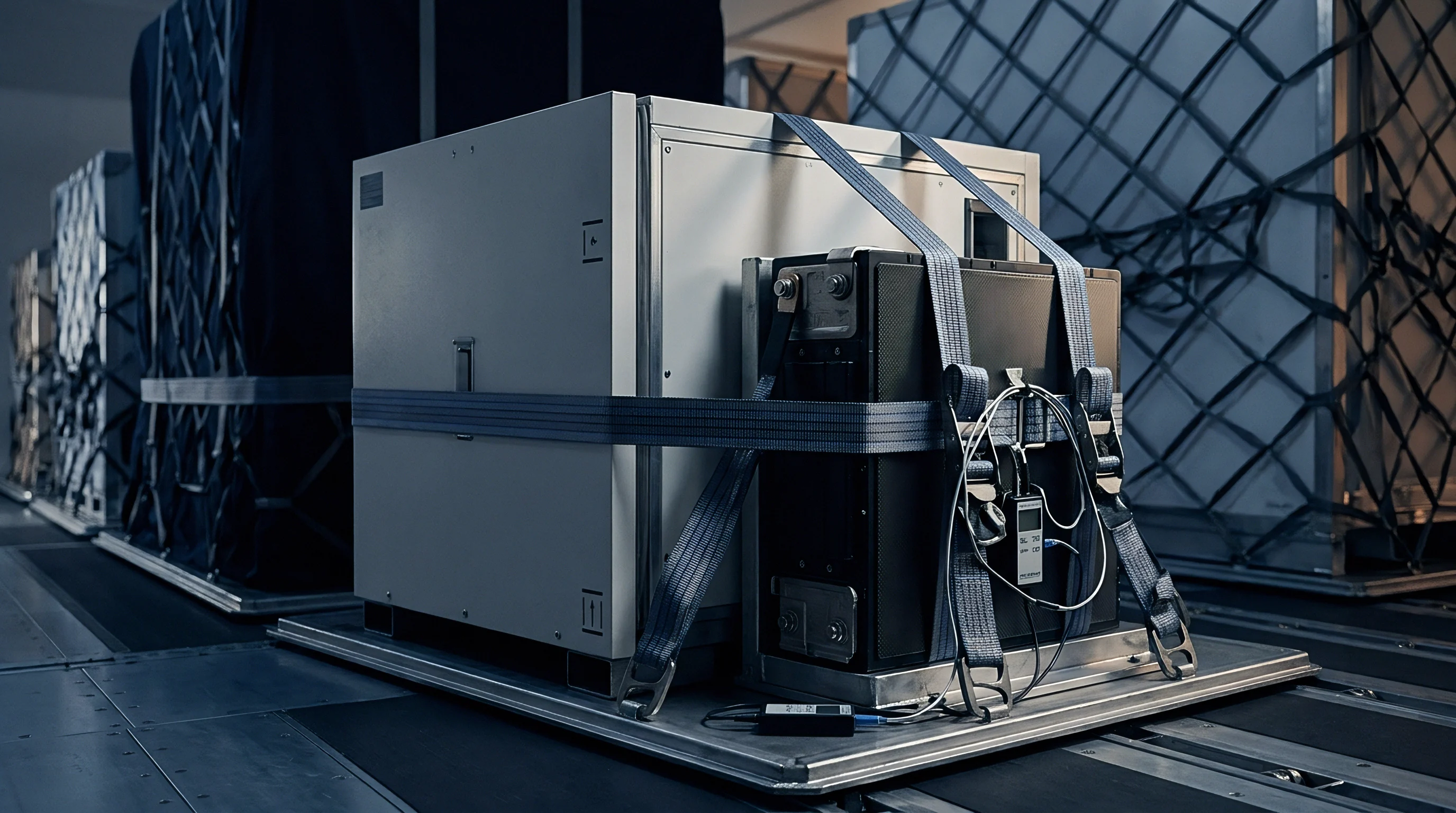
Transport acceptance gates represent final compliance control checkpoints before high-voltage battery packs leave assembly facilities or enter commercial freight networks. Freight forwarders, dangerous goods inspectors, airline safety officers, and maritime port authorities inspect documentation chains to confirm regulatory compliance. A single missing test summary, inconsistent serial number, or conflicting safety parameter between sub-assembly reports and pack enclosure declarations halts cargo movement at border crossings or air cargo terminals.
Forwarders inspect papers before moving freight. Regulatory compliance under IATA Dangerous Goods Regulations PI 965 and PI 967 demands that every shipment carries a valid UN 38.3 Test Summary document. This document synthesizes physical testing evidence into a standard ten-point format defined in UN Manual of Tests and Criteria Section 38.3.5.
Discrepancies between sub-assembly model numbers cited in underlying test summaries and final pack assembly part numbers printed on outer enclosure rating plates generate immediate transport holds.
Reviewing transport compliance documentation requires a systematic audit sequence before releasing battery pack shipments to freight handlers:
- Verify that final pack enclosure part numbers match identification codes listed on UN 38.3.5 transport test summaries.
- Cross-reference sub-assembly serial numbers listed in internal manufacturing build sheets with sub-assembly batch test reports.
- Confirm that State of Charge documentation at final packaging logs measured terminal voltage showing less than 30 percent nominal capacity.
- Inspect outer packaging labels for UN 3480 or UN 3481 dangerous goods markings, handling labels, and cargo aircraft transport restrictions.
- Validate high-voltage isolation test receipts recorded post-final-enclosure leak testing against ECE R100.03 minimum insulation thresholds.
- Audit continuous grounding continuity measurements between exposed metallic enclosure casing and internal ground points, confirming readings below 0.1 ohms.
- Confirm that pressure relief valve integrity seals and IP67 breathers remain intact, unblocked, and properly torqued prior to crate sealing.
Data gaps delay customs release. Reconciling documentation gaps at logistics gates requires fast, clear technical justification backed by baseline engineering test data. When dangerous goods inspectors identify discrepancies, shipping managers must supply engineering change orders, derivative test summaries, or official pack-level qualification addendums that explain physical differences while demonstrating compliance with transport rules.
Unmatched documentation between sub-assemblies and final enclosure labels grounds high-voltage cargo faster than physical seal failures.
Air transport authorities enforce strict rules regarding battery shipping safety. Cargo airlines reject shipments when sub-assembly safety documentation shows incomplete test sequences, such as missing T.7 Overcharge reports for rechargeable battery systems. Reconciling paperwork requires proving that overall pack safety architecture, including integrated BMS overcharge cut-off circuits, provides equivalent or superior protection compared to standalone sub-assembly test requirements.

Forwarding Validation and Customs Inspection
Customs officials and dangerous goods forwarders inspect physical rating plates against accompanying documentation files. Discrepancies in mass figures represent common reasons for shipment detention. If a UN 38.3 test summary documents a tested pack mass of 450 kilograms, but freight weight manifests list gross package weight at 580 kilograms due to outer shipping crates or structural reinforcement, forwarders flag the discrepancy.
Technical files must state pack mass separate from shipping container tare weight.
Serial code verification presents another operational bottleneck. Every sub-assembly within a high-voltage pack carries unique serial tracking codes linked to cell lot grading records, weld bench logs, and insulation test data. If customs authorities perform random physical inspections and discover sub-assembly serial numbers that do not trace back to master transport summary batch logs, the whole cargo lot experiences quarantine until manufacturing trace logs resolve the discrepancy.

UN 38.3.5 Test Summary Reconciliation Protocol
UN 38.3.5 mandates explicit information requirements on every lithium battery test summary. Items include name of cell, module, or pack manufacturer, test laboratory contact details, unique test report identification numbers, testing dates, physical description of the battery article, and a list of executed tests with pass/fail determinations.
When shipping completed packs built from previously qualified sub-assemblies, manufacturers must issue a combined test summary that references both sub-assembly qualification numbers and pack-level enclosure verification tests. The combined summary confirms that structural, electrical, and thermal changes introduced during final enclosure packaging do not compromise sub-assembly compliance certified under original laboratory test sequences.
Verifying transport paperwork against physical pack marking plates before cargo handoff prevents expensive delays at freight distribution hubs.

Margin
Discrepancies between sub-assembly testing documentation and final pack enclosure certifications carry heavy financial, operational, and contractual consequences. Financial exposure extends far beyond direct freight delays at transit hubs. When regulatory non-compliance strands high-voltage battery cargo, costs escalate rapidly through port demurrage charges, administrative fines, air freight re-routing fees, urgent field-inspection team deployments, and full-scale laboratory re-testing requirements.
Certificates cover specified configurations only. Commercial contracts between sub-assembly suppliers, battery pack integrators, and original equipment manufacturers must allocate legal exposure for transport documentation discrepancies. Under Incoterms 2020 Delivered Duty Paid (DDP) terms, the seller assumes all risk and cost associated with transport non-compliance, including import rejections at destination ports.
If non-compliance stems from undisclosed sub-assembly modifications made by a Tier-2 module supplier, Tier-1 pack integrators face severe margin erosion unless supply agreements contain explicit indemnification clauses covering transport hold costs.
| Cost Component | Operational Trigger | Estimated Unit Cost | 20-Pack Container Lot Total | Contractual Responsibility |
|---|---|---|---|---|
| Port Demurrage / Storage | Customs documentation hold exceeding 48 hours | $350 per container / day | $10,500 (30 days hold) | Importer of Record / Seller |
| Dangerous Goods Audit Fee | Discrepancy flag on UN 38.3.5 test summary | $2,800 per inspection event | $2,800 flat audit fee | Pack Integrator / Shipper |
| Pack Re-Certification Testing | Inconsistent sub-assembly vs pack safety file | $45,000 full UN 38.3 sequence | $45,000 lab testing fee | Sub-Assembly Supplier / Integrator |
| Air Freight Re-Routing Penalty | SOC declaration mismatch exceeding 30% SOC | $8.50 per kg freight charge | $102,000 (12,000 kg gross) | Dangerous Goods Shipper |
| Assembly Line Shutdown Claim | OEM factory starved of battery pack inventory | $12,000 per downtime hour | $288,000 (24-hour line stop) | Pack Supplier Warranty / Indemnity |
Consider a worked calculation detailing financial risk exposure for a shipment of 20 high-voltage commercial vehicle battery packs stranded at an international transit hub due to inconsistent isolation resistance documentation between module sub-assembly test reports and final enclosure ratings. Assume a gross shipment weight of 12,000 kilograms, a total cargo value of $1,200,000, and a contract specifying daily liquid damages for downstream assembly line delays. If customs inspectors hold cargo for 30 days while engineers perform on-site isolation re-verification, recertification testing, and paperwork updates, total financial losses reach $448,300 as itemized in the exposure model.
To prevent exposure, purchasing and engineering teams utilize a decision checklist before approving high-voltage battery packs for international transport release:
- Traceability Matrix Validation requires verifying that every sub-assembly serial number mapped into the final pack build sheet correlates with passed dielectric and mechanical test entries in factory database logs.
- Isolation Margin Verification demands confirming that pack-level measured isolation resistance exceeds ECE R100.03 minimum limits by a factor of ten to absorb environmental humidity accumulation during ocean transit.
- SOC Compliance Auditing mandates checking logged terminal voltages immediately before container sealing, confirming state-of-charge levels fall strictly between 20 percent and 28 percent nominal capacity.
- Documentation Scope Review requires verifying that UN 38.3.5 test summaries cover the exact structural casing design, internal cooling plate configuration, and BMS firmware version present in shipped articles.
Unmatched electrical isolation figures between sub-assemblies and final enclosure files stop customs clearance faster than missing transport manifests.
Contract clauses must address liability transfer points during sub-assembly integration. When an OEM specifies cell sub-assemblies from one vendor and contracts an independent pack builder for enclosure assembly, responsibility for transport certification reconciliation must sit with the pack builder. The supply contract should state that the pack builder warrants whole-article UN 38.3 and dangerous goods transport compliance, shifting financial liability for documentation gaps to the party controlling final pack assembly verification.
Whether future international dangerous goods regulations will accept digitized, blockchain-verified sub-assembly test histories in lieu of full-pack recertification when structural casing modifications remain within bounded finite element simulation margins stays an open question across the high-voltage battery transport industry.