Resolving Cryptographic Edge Hash Telemetry Verification Rules under Cold Weather Commercial Arbitration
Cryptographic edge hash telemetry resolves cold weather battery arbitration by proving subzero lithium plating abuse through tamper evident hardware logs.
Freeze
Between minus twenty and minus forty degrees Celsius, subzero conditions push lithium-ion cells into severe electrochemical distress. The mixture of ethylene carbonate and linear carbonates thickens rapidly as ambient temperatures drop toward eutectic limits, and lithium-ion desolvation kinetics at the graphite anode interface fall orders of magnitude below twenty-five-degree baseline values. If charging current arrives before the internal jelly roll reaches thermal equilibrium, intercalating ions run into an insurmountable charge-transfer barrier: starting at zero degrees, metallic lithium plates directly onto the negative electrode surface instead of inserting into the graphite matrix.
Battery energy storage systems deployed across northern latitudes rely on edge telemetry units to govern thermal conditioning circuits. Pack hardware tracks cell voltages, busbar temperatures, module current vectors, and heating blanket relay states, but prolonged subzero exposure introduces several common sensor failure modes:
- Thermistor resistance drift produces false positive temperature signals that trick thermal controllers into disengaging heating elements before core jelly rolls achieve safe electrochemical thresholds.
- Analog converter freeze locks internal register values during severe thermal shock, repeating identical voltage figures across successive polling intervals.
- Optocoupler gain degradation slows safety relay isolation commands during sudden subzero overcurrent spikes, allowing charging current into unheated cells.
- Electrolyte phase separation shifts local impedance unpredictably, generating anomalous voltage transients that can be mistaken for external wiring faults.
When cold-weather operations lead to severe capacity loss or thermal runaway, commercial arbitration tribunals examine historical telemetry to assign financial liability. Disputes typically pit battery management system logs of thermal floor violations against counter-arguments that heating ran continuously while freezing edge hardware corrupted the sensor readings. Resolving that divide requires absolute evidentiary integrity from the raw data stream.
Graphite anode potential drops below zero volts versus lithium reference at charge rates exceeding 0.15C when cell core temperatures remain below minus ten degrees Celsius.
Winter reading anomalies from field sensors and inherent cathode batch defects are frequently cited to explain cell degradation, but that explanation collapses once uncorrupted records show sustained charging current entering cold active material.


Hash
Cryptographic digests generated on an edge microcontroller provide a tamper-evident record of local battery operating conditions. Instead of sending vulnerable plaintext telemetry packets across remote cellular links, edge nodes calculate SHA-256 or BLAKE2b cryptographic hashes directly from synchronized sensor readings. Each packet packages the cell group voltage vector, four-point temperature distributions, current shunt integration values, and the digest of the preceding record, establishing an unbroken hash chain rooted in hardware registers.

Where Do Edge Hashing Chains Break in Subzero Storage?
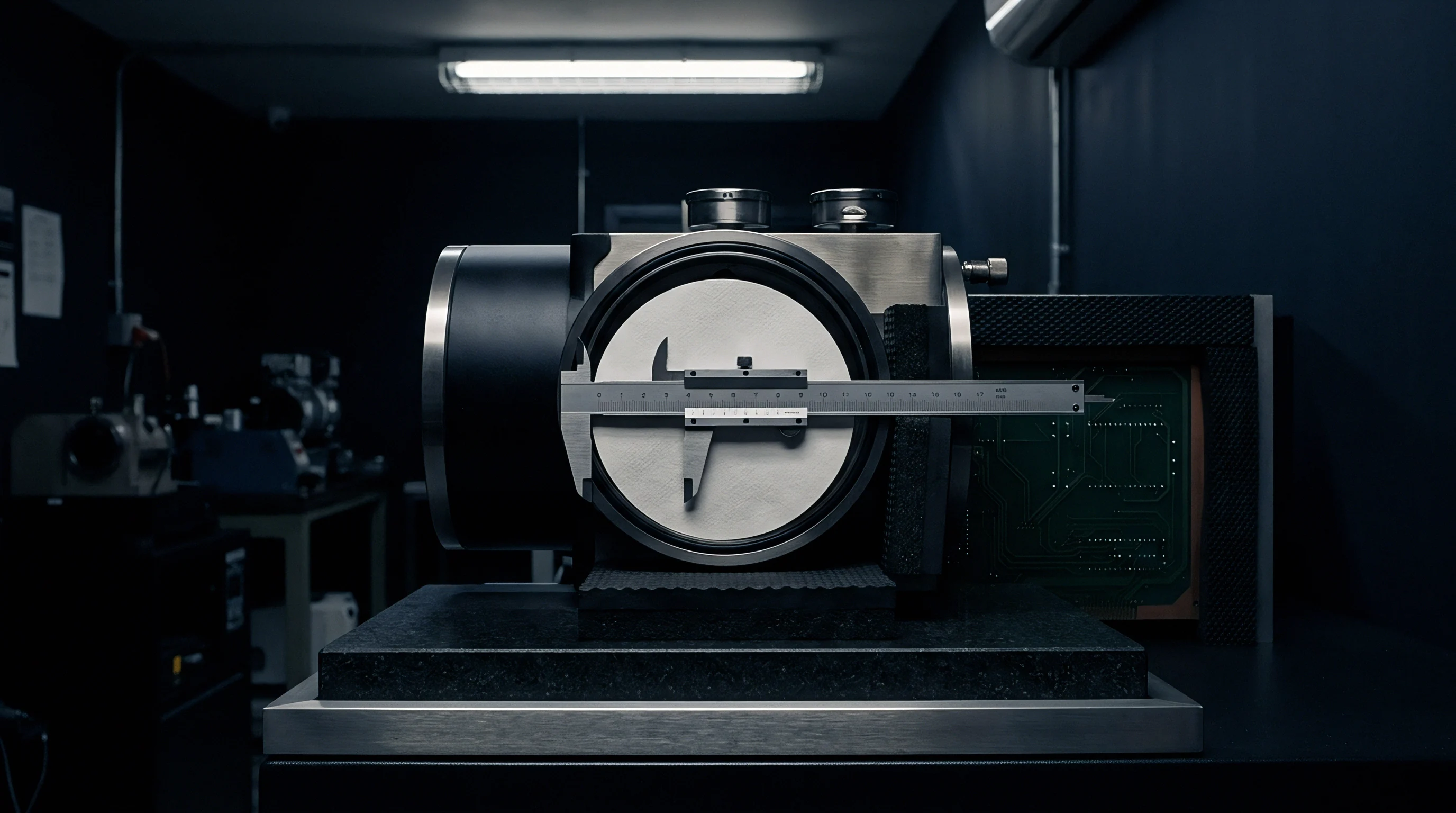
Extreme cold directly affects the silicon executing these cryptographic routines. Industrial microcontrollers rated from minus forty to eighty-five degrees Celsius experience internal timing shifts if board heaters fail, while flash memory write cycles suffer write disturbance and charge leakage as subzero temperatures alter the dielectric characteristics of tunneling oxide barriers. When an edge logger attempts to commit a new hash block to local NAND flash during an unconditioned arctic cold soak, an incomplete page write invalidates the root digest.
| Microcontroller Architecture | Minimum Rating | Subzero Write Failure Rate | Digest Verification Latency | Power Consumption At Extreme Cold |
|---|---|---|---|---|
| ARM Cortex-M4 Industrial | -40 °C | 0.04 percent at -35 °C | 12 milliseconds | 185 milliwatts |
| ARM Cortex-M33 Secure Enclave | -40 °C | 0.01 percent at -40 °C | 18 milliseconds | 240 milliwatts |
| RISC-V Automotive Hardened | -45 °C | 0.002 percent at -42 °C | 15 milliseconds | 210 milliwatts |
| Commercial Grade Flash Logger | -20 °C | 4.80 percent at -25 °C | 85 milliseconds | 95 milliwatts |
Enforcing an arbitration claim requires an unbroken cryptographic audit path. If a subzero brownout resets the microcontroller and creates a gap in the hash chain, the evidentiary value of subsequent telemetry drops significantly. A single break opens the door to technical challenges asserting that missing records were backfilled or modified to conceal improper manual charging commands.
Section 14.2 of standard energy storage supply agreements shifts warranty burdens entirely to the system integrator whenever untampered cryptographic edge records show unheated charging events below manufacturer limits.
Tribunals apply strict verification rules to key management and private signing certificates provisioned on edge modules. If an operator retains root access keys capable of rewriting telemetry tables without recalculating downstream block digests, tribunals treat the logs as non-binding circumstantial assertions. Section 18.4 of the International Chamber of Commerce energy procurement guidelines specifies that encrypted edge telemetry qualifies as self-authenticating evidence only when private keys reside within hardware security modules physically isolated from operating system kernels.
Clock
Real-time crystal oscillators undergo severe frequency shifts when ambient operating chambers drop below zero. Standard 32.768-kilohertz tuning-fork quartz crystals follow a parabolic frequency deviation centered near twenty-five degrees Celsius; at minus thirty degrees Celsius, uncompensated drift exceeds minus one hundred and twenty parts per million. Over days of sustained cold exposure, that thermal deviation accumulates more than ten seconds of temporal error every twenty-four hours.
Warranty disputes often turn entirely on the recorded timing between heating blanket activation and the commencement of charging current. If the system clock drifts forward by fifteen minutes, logged telemetry may portray current flowing while cell temperatures still registered minus fifteen degrees Celsius, even though the heating cycle had already elevated core temperatures to positive five degrees. Conversely, a clock drifting backward can disguise illegal subzero charging as compliant warm-state operation.
Controlling clock drift within cryptographic edge logging units requires specific hardware provisions:
- Temperature compensated crystal oscillators adjust capacitive loading networks dynamically across wide thermal swings, keeping timing error below two parts per million between minus forty and positive eighty-five degrees Celsius.
- Microcontroller register timestamping captures high-resolution peripheral counter values at the precise microsecond an analog-to-digital converter finishes sampling cell terminal voltages.
- Network time synchronization holdover maintains internal cadence models using historical drift coefficients whenever severe winter storms sever external communication links.
- Dual core counter comparisons catch divergent register increments between isolated silicon cores, flagging corrupted temporal intervals before cryptographic signing blocks execute.
Uncompensated quartz crystals lose time predictably under persistent arctic thermal loads.
When an uncompensated real-time clock drifts past the contractually stipulated telemetry tolerance window, tribunals routinely invalidate the entire operating log, leaving the project owner completely defenseless against manufacturer counterclaims for replacement costs exceeding several million dollars.
Damage
Metallic lithium deposition across graphite anode surfaces proceeds whenever charging occurs below electrolyte transport thresholds. At twenty-five degrees Celsius, lithium intercalation occurs smoothly as solvated ions shed their solvent shells and diffuse between graphene sheets. Below zero degrees Celsius, charge-transfer resistance increases dramatically while solid electrolyte interphase impedance climbs fivefold, producing an overpotential that forces the negative electrode potential below zero volts relative to the lithium reference electrode.

How Does Lithium Plating Evade Standard Current Thresholds?
Manufacturer guidelines frequently set static limits, permitting 0.1C current down to minus ten degrees Celsius, but this uniform threshold ignores local current density concentrations within large prismatic cells. In large-format 280-ampere-hour and 314-ampere-hour lithium iron phosphate cells, core temperatures lag surface measurements by up to twelve degrees Celsius during rapid thermal cycling. Exterior thermistors report positive operating temperatures while the cell core remains frozen.
| Cell Core Temperature | Charge Rate | Overpotential Shift | Plating Initiation Point | Three-Year Capacity Loss |
|---|---|---|---|---|
| 25 °C | 0.50C | +12 mV vs Li/Li+ | No Plating Observed | 4.2 percent |
| 5 °C | 0.30C | +3 mV vs Li/Li+ | No Plating Observed | 6.8 percent |
| -5 °C | 0.15C | -18 mV vs Li/Li+ | 45 Minutes Elapsed | 14.5 percent |
| -15 °C | 0.10C | -65 mV vs Li/Li+ | 8 Minutes Elapsed | 28.4 percent |
| -25 °C | 0.05C | -140 mV vs Li/Li+ | Instantaneous | 46.2 percent |
Verifying whether subzero charging occurred involves checking hash-linked differential capacity curves, where differentiating capacity against voltage exposes distinctive stripping peaks during subsequent discharge cycles. Plated metallic lithium that maintains electrical contact with the graphite matrix re-oxidizes during discharge, generating a characteristic voltage plateau between 3.32 and 3.38 volts in lithium iron phosphate cells. If the edge logger records high-resolution discharge voltage profiles, forensic analysts calculate the exact quantity of plated lithium by integrating the area beneath this stripping curve.
Tribunals evaluate procedural integrity by reviewing the complete forensic reconstruction dossier:
- Hardware root certificate extraction confirms that raw telemetry originated from the certified secure element physically bonded to the battery management circuit.
- Hash chain sequential validation verifies that every SHA-256 block digest recalculates correctly without timestamp discontinuities or altered payload bits across disputed operational periods.
- Thermal gradient mathematical modeling correlates logged surface thermistor telemetry against multi-physics thermal models to derive true core jelly roll temperatures during charging events.
- Differential voltage profile analysis identifies the presence of thermodynamic phase changes corresponding to reversible and irreversible metallic lithium stripping reactions.
An unresolved question remains whether low-level dead lithium accumulations can be distinguished from benign solid electrolyte interphase growth using purely edge-hashed voltage telemetry without destroying the disputed cells for physical microscopy.
Forum
Commercial arbitrators evaluating energy storage capacity guarantees demand unambiguous evidentiary foundations before shifting liability to pack manufacturers. Standard rules under the International Centre for Dispute Resolution require claimants to establish both the chain of custody and the technical reliability of computer-generated telemetry. Cryptographic edge hashing eliminates allegations of server-side data manipulation, but the party presenting the evidence must establish that the local edge node operated within valid physical calibration parameters throughout the dispute timeline.
Telemetry dropouts during severe winter conditions remain a frequent battleground in expert testimony. When subzero blizzards knock out wireless backhaul for days at a time, edge loggers cache hashed telemetry blocks locally until communication restores. If local storage overflows, FIFO circular buffers overwrite older records, creating unrecoverable gaps in the hash sequence.
Splicing separate hash chains across an operational void forces tribunals to decide whether incomplete logs satisfy evidentiary burdens.
Arbitrators accept uncorrupted hardware telemetry over retrospective simulation models when disputed degradation timelines conflict.
Technical compliance requires systematic alignment between contractual operating limits and hardware logging capabilities. Sourcing contracts must clearly specify cryptographic standards, timekeeping error tolerances, and sensor sampling frequencies for extreme thermal environments before projects commence. In commercial arbitration proceedings, raw telemetry signed by tamper-evident hardware consistently outmatches post-hoc theoretical models.