Aspiration Pressure Optimization in Gas Atomized Silicon Anode Production
Maintaining stable negative aspiration pressure during liquid silicon gas atomization optimizes spherical particle morphology and suppresses satellite formation.

Draft
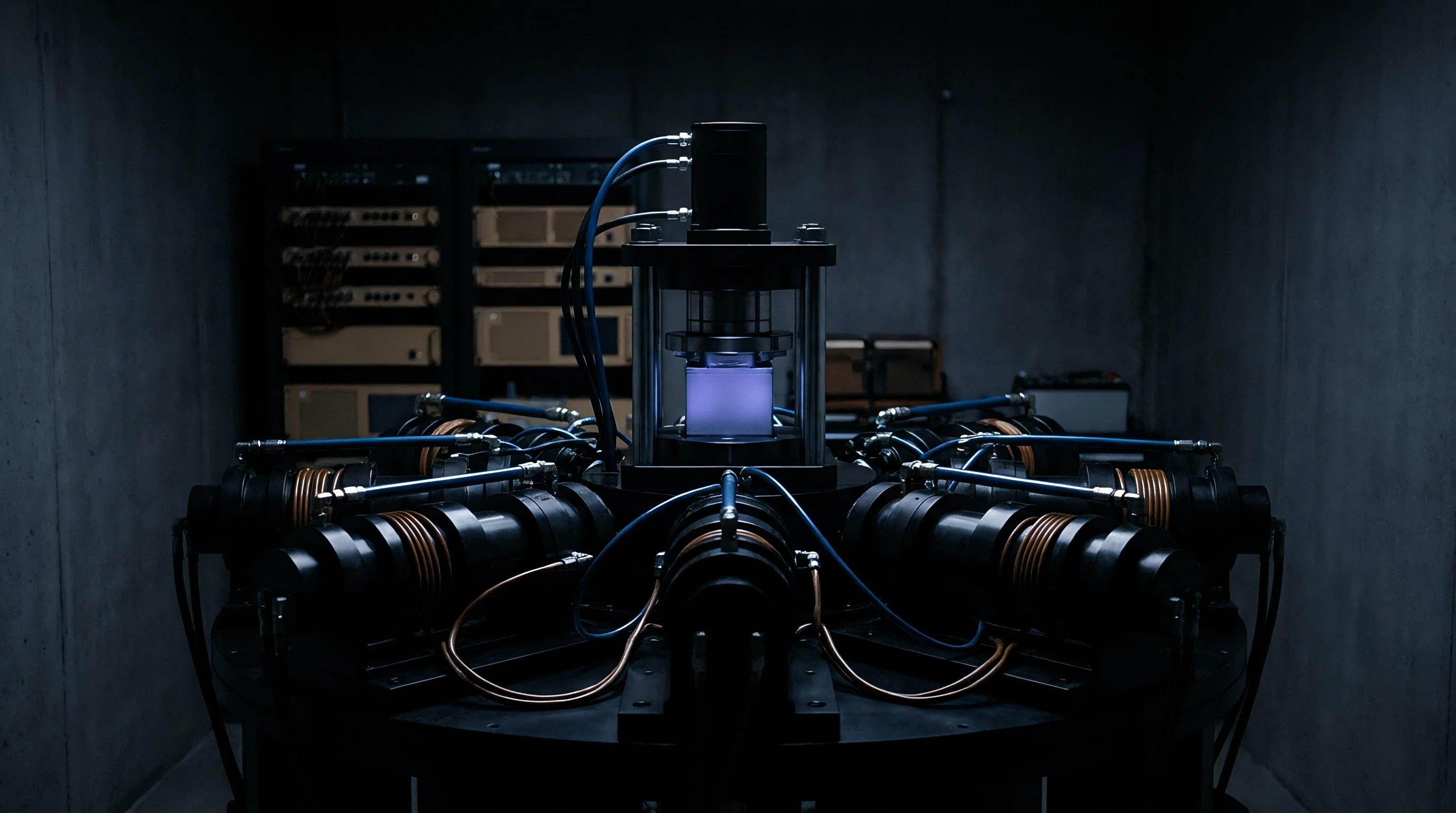
Close-coupled gas atomization nozzles convert liquid silicon melts at 1450 to 1550 degrees Celsius into ultra-fine spherical powders required for high-energy battery anodes. Suction pressure at the exit orifice of the liquid delivery tube governs melt stream stability and determines whether liquid silicon flows continuously or freezes catastrophically during spraying. High-velocity inert gas exiting the nozzle annulus creates a localized pressure depression at the end of the melt tip.
Gas manifold supply pressure, nozzle orifice geometry, and chamber ambient pressure establish this differential pressure, referred to as aspiration pressure. Maintaining a negative aspiration pressure between 5 and 25 kilopascals prevents melt back-pressurization, where gas surges upward into the tundish, causing explosive splashing and instant freezing of molten silicon.
Liquid silicon presents challenging physical properties during atomization due to high melt viscosity, elevated surface tension of approximately 0.73 Joules per square meter, and high reactivity with ceramic nozzle materials. Standard iron or nickel powder atomization tolerates minor pressure fluctuations at the nozzle tip without immediate shut-off. Silicon rapidly erodes alumina or zirconia delivery tubes, altering the inner diameter and shifting the liquid delivery rate mid-run.
As the inner diameter expands from 1.5 millimeters to 1.8 millimeters, suction efficiency degrades, shifting aspiration pressure toward positive values. Negative differential pressure draws liquid silicon downward through the exit orifice, thin-film shearing occurs across the ceramic edge, and steady primary disintegration begins before liquid droplets contact supersonic argon jets.
An aspiration pressure depression exceeding 15 kilopascals at a melt superheat of 100 Kelvin prevents ceramic nozzle tip freezing during high-gas-ratio atomization runs.
Gas delivery manifolds operating without dynamic pressure regulation experience feed oscillations when argon mass flow fluctuates. Transient pressure drops in the gas chamber translate into sudden loss of tip vacuum, triggering flow surges that form oversized liquid silicon droplets. Droplet coalescence inside the atomization zone leads to highly irregular particles that fail battery packing standards.
Controlling aspiration pressure requires continuous measurement of the differential pressure between the upper tundish atmosphere and the atomization zone directly adjacent to the melt stream exit.
- Ceramic orifice erosion increases liquid flow rates uncontrollably, overwhelming gas-jet kinetic energy and causing liquid silicon to drip into the chamber without atomizing.
- Gas supply pressure dips collapse suction at the liquid tip, allowing molten silicon to wet the exterior face of the ceramic nozzle and form thick rings of dead metal.
- Tundish pressure drift alters the hydraulic head above the delivery orifice, forcing operator adjustments to atomization gas volume to prevent liquid stream breakup inside the tip.
- Chamber back-pressure build-up reduces the effective pressure differential across the nozzle annulus, driving particle size distribution toward coarse tail fractions.
Sub-optimal aspiration settings cause immediate melt tip encrustation, forcing thermal shutdown and wasting entire silicon batch charges in the atomization tower.

Plume
Gas jet interaction with the descending liquid silicon stream transforms a solid liquid column into an expanding spray pattern of micro-droplets. Kinetic energy transfer depends directly on the gas-to-metal mass ratio, nozzle exit Mach number, and gas density at the impact point. Close-coupled geometries focus multiple supersonic argon jets onto the liquid stream within 2 to 5 millimeters of the delivery tip exit.
Peak kinetic transfer occurs when aspiration pressure remains tightly coupled to gas manifold pressure, establishing supersonic gas velocities of Mach 1.8 to 2.2 at the focal region.

Breakup Dynamics and Satellite Control
Primary breakup shears the liquid silicon column into thin liquid sheets and primary ligaments. Secondary breakup occurs within microseconds, where hydrodynamic drag forces overcome droplet surface tension, shattering ligaments into fine spherical liquid droplets. Higher gas-to-metal ratios elevate shear forces, driving mean droplet diameters downward.
Rapid cooling at rate steps above 100,000 Kelvin per second solidifies liquid droplets before spherical relaxation completes if atomization gas temperature remains unheated. Cold argon jets accelerate thermal quenching, preserving metastable structures but increasing micro-porosity within individual silicon particles.
Recirculation zones beneath the nozzle tip draw fine, already-solidified silicon particles back into the high-temperature core of the atomization stream. Solid particles strike molten or semi-molten silicon droplets, bonding permanently to form satellite structures. Satellites destroy particle sphericity, increase specific surface area, and degrade slurry packing density during electrode manufacturing.
Adjusting nozzle spray angles and atomization chamber suction profiles controls recirculation eddy strength, clearing fine particles from the primary liquid flight path.
| Aspiration Pressure (kPa) | Gas-to-Metal Ratio (kg/kg) | Mean Particle Size D50 (µm) | Fine Tail D10 (µm) | Satellite Content (Vol %) |
|---|---|---|---|---|
| -5.0 | 3.5 | 18.4 | 4.2 | 14.2 |
| -12.0 | 5.2 | 8.7 | 2.1 | 6.5 |
| -18.5 | 7.0 | 5.1 | 1.1 | 3.8 |
| -24.0 | 9.5 | 3.4 | 0.6 | 9.1 |
Sequential Optimization Protocol for Atomization Spray Stability
Establishing repeatable particle morphology requires systemic calibration of gas pressure, melt superheat, and suction stability across production runs.
- Preheat the liquid silicon tundish and boron nitride delivery nozzle to 1500 degrees Celsius under an inert argon atmosphere to eliminate thermal shock during initial melt contact.
- Establish chamber ambient pressure at 101.3 kilopascals while initiating argon flow through the atomization nozzle manifold at 2.5 megapascals to verify static tip vacuum levels.
- Adjust secondary argon trim valves until differential suction at the nozzle tip reaches a target depression of negative 15 kilopascals prior to opening the tundish stopper rod.
- Release molten silicon at a controlled superheat of 120 Kelvin above liquidus while monitoring real-time pressure transducers mounted on the liquid delivery housing.
- Modulate atomization gas manifold pressure dynamically to compensate for nozzle tip bore erosion, holding aspiration depression within a plus or minus 1.0 kilopascal tolerance band.
Uncontrolled spray angle widening causes liquid silicon droplets to strike atomization tower walls prior to full solidification, creating massive wall scale deposits that jeopardize batch purity.

Sieve
Particle classification converts raw atomized silicon powder into targeted size distributions for cell chemistry requirements. Gas-atomized silicon yields broad particle size curves ranging from sub-micron fines up to 50 microns. Anode slurry processing demands narrow particle size distributions, typically holding D50 between 3 and 8 microns, while capping D90 below 12 microns and limiting D10 above 1 micron.
Sub-micron silicon fines present excessive specific surface area, leading to severe solid electrolyte interphase development and rapid electrolyte consumption during initial cell formation cycles. Coarse particles above 15 microns undergo massive volume expansion during lithiation, causing localized mechanical failure of the binder matrix and electrode delamination from copper current collectors.
Does Dynamic Aspiration Adjustment Reduce Satellite Formation?
Dynamic aspiration pressure control reduces satellite formation by eliminating recirculating eddy currents beneath the delivery tip. Holding negative aspiration pressure precise suppresses gas reversal along the spray boundary. Fine particles remain swept downward into the cooling zone rather than recirculating upward into liquid silicon streams.
Reduced satellite fraction lowers overall particle surface roughness, lowering BET specific surface area measurements from 8.5 square meters per gram down to 3.2 square meters per gram without post-process chemical etching.
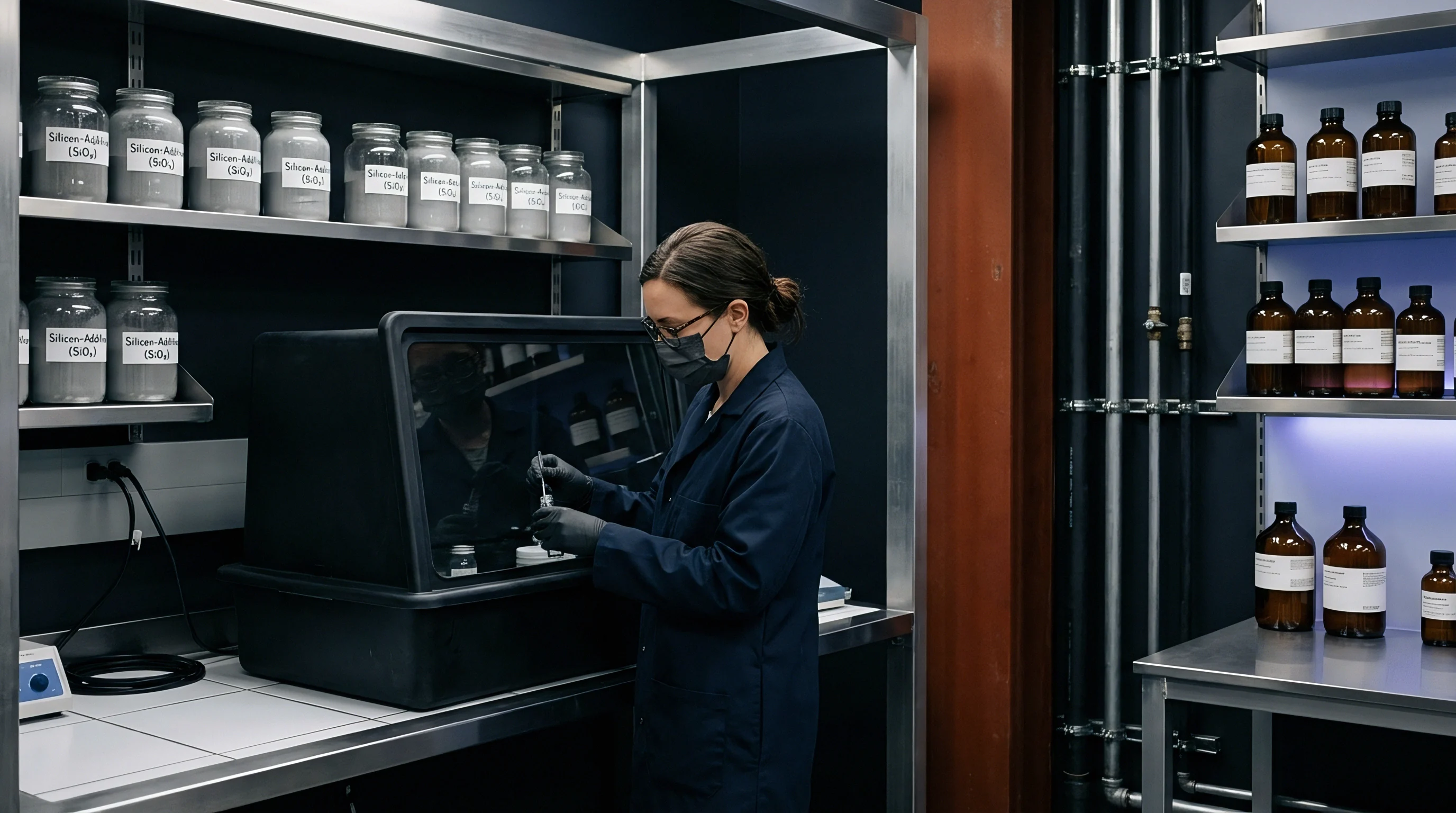
Separation of fine fractions occurs via multi-stage air classification coupled with ultrasonic screening systems under sealed argon environments. Oxygen exposure during classification must remain below 50 parts per million to prevent uncontrolled growth of surface oxide layers. Liquid silicon atomization produces particles coated with native silicon oxide layer thicknesses ranging from 1.2 to 2.5 nanometers.
Uncontrolled oxygen exposure during handling or classification increases oxide thickness beyond 5 nanometers, creating an insulating silica shell that degrades initial coulombic efficiency and increases electronic impedance across the composite anode.
Adherence to ASTM B214 screening standards combined with inline oxygen monitoring prevents silicon powder degradation during inert classification passes.
Recycling kerf silicon from photovoltaic wafer cutting historically provided low-cost feedstock for battery materials, but residual slurry contaminants like polyethylene glycol and carbide abrasives ruined electrochemical yields. Atomizing high-purity metallurgical silicon upgraded through directional solidification replaces recycled scrap, ensuring sub-ppm levels of iron, aluminum, and calcium in the final powder lot.
Published literature frequently cites a benchmark silicon particle yield of 65 percent within the 3-to-10 micron range for close-coupled atomization nozzles. This value rests on laboratory-scale trials using small batch tundishes with un-eroded boron nitride tips operating at 5 kilograms per minute melt flow rates. Industrial production runs above 500 kilograms per hour exhibit nozzle erosion that degrades this yield figure to 42 percent unless active aspiration pressure compensation is integrated into gas feed control loops.
Broad particle size distributions can be re-melted, though energy recovery losses and oxide accumulation during re-melting reduce net metal yield by 12 percent per recycle pass.

Paste
Integrating gas-atomized silicon powder into composite anodes requires managing rheological behaviors in wet slurry mixing operations. Spherical particle morphology achieved through optimized aspiration pressure reduces slurry viscosity at high shear rates compared to irregular milled silicon particles. Lower slurry viscosity permits higher solids loading in mixing vessels, increasing dry coating densities while reducing solvent evaporation energy requirements during coating line drying passes.
Polymeric binders, including polyacrylic acid and carboxymethyl cellulose paired with styrene-butadiene rubber, interact directly with the surface chemistry of atomized silicon. Hydroxyl groups on the thin surface oxide layer form hydrogen bonds with polyacrylic acid carboxyl groups, establishing an elastic network capable of accommodating a 300 percent volumetric expansion during lithium insertion. Irregular particles with high surface roughness concentrate mechanical stress during cyclic expansion, tearing binder bonds and causing binder degradation after fewer than 100 deep discharge cycles.
Worked Example: Particle Packing and Binder Consumption Arithmetic
Calculating the binder demand and coating density variations between optimized spherical silicon and irregular particle lots illustrates the structural impacts on cell production.
Assume a composite anode formulation specifying 15 percent by weight gas-atomized silicon powder, 80 percent by weight synthetic graphite, 2 percent conductive carbon black, and 3 percent polyacrylic acid binder. The production batch processes 500 kilograms of dry active material powder blend.
Case A utilizes optimized spherical silicon with a D50 of 5.5 microns, a BET specific surface area of 3.1 square meters per gram, and a tap density of 1.38 grams per cubic centimeter. Case B utilizes satellite-rich, irregular atomized silicon with an identical D50 of 5.5 microns, but a higher BET specific surface area of 7.8 square meters per gram and a lower tap density of 0.92 grams per cubic centimeter due to particle agglomeration.
In Case A, total silicon surface area within the 500 kilogram batch calculates as follows:
Silicon Mass = 500 kg × 0.15 = 75 kg = 75,000 grams
Total Silicon Surface Area (Case A) = 75,000 g × 3.1 m^2/g = 232,500 square meters
In Case B, total silicon surface area within the identical batch calculates as follows:
Total Silicon Surface Area (Case B) = 75,000 g × 7.8 m^2/g = 585,000 square meters
The polyacrylic acid binder requirement directly scales with total solids surface area to maintain a uniform surface coverage layer of 1.2 milligrams per square meter across all particle interfaces. Total surface area including graphite (BET 1.5 m^2/g) and carbon black (BET 60 m^2/g) sums to 900,000 square meters for Case A matrix components.
Case A binder coverage density = 15 kg PAA / 900,000 m^2 = 16.6 milligrams per square meter, sufficient to form a continuous molecular network. In Case B, total matrix surface area jumps to 1,252,500 square meters. Maintaining identical PAA mass (15 kg) drops binder coverage density to 11.9 milligrams per square meter, leaving 28 percent of active particle surface exposed without functional binder coverage.
To restore binder layer integrity in Case B, total PAA binder mass must increase from 15 kilograms to 20.8 kilograms. Adding 5.8 kilograms of binder reduces active material weight fraction from 97 percent down to 95.8 percent, directly decreasing cell volumetric energy density by 14 Watt-hours per liter at the pack level.
A specific data point regarding silicon expansion mechanics cites a maximum allowable silicon loading of 18 weight percent in graphite matrixes before electrode swelling exceeds 25 percent at full state of charge. This figure originates from single-layer pouch cell tests evaluated under 0.3 megapascals external stack pressure using 1.0 molar LiPF6 electrolyte in EC/EMC solvent blends. Increasing external constraint pressure to 0.8 megapascals allows identical silicon loads to run without binder shearing, shifting the commercial limitation from particle chemistry to mechanical module design.
Spherical particle geometries with low satellite counts lower internal friction inside wet slurry mixtures, preventing particle bridging during high-speed slot-die coating passes.
Margin
Gas atomization economics center on gas consumption efficiency, electrical energy inputs, and particle size classification yields. High-pressure argon gas represents the primary operational expenditure line item in silicon powder production. Argon recirculation loops equipped with multi-stage compressor systems, cryogenic gas purification, and particulate filtration recover up to 98 percent of atomization gas.
Gas loss rates scale directly with atomization chamber sealing integrity and aspiration pressure stability. Running high aspiration depressions without gas recovery increases production costs beyond commercial viability for automotive battery application markets.
Cost Sensitivity Matrix and Gas Economics
Choosing atomization inert gas compositions involves direct trade-offs between chemical reactivity and operational cost. Nitrogen gas costs significantly less than argon but reacts with molten silicon above 1200 degrees Celsius to form silicon nitride micro-inclusions. Silicon nitride particles act as electrochemically inactive sites, triggering localized current crowding and lithium plating during high-rate charging.
Pure argon remains mandatory for high-purity battery-grade silicon atomization despite higher supply expenses.
| Gas Type | Argon Recycling Efficiency (%) | Gas-to-Metal Ratio (kg/kg) | Target Cut Yield D10-D90 (%) | Direct Atomization Cost ($/kg Silicon) |
|---|---|---|---|---|
| Argon (Once-Through) | 0.0 | 6.0 | 48.0 | 28.50 |
| Argon (Recirculated) | 95.0 | 6.0 | 48.0 | 8.20 |
| Argon (Recirculated) | 98.0 | 8.5 | 62.0 | 5.75 |
| Nitrogen / Argon Blend | 95.0 | 6.0 | 52.0 | 6.10 |
Selection Criteria for Atomization Equipment and Gas Loop Integration
Equipment buyers evaluate specific hardware capabilities and gas loop operational metrics when qualifying powder atomization suppliers.
- Closed-loop argon purification system capacity determines maximum allowable runtime before oxygen and moisture levels in recirculated gas exceed 5 parts per million.
- Automated aspiration pressure trim valves must demonstrate response times under 50 milliseconds to compensate for transient nozzle clogging during high-throughput pouring.
- Boron nitride nozzle tip thermal gradient tolerance dictates maximum melt delivery runs before mechanical cracking forces line stoppage and batch contamination.
- In-line laser diffraction particle sizing integration provides immediate feedback on mass median diameter shifts, allowing automated gas pressure adjustments mid-run.
Quantifying total cost per kilogram of usable silicon powder requires estimating virgin yield scrap re-melting costs. Unusable coarse particles above 15 microns and sub-micron fines below 1 micron undergo briquetting and vacuum re-melting. Re-melting introduces secondary oxide growth, raising baseline oxygen content by 400 parts per million per recycle generation.
Re-melting carries an average cost penalty of $1.85 per kilogram of reprocessed material, though variance across different induction furnace designs ranges from $1.20 to $2.60 per kilogram. Cell buyers mitigate this uncertainty by stipulating maximum virgin feedstock ratios in material procurement contracts.
Standard material supply agreements mandate that delivered silicon powder lots must not contain more than 2.0 percent by weight of particles exceeding 15 microns, enforcing severe price deductions or lot rejection if post-sieve classification fails.
Dossier
Executing procurement contracts for gas-atomized silicon anode materials demands rigorous technical specifications that link powder physical metrics directly to battery cell warranty liabilities. Certificate of Analysis documents accompanying silicon shipments must validate chemical purity, surface oxygen content, particle size distribution statistics, tap density, and moisture contamination levels. Incoming quality control protocols at cell manufacturing plants verify compliance using automated sampling plans prior to releasing material lots into active production slurry lines.

Qualification Metrics and Incoming Verification Tolerances
Testing regimes for incoming powder lots establish baseline variance bounds for physical and electrochemical properties. Laser diffraction measures particle size metrics, requiring three independent samples per 500-kilogram container to confirm D10, D50, and D90 parameters remain within target bands. Inductively coupled plasma mass spectrometry measures metallic impurity concentrations, setting maximum limits of 50 parts per million for iron and 20 parts per million for aluminum.
X-ray photoelectron spectroscopy determines oxide layer thickness, ensuring surface silica coverage remains uniform without forming thick crystalline silicon dioxide domains that impede lithium ion transport.
Thermal stability testing during UN 38.3 transport safety qualification depends on powder specific surface area and residual free silicon micro-fines. Fine silicon powders with high surface areas exhibit self-heating tendencies when exposed to ambient moisture, reacting slowly to generate hydrogen gas and heat. Packaging specifications require hermetically sealed aluminum-laminated bags backfilled with high-purity argon gas, enclosed inside steel drums approved for Class 4.3 dangerous goods transport.
Establishing clear ownership boundaries between material supplier, cell producer, and pack integrator prevents extended liability disputes when field failures occur. The material supplier warrants powder physical metrics, chemical purity, and particle size distribution limits stated on approved engineering drawings. The cell manufacturer assumes complete responsibility for slurry mixing, binder cross-linking, electrode coating uniformity, and initial cell formation cycling protocols.
If cell capacity fade accelerates due to binder tearing caused by excessive particle satellites, material lot records and retain-sample analysis determine whether the fault resides in out-of-spec powder geometry or flawed slurry processing execution.
Long-term cycling verification requires building standardized 21700 or 4680 cylindrical test cells using verified silicon-graphite blended anodes. Cells undergo 1000 continuous charge-discharge cycles at 1C discharge and 0.5C charge rates under controlled 25 degrees Celsius ambient conditions, tracking capacity retention against baseline specifications. Data logging from incoming lot retain samples links raw atomization parameters, aspiration pressure settings, and classification records directly to multi-year cell performance trends, closing the quality control loop from liquid metal processing down to pack-level energy retention guarantees.