Cross Border Supply Chain Cell Degradation Mitigation during Oceanic Transit Containers
Precision state of charge settings and active reefer climate control prevent capacity loss and internal resistance growth during oceanic container transit.
Cargo
Extended ocean transit exposes sealed freight containers to environmental extremes that alter battery chemistry. On Transpacific and Europe-Asia lanes, internal air temperatures near the deck surface of standard dry containers regularly top 55 degrees Celsius. In tropical corridors, high humidity inside non-insulated container walls drives condensation cycles that break down secondary packaging and corrode terminal contacts.
Long-distance sea freight also subjects cargo to continuous dynamic stress. Vessel propulsion machinery generates low-frequency vibration between 2 Hz and 100 Hz, while wave impacts hit the vertical and longitudinal axes with transient mechanical shocks. Sustained harmonic excitation stresses current collector welds, accelerates micro-delamination across electrode layers, and disturbs passivated solid electrolyte interphase layers on graphite anodes.
When electrode coatings vibrate under thermal stress, active material particles dislodge from collector foils. This loss of active material increases internal direct-current resistance and reduces overall electrochemical capacity. At the same time, heat and humidity soften secondary packaging, letting cell stacks shift inside corrugated outer cartons, wearing through insulating sleeves and creating latent short circuits.
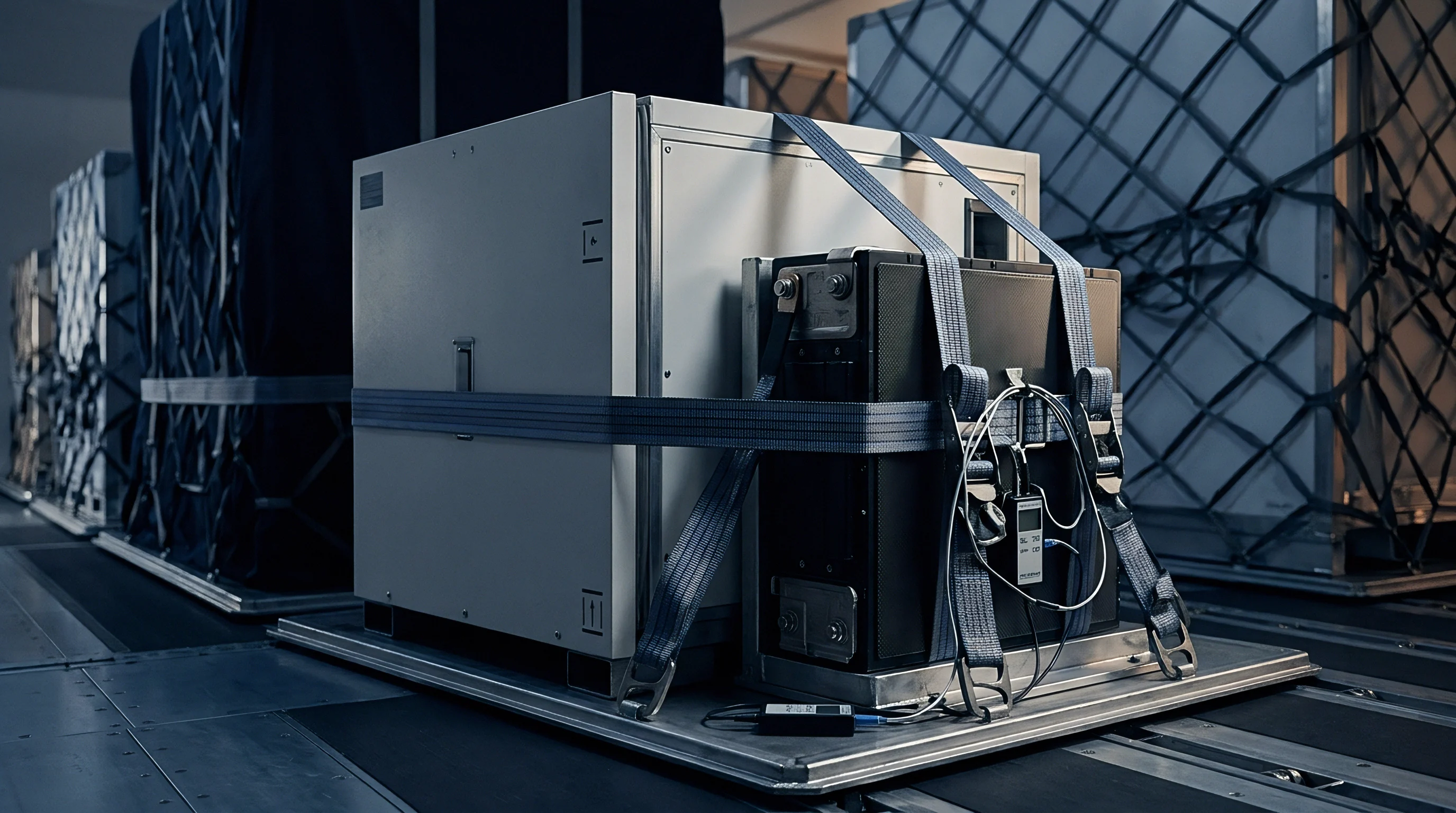
Ocean transit exposes battery shipments to ambient thermal cycling and continuous dynamic vibration across maritime shipping lanes.

Environmental Stressors across Oceanic Routes
Solar radiation on top-tier container stacks drives sharp diurnal temperature swings. Internal air temperatures can shift by up to 30 degrees Celsius over twenty-four hours, expanding and contracting enclosed air volumes. Moisture pulled through container vents condenses on cell surfaces as night temperatures drop, forming liquid films that react with exposed metal hardware.
Standard lithium-ion formulations fare poorly in unconditioned container environments. Electrolytes with lithium hexafluorophosphate salt react with trace water vapor passing through compromised seals, generating hydrofluoric acid that attacks transition metal cathodes. Sustained exposure to temperatures above 40 degrees Celsius triples parasitic side reactions at electrode interfaces, causing permanent capacity loss well before arrival.
- Anode Passivation Breakdown elevated thermal energy destabilizes anode film layers, forcing continuous electrolyte consumption to re-passivate exposed graphite surfaces.
- Collector Tab Weld Cracking continuous harmonic vibration from ship propulsion fatigues ultrasonic and laser welds joining internal foil stacks to external terminals.
- Cathode Metal Dissolution high temperature combined with high charge states dissolves transition metals from cathode lattices, causing irreversible active mass loss.
- Separator Mechanical Wear cyclic friction between cathode and anode plates under container vibration thins polymer separators, increasing self-discharge rates.
- Package Seal Failure extreme pressure variations inside sealed pouches due to temperature-induced electrolyte gassing compromise hermetic perimeter welds.

Electromechanical Impact of Marine Micro Vibration
Low-frequency engine resonance combined with swell movement imparts continuous mechanical energy to stacked cargo. Standard marine vibration profiles concentrate power spectral density between 5 Hz and 20 Hz, overlapping with the natural mechanical resonance frequencies of dense cylindrical arrays and suspended pouch stacks. Resonance amplifies displacement forces within individual cells.
These forces cause internal components to flex repeatedly against outer casing walls. In pouch cells, this flexing distorts pressure across electrode faces, producing localized high current density during initial charging. In prismatic cells, persistent vibration stresses rigid internal busbars, raising joint resistance across terminal assemblies.
Capacity fade occurring between the factory gate and the port of discharge is often attributed to normal storage stabilization rather than transport-induced degradation.
Storage
Managing cell charge levels prior to container loading controls the rate of parasitic side reactions during ocean transit. Cells shipped at high charge states maintain elevated electrochemical potential, driving solvent oxidation at cathode surfaces. Lowering the state of charge reduces surface potential, significantly slowing calendar aging over multi-week voyages.
Lithium-ion cells are commonly shipped at a 30 percent state of charge to meet international transport safety standards while limiting self-discharge. At this level, nickel-rich cathodes remain in lower energy states that resist transition metal dissolution and oxygen evolution. Lithium iron phosphate formulations maintain structural stability across wide temperature ranges, showing minimal baseline loss during transport heat spikes.
Temperature interacts exponentially with state of charge following Arrhenius kinetics. Storage at 45 degrees Celsius doubles the degradation rate measured at 35 degrees Celsius, whereas lowering storage temperature to 15 degrees Celsius suppresses cathode dissolution almost entirely. Balancing transit temperature against charge level ensures predictable capacity retention upon arrival.
| Chemistry Type | State of Charge (%) | Transit Temp (°C) | Capacity Loss (%) | ACIR Growth (%) |
|---|---|---|---|---|
| NMC 811 Cylindrical | 30 | 15 | 0.12 | 0.45 |
| NMC 811 Cylindrical | 30 | 35 | 0.48 | 1.85 |
| NMC 811 Cylindrical | 50 | 45 | 1.95 | 6.20 |
| LFP Prismatic | 30 | 25 | 0.05 | 0.15 |
| LFP Prismatic | 50 | 45 | 0.35 | 1.10 |
State of Charge Calibration for Transit
Precision discharge fixtures set cell charge levels within tight tolerances prior to primary packaging. Automated factory equipment must bring cell voltages within a 5-millivolt window across an entire production batch, as variations in initial charge state cause uneven aging across a lot and complicate subsequent module matching.
Discharging cells below 20 percent state of charge introduces distinct risks during extended transit delays. Copper current collectors dissolve into electrolyte solutions if cell voltages drop below 1.5 volts, forming copper dendrites that trigger severe internal shorts upon recharge. Sourcing specifications therefore set strict floor and ceiling limits on pre-shipment voltage.
Maintaining cells at thirty percent state of charge during a thirty day ocean voyage restricts calendar capacity loss to under zero point two percent at twenty degrees Celsius.
Comparative Chemistry Kinetic Decay Profiles
Nickel manganese cobalt chemistries with high nickel content are especially sensitive to storage temperatures above 30 degrees Celsius. Elevated nickel ratios increase reactivity at the cathode-electrolyte interface, accelerating micro-cracking within secondary cathode particles during thermal expansion cycles.
Lithium iron phosphate chemistries present flat open-circuit voltage curves between 20 percent and 80 percent state of charge, making accurate state-of-charge verification essential before packing. The lower reactivity of the phosphate cathode interface protects LFP cells against rapid capacity loss, allowing them to withstand un-refrigerated transit along equatorial routes.
Shipping cells at a reduced state of charge preserves active lithium inventory and protects cathode structures against severe ambient thermal spikes.

Reefer
Active climate control inside marine shipping units maintains internal temperatures within tight operational limits despite changing weather. Refrigerated containers, or reefers, use integrated cooling units and continuous airflow to remove heat from solar load and slow exothermic self-discharge inside packaged cell arrays. Setting reefers to 15 degrees Celsius suppresses calendar aging without causing moisture to condense inside primary foil packaging.
Atmospheric control inside reefer units protects cargo from humidity-driven degradation. Sealed barrier packaging and desiccant charges keep ambient moisture away from bare cell hardware, while enclosing outer cartons in heavy-gauge aluminum laminate vacuum bags isolates the shipment from marine salt air and humidity shifts.
Nitrogen purging prior to sealing vacuum foil packages removes oxygen and water vapor from internal voids, preventing oxidation on nickel-plated terminals and welded tab contacts. Installing redundant multi-channel data loggers throughout the container stack verifies thermal stability across the entire voyage.
| Protection Mechanism | Specification Standard | Operational Target | Failure Metric |
|---|---|---|---|
| Reefer Thermal Setpoint | ISO 1496-2 | 15°C ± 1.5°C | Excursion above 25°C |
| Barrier Foil Laminate | MIL-PRF-131K Class 1 | Water Vapor Transmission < 0.005 g/m²/24h | Pinhole moisture breach |
| Desiccant Charge Rate | DIN 55473 Type B | 16 Units per m³ sealed volume | Carton relative humidity > 40% |
| Pallet Vibration Damping | ASTM D4169 Assurance Level I | Attenuation of 5 ~ 50 Hz harmonics | Transmissibility ratio > 1.2 |
Active Climate Control Container Configurations
Reefer air circulation requires specific pallet loading geometries to eliminate thermal dead zones. Bottom-air delivery systems force chilled air upward through T-bar floor grates, which requires open channels beneath pallet bases for uniform vertical flow. Stacking pallets flush against container side walls blocks air return channels and creates localized heat pockets in upper tiers.
Power continuity during port transfers and loading presents a significant operational risk. Attached diesel generator sets (gensets) supply power during road transport and port staging before connection to vessel power. Power interruptions lasting longer than six hours lead to rapid temperature rises inside tropical port terminals.
- Genset Power Continuity continuous diesel generator operation during land transit prevents reefer compressor shutdowns prior to vessel loading.
- Pallet Airflow Channels engineered bottom clearances allow cold air up-drafts to circulate freely through outer corrugated packaging stacks.
- Redundant Temperature Logging dual-sensor environmental recorders placed at top, middle, and door locations record spatial thermal gradients.
- Desiccant Quantity Calculation sizing desiccant volume based on interior air space and total ocean transit duration prevents internal humidity saturation.
- Vacuum Laminate Integrity Checks helium leak testing of primary barrier bags ensures long-term hermetic isolation against humid ocean air.
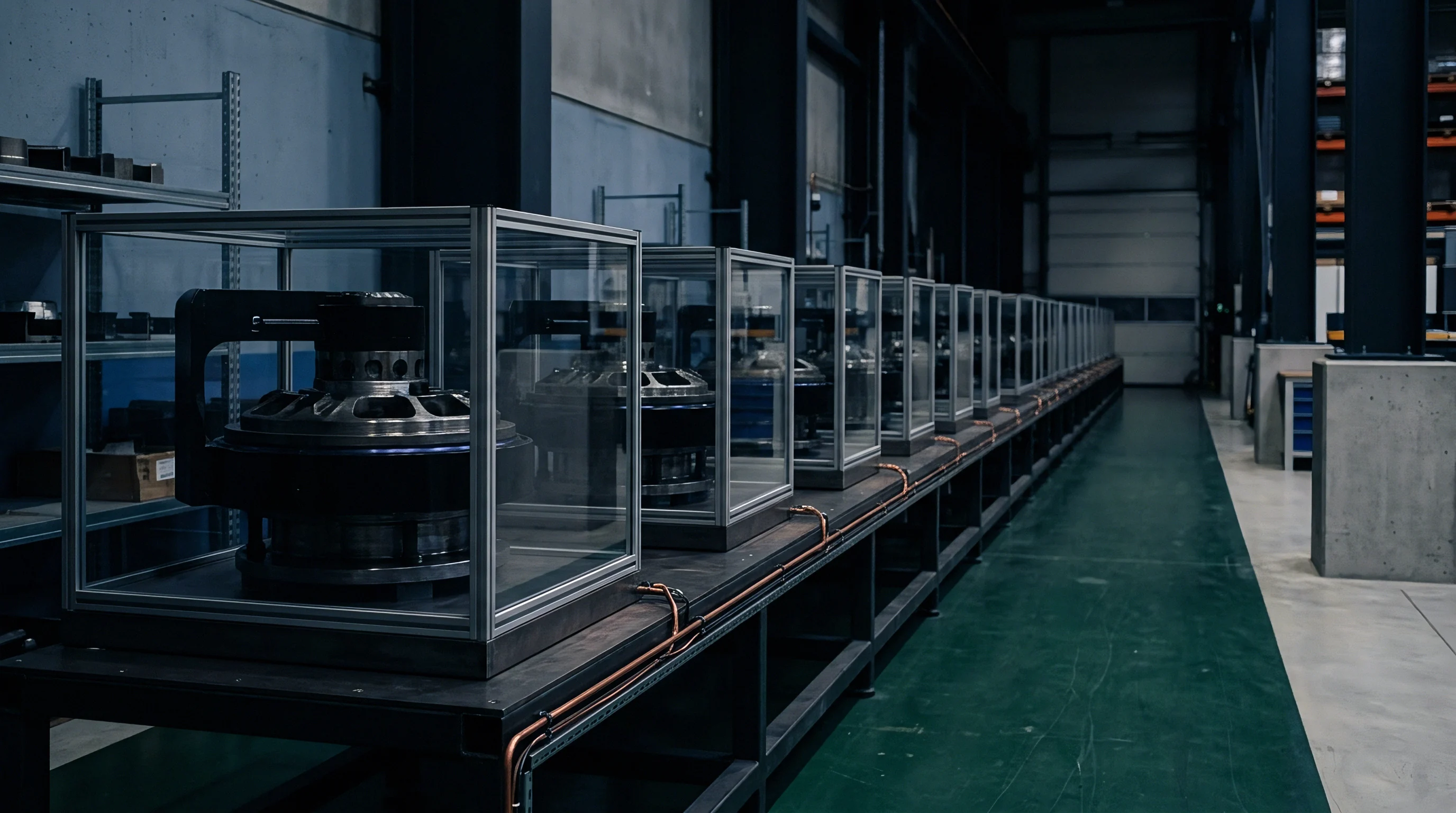
Barrier Foil Packaging and Moisture Elimination
Vacuum packaging materials must withstand mechanical stress from container motion and pallet stacking. Multi-layer laminates combining polyethylene, aluminum foil, and oriented nylon deliver high puncture resistance alongside near-zero water vapor transmission rates. Because seal integrity determines desiccant lifespan, weak heat-seals along package margins can split under vibration, exposing cells to ambient humidity.
Desiccant packets containing activated aluminosilicate or silica gel absorb trace moisture trapped during package assembly. Inserting humidity indicator cards behind transparent inspection windows allows receiving personnel to check package integrity without breaking barrier seals; discolored indicator dots confirm moisture ingress and trigger immediate quarantine.
Section 5.2 of UN 38.3 packaging guidelines enforces hermetic moisture barriers and structural stacking loads that prevent outer carton crush under three meters of overhead weight.
Compliance with these transport safety provisions requires outer cartons to maintain structural integrity under full stacking loads while preserving internal barrier seals throughout multi-week maritime transit.
Customs
Regulatory inspections and port clearance bottlenecks frequently extend transit beyond scheduled voyage times. Dangerous goods audits, manifest verifications, and customs holds leave battery containers in un-refrigerated staging areas on open tarmac, where internal temperatures in unpowered dry containers can reach 65 degrees Celsius under direct sunlight and accelerate cell degradation.
Documentation errors trigger immediate holds by port authorities and shipping lines. Incomplete UN 38.3 test summaries, incorrect safety data sheets, or mismatched container safety plates halt cargo movement and incur heavy demurrage fees. Extended port delays consume storage safety margins, exposing cells to uncontrolled ambient conditions for weeks.
Where Does Financial Liability Shift during Transit Delays?
Commercial contracts establish risk boundaries among cell manufacturers, freight forwarders, and buyers. Incoterms 2020 rules define responsibility for transit damage, insurance, and customs clearance. Under Free On Board (FOB) terms, risk transfers to the buyer once freight passes the ship’s rail at the port of origin, leaving the buyer liable for heat-induced degradation caused by subsequent transport or customs delays.
Delivered Duty Paid (DDP) terms shift transit risks and customs clearance duties to the supplier or carrier. Under DDP, the buyer retains the right to reject cell lots that fail quality thresholds upon delivery at the destination warehouse. Including strict acceptance criteria in DDP contracts forces suppliers to use refrigerated containers and adequate barrier packaging.

Incoterms Alignment and Quality Boundary Transfer
Quality agreements must incorporate measurable electrochemical metrics alongside standard commercial terms. Conventional physical damage clauses do not address internal chemical degradation, such as ACIR growth or capacity loss inside intact packaging. Effective contracts set explicit limits on self-discharge rates, ACIR increases, and cosmetic parameters for accepted shipments.
Customs inspections that require opening packages pose severe risks to battery lots. When customs agents breach primary vacuum bags to inspect cell markings, humid ambient air enters the desiccated volume. Retaining bonded customs agents certified in dangerous goods handling ensures opened packaging is properly resealed with fresh desiccant before freight moves forward.
Debate continues among sourcing managers over whether baseline capacity loss from extended customs holds should be covered by marine insurance or shared between buyer and seller through revised purchase agreements.


Arrival
Discharge from the vessel initiates incoming quality verification at the receiving facility or port warehouse. Incoming quality control routines isolate cell lots in climate-controlled staging areas while technicians evaluate outer packaging, internal moisture indicators, and temperature logger data. Identifying thermal excursions allows engineers to adjust testing protocols for affected shipments.
Electrochemical testing confirms whether incoming cells meet original manufacturing specifications. Open-circuit voltage (OCV) measurements combined with 1 kHz alternating-current internal resistance (ACIR) screening identify degraded units. Cells showing elevated self-discharge or abnormal resistance growth indicate internal damage from transport stress.
Calculating self-discharge rates (expressed as K-value in millivolts per day) isolates micro-shorts caused by mechanical vibration or separator wear. Comparing post-transit K-values against factory end-of-line data pinpoints lots with internal structural damage, enabling quality teams to reject compromised units before they reach module assembly lines.
Cell lots that demonstrate anomalous voltage drift immediately upon port discharge indicate active electrolyte degradation long before capacity loss surfaces on a test channel.
Self Discharge Rate and K Value Analysis
Determining cell K-value requires high-precision open-circuit voltage measurements taken at set intervals under controlled temperatures. Voltage drops exceeding predicted self-discharge rates point to parasitic reactions or micro-dendrite growth across separators. Automated multi-channel OCV meters allow rapid screening to intercept defective units before pack assembly.
Alternating-current internal resistance (ACIR) measurements at 1 kHz detect interface deterioration without altering state of charge. Elevated 1 kHz ACIR readings indicate contact foil oxidation, electrolyte loss, or passivation film growth incurred during transit. Lots showing ACIR shifts greater than 10 percent above factory baseline are placed in full quarantine for teardown analysis.

Worked Economic Analysis of Transit Degraded Lots
Quantifying the financial impact of transit degradation involves weighing scrap costs, quarantine overhead, and production downtime against climate-control expenditures. Consider a shipment of 100,000 NMC 811 cylindrical cells valued at $3.00 per unit landed cost, moved in a standard dry container without active refrigeration. A 2 percent reject rate caused by localized heat spikes during port delays yields 2,000 defective cells, creating a direct scrap loss of $6,000.
Re-screening the entire 100,000-unit shipment requires 40 technician hours at $75 per hour, adding $3,000 in unbudgeted labor. The total impact of the thermal excursion reaches $9,000 ~ a $0.09 per-cell penalty across the lot. By comparison, shipping the lot in a refrigerated container adds $2,500 over dry freight rates, producing a net savings of $6,500 while preserving cell calendar life and assembly schedules.
| Test Parameter | Measurement Method | Acceptance Threshold | Action on Non-Conformance |
|---|---|---|---|
| K-Value (Self-Discharge) | Dual OCV delta over 7 days | < 0.8 mV / day at 20°C | 100% lot re-screening & quarantine |
| ACIR (1 kHz) | Four-wire Kelvin probe | Baseline ± 5% max deviation | Isolate lot; initiate tear-down teardown |
| Barrier Bag Vacuum | Visual & internal humidity card | Indicator dot shows < 20% RH | Replace desiccant; re-seal vacuum foil |
| Visual Terminal Inspection | Automated Optical Inspection | Zero oxidation or electrolyte haze | Reject affected trays; claim supplier credit |
- Container seal inspection verifies that locks remain intact and match bill of lading documentation before opening container doors.
- Data logger retrieval extracts full temperature, humidity, and shock history profiles across the entire voyage.
- Secondary packaging evaluation checks outer corrugated cartons for structural softening, crushing, or moisture accumulation.
- Primary barrier bag inspection checks vacuum retention and verifies internal humidity indicator status before breaking seals.
- Sample OCV and ACIR screening measures 125 cells per pallet using four-wire Kelvin fixtures to establish statistical lot compliance.
Bypassing incoming K-value screening risks allowing micro-shorted cells into pack production, where they can trigger thermal runaway during post-assembly testing and force complete lot scrapping.