Auditing Battery Laboratory Accreditation Chains and Parameter Drift Boundaries
Auditing battery laboratory accreditations requires matching exact test standards against ISO 17025 scopes while enforcing drift limits on cell data.

Accreditation
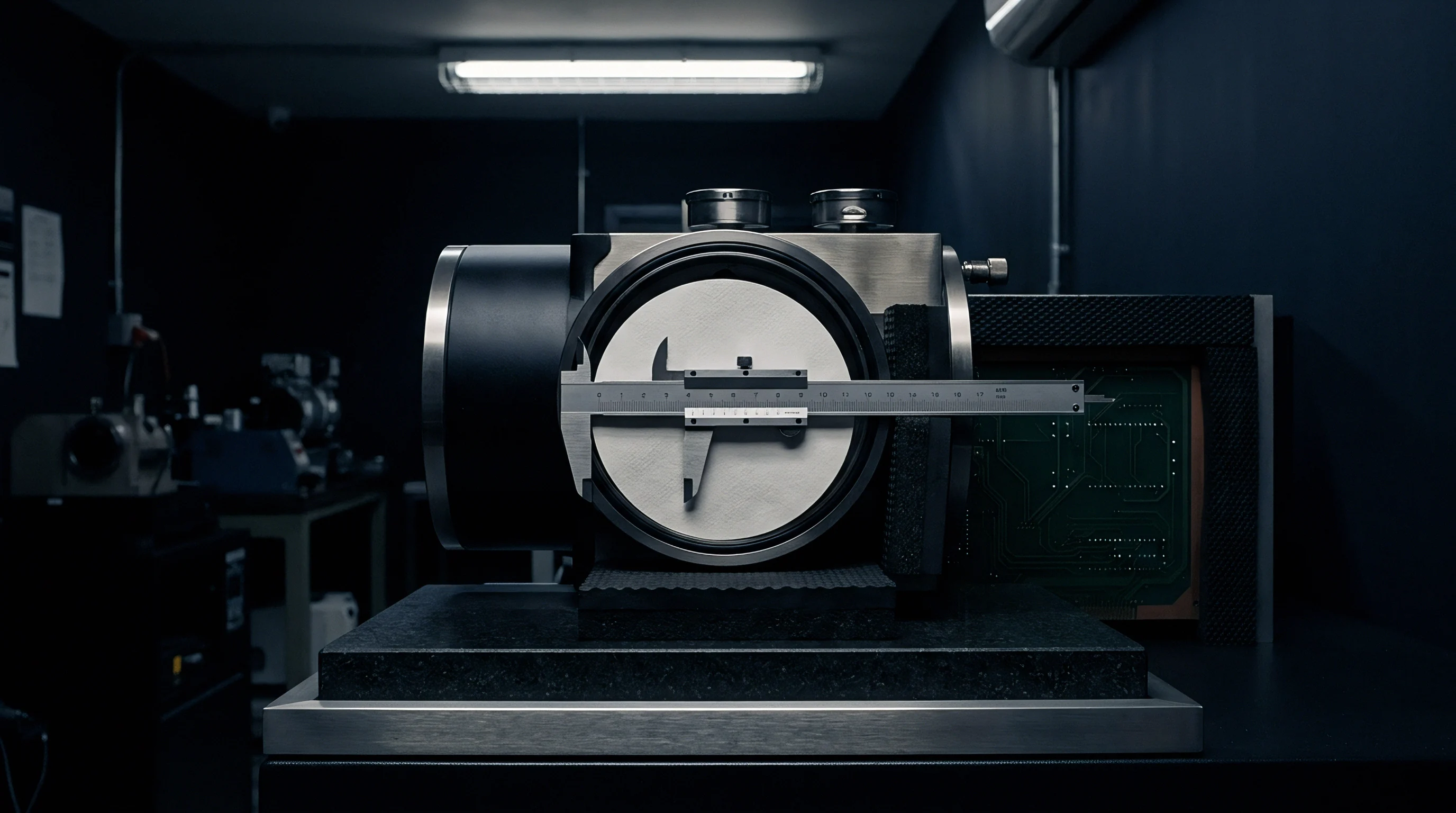
Testing laboratories that issue compliance certificates for lithium-ion cells vary significantly in technical competency and institutional oversight. Checking a facility’s standing requires requesting its official listing directly from the relevant national signatory body. Facilities accredited under ISO/IEC 17025 are bounded by specific scopes; a laboratory certified for basic electrical safety isn’t automatically authorized for UN 38.3 transport qualification or IEC 62133-2 battery safety testing.

ISO/IEC 17025 Scope Schedule Mapping
Accreditation schedules define the precise test methods, parameters, and measurement uncertainties allowed at a given site. When auditing cell compliance files, auditors check the standard version cited in the test report against the lab’s active schedule. If a laboratory runs UN 38.3 Section 38.3.4 testing while its public scope covers only stationary storage standards, the resulting certificate has no standing under international shipping codes.
Validating an accreditation chain requires four distinct checks.
- Request the ISO/IEC 17025 scope schedule directly from the national accreditation body’s portal, rather than relying on a vendor-provided PDF.
- Check the test standard revision year in the cell qualification dossier against the active version on the lab’s schedule.
- Confirm that specific sub-clause tests ~ such as overcharge, forced discharge, and altitude simulation ~ fall explicitly within listed parameter limits.
- Match the facility address on the test report to the physical site address registered on the accreditation certificate.

ILAC Mutual Recognition Mechanics
Transport authorities recognize safety reports across borders through multilateral agreements. Under the International Laboratory Accreditation Cooperation Mutual Recognition Arrangement, national accreditation bodies accept technical equivalence. Reports carrying an ILAC-MRA mark confirm that the testing site passed peer evaluation under ISO/IEC 17011 standards.
A test report issued by an ISO/IEC 17025 accredited facility becomes legally void for transport compliance when the specific testing standard sits outside the laboratory published scope schedule.
Issues often arise when laboratories subcontract specific sub-clause tests to unaccredited secondary facilities. In transpacific cell supply chains, primary labs sometimes outsource mechanical shock or thermal abuse testing to outside facilities without disclosing the subcontracting on the summary sheet. That breaks the chain of custody and invalidates the dangerous goods shipping declaration.
Suppliers often point to lab backlogs to explain why an unaccredited subcontractor was brought in for identical test procedures.

Gauge
Instrument precision and chamber climate controls dictate whether cell baseline data reflects actual physical behavior. Measurement uncertainty accumulates across test channels, current shunts, and thermal probes. If lab instrumentation drifts off calibration, safety testing can yield false passes that hide underlying design flaws.

Voltage and Current Measurement Drift
Channel sensors require regular calibration against traceable national standards to prevent systematic measurement errors. In qualifying high-density lithium nickel manganese cobalt oxide chemistries, a positive offset of just five millivolts causes a cycler to charge cells to 4.255 volts when set to an upper cut-off of 4.200 volts.
Sustained operation at elevated cut-off voltages accelerates electrolyte breakdown and transition metal dissolution. During UN 38.3 T.7 overcharge testing, uncalibrated current shunts delivering 1.8 times nominal charge current instead of the required 2.0 times under-test the cell’s thermal dissipation capabilities. The test summary logs a pass, but the production batch remains vulnerable to thermal runaway during fast charging in the field.
| Parameter | Standard Test Limit | Maximum Lab Uncertainty | Impact of Exceeded Margin |
|---|---|---|---|
| Cell Voltage | +/- 1.0 % | +/- 0.1 % | Undetected overcharge during T.7 safety test |
| Test Current | +/- 1.0 % | +/- 0.2 % | Inaccurate C-rate application during capacity grading |
| Ambient Temperature | 20 +/- 5 deg C | +/- 0.5 deg C | Thermal gradient distortion during DCIR measurement |
| Pressure (Altitude) | 11.6 kPa max | +/- 0.5 kPa | False pass on T.1 low pressure simulation |

Thermal Chamber Spatial Gradients
Environmental test chambers show notable internal temperature variation if airflow isn’t properly managed. IEC 62133-2 Clause 7.3.5 thermal abuse testing requires holding cells at 130 degrees Celsius in a gravity or forced-convection oven.
Voltage measurement calibration uncertainty exceeding five millivolts invalidates cell overcharge safety margins during UN 38.3 T.7 testing.
When qualification racks are packed tightly with cells, internal temperature gradients across the enclosure can reach eight degrees Celsius. Cells near heating elements face accelerated thermal exposure, driving premature separator shutdown or thermal runaway. Conversely, cells in cold spots near door gaskets never reach target temperatures, producing invalid compliance passes.
Technical audits rely on chamber thermal mapping logs to confirm temperature uniformity within plus or minus two degrees Celsius across all test positions. Calibration records for all measuring equipment should sit in the qualification dossier alongside the final safety certificates.


Discrepancy
Shifts in electrochemical performance between initial qualification batches and mass production indicate process variability or unannounced component substitution. Baseline parameters established during initial qualification set the boundary limits for incoming lot acceptance testing.

Capacity and DCIR Shift Limits
Baseline values set during cell qualification serve as the benchmark for receiving inspection. Direct current internal resistance rises as cathode structures degrade and solid electrolyte interphase layers thicken. During receiving audits, technical teams measure 100-millisecond DCIR at 50 percent state of charge with a four-wire Kelvin connection.
A production lot showing a mean DCIR shift more than eight percent above baseline points to unannounced bill of materials changes. Typical causes include reduced conductive carbon additives, thinner current collector foils, or altered electrolyte solvent ratios.
| Electrochemical Parameter | Qualification Baseline | Acceptable Drift Boundary | Action Threshold |
|---|---|---|---|
| Discharge Capacity (0.2C) | 100 % Nominal | – 2.5 % | Reject shipment lot if mean drops below 97.5 % |
| 100ms DCIR (50% SOC) | 18.5 mOhm | + 8.0 % | Hold lot for teardown audit if mean exceeds 20.0 mOhm |
| Self-Discharge Rate (K-value) | 0.45 mV / day | + 15.0 % | Quarantine lot for micro-short risk evaluation |
| Cell Thickness / Swell | 7.20 mm | + 3.0 % | Flag mechanical enclosure tolerance violation |

Zero Volt Recovery Drift Boundaries
Deep discharge during extended warehouse storage leads to copper current collector dissolution when voltages fall below critical limits. Dissolution starts once cell potential drops below 1.5 volts, releasing copper ions that migrate through the separator matrix.
Parameter drift between prototype qualification and volume production signals unannounced bill of materials modification.
When recharged, those copper ions deposit as metallic dendrites, creating low-resistance micro-shorts. Qualification reports covering zero-volt recovery apply only to the exact anode slurry formulation, binder percentage, and copper foil surface treatment evaluated in the test. If production lots show elevated self-discharge after three months in transit, drift boundaries have been breached ~ making the UN 38.3 transport summary legally invalid for that run.
Accepting shipments without tracking parameter drift leads to high field return rates, pack swelling, and latent thermal runaway risks.


Paperwork
Documentation accompanying regulated lithium cell shipments faces detailed review by air and ocean freight forwarders.
UN 38.3.5 Test Summary Authentication
Regulations require every cell shipment file to contain a standardized ten-point record signed off by an authorized corporate representative. Section 38.3.5 of the UN Manual of Tests and Criteria sets clear parameters for these test summaries, and dangerous goods declarations depend directly on their technical integrity.
Customs inspectors review ten compulsory data points on incoming battery documentation packages.
- Factory Name and Address matching the exact production site listed in the cell procurement contract and dangerous goods declaration.
- Third-Party Laboratory Details including the ISO/IEC 17025 accreditation number, ILAC mark, and contact phone number for verification.
- Unique Test Report Number and issuance date that align with the physical cell product code and date stamp.
- Detailed Parameter List documenting cell mass, nominal energy in watt-hours, maximum charge voltage, and full physical dimensions.
- Specific Test Results explicitly confirming successful completion of tests T.1 through T.8 without disassembly or fire.

ILAC Mark Verification Protocols
Verifying international test documents requires checking for valid accreditation symbols on official report headers. Acceptance clerks at major air hubs compare laboratory accreditation numbers against online national databases, and test summaries missing traceable ILAC clearance trigger immediate cargo holds.
Customs authorities seize landed battery shipments when test summary documents omit the specific signatory name or matching factory lot code.
Verification procedures also extend to signatures on the test summary, which must be signed by an authorized lab manager or corporate officer under regulatory liability. When documentation carries generic stamps or unverified electronic signatures, forwarders refuse transport authorization under IATA Packing Instruction 965. Section 38.3.5 of the UN Manual of Tests and Criteria places legal responsibility for document validity directly on the shipper of record.

Clause
Supply agreements between cell buyers and manufacturers establish legal protections against parameter drift and accreditation deficiencies.

Contractual Drift Tolerance Thresholds
Commercial purchase orders specify quantitative performance boundaries for lot acceptance and rejection. Master service agreements build parameter drift limits directly into quality warranties. When lot sampling shows deviation beyond agreed statistical margins, contracts allow buyers to reject entire shipments at the seller’s expense.
| Compliance Failure Mode | Regulatory Impact | Commercial Exposure | Contractual Remedy |
|---|---|---|---|
| Unaccredited Test Laboratory Scope | UN 38.3 summary invalidation | Shipment seizure at border port | Full lot refund and carrier penalty indemnity |
| DCIR Elevation Exceeding 10% | Accelerated thermal degradation | Reduced cycle life warranty coverage | Supplier-funded lot sorting and replacement |
| Unannounced BOM Modification | Type testing certificate voidance | Recall of installed field packs | Direct damages claim and warranty chargeback |
Contracts typically require manufacturers to maintain bill of materials freeze agreements. Any change to cathode stoichiometry, separator porosity, electrolyte formulation, or tab welding requires written consent and complete safety re-testing under ISO/IEC 17025 rules.
Which Audit Trigger Protects Landed Shipments?
Verifying lot conformity before cargo departs prevents costly liabilities at destination ports. Sourcing contracts often set automatic audit triggers tied to receiving metrics: if statistical sampling shows a capacity drop over 2.5 percent or thickness swell above 3.0 percent, an unannounced factory audit is triggered immediately.
Testing lots prior to container sealing keeps non-conforming product at the factory. Strict hazardous goods shipping rules make cross-border returns cost-prohibitive after customs clearance. Industry stakeholders continue to debate whether continuous AI monitoring of factory telemetry can eventually replace periodic third-party lab audits.