Inert Gas Atomization Melt Superheat Control for High Alloy Tool Steel Powder Production
Controlling melt superheat within a twenty-kelvin window balances gas atomization efficiency against refractory dissolution in high-alloy tool steel powder production.
Melt
In gas atomization of high-speed and cold-work tool steels, melt temperature sets the baseline for melt fluidity, surface tension, and stream breakup. Vacuum induction melting systems rely on superheat ~ the temperature margin above the alloy liquidus ~ to control how the liquid jet disintegrates at the nozzle. For high-alloy grades like M2, M35, and CPM 10V, liquidus temperatures range from 1380 to 1460 degrees Celsius, depending on the balance of carbon, tungsten, molybdenum, and vanadium.
Keeping superheat between 60 K and 110 K provides a stable flow through the tundish without risking freeze-offs in the delivery tube.

Thermodynamics of Liquid High Alloy Steels
High-speed grades like M2 and M35 combine roughly 0.9 weight percent carbon with over 15 percent tungsten, molybdenum, chromium, and vanadium combined. Freezing occurs over a wide window, often 120 K to 200 K between liquidus and solidus. While raising bath temperature lowers liquid density and keeps heavy additions like tungsten in solution, overheating drives sharp shifts in carbon and oxygen activity coefficients.
Above 1550 degrees Celsius, dissolved oxygen climbs noticeably as the aggressive melt attacks the refractory lining.
An elevation of superheat by 40 K in M2 high-speed steel reduces melt surface tension from 1.55 N/m to 1.42 N/m, shifting median particle diameter downward by 4.2 micrometers at an atomization pressure of 4.5 MPa argon.
Viscosity and Surface Tension Scaling
Melt temperature directly governs internal cohesive forces, altering dynamic fluidity as the superheat changes. Viscosity drops exponentially with temperature following an Arrhenius curve, while surface tension declines roughly linearly. In CPM 10V, dynamic viscosity falls from approximately 5.8 millipascal-seconds at 40 K superheat down to 4.1 millipascal-seconds at 120 K. That lower viscosity speeds the growth of Rayleigh-Taylor and Kelvin-Helmholtz instabilities under the impact of high-velocity argon, forming thinner liquid sheets at the nozzle tip that break apart quickly into fine droplets.
Running the bath too hot, however, accelerates ceramic erosion from containment walls, seeding the powder with non-metallic inclusions that degrade the fatigue performance of finished parts.

Calibration
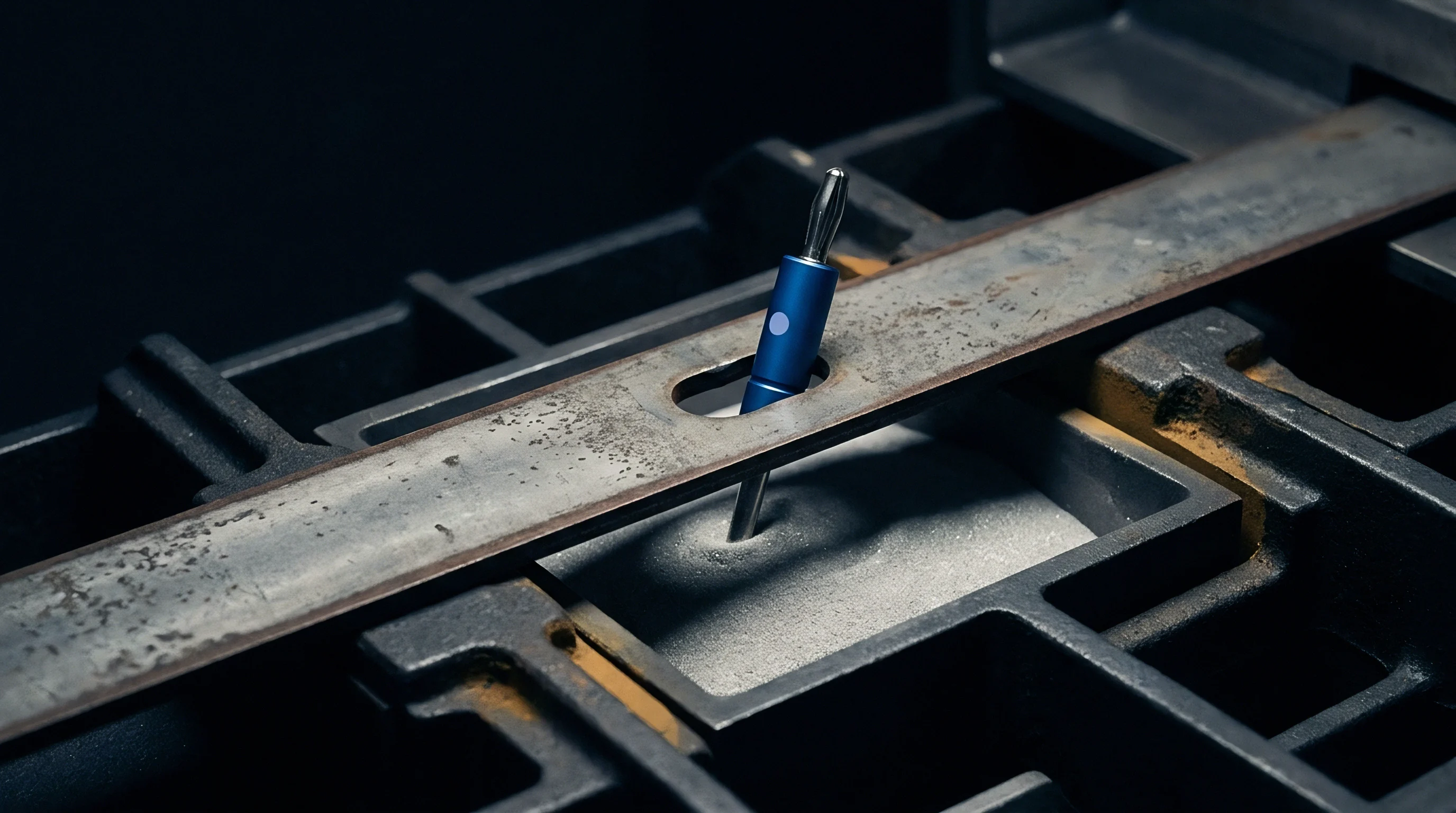
Accurate melt measurement in vacuum induction furnaces generally pairs dual-color pyrometry with single-use immersion lances. The vacuum environment makes optical monitoring difficult because volatile species condense on the sight glass. Fumes containing manganese, zinc, or iron oxides coat quartz viewports, reducing signal transmission and causing single-wavelength pyrometers to read low.
If an uncorrected sight glass drifts 30 K below the true bath temperature, an operator will routinely overheat the melt, accelerating refractory wear.

Optical Pyrometry and Bath Emissivity Shifts
Infrared sensors monitor radiant energy off the melt surface inside the chamber, but high-alloy tool steels shift in monochromatic emissivity as alloy additions dissolve or trace surface films develop. Two-color ratio pyrometers compensate for optical obscuration by comparing radiance at two adjacent wavelengths, typically 0.9 and 1.05 micrometers. Even so, extended pours still need argon purge systems or rotating mechanical shields over the sight glass to keep heavy coatings from building up.

Immersion Thermocouple Drift and Thermal Lag
Type S and Type R platinum-rhodium thermocouples in alumina sheaths provide the direct reference needed to calibrate optical sensors prior to tap. Thick ceramic protection tubes create a 12 to 20 seconds thermal lag before reaching equilibrium. Leaving a probe immersed continuously ruins calibration almost immediately, as iron vapor and slag components migrate through the sheath and contaminate the platinum wires.
Consequently, plants take spot readings with disposable dip probes at key milestones: full melt-down, post-trim chemistry adjustment, and release to the tundish.
- Optical viewport condensation reduces radiation flux reaching infrared detectors, causing pyrometer calibration drift toward artificially low thermal readings.
- Thermoelement chemical contamination occurs when metal vapors penetrate ceramic protective sleeves, shifting voltage output across platinum junction wires.
- Slag crust coverage blocks direct optical viewing of liquid metal, forcing ratio pyrometers to calculate temperatures from slag surface physics.
- Induction field interference induces electromagnetic noise in sensor compensation cables, requiring shielded twisted-pair signal routing.
A cold melt risks freezing off in the tundish nozzle before the heat can be poured.
| Sensor Tech | Accuracy Range | Response Time | Primary Drift Cause | Lifespan |
|---|---|---|---|---|
| Single-Color Pyrometer | +/- 15 K | 10 milliseconds | Sight glass vapor coating | Continuous |
| Dual-Ratio Pyrometer | +/- 5 K | 10 milliseconds | Emissivity ratio variation | Continuous |
| Type S Immersion Probe | +/- 1.5 K | 15 seconds | Rhodium diffusion, grain growth | Single dip (15 sec) |
| Cermet Sheathed Probe | +/- 4 K | 45 seconds | Slag attack, thermal shock cracks | 3 to 8 pours |
Factory pyrometer calibrations are rated for consistent operation across tool steel grades, but optical transmission drops once metallic fume deposits on the chamber viewport.


Morphology
Particle sizing, internal grain structure, and sphericity are set largely by the melt temperature immediately before atomization. At a low superheat around 30 K, droplets freeze before surface tension can pull them into round spheres, producing coarse, irregular powder. Raising superheat to 120 K lowers melt viscosity and yields finer droplets, but it also increases the heat the argon stream must extract before the particles strike the chamber walls and flatten or stick together.

Why Does Excessive Superheat Increase Satellite Droplet Attachment?
Recirculation eddies inside the atomization tower sweep solidified fines back into the spray plume where larger droplets are still molten. When superheat exceeds 100 K, the time required for droplet surfaces to freeze lengthens by 40 to 70 milliseconds. Fines weld to the semi-liquid surfaces on impact, creating satellited particles that compromise Hall flow rates and tap density.
Matching gas plume geometry to melt superheat helps suppress satellite formation across target sizing fractions.
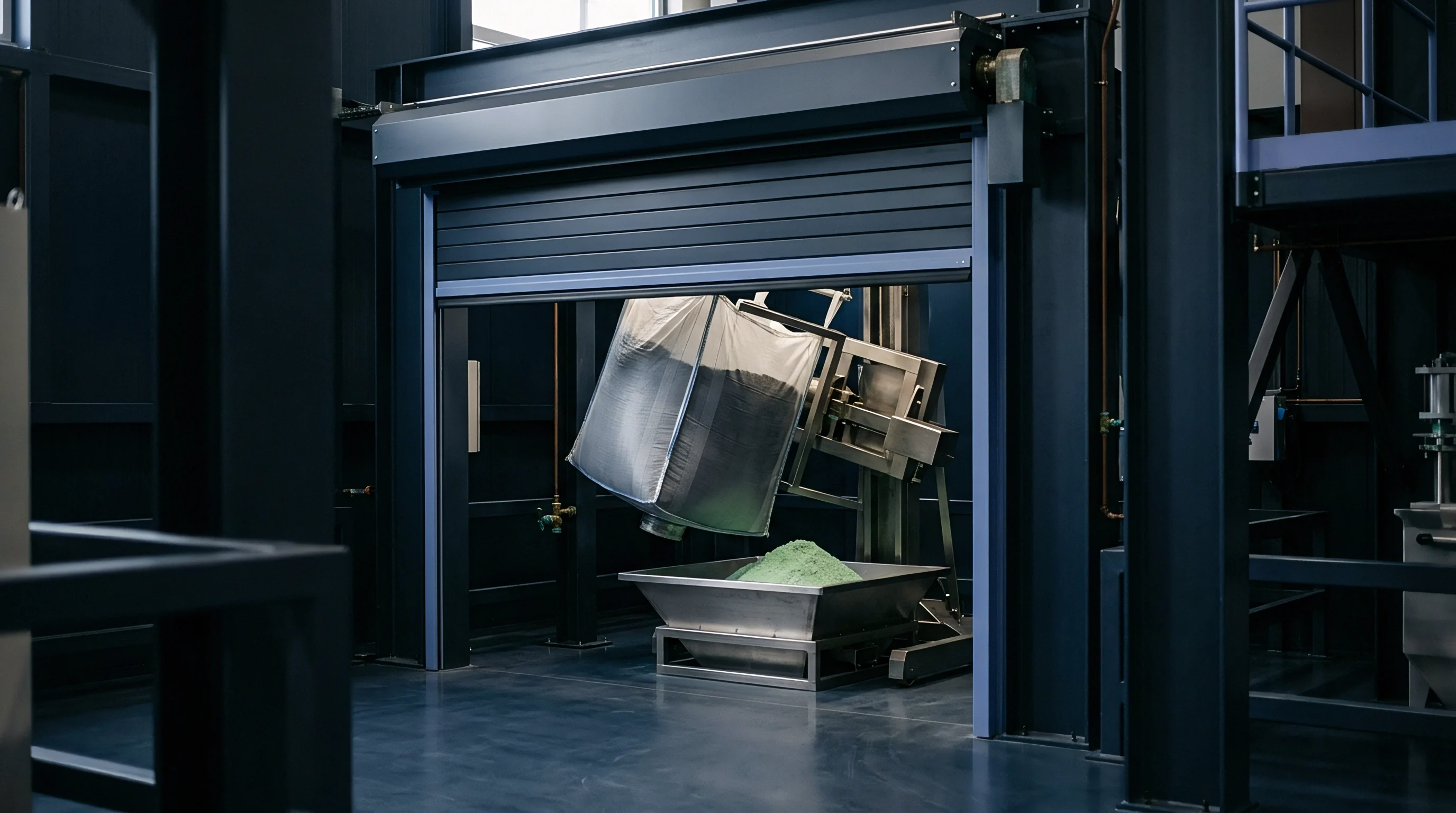
Higher superheat reduces liquid film thickness at the nozzle exit but accelerates ceramic dissolution into the melt stream.
Carbide Precipitation and Cooling Dynamics
Droplets undergo rapid solidification during flight, experiencing cooling rates from 10,000 to 1,000,000 K/s. A higher pour temperature extends the liquid lifetime, directly altering grain scale and carbide distribution. In M2, moderate temperatures yield fine cellular structures with narrow interdendritic boundaries populated by vanadium-rich MC and tungsten-molybdenum-rich M6C carbides.
Excessive superheat allows solute partitioning within larger droplets, producing coarse, interconnected carbide networks that resist dissolution during subsequent hot isostatic pressing.
Recirculation gas sweeps fines back onto semi-solid droplets, while unrefined, coarse carbides provide ready initiation sites for fatigue failure.
- Preheating tundish and nozzle assemblies to target pour temperature minimizes initial thermal loss during metal release.
- Verifying alloy bath chemistry and optical pyrometer ratio settings establishes correct baseline heating parameters.
- Adjusting furnace power input locks bath temperature within a 15 K window relative to calculated alloy liquidus.
- Monitoring gas atomization pressure maintains target gas-to-metal ratio as liquid metal viscosity changes with temperature.
The exact thermal transition where surface tension begins to dominate aerodynamic shear forces during secondary atomization remains an open question across high-speed steel grades.

Refractory
Crucible linings and tundish nozzles face severe chemical corrosion and mechanical erosion under high-temperature melt flow. Yttria-stabilized zirconia and alumina provide structural containment, but their chemical stability drops as bath temperature rises. Vanadium, chromium, and carbon in the melt actively reduce oxide impurities along refractory grain boundaries.
Once dislodged, eroded refractory debris enters the atomization stream as non-metallic inclusions that degrade the fatigue endurance of additively manufactured parts.

Dissolution Kinetics of Zirconia and Alumina Nozzles
Nozzle wear climbs sharply once melt temperature runs more than 100 K above liquidus. The hot tool steel leaches yttria stabilizer from the zirconia matrix, triggering a phase transformation to monoclinic symmetry that brings a 3 to 5 percent volume expansion. The resulting micro-cracks weaken the nozzle bore against stream erosion.
Over the course of a single run, bore enlargement can drive liquid delivery rates from 12 kilograms per minute to over 18 kilograms per minute.
ASTM B214 particle size compliance fails when thermal drift in the tundish exceeds 15 K over a two-hour atomization run, pushing the over-size mesh fraction beyond the 3 percent tolerance limit.

Inclusion Trapping and Nozzle Bore Degradation
Eroded ceramic particles carry straight into the powder stream, generating non-metallic inclusions in finished lots. Running cold creates the opposite problem: below 40 K superheat, conduction into the delivery nozzle induces skulling or complete freeze-off. Precipitating slag phases constrict the orifice, distorting the melt stream and misaligning gas coupling.
Because thermal losses along the delivery tube are substantial, operators must walk a narrow thermal line between aggressive ceramic attack and bore freeze-ups.
| Superheat Delta | Nozzle Erosion Rate | Inclusion Count (>15um) | Flow Rate Drift | Nozzle Life |
|---|---|---|---|---|
| 30 K to 50 K | 0.02 mm/hour | < 2 per kg | – 15 percent (skulled) | 300 minutes |
| 60 K to 90 K | 0.08 mm/hour | 3 to 6 per kg | + 5 percent (stable) | 240 minutes |
| 100 K to 140 K | 0.35 mm/hour | 18 to 45 per kg | + 35 percent (eroded) | 90 minutes |
- Zirconia grain spalling occurs when thermal gradients induce phase changes inside tundish nozzle walls.
- Alumina dissolution rate accelerates when high-vanadium tool steel melt thermal energy rises past 1560 degrees Celsius.
- Nozzle bore enlargement increases liquid delivery flow rates, systematically depressing the gas-to-metal atomization ratio.
- Cold skull precipitation constricts delivery channels when liquid metal drops near liquidus temperatures before entering gas nozzles.
Under ASTM B214, lots face rejection if the oversize fraction exceeds three percent, a threshold easily breached when an eroded tundish nozzle raises the mass pour rate mid-run.
Economics
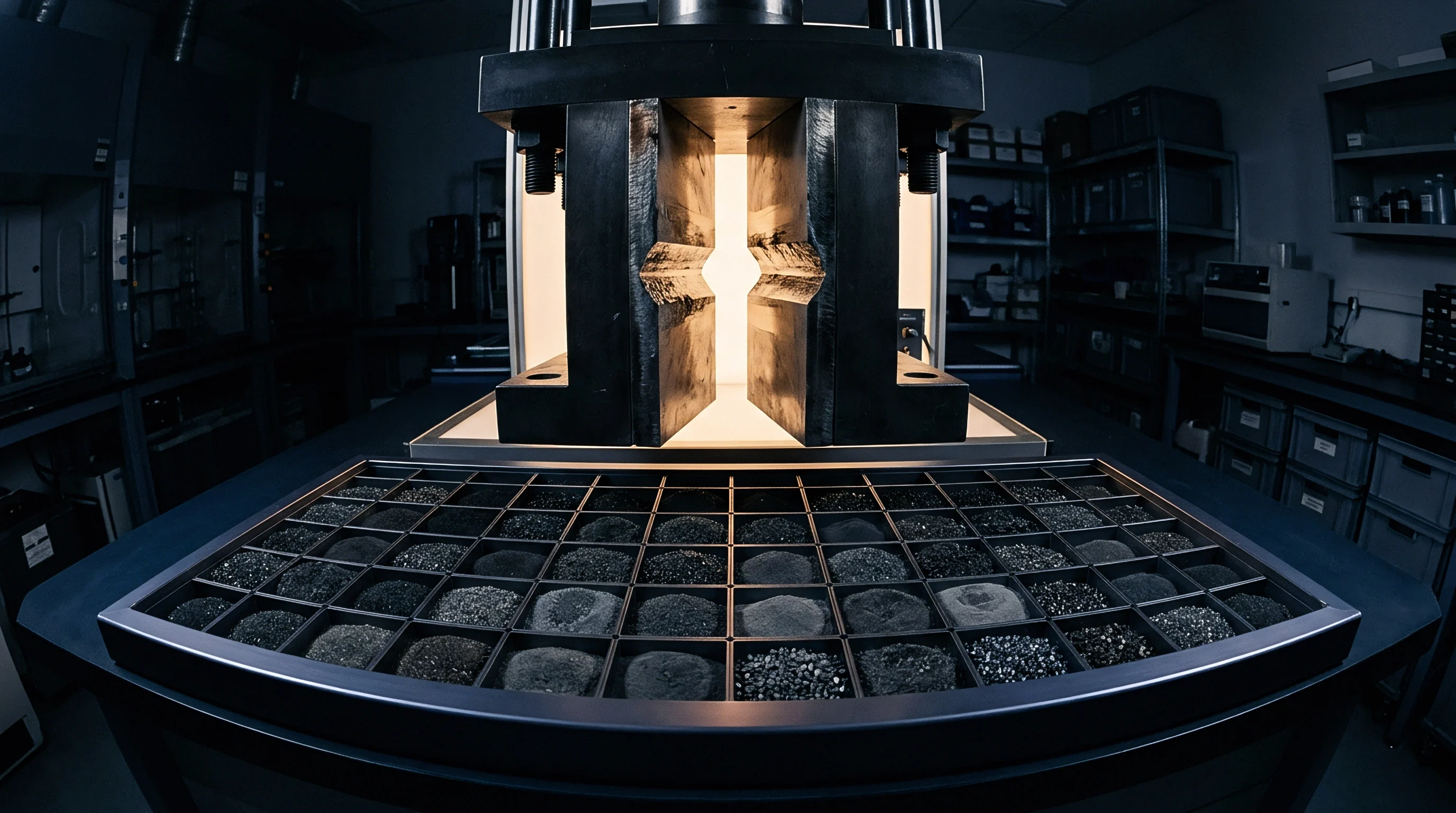
Commercial success in vacuum gas atomization depends almost entirely on yield within narrow particle size distributions. Laser powder bed fusion requires cuts between 15 and 53 micrometers, while hot isostatic pressing accommodates coarser stock up to 150 micrometers. Narrow temperature windows keep the median particle diameter (d50) where it belongs; drift in superheat shunts high-value metal into off-spec scrap bins.
Gas-to-Metal Ratio and Argon Consumption Costs
Argon consumption represents one of the largest direct operating costs in tool steel atomization, with delivery jets running at supersonic velocities. Boosting gas pressure compensates for the coarser droplet breakup seen at low superheat, but drives up consumption per kilogram. If superheat slips from 80 K to 40 K, holding a target d50 of 32 micrometers forces the gas-to-metal mass ratio from 2.2 up to 3.4, rapidly cutting into the campaign margin.
Primary M6C carbide segregation in tool steel powder particles scales directly with heat extraction delay during droplet flight.

Scrap Processing and Alloy Recovery
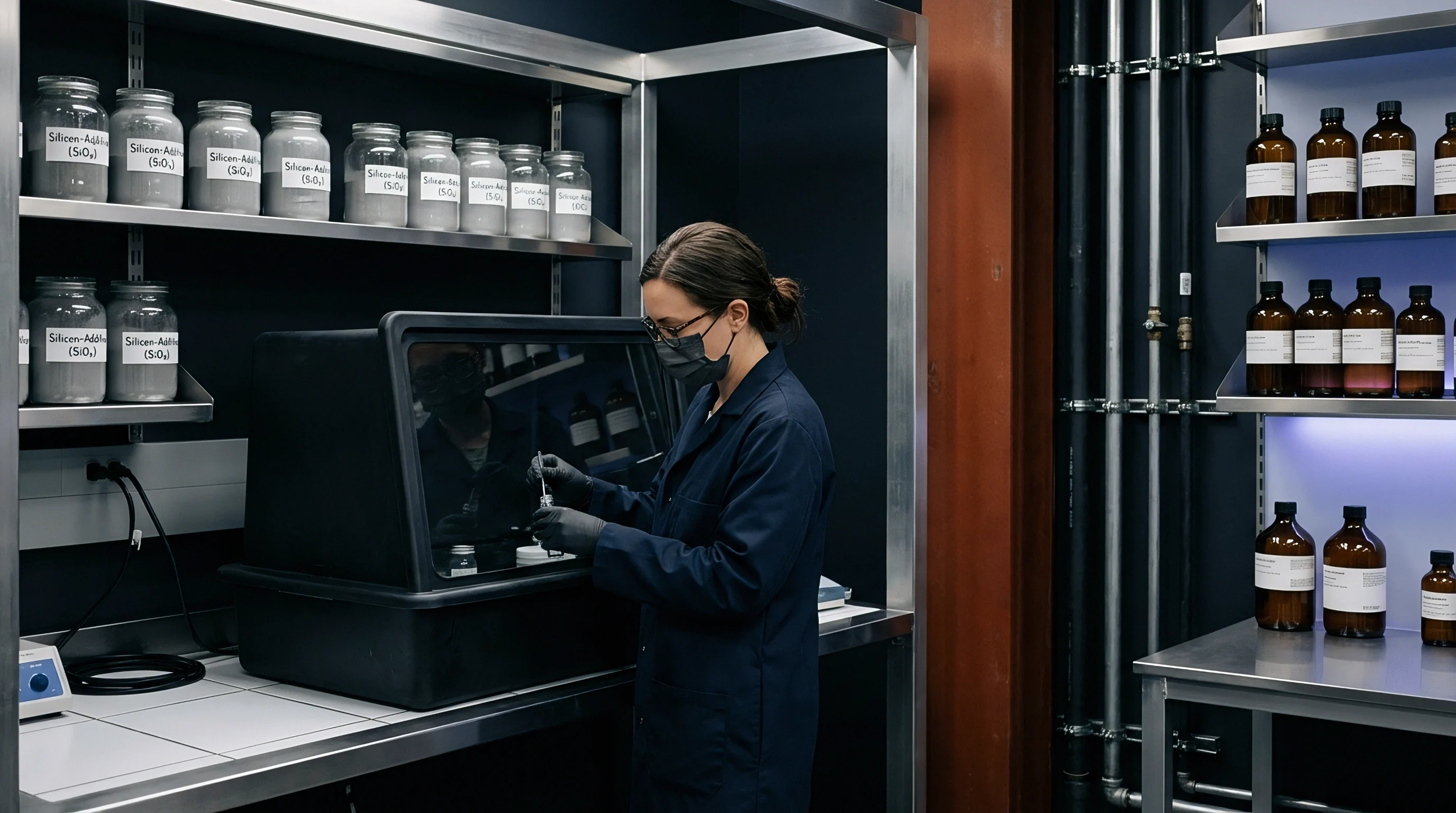
Oversize cuts and tundish skull must be re-melted carefully to recover costly tungsten and cobalt. Scrap charges require vacuum refining to strip out pickup oxygen and inclusions before the material can be atomized again. Running without tight temperature controls during remelting accelerates alloy oxidation and ceramic wear, steadily eroding recovery yields.
| Superheat Level | 15-53um Yield | Argon Cost / kg | Refractory Cost / kg | Net Landed Cost |
|---|---|---|---|---|
| 40 K Superheat | 32 percent | $14.20 | $1.10 | $48.50 / kg |
| 80 K Superheat | 48 percent | $9.80 | $1.80 | $36.20 / kg |
| 120 K Superheat | 41 percent | $8.90 | $4.60 | $41.10 / kg |
Balancing argon consumption against target cut yield ultimately comes down to running just enough superheat to clear the nozzle reliably without scouring the ceramic refractory.