Prismatic Cell Pack Mechanical Housing Tooling Capital Breakdown
Prismatic pack housing tooling capital spans $90k for modular extrusion dies to over $750k for monolithic casting dies, dictating rigid bailment contracts.
Die
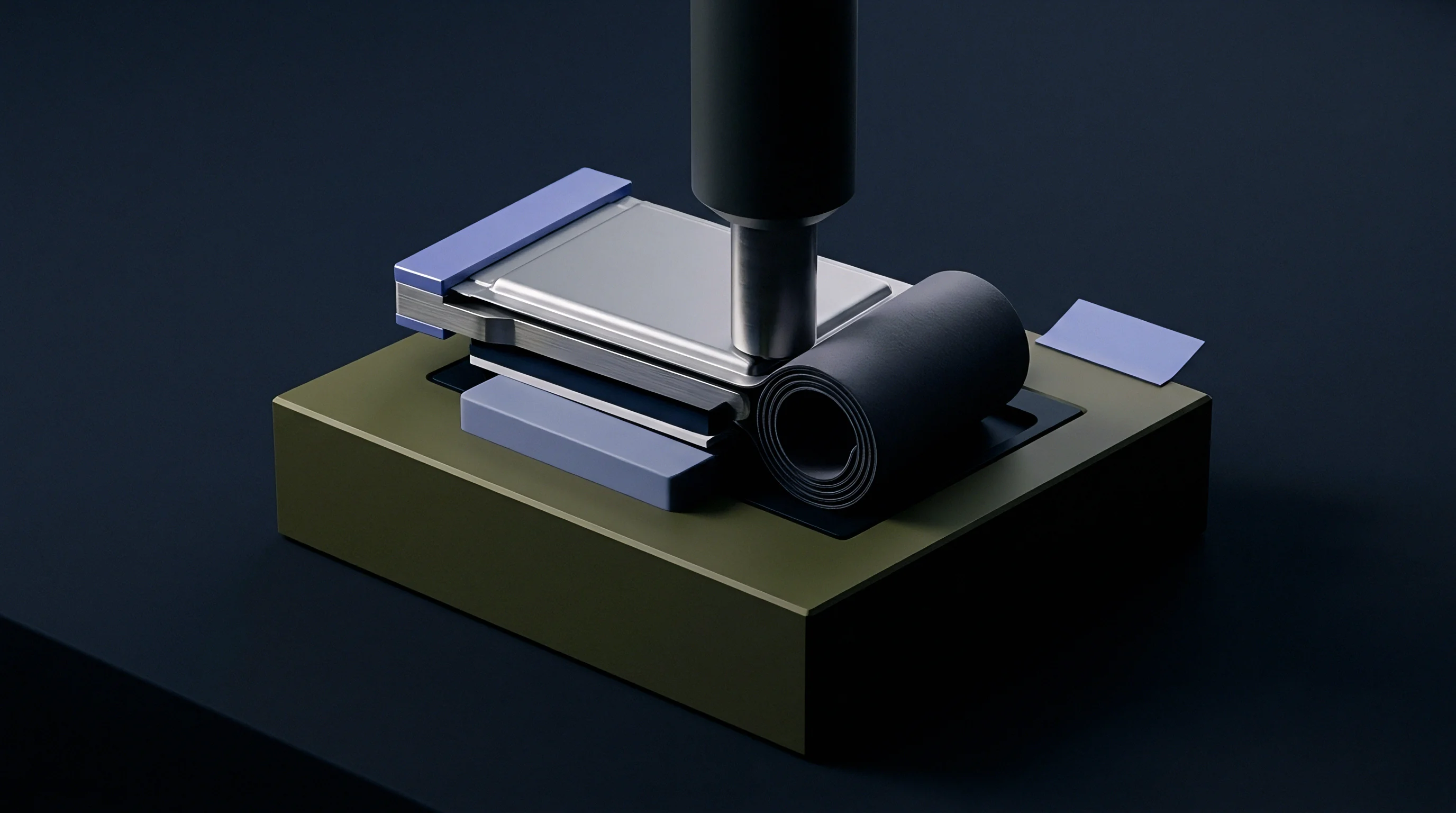
An eleven-week lead time and a 42,000-dollar quote from Ningbo for a dual-cavity H13 tool-steel extrusion die marks the starting line for a structural side rail built to hold sixteen 100 Ah prismatic cells. Tooling capital for these enclosures follows different rules than typical sheet-metal work. The casing has to satisfy ISO 6469-1 electrical containment, act as a UNECE R100.03 crash member, and double as a heat sink that keeps cell-to-cell thermal variance below 3 Kelvin during continuous 2C discharge.
Extrusion dies remain the cheapest entry point for custom structural aluminum. Machining single-cavity dies from DIN 1.2344 (AISI H13) tool steel, vacuum-hardened to 48 Rockwell C, runs between 8,000 and 18,000 dollars for cross-sections up to 250 millimeters wide. Costs climb when floor cooling channels are integrated directly into structural cross-members.
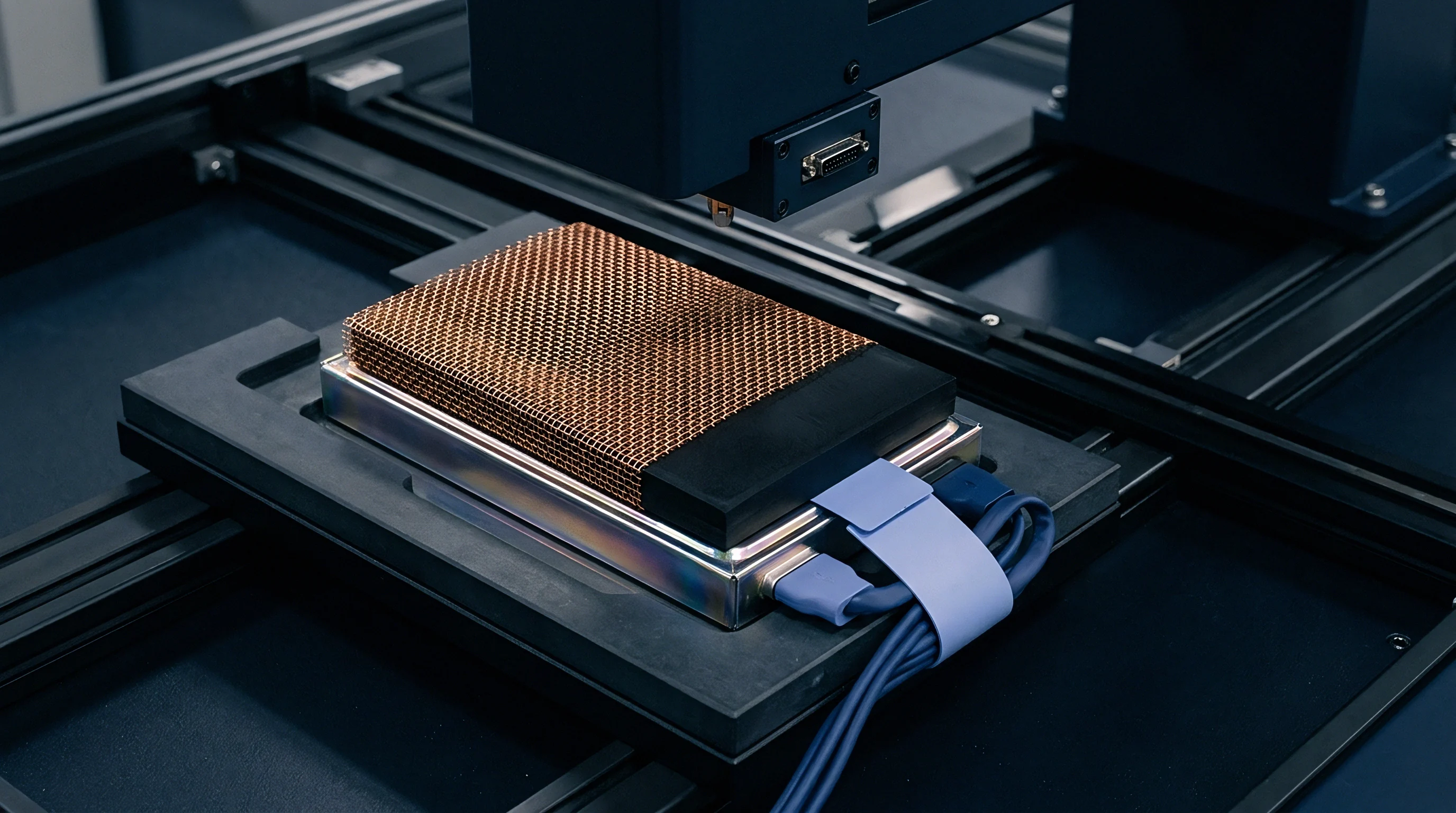
Running hollow multi-void sections requires porthole or bridge dies with internal mandrels that split the metal stream and reweld it inside the extrusion chamber. These multi-void dies cost 24,000 to 52,000 dollars and run on 2,500-tonne to 3,600-tonne horizontal presses at speeds of 12 to 22 meters per minute.
A dual-void hollow cross-member die machined from vacuum-hardened H13 steel yields roughly thirty-five metric tonnes of extruded aluminum before bearing geometry requires bench reconditioning.
High-pressure die casting introduces an order of magnitude more non-recurring engineering expense. A single-piece cast bottom tray holding ninety-six prismatic cells spans roughly 1,400 millimeters across by 1,800 millimeters long. Tooling a tub that size demands steels like Bohler Dievar or Uddeholm Vidar Superior to endure the thermal shock of molten A380 or AlSi10MnMg shot at 680 degrees Celsius under 120 megapascal intensification pressure.
The completed tool routinely tops 35 metric tonnes and needs four hydraulic side-pull cores just to shape outer mounting ears and perimeter seal channels.
| Process Type | Tool Component | Steel Grade | Capital Range USD | Lead Time Weeks | Shot or Stroke Life |
|---|---|---|---|---|---|
| Direct Extrusion | Solid Side Rail Profile | DIN 1.2344 / H13 | 8,500 to 14,000 | 8 to 11 | 40,000 meters |
| Direct Extrusion | Porthole Multi-Void Chill Plate | DIN 1.2344 Premium | 26,000 to 48,000 | 12 to 15 | 25,000 meters |
| High-Pressure Casting | Structural Module Enclosure Core/Cavity | Bohler Dievar / H13 ESR | 140,000 to 280,000 | 18 to 24 | 100,000 shots |
| High-Pressure Casting | Hydraulic Trim and Punch Die | AISI D2 / 1.2379 | 35,000 to 65,000 | 10 to 14 | 150,000 shots |
| Progressive Stamping | Top Cover Forming and Piercing | AISI D2 / Caldie | 85,000 to 190,000 | 14 to 18 | 250,000 strokes |
Secondary trimming and sizing tools have to be budgeted alongside the casting die. Parts come off the platen carrying parting-line flash, heavy runner gates, and vacuum chill vents. Building a matched hydraulic trim tool from AISI D2 tool steel adds another 35,000 to 65,000 dollars.
Skipping the trim press and hand-deburring leaves local wall variations that ruin the flat mating face required to compress the IP67 perimeter gasket.
Liquid cooling plates add another distinct capital expense. When an enclosure uses an under-pack brazed water-glycol cold plate, the tooling splits into progressive stamping dies for dimpled turbulator sheets and precision fixtures for high-vacuum fluxless brazing. The progressive die sets that stamp fluid channels into 0.8 millimeter 3003 aluminum foil run from 45,000 to 95,000 dollars, depending on manifold width.
Overlooking core-slide alignment checks on the casting tool early on leads to mismatched O-ring sealing grooves around the housing perimeter, and the resulting coolant leaks dump straight onto high-voltage busbars during early sign-off tests.

Enclosure
Bottom trays take the brunt of suspension inputs, road debris impacts, and dynamic cell mass under 10g shock loads. Unlike pouch cells that spread mass across pliant layers, prismatic cells concentrate their weight into stiff aluminum bricks. A pack of twenty-four 150 Ah cells weighs about 72 kilograms.
Passing an SAE J2464 ground strike means the lower skin must absorb that kinetic energy without tearing open or deflecting into the 2.5 millimeter safety gap under cell vent discs.
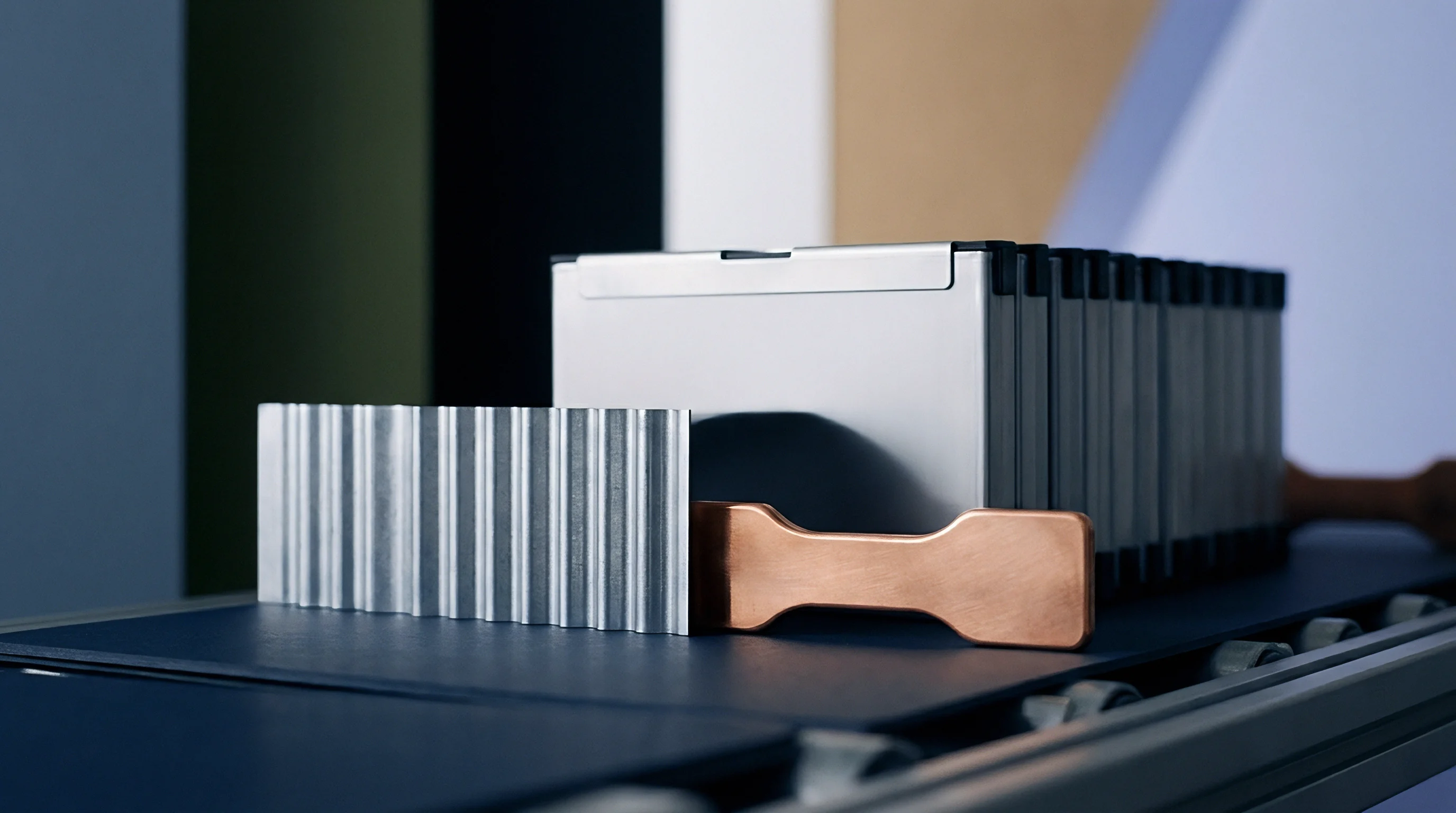
Building an enclosure from extruded sections divides tooling costs across several simpler setups instead of sinking everything into one massive tool steel block. A fabricated tray typically uses eight to fourteen individual extrusions joined by robotic cold metal transfer or friction stir welding. Friction stir welding, however, requires rigid workholding: a four-meter bed fixture with hydraulic clamps, pneumatic hold-downs, and copper heat-sink backings costs 55,000 to 110,000 dollars per station.
Which Enclosure Process Dictates Upfront Tooling Commitments?
Die casting replaces a dozen stamped or extruded parts with a single casting, eliminating assembly weld seams and leak check operations. The trade-off is press size: a full-sized bottom tray requires a 4,000-tonne to 6,000-tonne cold-chamber machine, with mold blocks spanning two meters on a side. The slide cores required for side-mounting rails also introduce steep thermal gradients that risk hot tearing in structural 6000-series cast alloys.
- Monolithic Die Cast Tray tooling requires 380,000 to 750,000 dollars upfront, yielding three-minute cycle times and removing the need for non-destructive weld testing.
- Extruded and Welded Ladder Trays require 90,000 to 160,000 dollars across six to eight profile dies, moving capital into multi-axis CNC welding beds.
- Deep-Drawn Stamped Lower Pans use three-stage tandem hydraulic press tooling costing 220,000 to 410,000 dollars, but limit the housing to simpler exterior profiles.
Top cover tooling operates on entirely different economics. Upper lids do not carry chassis loads; they exist to satisfy UNECE R100 thermal containment and withstand IP69K washdown spray. A stamped 1.2 millimeter 5754-H111 aluminum lid requires blanking, drawing, and perimeter piercing dies that total 110,000 to 180,000 dollars.
Deep draws are difficult here: pulling an aluminum cover deeper than 80 millimeters causes severe thinning in corner radii. If the wall drops below 0.85 millimeters, burn-through resistance during a thermal runaway drops from ten minutes to ninety seconds, failing mandatory passenger egress requirements.
A pack enclosure perimeter seal requires forty percent compression across thirty-six bolt locations to pass ISO 20653 IP6K9K high-pressure spray testing.
Thermal distortion across friction-stir welded bottom plates cannot simply be flattened during pack bolt-down; maintaining an IP-rated seal requires machining the perimeter sealing plane flat after welding.
Clamp
Electrode swelling inside prismatic cans exerts steady outward force on module endplates throughout the cell life cycle. Graphite anodes expand six to ten percent during lithium intercalation, translating into heavy lateral pressure across the broad faces of rigid cans. Packs require 300 to 500 kilopascals of initial mechanical pre-load at assembly.
Clamping the stack maintains layer-to-layer contact, slows active material shedding, and suppresses lithium plating during low-temperature charging.
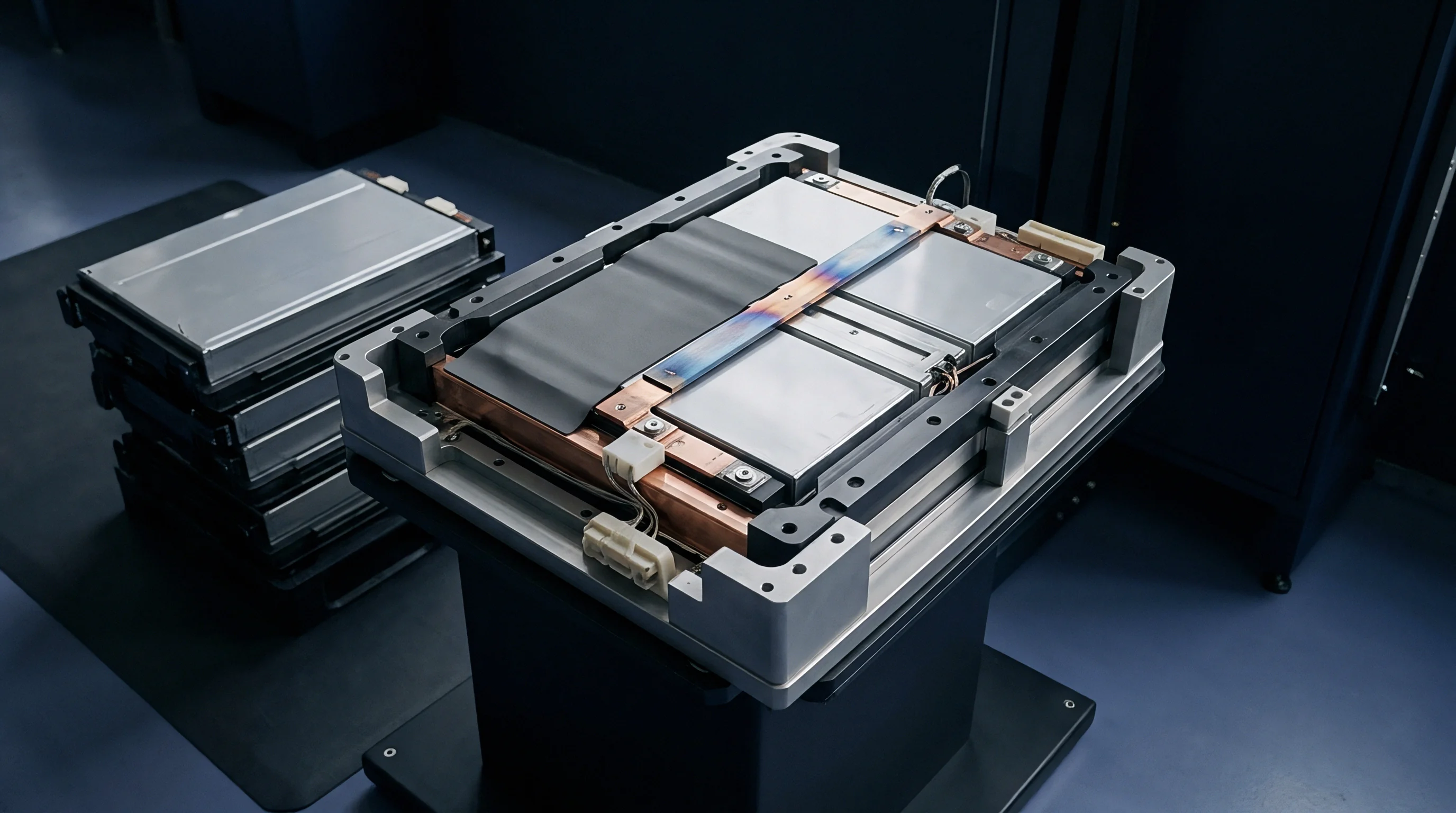
Pre-compressing twelve to twenty-four prismatic cells into a rigid module takes purpose-built assembly hardware. The endplates ~ either 6061-T6 aluminum extrusions or 2.0 millimeter high-strength low-alloy stampings ~ require forming dies, while 304 stainless steel side straps wrap the stack. These straps are tensioned hydraulically and laser-welded while clamped inside an automated compression nest.
Will Modular Extrusions Supplant Monolithic Castings?
Extrusions let pack builders alter cell count without cutting fresh die steel. Going from an eight-cell block to a twelve-cell block is largely a matter of updating the cut-off length on the automated saw line. Die casting offers no such latitude.
Adding a cell bay to a cast tray scraps the entire cavity and core set, writing off hundreds of thousands of dollars in hardened tooling.
Module compression fixtures represent a heavy capital commitment on the line. An automated compression and banding station incorporates four servo-driven ball screws, multi-channel load cell feedback, and pneumatic nest locators, costing between 75,000 and 130,000 dollars per cell. The tool has to hold cell terminal heights within 0.15 millimeters across the full stack while sustaining 4,500 newtons of continuous clamping force during side-strap welding.
Tolerance stack-ups govern fixture compliance. Typical prismatic can thickness varies by plus or minus 0.3 millimeters per cell. In a twenty-four-cell module, that tolerance window compounds to 7.2 millimeters across extreme production lots.
The compression station must read stack length on the fly and transition from position control to force control once it contacts the endplates. Fixed displacement fixtures crush separator margins on thick cells and leave thin cells loose, which speeds up internal impedance growth over cycling.
Stack pre-load fixtures operating under pure displacement control inevitably generate excessive interfacial pressure across upper-tolerance cell lots.
Aerogel or polyurethane foam pads inserted between cells take up expansion and smooth out dimensional variances. Cutting dies for these insulation sheets are inexpensive ~ steel-rule dies cost between 2,500 and 6,000 dollars. The real capital sits in the automated pick-and-place vacuum end-effectors needed to handle static-prone, fragile pads on the line.
Once compressed beyond their yield point, these pads behave like solid blocks, passing raw electrode expansion directly into structural fasteners.
Polymer
Dielectric barriers isolate metal cell cans from chassis ground. The outer polyolefin shrink wrap on prismatic cans provides little more than basic scratch resistance and primary electrical isolation. Standards like IEC 62133-2 and UL 2580 mandate secondary insulation barriers rated to withstand at least 2,500 volts direct current.
Meeting that requires injection-molded end insulators, cell inter-leaf sheets, and overhead busbar trays.
Tooling for these pack plastics uses multi-cavity injection molds cut from P20 or DIN 1.2738 pre-hardened tool steel. The parts themselves rely on thirty-percent glass-filled polybutylene terephthalate (PBT-GF30) or flame-retardant PC-ABS with UL 94 V-0 ratings. Glass fiber wears down gate orifices, runner corners, and vent pins quickly.
Molders use hardened steel inserts, typically Bohler M310 or AISI S136 heat-treated to 52 Rockwell C, at the gates to prevent washout before 50,000 cycles.
- Cell Partition Spacers require high-cavitation family molds (2+2 or 4+4 cavities) running hot-runner systems, demanding 65,000 to 120,000 dollars per tool set to maintain 0.4 millimeter wall thickness consistency.
- Busbar Carrier Trays span the full length of the module, requiring large single-cavity molds with sequential valve gating costing 85,000 to 145,000 dollars to eliminate structural weld lines.
- High-Voltage Terminal Covers utilize dual-cavity cold-runner molds costing 28,000 to 45,000 dollars, operating with three-plate mold layouts to automate runner separation.
- Cable Routing Brackets require sliding-core injection tools costing 32,000 to 55,000 dollars to form side-locking retention snaps without sink mark defects.
Differential shrinkage controls final part fit. Glass-filled PBT shrinks 0.3 to 0.5 percent parallel to the melt flow, but 0.8 to 1.2 percent across it. Poor thermal balance across hot-runner nozzles will twist long carrier trays out of plane.
A bow of just 1.5 millimeters across a 600 millimeter tray pulls cell terminals out of focus for laser welding or wire bonding scanners, resulting in cold joints or burn-through on negative terminals.
Soft prototype molds are rarely an option with glass-filled resins. Aluminum tool cavities wash out within 500 shots from abrasive glass fibers at 260 degrees Celsius melt temperatures. Validation testing requires cutting semi-hardened P20 steel tooling right away, committing tooling capital four to six months before engineering sign-off.

Amortization
Finished pack cost comes down to balancing upfront tooling against piece-part cycle time. A commercial utility vehicle pack amortized across limited volumes exposes this spread: at 5,000 packs a year, 550,000 dollars in casting and stamping dies burdens every pack with a 110-dollar surcharge. At 50,000 packs annually, that capital cost falls to 11 dollars per unit, making dedicated, high-speed automated tooling viable.
| Volume Scenario | Total Tooling CapEx USD | Annual Packs Produced | Three-Year Unit Amortization USD | Scrap and Rework Allowance USD |
|---|---|---|---|---|
| Low Volume Specialty | 145,000 | 2,500 | 19.33 | 8.50 |
| Pilot Fleet Rollout | 280,000 | 5,000 | 18.67 | 5.20 |
| Mid-Volume Commercial | 520,000 | 15,000 | 11.56 | 2.80 |
| High-Volume Industrial | 980,000 | 50,000 | 6.53 | 1.15 |
| Mass Automotive Platform | 1,650,000 | 120,000 | 4.58 | 0.65 |
Refurbishment funds often get overlooked during sourcing. Extrusion dies wear as billets are forced through the aperture. A profile die pushing high-yield 6000-series alloy lasts roughly 25,000 to 40,000 meters before critical dimensions exceed the plus or minus 0.25 millimeter limit.
When an enclosure requires 16 meters of structural profile per pack, one die set washes out after 2,000 to 2,500 packs. The budget has to absorb replacement die inserts at 3,500 to 6,000 dollars each at regular production milestones.
High-pressure die casting cavities show thermal fatigue and micro-cracking around gates after 70,000 to 100,000 shots. Shot sleeves and plunger tips wear out faster, needing replacement every 4,000 to 8,000 cycles. Replacing a main pack cavity insert consumes forty percent of the original tooling cost.
Treating the original tooling purchase order as a one-off asset leaves a project exposed to large unbudgeted costs when the cavity checks mid-program.
Stamping dies running 5000-series or 6000-series sheet require regular laser cladding or recoating to prevent galling. Under heavy forming loads, microscopic aluminum particles weld to tool surfaces and scratch incoming blanks. Physical vapor deposition coatings like titanium carbo-nitride (TiCN) or diamond-like carbon cost 6,000 to 12,000 dollars per tool set, but stretch maintenance intervals from 10,000 to 60,000 strokes.
That maintenance budget decides whether true unit amortization matches the original business case or bleeds into continual tooling repairs.
The main commercial challenge remains whether regional suppliers can support die maintenance without maintaining expensive backup tool sets on active standby across three continents.
Covenant
Legal ownership of tooling defines leverage between cell integrators, contract pack builders, and vehicle OEMs. Dedicated tooling is customer-funded property residing on a supplier’s shop floor. If a contract manufacturer encounters financial trouble, tier-two tooling shops can place statutory liens on the dies, halting pack assembly for months.
Robust contracts secure this equipment through strict asset bailment language.
Every tool funded via non-recurring engineering charges requires physical tagging, serial number stamps, and brass asset plates riveted straight to the mold base. These plates state that the die remains the exclusive property of the buyer and cannot be pledged, encumbered, or moved without written consent. Customer auditors inspect these physical tags, match serials against company asset registers, and review maintenance logs during annual supplier audits.
Bailment terms set clear operating constraints. The agreement establishes that the supplier holds the tooling strictly as a bailee to build parts for the buyer. Without explicit limits, contract manufacturers sometimes use customer-owned extrusion dies to run profiles for third-party stationary storage projects.
Contracts protect against this by restricting production to authorized purchase orders and requiring tamper-evident cycle counters on casting and stamping dies to verify shot counts against invoices.
Relocation clauses define step-in rights if a vendor misses yield targets or defaults on deliveries. The agreement must establish immediate extraction rights on forty-eight hours notice. A standard legal clause reads: The Buyer retains the absolute right to enter the manufacturing premises, take immediate physical possession of the tooling, fixtures, and associated engineering drawings, and relocate the assets to an alternate manufacturing facility without judicial intervention or counterclaim offset.
Clear language here prevents an underperforming supplier from holding production tooling hostage during commercial disputes.