Air Cargo Clearance Workflows for Packaged Lithium Cell Shipments
Air clearance for packaged lithium cells requires PI 965 compliance, 30% state of charge, UN 38.3 summaries, and precise Class 9 dangerous goods declarations.


Dispatch
Air transport of energetic energy storage media operates under international regulations governed by the International Civil Aviation Organization Technical Instructions and the International Air Transport Association Dangerous Goods Regulations. Commercial shipments of secondary lithium ion cells fall under designated United Nations classification numbers that dictate carrier acceptance, packing requirements, and flight eligibility. Standalone lithium ion cells, transported as energy storage components rather than installed inside equipment, receive classification under UN 3480.
When cells ship alongside their end-use devices inside the same package, regulations assign UN 3481 under Packing Instruction 966. Equipment containing integral cell assemblies utilizes UN 3481 under Packing Instruction 967.

Navigating IATA Dangerous Goods Frameworks
Regulatory tiering within Packing Instruction 965 divides UN 3480 shipments into three distinct operational categories based on cell energy capacity and package mass. Section IA applies to secondary cells exceeding 20 watt-hours individual capacity, necessitating complete Class 9 dangerous goods declaration, UN specification packaging, and strict cargo aircraft routing. Section IB covers cell capacities at or below 20 watt-hours packaged in multi-unit consignments where gross package mass remains under 10 kilograms, yet maintains full dangerous goods documentation requirements.
Section II previously permitted excepted carriage for small quantity cell shipments; however, regulatory revisions eliminated Section II standalone cell allowances for air freight. All commercial air shipments of standalone cells now demand execution under Section IA or Section IB pathways.
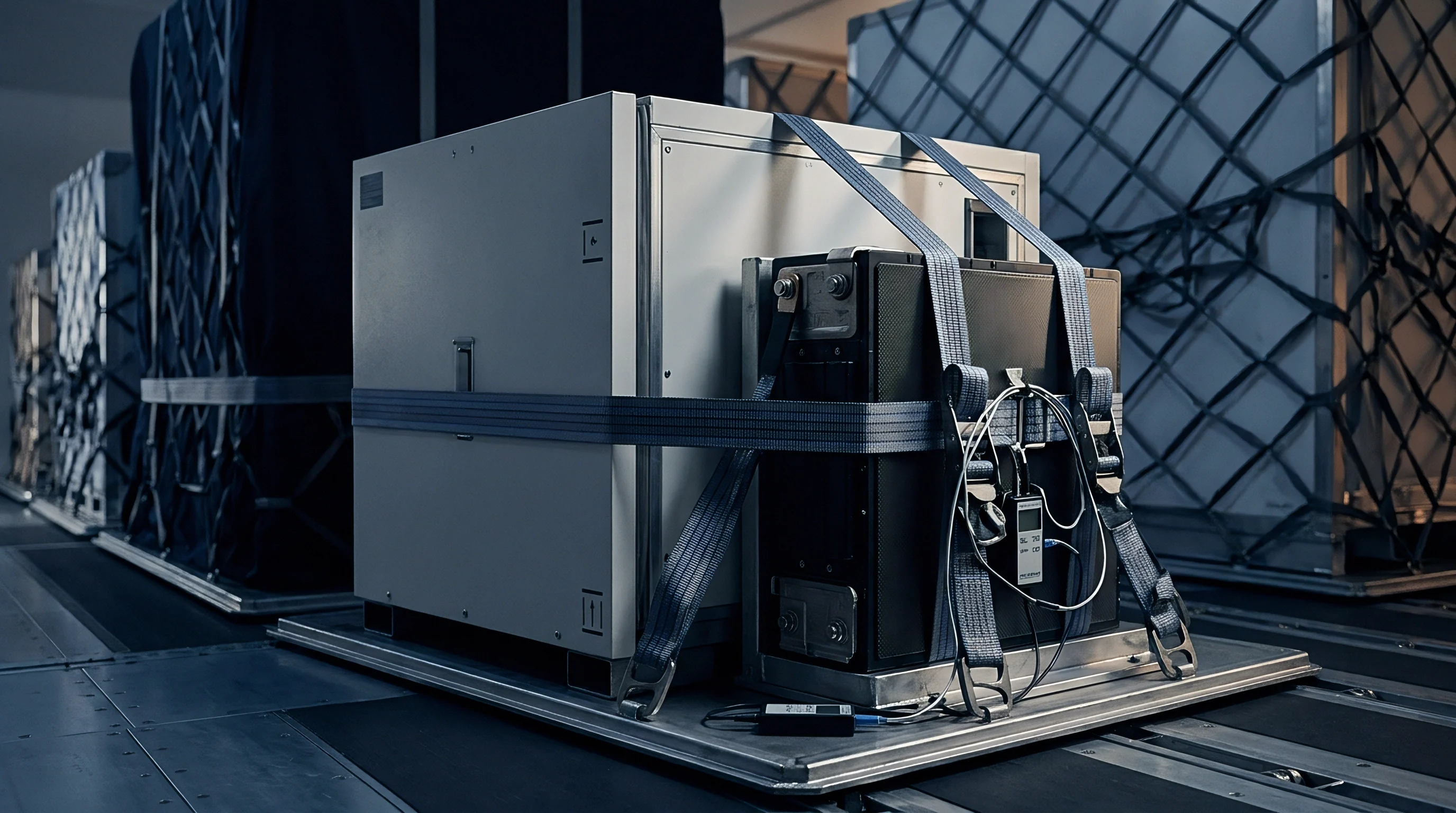
Carriage permissions restrict standalone lithium ion cells exclusively to dedicated cargo aircraft. Passenger aircraft transport for UN 3480 remains prohibited under international aviation security mandates. Compliance requires affixing the Cargo Aircraft Only handling label alongside the primary Class 9 dangerous goods label on opposite faces of outer packages.
State and Operator Variations
National civil aviation authorities enforce national variations that override standard international regulations. The United States Department of Transportation, through the Pipeline and Hazardous Materials Safety Administration, enforces 49 CFR Section 173.185, imposing mandatory state variations USG-02 and USG-13. These provisions alter battery shipping allowances across domestic air space.
European Union aviation authorities mandate equivalent structural compliance through European Union Aviation Safety Agency operational directives.
Airline operators apply individual restrictions beyond statutory baselines. Commercial air carriers frequently enforce operator variations that outright reject Section IB consignments or mandate prior operator approval for large battery shipments. Freight forwarders verify carrier-specific variations before issuing airway bills.
A carrier variation code published in the dangerous goods manual functions as a binding refusal criteria at the airport intake counter.
Selecting the incorrect UN classification on cargo manifests leads to immediate cargo detention at airport transfer hubs.


Pack
Physical containment structures for secondary lithium cells must withstand dynamic mechanical stresses, pressure differentials, and thermal events during flight. The primary hazard stems from internal short circuits triggering thermal runaway, where cell temperatures exceed 400 degrees Celsius and release flammable vapors. Packaging engineering mitigates thermal propagation between adjacent cells while holding structural integrity during high-altitude depressurization events down to 11.6 kilopascals.

State of Charge Limits
Mandatory state of charge restrictions apply to all standalone cell shipments under Packing Instruction 965. Factory lines outputting commercial cells for air transit set charge levels to a defined ceiling before package sealing.
| UN Classification | Packing Instruction | Cell Watt-Hour Ceiling | Package Mass Limit | UN Packaging Standard |
|---|---|---|---|---|
| UN 3480 Section IA | PI 965 IA | Exceeds 20 Wh | 35 kg net mass | UN 4G / 4GV Specification |
| UN 3480 Section IB | PI 965 IB | 20 Wh or less | 10 kg gross mass | UN Specification Traced |
| UN 3481 Section I | PI 966 I / 967 I | Exceeds 20 Wh | 35 kg net mass | UN 4G Outer Box |
| UN 3481 Section II | PI 966 II / 967 II | 20 Wh or less | 5 kg net mass | Strong Rigid Outer Packaging |
Verification of cell charge levels takes place via open-circuit voltage checks prior to final boxing. A cell exceeding its nominal voltage threshold violates carrier acceptance rules, forcing physical discharge reprocessing at the factory before air transit authorization.

UN Specification Packaging Mechanics
Outer boxes holding Section IA and Section IB shipments require UN 4G or 4GV fiberboard certification marks. Certification entails independent testing under UN Performance Test Standards, including drop testing from 1.2 meters, stacking tests under heavy loads, and internal hydro-pressure resistance. Inner packaging components demand complete electrical isolation of individual cell terminals.
Dividers formed from flame-retardant corrugated board or thermoformed trays prevent contact between adjacent battery terminals. Absorbent non-combustible cushioning materials surround inner packagings to isolate movement. Outer cartons feature the UN packaging code stamp, indicating design type, maximum gross weight, packaging material, and testing facility credentials.
Standalone lithium ion cell cargo shipped under Packing Instruction 965 carries an upper state-of-charge limit of 30 percent rated capacity.
Overpacks enclosing multiple UN-certified cartons require clear external markings. An overpack must display the word OVERPACK in letters measuring at least 12 millimeters in height, alongside duplicate dangerous goods hazard labels, cargo aircraft labels, and shipper contact details visible on exterior surfaces.
Failure to isolate cell terminals inside inner cartons causes localized thermal shorts, triggering container fire and total cargo destruction during transit.

Evidence
Documentary proof forms the mandatory core of dangerous goods compliance files. Every lithium cell shipment crossing international air freight corridors carries a chain of custody backed by certified laboratory test reports. Forwarders, customs authorities, and air carrier safety departments evaluate technical evidence prior to granting runway clearance.
UN 38.3 Test Summary Mandate
Sub-section 38.3 of the United Nations Manual of Tests and Criteria outlines eight distinct physical, thermal, and electrical stress protocols cell designs complete before commercial transport. Passing UN 38.3 testing demonstrates cell stability during altitude simulation, thermal cycling, vibration, mechanical shock, external short circuit, impact/crush, overcharge, and forced discharge.
| Test Protocol | Simulated Environmental Stress | Passing Acceptance Criteria | Carrier Audit Document |
|---|---|---|---|
| T.1 Altitude | 11.6 kPa pressure for 6 hours | No mass loss, no leakage, no rupture | UN 38.3.5 Test Summary Clause 7 |
| T.2 Thermal | minus 40 C to plus 72 C cycles | Voltage stability, no open-circuit drop | UN 38.3.5 Test Summary Clause 7 |
| T.3 Vibration | 7 Hz to 200 Hz sinusoidal sweep | No venting, no structural distortion | UN 38.3.5 Test Summary Clause 7 |
| T.4 Shock | 150g half-sine shock pulses | No disassembly, flame, or shorting | UN 38.3.5 Test Summary Clause 7 |
| T.5 Short Circuit | External short at 55 C ambient | External temp below 170 C, no fire | UN 38.3.5 Test Summary Clause 7 |
Civil aviation regulations require cell manufacturers and subsequent distributors to provide a standardized UN 38.3 Test Summary document to downstream buyers and freight handlers. Under UN 38.3.5, this summary contains ten mandatory fields, including exact cell model designations, laboratory credentials, test report tracking numbers, and specific chemical formulations.

Certification Boundaries and Scope
Safety Data Sheets compiled under the Globally Harmonized System furnish physical handling and emergency fire suppression metrics for logistics teams. Section 14 of the document detail transport classification criteria, matching the dangerous goods declaration. Misalignment between Safety Data Sheet trade names and commercial airway bill descriptions triggers freight detention at origin customs.
Testing under IEC 62133-2 covers electrical safety for portable consumer electronics; however, an IEC certificate does not substitute for transport qualification under UN 38.3. While IEC standards assess cell safety during operational consumer usage, UN transport tests measure survival under extreme transportation environments. Procurement practices demand distinct files for both safety certification frameworks.
A valid UN 38.3.5 test summary contains ten mandatory technical data fields verifying cell laboratory testing.
Quality management systems operating inside cell manufacturing facilities follow ISO 9001 or equivalent continuous auditing standards. Regulatory authorities inspect quality assurance documentation to verify that production cells match the electrochemistry of laboratory prototype units certified under UN 38.3 testing protocols.
Purchase contracts specifying FOB terms shift regulatory documentation delivery obligations directly onto cell manufacturers prior to release of origin bill of lading documents.


Declarant
Formal air cargo acceptance requires execution of the Shipper’s Declaration for Dangerous Goods. This legally binding document transfers regulatory responsibility to the named shipper. Transport workers process cargo relying on data stated within the declaration, making clerical errors a ground for cargo groundings.

Shipper Declaration Workflows
Accuracy demands exact alignment between physical container labels and paper declaration lines. Declarants complete standardized forms printed with red hatch borders, entering dangerous goods details in precise sequence: UN number, Proper Shipping Name, Class 9 designation, packing group omission status, total net mass, and packing instruction code.

What Triggers Cargo Acceptance Rejection at Airport Hubs?
Ground handling personnel inspect incoming freight against strict acceptance checklists. Discrepancies between paperwork entries and container marks result in immediate rejection at cargo gates.
- Document Discrepancy entries present mismatched net weight figures between the dangerous goods declaration and the master airway bill.
- Label Positioning errors occur when hazard labels sit on the same side as package corners or fold over outer carton edges.
- UN Mark Absence occurs when outer fiberboard boxes lack factory-stamped UN specification code markings.
- Emergency Contact Failure occurs when provided 24-hour phone lines connect to automated systems rather than live technical specialists.
Air freight acceptance desks reject dangerous goods packages carrying folded or obscured hazard labels.
Forwarders check emergency phone numbers listed on dangerous goods declarations during physical intake. Regulations mandate that listed emergency phone services connect directly to individuals with technical knowledge of cell chemistry characteristics during all transit hours.
Suppliers frequently claim that small volumetric sample shipments require only generic air commercial invoices, omitting dangerous goods declarations entirely.


Customs
Cross-border customs workflows integrate dangerous goods security protocols with trade compliance clearance routines. Import authorities verify cell battery origin declarations, trade agreement credentials, and dangerous goods paperwork before allowing freight transfer into bonded staging zones.

Border Entry and Physical Inspection Protocols
Customs officers select lithium cell shipments for physical inspection based on risk profiles, chemical commodity codes, and origin country flags. Port inspectors examine packaging conditions inside customs bonded warehouses, verifying state of charge declarations and physical box integrity.
Dangerous goods cargo clearance relies on sequential verification across regulatory agencies and terminal operators.
- Importers submit dangerous goods declarations, airway bills, and commercial invoices to customs trade portals 24 hours prior to flight departure.
- Aviation security authorities cross-reference the shipment UN 38.3 test summary against origin factory database registries.
- Customs officers issue conditional release permits pending physical package examination inside temperature-controlled dangerous goods holding areas.
- Terminal handling agents verify outer container UN specification marks against physical gross weight scales.
- Final customs release authorizes freight forwarders to transfer cleared cargo to domestic logistics transport hubs.

Terminal Staging and Emergency Provisions
Air freight terminals isolate lithium cell cargo within designated hazardous material storage bays equipped with automatic fire suppression systems. Staging areas maintain thermal monitoring to identify early thermal runaway events before cargo loading.
Dangerous goods cargo staging requires dedicated climate-controlled storage bays equipped with thermal monitoring systems.
Emergency response frameworks operate under International Civil Aviation Organization Guidance Document 9481. Airport dangerous goods handling crews maintain specialized fire extinguishers, litters of dry sand, and thermal imaging cameras to manage damaged battery packages during terminal transport operations.
Which operational parameters dictate whether customs authorities seize non-compliant lithium cell consignments or permit re-export back to origin manufacturing facilities?


Tariff
Trade compliance and financial planning for cross-border lithium cell movements hinge on accurate Harmonized System classification and landed cost calculation. Incorrect product classification alters customs duty liabilities, introduces punitive border fines, and invalidates cargo liability insurance coverage.

Harmonized System Classification for Lithium Cells
Customs tariffs classify secondary lithium ion cells under Harmonized System tariff code 8507.60.00. National tariff schedules divide this heading into sub-codes distinguishing individual cylindrical cells, pouch formats, prismatic modules, and fully assembled battery packs. Proper tariff selection requires evaluating cell chemistry and structural integration levels.
Customs valuation incorporates air freight transit costs, hazardous material handling fees, and origin export processing charges into the total taxable base value. Subheading entries alter standard duty rates between zero and 3.4 percent depending on trade agreement terms.

Landed Cost Arithmetic and Air Freight Surcharges
Calculating landed freight costs requires factoring hazardous material carrier surcharges into baseline weight-volume air freight rates. Dangerous goods cargo processing adds substantial cost overhead per shipment.
Consider a commercial shipment of 40,000 cylindrical 21700 lithium ion cells destined for industrial battery pack integration. Assume an individual cell unit price of $3.20 USD, a cell mass of 68 grams, a net shipment weight of 2,720 kilograms, an baseline air freight rate of $4.50 USD per kilogram, a dangerous goods carrier fee of $250 USD per UN specification carton lot, a customs import duty rate of 3.4 percent, and local port dangerous goods staging fees of $850 USD.
Baseline cell purchase cost equals $128,000 USD. Baseline air freight charges total $12,240 USD. Packaging 40,000 cells across 200 UN-certified boxes generates dangerous goods processing surcharges of $5,000 USD.
Custom clearance, terminal dangerous goods handling, and security documentation add $1,850 USD. The CIF customs value calculates to $147,090 USD, yielding an import duty assessment of $5,001.06 USD at the 3.4 percent tariff rate. Total landed cost reaches $152,091.06 USD, increasing nominal unit cost from $3.20 USD to $3.80 USD per cell.
Procurement teams deploy risk mitigation frameworks to lock shipping compliance obligations into supply contracts before issuing purchase orders.
- Factory Gate Verification requires cell suppliers to submit verified UN 38.3 test summaries prior to releasing initial purchase order deposits.
- State of Charge Audit obligates cell suppliers to issue batch-level factory voltage certificates proving cell charge stays under 30 percent.
- Carrier Variation Pre-Clearance mandates forwarders confirm airline dangerous goods space availability prior to origin truck dispatch.
- Documentation Indemnity Clauses assign financial liability for airport detention fees back to vendors supplying incomplete paperwork.
| Cost Component | Standard Commercial Freight | Class 9 Dangerous Goods Freight | Cost Driver Variance |
|---|---|---|---|
| Packaging Materials | $0.45 per carton box | $8.50 per UN 4G box | UN performance testing certification |
| Air Freight Surcharge | Baseline weight rate | Baseline plus $1.80/kg hazard rate | Cargo aircraft linehaul restrictions |
| Terminal Handling | Standard warehouse intake | Hazardous bay isolation staging | Dedicated dangerous goods infrastructure |
| Documentation Processing | Standard airway bill generation | Dangerous goods declaration audit | Certified declarant legal exposure |
Executing commercial cell procurement contracts demands aligning logistics timelines with dangerous goods documentation validation windows. Forwarders require three business days to verify UN 38.3 summaries, validate shipper declarations, and secure cargo aircraft space bookings. Air freight scheduling accounts for dangerous goods inspection buffers at transfer hubs to prevent missing connecting flights and incurring daily warehouse storage fees.