Standard Air Cargo Acceptance Procedures for Lithium Battery Test Summaries
Air cargo acceptance mandates matching UN 38.3.5 test summary parameters against physical carton markings and declaration sheets to prevent ground impoundment.


Dock
Ground handling agents evaluate incoming dangerous goods shipments against strict documentary criteria before cargo enters unit load devices. For lithium ion and lithium metal consignments, the primary gatekeeper is the lithium battery test summary required under UN Manual of Tests and Criteria Subsection 38.3.5. Acceptance technicians cross-reference physical packaging labels directly against the parameters listed in the dossier.
A complete test summary requires ten distinct technical items, and omitting any of them triggers an immediate hold. Cargo acceptance desks use IATA Dangerous Goods Regulations check sheets to confirm that every cell, module, and finished pack holds valid test evidence.
A missing laboratory accreditation number or mismatch in cell mass automatically halts freight processing at the carrier acceptance counter.
Air operators inspect both physical parcel condition and paperwork consistency. If battery energy ratings, nominal voltages, or physical dimensions differ between the declaration and the test sheet, cargo remains grounded on the warehouse apron.
| Inspection Parameter | Verification Source | Carrier Rejection Trigger | Regulatory Reference |
|---|---|---|---|
| Manufacturer Identification | UN 38.3.5 Item 1 and Item 2 | Name mismatch between summary and cell wrapper | ICAO TI Part 2, Chapter 9 |
| Test Laboratory Credentials | UN 38.3.5 Item 3 and Item 4 | Absence of accreditation body details or test contact | UN Manual Section 38.3.5(d) |
| Product Mass and Watt-Hour Rating | UN 38.3.5 Item 6 | Declared pack mass exceeds test summary limit by over 20 percent | IATA DGR Table 9.3.A |
| Test Execution Matrix | UN 38.3.5 Item 7 (T.1 to T.8) | Unchecked test boxes without technical justification | UN Manual Section 38.3.4 |
| Authorizing Signatory | UN 38.3.5 Item 9 and Item 10 | Missing corporate title or date of issuance | UN Manual Section 38.3.5(j) |
Carriers reject pallets with illegible markings, torn hazard labels, or ambiguous summary references. Handlers isolate suspect cargo in dedicated containment zones until the shipper issues validated paperwork corrections.
Submitting an unsigned test summary or documentation for an unverified cell design leads to full consignment refusal, emergency warehouse storage fees, and mandatory reporting to civil aviation authorities.


Dossier
Compliance relies on gathering safety data well before cargo reaches the pallet stage. The UN 38.3 test summary condenses lengthy laboratory test reports into a standardized one- or two-page document for verification.
Shippers maintain digital files linking each cell model number to its underlying test report. Forwarders produce these summaries immediately when requested by air carriers, customs brokers, or ramp inspectors.

Is Documented Cell Lineage Legally Defensible?
Integrating subassemblies complicates documentation when finished equipment contains third-party cells. A consumer device built with a pouch cell needs clear paper trails linking the assembled battery back to the original cell testing.
The issuing party lists both the final battery model and the underlying cell model on the UN 38.3.5 certificate. Omitting the constituent cell details breaks the regulatory chain of custody.
- Primary Cell Identifier establishes the foundational electrochemical testing conducted under tests T.1 through T.5 and test T.8.
- Battery Pack Code links the integrated protection circuit and multi-cell assembly to tests T.1 through T.5 and overcharge test T.7.
- Packaging Instruction Alignment confirms compliance with Packing Instruction 965, 966, 967, 968, 969, or 970.
- State of Charge Attestation affirms that loose lithium ion cells are tendered at or below 30 percent rated capacity.
Airlines reject incomplete paperwork on sight. Test records remain valid indefinitely as long as the cell design, internal chemistry, and cathode formulation do not change. Any modifications beyond regulatory thresholds necessitate complete retesting.
Section 38.3.2.2 dictates full retesting across all test regimes whenever cathode active material or mass changes by more than 0.1 grams or 20 percent.
Supply contracts frequently incorporate specific clauses assigning full financial responsibility for shipping delays caused by invalid or fraudulent test summaries directly to the component vendor.


Discrepancy
Document audits regularly uncover misalignments between laboratory test reports and commercial shipping paperwork. Freight forwarders review incoming dossiers to catch these errors before freight reaches airline screening stations.
A common error involves discrepancies between the legal entity named on the test summary and the shipper listed on the Air Waybill. Third-party branding often obscures the original manufacturer, creating verification deadlocks at airline transfer hubs.
| Documentation Defect | Physical Cargo Manifestation | Operational Risk | Resolution Requirement |
|---|---|---|---|
| Watt-Hour Derivation Error | Nominal voltage multiplied by incorrect amp-hour base | Misclassification between Section IA and IB | Laboratory reissue of calculated rating |
| Omission of T.7 Overcharge | Rechargeable pack presented without overcharge test data | Immediate grounding for non-compliance | Supplemental battery-level test execution |
| Single-Cell Battery Confusion | Single cell labeled as multi-cell pack | Mismatched test matrix applications | Corrective declaration of component configuration |
| Stale Standard Version | Summary cites obsolete UN Manual revision without equivalence | Carrier quarantine during safety audits | Laboratory reassessment under current edition |
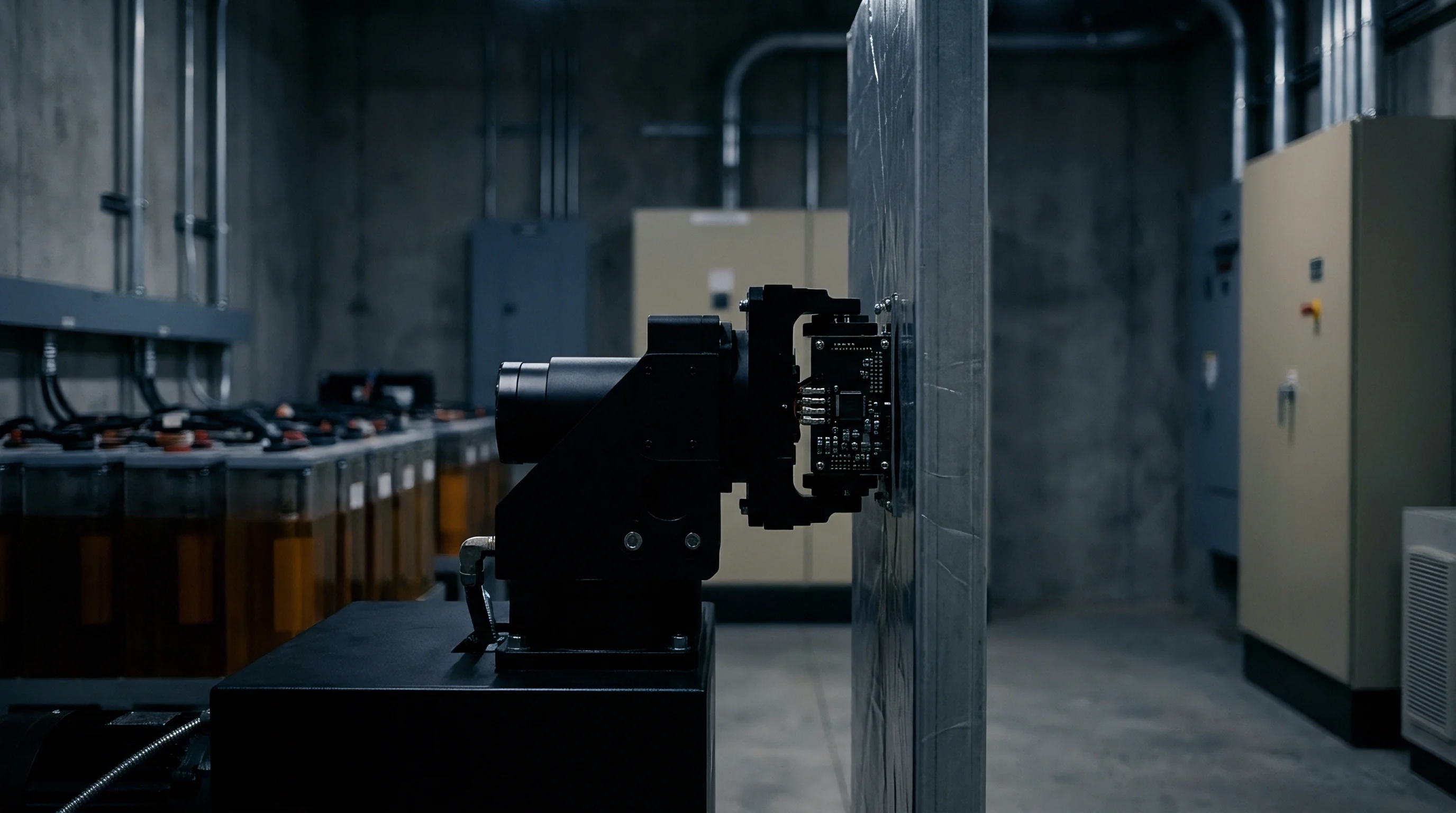
Secondary assemblers inherit transport liabilities. Modifying a tested pack enclosure alters its mechanical resistance, invalidating baseline shock and vibration ratings. Acceptance technicians spot physical variations by comparing outer casing drawings with sample photographs on file.
Will Modular Pack Reconfiguration Invalidate Upstream Testing?
Altering pack geometry or swapping the integrated battery management system voids original laboratory certifications. Adding cells in series increases overall voltage, altering electrical fault responses during short-circuit testing.
Minor enclosure modifications may preserve internal electrochemical stability, but transport regulations still treat them as changes requiring administrative updates or complete retesting.

Crate
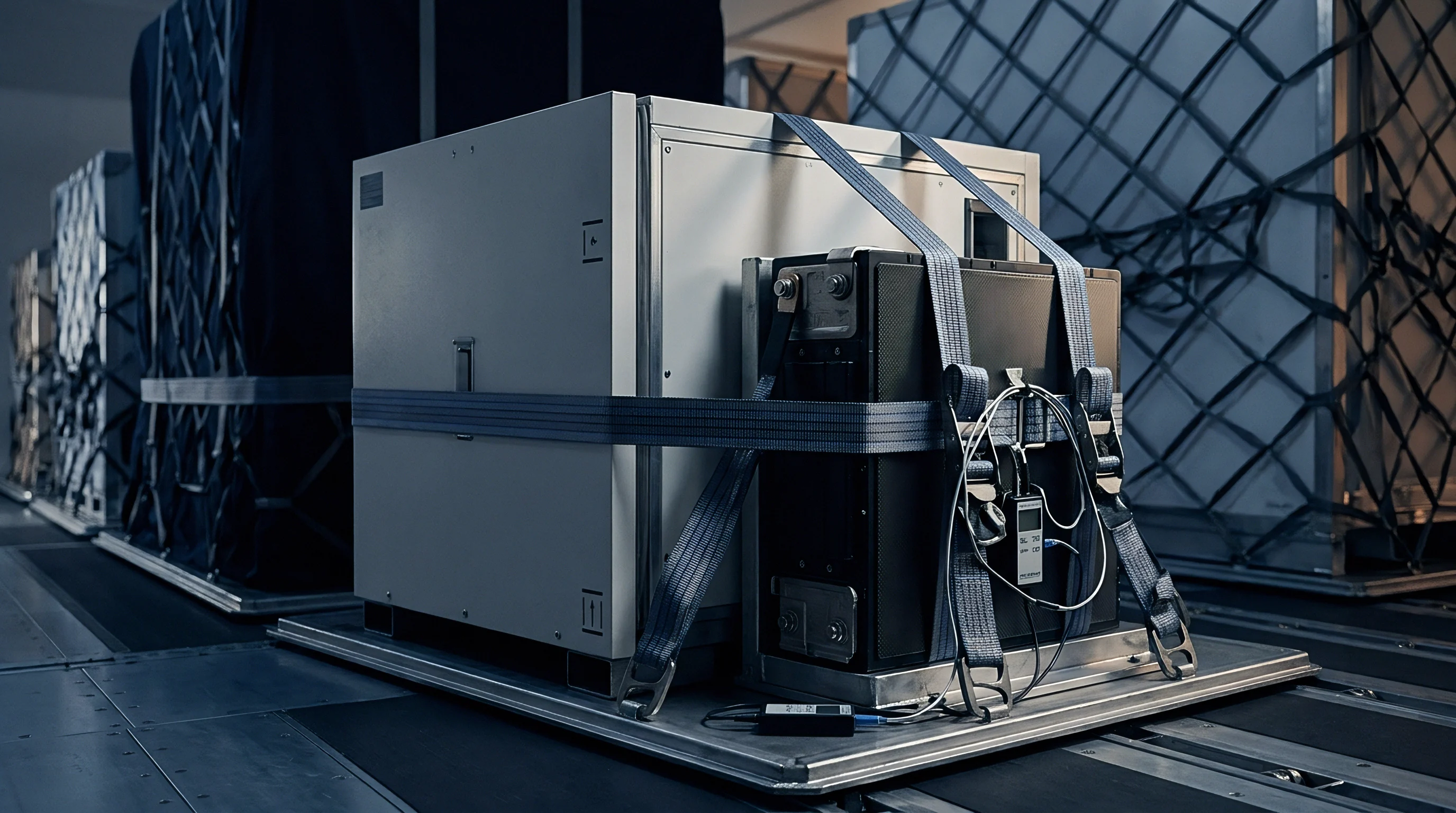
Packaging must withstand normal handling during transport while clearly displaying required regulatory markings. Cargo aircraft accept lithium battery shipments only when external packaging meets UN performance standards.
Acceptance personnel evaluate crate integrity, closure mechanisms, label placement, and required signatures before issuing cargo receipts.
- UN Specification Packaging Marks verify performance-tested container integrity, displaying approved packaging codes like 4G fiberboard boxes or 4D plywood crates.
- Class 9 Hazard Labels indicate Class 9A lithium battery hazards placed adjacent to proper shipping names and UN numbers.
- Cargo Aircraft Only Markings identify pure freight consignments where passenger transport is prohibited by civil aviation regulations.
- Lithium Battery Handling Marks display designated UN numbers along with a telephone number providing round-the-clock technical information.
Inspectors examine outer containers to confirm that no denting, punctures, or chemical residues have compromised the shell during transit to the consolidation center.
Crate structural integrity combined with verifiable paperwork forms the legal baseline for air cargo carriage clearance.
When markings on individual battery modules do not match outer box placards, warehouse agents immediately segregate the shipment, incurring transit holds that double storage tariffs.
Packaging integrity directly mirrors the reliability of the underlying documentation file.
Exposure
Commercial liability in dangerous goods airfreight falls squarely on the shipper of record. Signing the Shipper’s Declaration for Dangerous Goods constitutes a binding legal certification that the consignment complies with all international transport provisions.
Civil aviation authorities impose substantial financial penalties on organizations tendering non-compliant battery shipments. Fines escalate rapidly when unregistered cells trigger thermal runaway incidents aboard aircraft.
Forwarders, integrators, and downstream distributors protect their operating balance sheets by demanding complete, audit-ready compliance dossiers from upstream cell fabricators prior to issuing purchase orders.
The industry remains divided on how strictly third-party assembly integrators must audit subcontractor supply chains, particularly when multi-tiered sourcing obscures original cell manufacturing data across cross-border transit corridors.