Quantifying Non-Linear Viscoelastic Creep and Micro-Void Growth Kinetics in Thermoplastic Pouch Laminate Seals
Non-linear viscoelastic creep and solvent-induced micro-void growth in pouch cell seals determine hermetic failure limits under internal gas pressure.

Melt
Thermoplastic laminate pouches rely on a multilayer structure consisting of an outer oriented polyamide layer, a central aluminum foil barrier, and an inner cast polypropylene film. The inner polyolefin layer serves as the primary thermal sealant, fusing opposing pouch flaps under applied heat and mechanical force to enclose liquid organic electrolyte and electrochemically active stack components. Sealing performance depends directly on achieving a uniform, low-defect bond geometry along the perimeter flange.
Internal cell gassing, swelling of electrochemically active materials during charge-discharge cycling, and exposure to volatile carbonate solvents generate localized mechanical forces across this perimeter region.
Thermal sealing operations establish the initial morphology of the polyolefin sealant layer. Heat transfer across the multilayer web melts the semi-crystalline cast polypropylene while mechanical pressure compresses opposing surfaces into intimate physical contact. Melt interdiffusion across the joint interface eliminates the distinct boundary line, creating a unified polymeric continuum.
Thermal process parameters dictate the final thickness, chain orientation, crystalline ratio, and residual stress profile within the joint area.
Thermal Sealing Parameter Windows
Impulse heat sealing joins opposing polymeric interfaces by applying elevated temperature and mechanical force across a defined dwell duration. Process temperatures typically operate between 180°C and 225°C, while mechanical jaw pressures range from 0.3 MPa to 0.8 MPa. Applying insufficient thermal energy produces incomplete polymer chain interdiffusion across the joint interface, leaving a weak interfacial boundary susceptible to immediate mechanical peel failure.
Overheating causes excessive lateral extrusion of the molten polypropylene, squeezing the sealant material away from the seal center toward the inner and outer package edges.
Lateral squeeze-out reduces effective sealant layer thickness from an initial nominal dimension of 80 micrometers down to less than 25 micrometers in extreme cases. Thinning near the internal seal shoulder creates a geometric notch, and the resulting polymer displacement brings internal aluminum foil layers closer together, increasing short-circuit risks during tab bending or cell handling. Process control requires balancing seal jaw temperature, dwell time, and clamping pressure to preserve a minimum sealant thickness of 50 micrometers across the seal area.

Spherulitic Morphologies in Polypropylene Layers
Semi-crystalline polymers transform during thermal consolidation, developing ordered crystalline regions surrounded by amorphous chains. Cooling rates following the thermal sealing dwell phase dictate the nucleation rate and growth kinetics of spherulitic structures within the cast polypropylene layer. Rapid cooling produces smaller spherulites with high tie-molecule density connecting adjacent crystalline domains, whereas slow cooling permits the growth of large spherulite structures exceeding 15 micrometers in diameter separated by well-defined inter-spherulitic boundary zones.
Large spherulitic structures alter the local mechanical response of the sealant material. Inter-spherulitic boundary zones concentrate impurities, low-molecular-weight polymer fractions, and residual thermal stresses generated during cooling contraction. Amorphous polymer chains occupying these boundaries exhibit higher fractional free volume than the surrounding crystalline lamellae.
Under external tensile or internal hydrostatic pressure, these inter-spherulitic boundaries act as primary structural weak points where localized deformation initiates long before macroscopic yielding occurs across the bulk sealant layer.
- Interfacial Squeeze Out Excessive sealing jaw pressure displaces molten polypropylene, creating geometric stress concentrations along the seal shoulder and reducing barrier separation.
- Spherulite Coarsening Uncontrolled thermal cooling cycles produce oversized crystalline domain structures with vulnerable inter-spherulitic amorphous regions.
- Tab Notch Discontinuity Incomplete polymer flow around metallic tab leads creates micro-void channels adjacent to the sealant-metal interface.
- Residual Stress Trapping Rapid thermal quenching locks frozen-in molecular orientations into the sealant matrix, lowering the threshold for stress-induced cracking.
Mismatching thermal seal jaw temperature profiles by as little as 8°C across top and bottom sealing bars alters the symmetry of the crystalline transition layer, shifting the locus of failure from bulk shear to interfacial peeling under internal pressure loading.

Rheology
Polymeric inner layers in pouch laminates exhibit time-dependent mechanical deformation when subjected to sustained tensile and shear stresses. Internal gas accumulation from electrolyte oxidation, moisture reactions, or thermal decomposition generates continuous internal pressurization within the pouch cavity. This internal pressure creates outward normal forces that induce cleavage and peel stresses along the bonded perimeter flange.
Cast polypropylene exhibits distinct non-linear viscoelastic behavior under these conditions, characterized by stress-dependent creep compliance where strain response scales non-linearly with applied stress magnitude.
Creep deformation unfolds across three distinct kinetic stages: primary viscoelastic creep, secondary steady-state creep, and tertiary creep leading to mechanical rupture. Primary creep involves instantaneous elastic deformation followed by transient viscoelastic chain alignment. Secondary creep establishes a pseudo-steady state where the rate of deformation remains relatively constant over extended periods.
Tertiary creep marks a rapid acceleration in strain rate driven by localized necking, micro-structural damage accumulation, and cavitation, culminating in complete seal separation.

Findley Power Law and Schapery Non-Linear Formulation
Constitutive equations describe the instantaneous and time-dependent strain response of polymeric materials under arbitrary mechanical loading histories. The Findley power law provides an empirical expression for stress-dependent creep strain under uniaxial tension:
epsilon(t, sigma) = epsilon_0(sigma) + epsilon_t(sigma) (t / t_0)^n
Here, epsilon_0 represents the stress-dependent instantaneous elastic strain, epsilon_t is the creep coefficient, t is time, t_0 is a unit reference time, and n is a stress-independent strain exponent typically ranging between 0.25 and 0.40 for cast polypropylene. While the Findley model fits single-step constant stress creep data, it lacks thermodynamic foundation for multi-axial or variable stress states encountered during cell cycling.
The Schapery non-linear viscoelastic thermodynamic model accounts for multi-axial stress states and variable loading histories using stress-dependent non-linear factors g_0, g_1, g_2, and a_sigma:
epsilon(t) = g_0(sigma) D_0 sigma + g_1(sigma) Integral from 0 to t of d-tau
The reduced time parameter psi is defined as:
psi(t) = Integral from 0 to t of
In this formulation, D_0 represents instantaneous elastic compliance, Delta D(psi) is the transient viscoelastic compliance function, g_0 governs stress nonlinearity in elastic compliance, g_1 and g_2 describe stress non-linearity in transient compliance, and a_sigma is the stress shift factor. When stress levels exceed 30% of the yield strength, g_0, g_1, g_2, and a_sigma deviate significantly from unity, accelerating creep strain accumulation beyond predictions made by linear viscoelastic models.
The non-linear stress shift factor a_sigma for cast polypropylene drops from 1.00 at 2 MPa to 0.18 at 8 MPa under 45°C testing conditions, accelerating transient creep rates by more than fivefold.
Solvent absorption further modifies non-linear viscoelastic behavior. Liquid carbonate solvents such as ethyl methyl carbonate (EMC) and dimethyl carbonate (DMC) permeate the amorphous domains of the cast polypropylene matrix. Absorbed solvent molecules act as plasticizers, increasing macromolecular mobility and decreasing the glass transition temperature of the polymer.
Solvent plasticization shifts the baseline creep compliance function D_0 upwards while decreasing the stress threshold required to initiate non-linear creep behavior.

Time-Temperature-Stress Superposition Principles
Accelerated characterization of long-term mechanical creep relies on shifting short-term empirical compliance curves along logarithmic time scales. The Time-Temperature-Stress Superposition Principle (TTSSP) combines thermal shift factors a_T with stress shift factors a_sigma to construct a master creep compliance curve spanning decades of operational life from short-term laboratory measurements.
The horizontal shift factor a_T is modeled using the Williams-Landel-Ferry (WLF) equation for temperature regimes near the glass transition, or the Arrhenius expression for temperatures well below or above transition boundaries:
ln(a_T) = (E_a / R) (1 / T – 1 / T_ref)
E_a represents the activation energy for viscoelastic chain relaxation (typically 85 to 110 kJ/mol for semi-crystalline polypropylene), R is the universal gas constant, T is absolute temperature, and T_ref is baseline reference temperature. When internal gas pressure elevates tensile stresses within the seal shoulder, thermal and mechanical activation act conjunctively to accelerate polymer chain sliding.
| Condition | Temperature (°C) | Stress (MPa) | Elastic Compliance D_0 (1/GPa) | Findley Exponent n | Schapery Factor g_1 | Shift Factor a_sigma |
|---|---|---|---|---|---|---|
| Dry Unexposed | 25 | 2.0 | 0.62 | 0.28 | 1.02 | 1.00 |
| Dry Unexposed | 25 | 6.0 | 0.68 | 0.31 | 1.35 | 0.42 |
| Dry Unexposed | 45 | 2.0 | 0.81 | 0.32 | 1.18 | 0.65 |
| Dry Unexposed | 45 | 6.0 | 0.95 | 0.36 | 1.72 | 0.18 |
| Solvent Swollen (DMC/EMC) | 25 | 2.0 | 0.94 | 0.35 | 1.41 | 0.38 |
| Solvent Swollen (DMC/EMC) | 45 | 6.0 | 1.42 | 0.42 | 2.28 | 0.04 |
High mechanical stress levels combined with elevated ambient temperatures and solvent exposure force the polymer into severe non-linear deformation regimes. Under these conditions, standard linear viscoelastic extrapolations underestimate total creep strain after 1,000 operational hours by as much as 300 percent.
- Uniaxial Creep Data Measured strain-time curves under constant tensile load across target temperature ranges.
- Solvent Swelling Isotherms Mass uptake percentages and equilibrium solubility limits for DMC, EMC, and EC solvents.
- Multi Axial Yield Criteria Tensile-to-shear stress transformation matrices calibrated for constrained thin-film joint geometry.
- Thermal Shift Energy Empirically validated Arrhenius activation energy constants for temperature range 20°C to 70°C.
Standard laboratory seal strength measurements meeting initial 180-degree peel test requirements of 35 N/cm reflect instantaneous ultimate force rather than time-dependent viscoelastic compliance under sustained low-magnitude loads.


Cavitation
Polymer matrix degradation under internal pressure involves microstructural pore nucleation within the amorphous regions between crystalline lamellae. As the cast polypropylene sealant layer undergoes continuous non-linear creep deformation, localized hydrostatic tensile stresses develop around microscopic density fluctuations, pigment particles, and spherulitic boundary interfaces. These hydrostatic stresses drive localized volume expansion, leading to micro-void nucleation.
Void growth degrades the structural continuity of the polymer matrix, acting as a direct precursor to macro-scale seal breach and electrolyte egress.
Micro-void nucleation occurs when local hydrostatic stress sigma_m exceeds the critical void nucleation stress sigma_n of the polymer matrix. The critical nucleation stress depends on the surface energy gamma of the polymer, local shear modulus G, and initial structural flaw radius r_0:
sigma_n = sqrt( (2 PI gamma G) / r_0 )
In uncrosslinked cast polypropylene, initial structural flaw radii associated with inter-spherulitic boundaries range from 5 to 50 nanometers. Under sustained internal pouch pressures of 0.15 MPa to 0.35 MPa, localized stress concentration along the seal shoulder creates hydrostatic stresses exceeding the 4.5 MPa critical nucleation threshold for solvent-plasticized polypropylene.

Is Micro-Void Coalescence Accelerated by Carbonate Solvents?
Liquid electrolyte solvents penetrate the uncrosslinked polyolefin matrix during prolonged storage at room and elevated temperatures. Carbonate solvents reduce the cohesive energy density of the amorphous polypropylene phase. Swelling lowers effective surface energy gamma from 30 mJ/m^2 in dry polypropylene down to less than 14 mJ/m^2 in solvent-equilibrated polymer layers, decreasing the critical hydrostatic stress required for micro-void nucleation.
As absorbed solvent molecules swell the matrix and double diffusion rates, they occupy free volume within amorphous regions, increasing molecular mobility and facilitating volumetric dilation under applied mechanical shear. Micro-voids nucleate at lower bulk strain levels in solvent-exposed seals compared to dry seals subjected to identical mechanical loads, expanding rapidly under sustained internal pressure once formed.
Micro-void volume fraction within solvent-swollen cast polypropylene increases at an exponential rate once local plastic strain exceeds 0.08 mm/mm.
Rice-Tracey Void Kinetics and Strain Localisation
Analytical models quantify the expansion rate of spherical micro-pores embedded in a plastically deforming viscoelastic continuum under multiaxial stress. The modified Rice-Tracey void growth equation models the growth rate of a micro-void radius r as a function of equivalent plastic strain rate epsilon_dot_p and stress triaxiality ratio (sigma_m / sigma_eq):
dr / d-epsilon_p = C_1 r exp( C_2 (sigma_m / sigma_eq) )
In this expression, sigma_m is hydrostatic stress, sigma_eq is von Mises equivalent stress, and C_1 and C_2 are material constants. For cast polypropylene, C_1 typically equals 0.283 and C_2 equals 1.50. Stress triaxiality along the seal shoulder routinely exceeds 1.2 due to mechanical constraint imposed by the stiff adjacent aluminum foil layer, accelerating the rate of micro-void expansion relative to total plastic strain.
Void expansion alters local stress distribution in adjacent polymer material. As neighboring micro-voids expand, the ligament distance separating adjacent void walls decreases. When inter-void distance drops below average void diameter, local shear bands form between adjacent voids, driving rapid coalescence that transforms isolated spherical micro-voids into elongated micro-channels spanning across the width of the sealant layer.
Consider a worked calculation for a pouch cell seal shoulder operating under an internal gas pressure of 0.25 MPa at 50°C. Mechanical stress analysis indicates a von Mises equivalent stress sigma_eq of 4.2 MPa and a hydrostatic stress sigma_m of 5.8 MPa within the sealant layer, yielding a stress triaxiality ratio of 1.38. Assume an initial micro-void radius r_0 of 20 nanometers nucleated at an inter-spherulitic boundary.
Applying the Rice-Tracey model, the void expansion exponent term is calculated as:
exp(1.50 1.38) = exp(2.07) = 7.92
The void growth rate per unit plastic strain becomes:
dr / d-epsilon_p = 0.283 (20 nm) 7.92 = 44.8 nm per unit plastic strain
Under non-linear viscoelastic creep, the polymer accumulates plastic strain over time. Assuming a steady-state creep plastic strain rate of 1.2 10^-6 s^-1 in the solvent-swollen polypropylene matrix, the accumulated plastic strain after 720 hours (2.592 10^6 seconds) equals:
epsilon_p = (1.2 10^-6 s^-1) (2.592 10^6 s) = 3.11
Integrating the void growth relation over this accumulated strain profile yields an expanded micro-void radius r_final:
ln(r_final / r_0) = C_1 exp(C_2 (sigma_m / sigma_eq)) epsilon_p
ln(r_final / 20 nm) = 0.283 7.92 3.11 = 6.97
r_final = 20 nm exp(6.97) = 20 nm 1064 = 21,280 nm = 21.28 micrometers
An initial 20-nanometer micro-defect expands into a 21-micrometer cavity within 30 days of storage under these combined thermal, mechanical, and solvent conditions. When adjacent cavities of this magnitude touch, they form a continuous path across a 50-micrometer sealant layer.
- Mechanical stress concentration along the seal shoulder initiates localized tensile yield in the solvent-swollen amorphous polypropylene matrix.
- Hydrostatic tensile stresses exceed the critical nucleation threshold, forming sub-micron voids at inter-spherulitic boundaries.
- Sustained internal gas pressure drives non-linear viscoelastic creep, increasing local plastic strain and expanding individual void dimensions according to Rice-Tracey growth kinetics.
- Stress fields around adjacent expanding voids overlap, inducing localized shear band formation within the narrowing polymer ligaments.
- Neighbouring voids coalesce, forming continuous micro-channels that bridge the sealant thickness and compromise hermetic containment.
Whether solvent-induced swelling permanently alters the activation energy of micro-void nucleation or merely accelerates viscoelastic creep strain accumulation remains actively debated among polymer reliability researchers.

Metrology
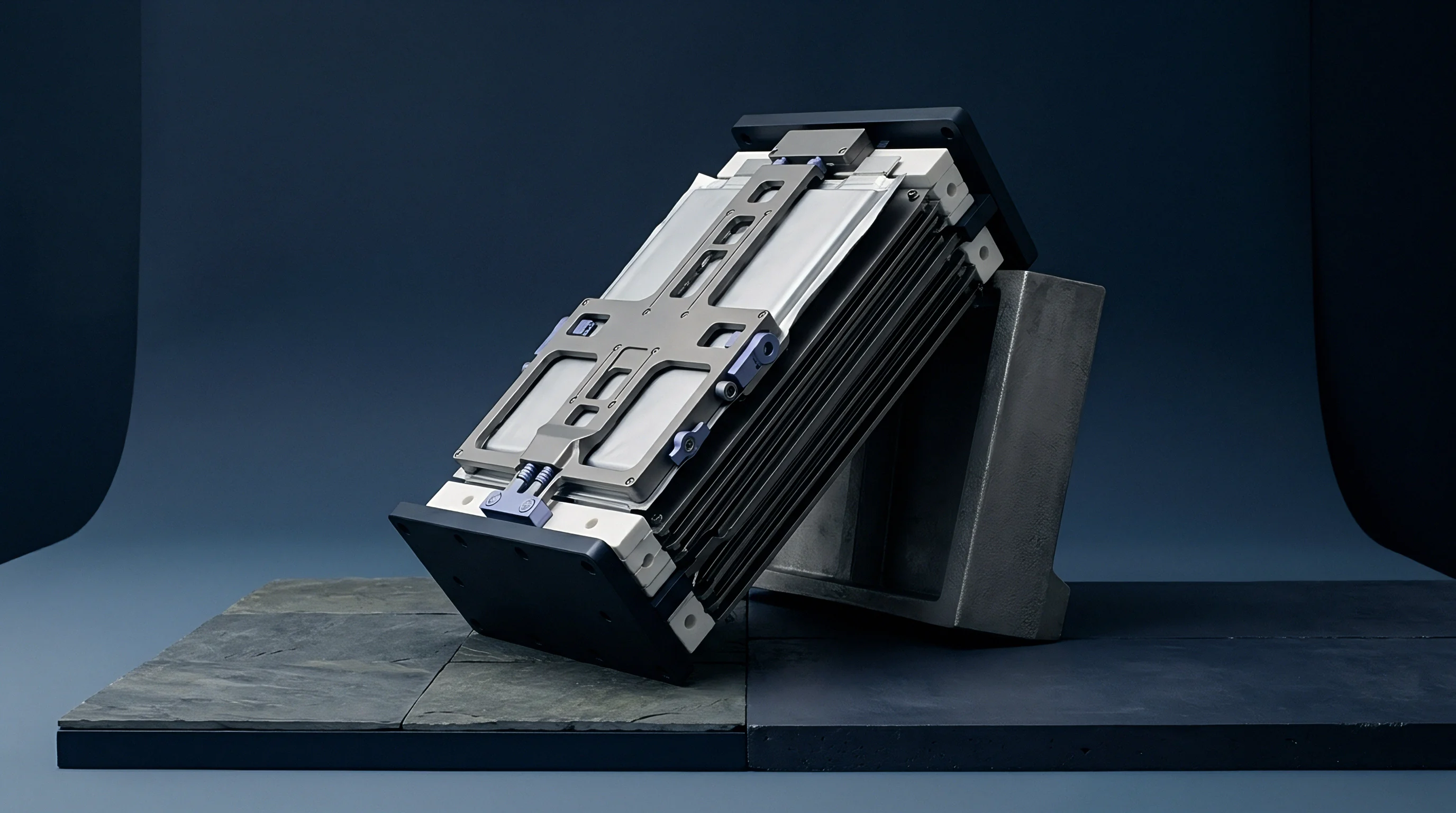
Evaluating pouch seal integrity requires diagnostic instruments capable of detecting sub-micron channel formation before physical electrolyte leakage occurs. Standard quality control protocols rely on destructive short-term peel testing or visual inspection, which fail to capture time-dependent viscoelastic creep or localized micro-cavitation. Advanced metrology combines high-resolution physical imaging with quantitative gas tracer leak detection to establish precise failure thresholds.
Helium mass spectrometry leak testing provides high sensitivity for detecting microscopic breach paths across laminate seals. Test procedures involve bombing pouch packages with helium tracer gas inside pressurized chambers or filling cell containers with helium prior to final thermal sealing. The test specimen is then placed inside an evacuated vacuum chamber connected to a mass spectrometer calibrated to detect helium ion currents down to 10^-12 Pa m^3/s.

Helium Mass Spectrometry and Differential Pressure Decay
Quantitative leak rate measurements isolate non-destructive gas transmission across sealed laminate perimeters under controlled vacuum conditions. A measured helium leak rate exceeding 10^-8 Pa m^3/s indicates the presence of continuous micro-channels across the sealant layer, whereas baseline permeation through intact cast polypropylene typically yields leak rates between 10^-10 and 10^-11 Pa m^3/s. Vacuum decay testing complements tracer gas methods by measuring pressure rise over extended dwell intervals, quantifying total volumetric loss rates under controlled pressure differentials.
X-ray micro-tomography (micro-CT) offers non-destructive three-dimensional visualization of internal seal architecture at sub-micron spatial resolution. Micro-CT scans map local density variations across the polypropylene matrix, identifying micro-void distributions, tab seam alignment, and aluminum foil deformation. Scans performed at sequential stages during accelerated creep testing reveal the spatial progression of micro-void nucleation and coalescence along the seal shoulder.
| Test Method | Standard Reference | Detection Limit / Resolution | Test Duration | Sample Destructive Status | Primary Failure Mode Detected |
|---|---|---|---|---|---|
| Helium Mass Spectrometry | ASTM E499 / DIN EN 1779 | 10^-12 Pa m^3/s | 1 to 3 minutes | Non-destructive | Through-thickness micro-channels and pinholes |
| Differential Pressure Decay | ASTM F2095 | 10^-5 Pa m^3/s | 5 to 15 minutes | Non-destructive | Gross seal breaches and large channel leaks |
| X-Ray Micro-Tomography | ASTM E1441 | 0.5 micrometers | 1 to 4 hours | Non-destructive | Internal micro-void distribution and layer thinning |
| Dye Penetration Testing | ASTM F1929 | 50 micrometers | 15 to 30 minutes | Destructive | Open capillary channels and edge channel leaks |
| Hot Creep Rupture Test | IEC 62133-2 Clause 7.3.2 | 0.01 mm strain | 24 to 500 hours | Destructive | Time-dependent viscoelastic shear creep rupture |
Measuring helium leakage under elevated temperature conditions correlates physical micro-cavitation rates with observed macroscopic seal failure points.

Accelerated Creep Rupture Testing Protocols
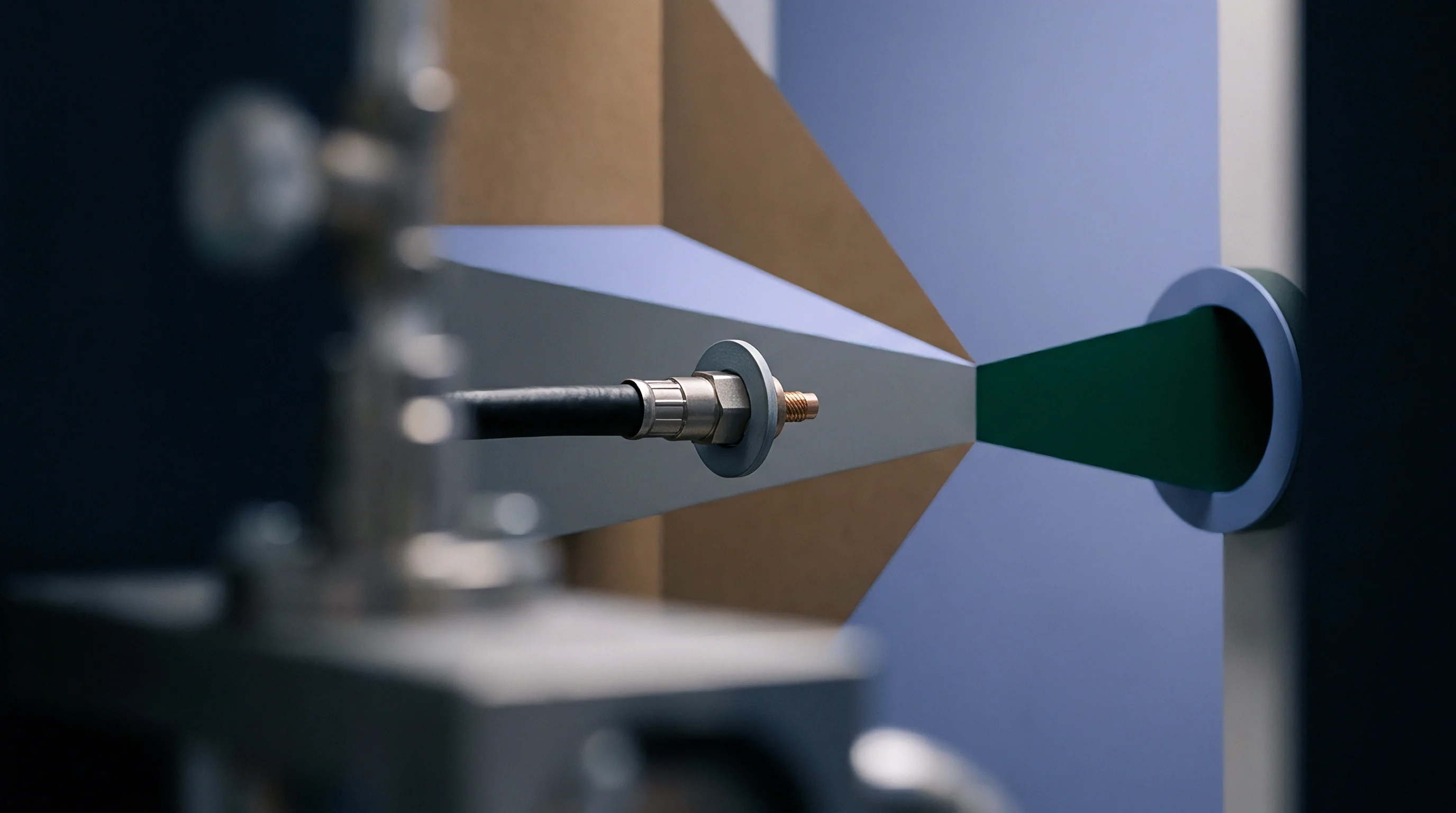
Mechanical reliability qualification subjects test specimens to constant tensile forces inside environmental chambers operating at specified elevated temperatures. Test fixtures hold isolated seal strips extracted from manufactured pouches at defined loading angles (90-degree or 180-degree peel configurations) while static weights or pneumatic actuators apply precise tensile loads corresponding to target internal pressure equivalents.
Test conditions escalate mechanical stress levels (4 MPa to 10 MPa) and temperatures (45°C to 70°C) to accelerate viscoelastic deformation rates. Time-to-rupture data collected across multiple stress-temperature combinations yield creep rupture envelope curves. Fitting these datasets to Larson-Miller or Manson-Haferd parameter models allows engineers to extrapolate mean time between failures (MTBF) under normal operational conditions (0.05 MPa internal pressure at 25°C).
- Cell specimens undergo helium gas charging inside a dry glovebox environment to achieve a 100 percent internal tracer concentration at 101.3 kPa absolute pressure.
- Sealed test units are installed inside sealed stainless-steel vacuum chambers evacuated to an initial background pressure below 0.1 Pa.
- Mass spectrometer monitoring tracks the 4-AMU helium signal over a 600-second dwell period to measure baseline tracer transmission rates.
- Chambers elevate ambient temperature to 60°C while pneumatic plates apply external mechanical pressure simulating internal swell forces.
- Continuous ion current logging records the precise time elapsed prior to helium signal spikes exceeding the 10^-8 Pa m^3/s leak threshold.
IEC 62133-2 Clause 7.2.2 compliance validation specifies that cell packages show no physical leakage or vent rupture following sustained 55°C storage for 7 days under fully charged electrical conditions.
Standard quality agreements citing compliance with IEC 62133-2 Clause 7.2.2 do not protect buyers against long-term creep failure, as the standard’s 7-day test duration is insufficient to initiate tertiary creep or micro-void coalescence in solvent-plasticized cast polypropylene matrices operating under real-world multi-year deployment lifecycles.

Settlement
Commercial agreements for pouch cell supply specify mechanical and environmental endurance criteria that govern liability assignment during field failures. Standard warranties guarantee electrical performance parameters such as capacity retention and direct-current internal resistance over defined calendar periods or cycle counts. Warranties frequently contain exclusion clauses covering mechanical damage, external puncture, or improper pack integration.
Distinguishing between manufacturing defects in seal consolidation and operational pack-level abuse requires precise physical evidence from creep kinetics models.
When electrolyte leakage occurs in energy storage systems or EV packs, liability disputes center on whether internal pressure accumulation resulted from cell-level electrochemical degradation (excess gas generation) or sub-standard thermal sealing by the cell manufacturer. Sourcing contracts that lack explicit quantitative specifications for maximum sealant layer creep compliance leave buyers fully exposed to field containment failure costs.

Warranty Risk Transfer and Defect Quantification
Failure analysis of degraded battery packs focuses on distinguishing manufacturing defects from operational abuse during extended field deployment. Cell buyers manage financial risk by inserting explicit microstructural and rheological limits into incoming Quality Agreement addenda. These addenda translate physical creep mechanics into measurable incoming quality control metrics.
Specification terms define maximum allowable squeeze-out thinning, minimum acceptable post-seal polyolefin thickness, and maximum allowable micro-void volume fraction measured via micro-CT sampling. Quality agreements link lot acceptance thresholds directly to accelerated creep rupture testing metrics rather than relying solely on initial room-temperature peel tests.
Unplanned cell replacement campaigns cost millions when systemic seal creep compromises entire battery module installations in remote field sites.

EU Battery Regulation Compliance Provisions
Legislative directives enforcement mandates extended producer responsibility for electrochemical storage hardware operating across European jurisdictions. European Union Regulation 2023/1542 specifies comprehensive electrochemical performance, safety, and durability criteria across the entire lifecycle of industrial and electric vehicle batteries. Article 10 mandates that battery systems carry technical documentation proving performance retention over projected service lives under declared thermal and mechanical operational profiles.
Producers carry strict financial responsibility for end-of-life collection, hazardous material containment, and safety remediation associated with electrolyte leakage. Under EU Regulation 2023/1542 Annex VII, proof of mechanical envelope integrity requires cell manufacturers and pack integrators to provide verified reliability data demonstrating barrier containment under long-term thermal aging. Failure to provide robust non-linear creep modeling data exposing seal failure risks invalidates product compliance declarations, preventing commercial sales across EU member states.
Systemic seal failures trigger mandatory recall provisions enforced by national market surveillance authorities under Article 76 of EU 2023/1542, imposing full financial liability for pack retrieval, transport, and recycling costs directly onto the importer of record.
Contractual quality specifications that require less than 15 percent total sealant thickness reduction and zero detectable micro-voids above 1 micrometer resolution eliminate 90 percent of premature field leak liabilities.
A simple practical guideline dictates that any pouch laminate seal exhibiting more than 20 percent localized thinning at the shoulder will fail long-term creep rupture metrics whenever internal storage temperatures exceed 45°C for prolonged intervals.