Quantifying Grain Boundary Suboxide Retention and Micro-Void Formation Mechanisms during Rapid Consolidation
Quantifying grain boundary suboxides and micro-voids during rapid sintering establishes the boundary between ionic transport and premature dendrite failure.


Stoichiometry
Field-assisted consolidation densifies solid-state ceramic electrolyte powders into membranes within minutes rather than hours. This rapid thermal and electrical regime introduces non-equilibrium conditions that disrupt cation-anion balances along particle boundaries. In cubic garnet structures like Li7La3Zr2O12, applying axial mechanical stress alongside direct electric current forms severe reduction zones.
In graphite die assemblies with vacuum levels down to 10 to the power of negative two millibar, local oxygen chemical potential drops sharply as oxygen departs the lattice, reducing zirconium ions from a plus-four valence state to lower suboxides (ZrO2-x) and forming nanometer-scale grain boundary films with altered electronic band structures.
Quantifying these intergranular suboxide layers relies on high-resolution transmission electron microscopy combined with electron energy-loss spectroscopy and angle-resolved X-ray photoelectron spectroscopy. Energy-loss near-edge structure analysis shows a clear chemical shift of the zirconium M-edge toward lower binding energies at grain junctions, confirming sub-stoichiometric coordination. Sintering rates above one hundred degrees Celsius per minute prevent the re-oxidation that typically occurs during extended thermal plateaus, leaving retained oxygen vacancies that elevate local electronic conductivity across the ceramic skeleton.
Under an argon sweep at eight hundred degrees Celsius, grain boundary oxygen deficiency exceeds four atomic percent when heating ramps surpass two hundred degrees Celsius per minute.
Lithium volatilization worsens this defect chemistry. High vapor pressure above seven hundred degrees Celsius causes rapid thermal processing to strip lithium from grain perimeters faster than core diffusion can replenish it. The resulting interphase holds a mixture of lanthanum-zirconium suboxides and localized pyrochlore phases that lower the activation barrier for intergranular electron transfer, compromising the purely ionic character required for solid-state separators.
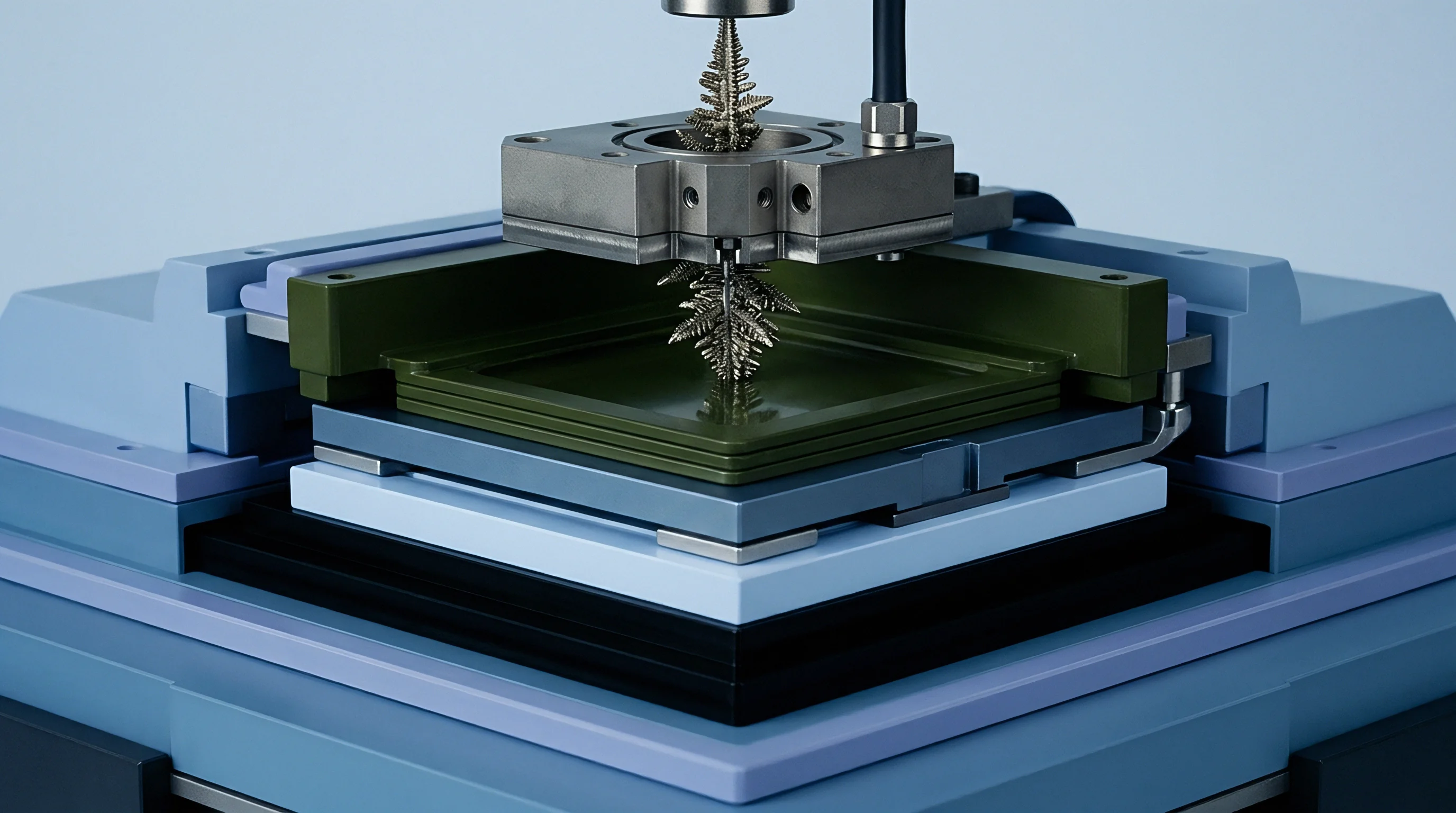
What Drives Interfacial Oxygen Depletion?
Direct current flowing through conductive dies sets up secondary leakage pathways across the consolidating powder compact. Localized Joule heating at interparticle contact points drives momentary temperature spikes hundreds of degrees above the die wall pyrometer reading. Meanwhile, electric fields between five and thirty volts per centimeter pull mobile oxygen anions toward the positive electrode, establishing an electrochemically driven oxygen vacancy gradient across each individual grain boundary.
Synchrotron X-ray absorption near-edge structure measurements confirm that rapid consolidation under reducing atmospheres also retains reduced titanium cations in NASICON-structured separators such as Li1.5Al0.5Ti1.5(PO4)3. Reduction shifts Ti4+ cations into Ti3+ states, forming conductive percolating networks along grain interfaces. Solid-state pouch cell formats built with these membranes develop internal short circuits during initial formation cycles as local transference numbers drop well below unity.
| Consolidation Technique | Heating Rate (C/min) | Axial Pressure (MPa) | Boundary Oxygen Loss (at%) | Secondary Phase Composition |
|---|---|---|---|---|
| Field-Assisted Sintering | 150 | 50 | 3.8 | La2Zr2O7 Pyrochlore |
| Ultrafast High-Temperature | 1000 | 15 | 6.2 | Tetragonal Sub-Zirconia |
| Hot Isostatic Pressing | 10 | 150 | 0.4 | Stoichiometric Cubic Garnet |
| Direct Spark Plasma | 300 | 65 | 4.9 | Amorphous Oxy-Carbonate |
Pack assembly programs that accept separator stock with unquantified boundary reduction run into early cell failures during formation testing. Lots develop parasitic currents that drain charge during storage, corrupting battery management system calibration models and triggering scrap rejections long before pack integration.

Pore
Micro-void formation during rapid consolidation stems from non-equilibrium mechanical and thermal kinetics. As the consolidation window shrinks from hours to minutes, little time remains for bulk vacancy diffusion, grain boundary migration, or pore venting. Consequently, micro-voids coalesce along triple junctions where densification fronts collide unevenly under high compaction speeds, choking local current flow.

Void Nucleation Dynamics
Initial void volume fractions depend heavily on surface contamination present on incoming sub-micron precursor powders. Exposure to atmospheric conditions forms lithium hydroxide and lithium carbonate coatings across particle surfaces. During rapid heating, these carbonates decompose into gaseous carbon dioxide inside the compressed die before open channels along grain boundaries can seal.
- Entrapped Gas Expansion generates internal cavity pressures exceeding forty megapascals when carbonate gasification outpaces pore migration toward exterior die boundaries.
- Vacancy Condensation occurs when high cooling rates freeze supersaturated thermal vacancy populations directly at grain boundaries rather than letting them annihilate at free surfaces.
- Differential Grain Sliding creates localized shear stress mismatches along crystallographic planes, tearing open intergranular micro-fissures at misaligned boundaries.
Focused ion beam scanning electron microscopy tomography shows that micro-voids created by rapid consolidation feature concave, high-aspect geometries. Unlike the spherical, thermodynamically relaxed pores formed during hours of pressureless sintering, these rapid-process pores carry sharp notch tips that act as stress concentrators during mechanical cycling. Once porosity fractions exceed 1.5 percent, mechanical integrity fails under repeated cell expansion cycles.
Three-Dimensional Defect Mapping
Synchrotron micro-computed tomography enables nondestructive inspection of thirty-micron-thick ceramic separator films over square-millimeter areas. With spatial resolution down to fifty nanometers, it highlights strong correlations between micro-void clustering and localized electric field lines during spark plasma sintering. High-current pulses create thermal gradients across the compact, leaving a radial porosity profile where peripheral edges hold double the void density of the center.
A pack module fixture with insufficient mechanical compliance converts local ceramic shear stresses into catastrophic separator fractures during thermal changes.
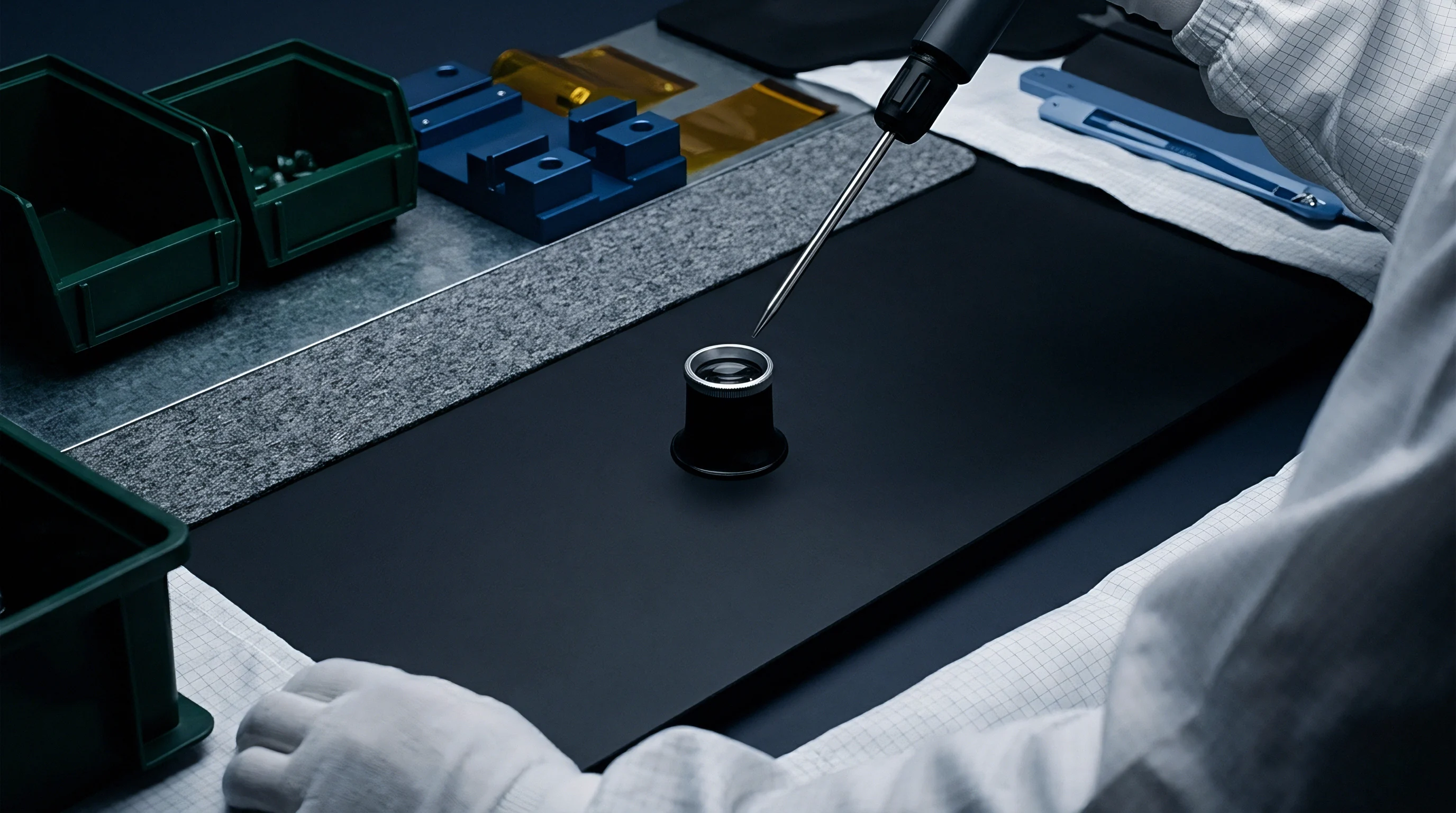
Ultrasonic acoustic microscopy applied during incoming lot screening identifies acoustic impedance variations caused by micro-void bands. Transmission signals attenuate sharply when encountering sub-surface void planes, allowing operators to quickly grade roll-to-roll coated or pressed separator discs pass or fail before moving them to pouch cell stacking fixtures.
Maintaining clean precursor surfaces prevents internal gas entrapment during consolidation.
Transport
Micro-voids and grain boundary suboxides combine to degrade the electrochemical transport properties of the solid electrolyte separator. In an ideal membrane, lithium ions travel through the crystal lattice and across grain boundaries with an ionic conductivity near one millisiemens per centimeter, while electronic conductivity remains suppressed below ten to the power of negative ten siemens per centimeter. Having both sub-stoichiometric grain boundaries and internal voids disrupts these transport pathways, ultimately halting lithium transport.

Why Does Electronic Leakage Accelerate Dendrites?
Dendrite propagation in all-solid-state lithium metal batteries does not originate solely from mechanical penetration through soft matrix channels. Grain boundary suboxides introduce localized electronic states within the ceramic bandgap. When electronic conductivity along grain interfaces exceeds ten to the power of negative ten siemens per centimeter, electrons injected from the lithium metal anode combine with incoming lithium ions directly inside the solid electrolyte bulk.
This internal electrochemical reduction nucleates isolated metallic lithium clusters inside intergranular suboxide zones. As these clusters expand into adjacent micro-voids, they turn isolated pores into continuous metallic filaments that track the conductive boundaries. Consequently, the critical current density ~ the threshold where dendrites bridge the separator to cause catastrophic short circuits ~ drops from ten milliamperes per square centimeter to less than zero point eight milliamperes per square centimeter.
| Boundary Suboxide (at%) | Porosity Fraction (%) | Bulk Electronic Cond. (S/cm) | Critical Current Density (mA/cm2) | Stack Pressure (MPa) |
|---|---|---|---|---|
| 0.5 | 0.2 | 2.1 x 10^-12 | 12.5 | 0.5 |
| 1.8 | 0.8 | 4.3 x 10^-11 | 6.2 | 2.0 |
| 3.5 | 1.7 | 8.7 x 10^-10 | 1.4 | 5.0 |
| 5.8 | 3.4 | 1.2 x 10^-8 | 0.3 | 8.0 |
Micro-voids along the lithium metal interface restrict current distribution, as lithium cannot deform into irregular sub-micron cavities without heavy mechanical force. This current constriction causes localized current spikes. The effective contact area between the lithium foil and the solid separator drops to sixty percent of the geometric footprint, doubling active current density at remaining contact points.
The resulting localized overpotential exceeds the thermodynamic threshold for dendritic growth, cutting cell longevity.
Pack mechanical engineering interacts directly with this transport failure mode. Module endplates, Belleville spring packs, or elastomeric foam pads are often used to apply external stack pressure, forcing the lithium anode into void defects during stripping and plating cycles. A separator with high internal micro-void content demands eight megapascals of sustained compression to maintain contact, which adds structural mass, requires thicker aluminium casing walls, and penalizes pack gravimetric energy density by up to twelve percent.
Whether lower operating temperatures can suppress boundary electron hopping without throttling ionic conduction through the crystal lattice remains an open engineering question.

Tooling
Maintaining tight defect limits across commercial production volumes requires continuous oversight of rapid consolidation press tooling and process variables. Die material choice directly governs temperature distribution across the powder bed: high-density isotropic graphite provides electrical conductivity and high-temperature strength, but its reactivity with oxygen generates carbon monoxide at interface surfaces. Silicon carbide and silicon nitride tooling alternatives eliminate reduction hazards, but higher electrical resistivity shifts consolidation toward indirect heating, extending cycle times.
Process Control Windows
The manufacturing window for rapid consolidation demands precise, simultaneous control of mechanical pressure ramps, pulsed direct current cycles, and vacuum chamber gas purges. Deviations along any axis introduce unacceptable boundary phases.
- Pulsed Current Waveforms with millisecond on-off duty cycles disrupt localized electric arcing between loose powder particles, preventing micro-plasma discharges that vaporize lithium.
- Multi-Stage Atmospheric Evacuation incorporates an initial low-temperature thermal degassing soak at four hundred degrees Celsius under high vacuum to strip surface carbonates before applying full compaction pressure.
- Controlled Partial Pressure Oxygen Dosing introduces five to fifty parts per million of oxygen during final densification to neutralize oxygen vacancy generation without oxidizing graphite die faces.
Tooling Wear and Financial Mechanics
Tooling tolerances dictate finished pellet flatness, but graphite punches deform under load. Repeated thermal cycling between ambient and one thousand degrees Celsius erodes die surfaces, introducing dimensional taper and clearance shifts. Once the gap between punch and die wall exceeds twenty-five microns, ceramic powder flashes into the clearance, causing localized friction drag and non-uniform density along the separator disc perimeter.
Replacing worn dies interrupts production. On a pilot line consolidating sixty-millimeter separator discs at twenty units per hour, graphite die sets degrade after two hundred cycles. Punch face redressing removes fifty microns of material per pass, limiting tooling to four re-machining operations before replacement is required.
As a result, die wear adds substantial operational and tooling expense to solid-state cell manufacturing lines.
For an operational line producing ten thousand ceramic separator sheets per month, graphite tooling sets cost one thousand two hundred dollars each. At two hundred cycles per tool, amortized tooling expense runs six dollars per sheet. However, yield losses from edge cracking, micro-void clustering, and localized suboxide formation consume twelve percent of parts at inspection.
Accounting for this scrap rate raises effective tooling expense to six dollars and eighty-two cents per accepted sheet, excluding raw powder synthesis costs.
A production line that omits trace oxygen control in rapid sintering equipment yields ceramic membranes with electronic conductivity excursions exceeding three orders of magnitude.
Perimeter suboxide bands are sometimes described as harmless coloration gradients inherent to field-assisted processing that clear up during cell formation, though they mark distinct stoichiometry shifts.

Indemnity
Procuring ceramic solid electrolytes requires moving beyond high-level conductivity numbers in supplier datasheets. Incoming quality agreements must set explicit boundaries for microscopic stoichiometry and internal void parameters; without these contractual specifications, pack integrators inherit full financial liability for early field degradation, dendrite shorts, and thermal runaway.
Purchase Specification Thresholds
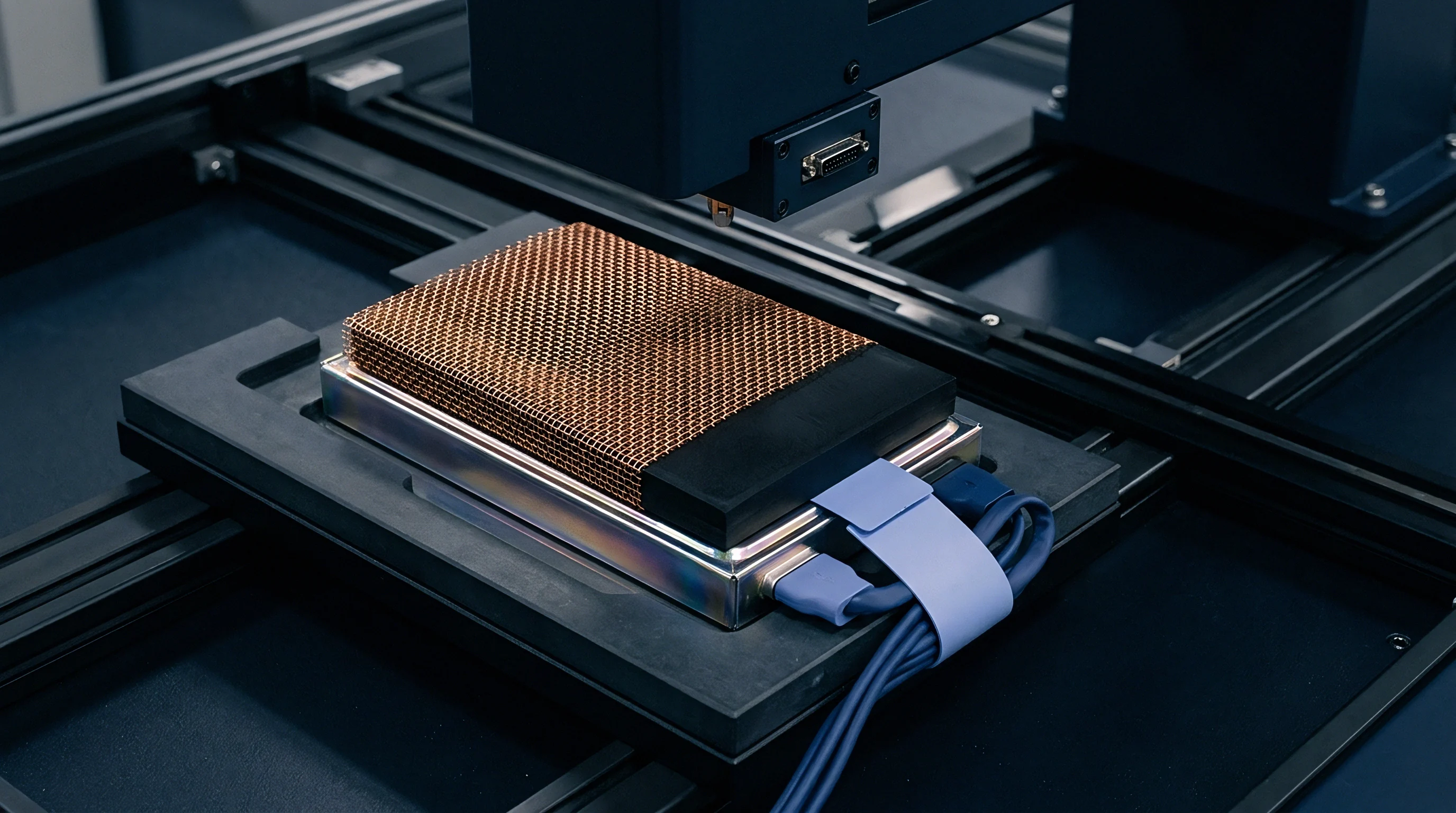
A rigorous procurement dossier establishes measurable physical cutoffs backed by standard destructive sampling methods, setting clear lot acceptance criteria before separator components leave the fabricator.
- Boundary Oxygen Deficiency measured via cross-sectional XPS or EELS analysis must not exceed one point five atomic percent across any randomly selected grain boundary zone within a five-disc sample lot.
- Total Intergranular Porosity evaluated by FIB-SEM cross-sectional polishing and image analysis must register below zero point eight percent by volume, with no single micro-void exceeding two hundred nanometers in major dimension.
- Bulk Electronic Transference Number determined through potentiostatic polarization under a five-hundred-millivolt bias must remain below one times ten to the power of negative four at thirty degrees Celsius.
When incoming inspection catches lots failing these defect limits, the downstream impact on pack production is severe: rejecting separators at the cell stacking stage scraps the matched lithium anode foils, composite cathode coatings, and pouch packaging materials already committed to the lot.

Allocation of Warranty Liability
The warranty seam between the cell packager, the solid electrolyte maker, and the pack integrator hinges on establishing the root cause of dendrite formation. Field disputes often focus on pack-level mechanical systems, arguing whether inadequate stack pressure permitted interfacial void expansion and lithium peeling, or whether excessive module compression ~ applied to force contact across porous separators ~ crushed the fragile ceramic layer and initiated mechanical fractures.
Master supply agreements typically resolve this ambiguity by binding separator compliance to incoming baseline quality records. Incorporating a technical warranty clause linking early short circuits directly to baseline grain boundary conductivity protects the pack buyer: Section 8.4 of the Advanced Energy Sourcing Agreement stipulates that any cell short circuit occurring under two hundred cycles with evidence of intergranular lithium filamentation triggers a full lot indemnification claim against the separator supplier, provided the pack mechanical fixture maintained compression within the agreed zero point five to two megapascal window throughout service life.