Solid State Battery Polymer Electrolyte Interfacial Shear Degradation under Dynamic Vacuum
Dynamic vacuum during transport induces polymer outgassing and interfacial shear slip, escalating resistance and voiding across solid-state cell stacks.
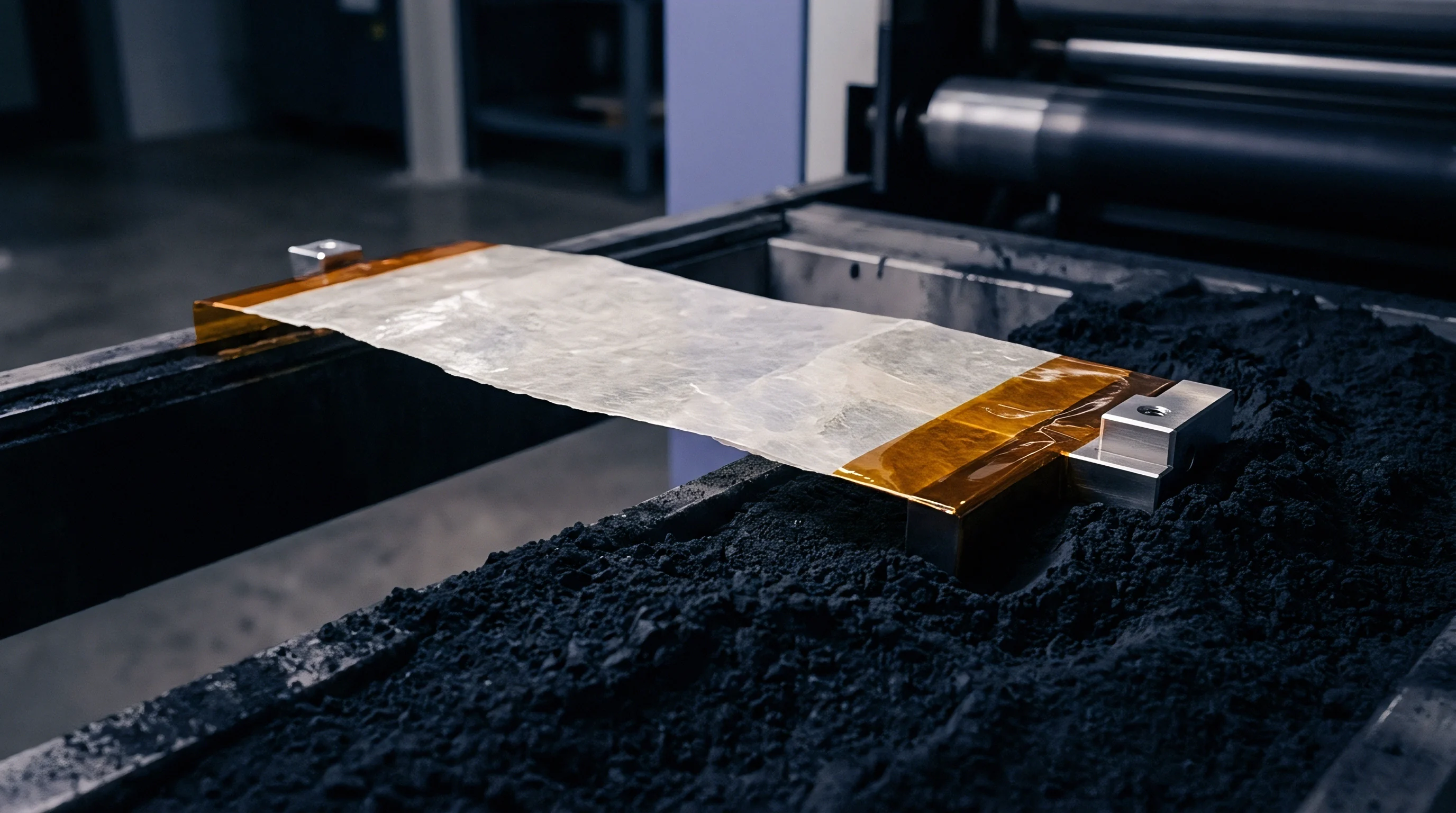

Adhesion
Solid-state pouch and prismatic cells incorporating poly(ethylene oxide) matrices complexed with lithium bis(trifluoromethanesulfonyl)imide rely on continuous physical boundary contact to sustain ion transport across the solid polymer electrolyte interface. Operating stack pressure, maintained by mechanical springs or elastomeric foam plates within the module assembly, enforces interfacial contact across the microscopic surface roughness of metallic lithium anodes and composite cathodes. Ambient atmospheric pressure provides a significant fraction of effective stack clamping force in flexible pouch formats.
Pressure drops during high-altitude air transport or unpressurized flight submerge the cell in reduced external ambient regimes. Loss of exterior atmospheric compression allows the pouch envelope to expand under internal gas pressure, diminishing net mechanical stack compression from nominal values of 1.0 to 3.0 MPa down to sub-critical levels below 0.2 MPa.
Mechanical boundary contact degrades non-uniformly across the active planar area. Microscopic asperities at the lithium metal anode disengage from the softening polymer matrix when external normal force decreases. Surface roughness features on nickel-manganese-cobalt composite cathodes create interfacial microscopic gaps where local ion flux drops to zero.
Reduced stack compression creates preferential current distribution pathways through residual contact points. Current density spikes at these localized contact micro-domains, elevating interfacial overpotential and accelerating parasitic side reactions between the polymer chains and reactive metallic lithium.
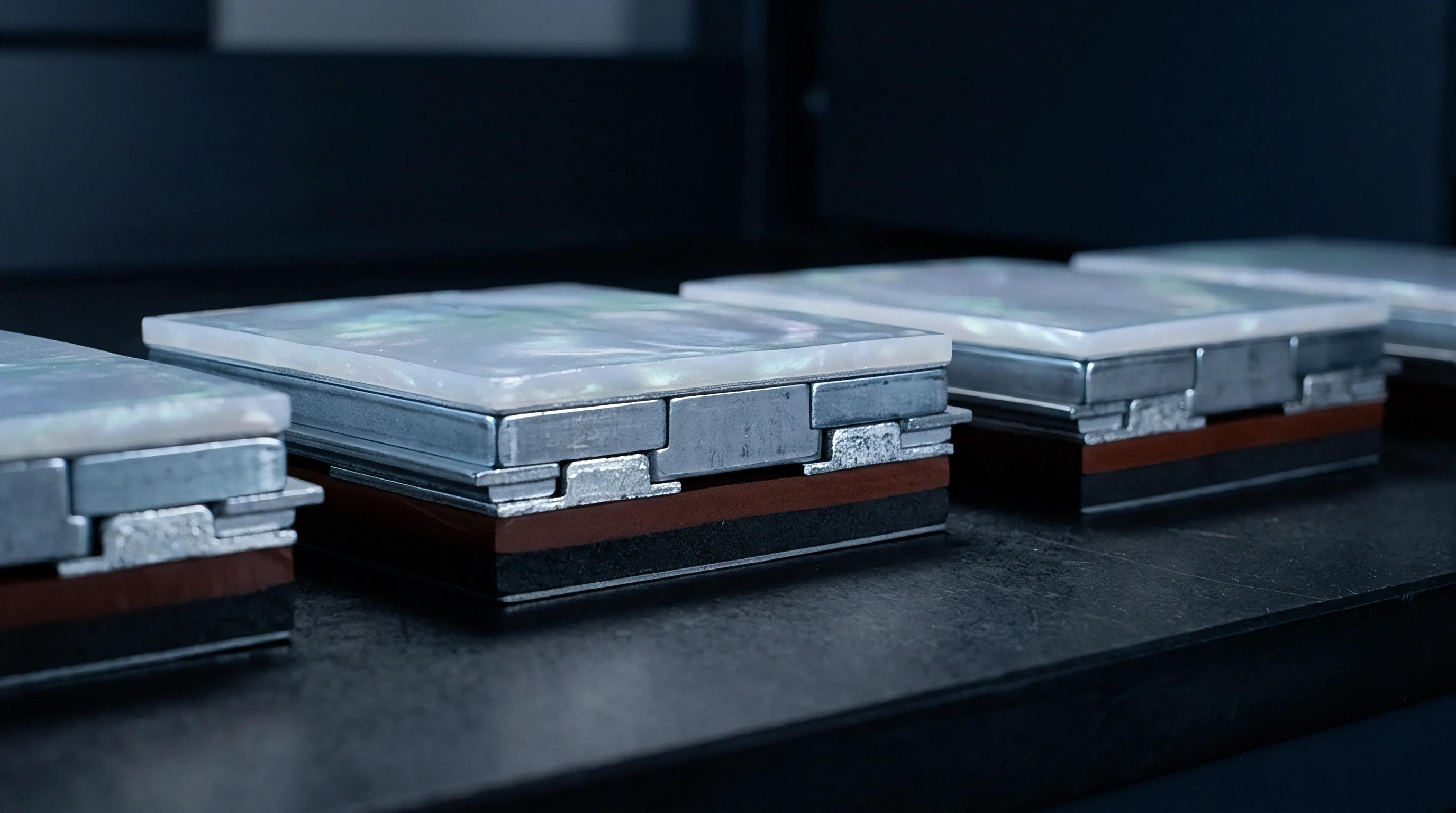
Mechanical Contact Integrity under Reduced External Compression
The viscoelastic modulus of polyether-based electrolytes exhibits strong temperature and strain-rate dependence. Above the polymer glass transition temperature, typically ranging from -60 degrees Celsius to -40 degrees Celsius, poly(ethylene oxide) acts as a flexible amorphous matrix capable of stress relaxation under slow mechanical deformation. Rapid atmospheric decompression forces the cell housing outward faster than the polymer matrix can creep, creating localized tensile shear stresses along the interface.
Micro-separation occurs wherever local normal contact stress falls below the intrinsic work of adhesion between the polymer membrane and the electrode surface, which ranges from 0.15 to 0.45 Joules per square meter for dry solid polymer electrolytes on smooth lithium foil.
Interfacial boundary contact drops precipitously whenever internal cell gas expansion overrides exterior module clamp compression.
Delamination initiates at the cell perimeter where shell deformation is concentrated. Shear displacement along the boundary strips the protective solid electrolyte interphase layer, exposing pristine metallic lithium to trace unreacted monomer or residual solvent species trapped within the polymer bulk. Localized shear stresses exceeding 0.8 MPa overcome the yield strength of the soft lithium substrate, causing irreversible microscopic plastic deformation along the contact surface.

Interfacial Contact Mechanics
Quantifying the interfacial bond requires isolating mechanical shear stress from normal stack pressure. Surface energy measurements establish that the thermodynamic adhesion energy of polyether electrolytes against metallic lithium decreases when exposed to low partial pressures of volatile components. Micro-indentation tests reveal that viscoelastic creep rates inside the polymer matrix double when ambient pressure drops from 101.3 kPa down to vacuum levels below 12.0 kPa.
Polymer chain mobility increases near unconstrained surfaces, causing microscopic flow away from high-stress contact zones and reducing effective contact area across cycle life.
Lowered stack tightness accelerates non-uniform plating. Micro-cavities formed by contact loss act as nucleation sites for lithium dendrite growth during charge cycles. Dendritic structures easily penetrate soft polymer membranes whose shear modulus sits below the 6.8 GPa threshold required for mechanical dendrite suppression at elevated temperatures.
Stack tightness requires external mechanical clamping independent of atmospheric pressure.

Decompression
Polymer electrolytes frequently contain secondary components to enhance ionic conductivity at ambient temperatures. Plasticizers such as succinonitrile, low molecular weight glymes, ionic liquids like 1-butyl-1-methylpyrrolidinium bis(trifluoromethanesulfonyl)imide, and residual processing solvents remain embedded within the cross-linked polymer network. Exposure to dynamic vacuum conditions induces a severe thermodynamic vapor pressure gradient across the pouch seal or vent mechanism.
Volatilization of plasticizing additives alters the bulk stoichiometric composition of the electrolyte layer, elevating the glass transition temperature and dropping ambient ionic conductivity by up to two orders of magnitude.
Outgassing of volatile components forms gas pockets along the planar interface between the electrode layer and the polymer matrix. Micro-bubbles expand under declining ambient pressure, lifting the flexible polymer membrane away from the cathode active material. Pore structure collapses inside porous composite electrodes as trapped micro-bubbles push liquid or gel plasticizers out of the interstitial electrode volume.
| Electrolyte Plasticizer Additive | Vapor Pressure at 25°C (Pa) | Boiling Point at 101.3 kPa (°C) | Mass Loss at 11.6 kPa / 6h (%) | Mass Loss at 0.1 Pa / 6h (%) |
|---|---|---|---|---|
| Tetraethylene glycol dimethyl ether (TEGDME) | 1.33 | 275 | 0.42 | 4.85 |
| Succinonitrile (SN) | 0.80 | 267 | 0.18 | 2.10 |
| 1-Butyl-1-methylpyrrolidinium TFSI | 0.01 | 320 | 0.02 | 0.15 |
| Propylene Carbonate (PC) residual trace | 17.30 | 242 | 2.10 | 14.60 |
Gas phase evolution directly degrades mechanical structural integrity. Gas pockets block lithium-ion conduction paths, increasing local cell impedance while generating concentrated lateral shear stresses along the periphery of each bubble. Shear displacement during bubble growth ruptures the thin, brittle solid electrolyte interphase layer present on the composite cathode particles.
Outgassing Driven Interfacial Defects
Vacuum exposure drives phase separation inside plasticized polymer formulations. Homogeneous solid polymer solutions transition into heterogeneous phase mixtures as light solvent molecules evaporate through semi-permeable pouch enclosures.
- Micro-void nucleation occurs at interfacial high-energy grain boundaries where outgassing vapor collects into unconfined gas cavities.
- Plasticizer depletion elevates the glass transition temperature of the remaining polymer network, inducing embrittlement and micro-cracking under mechanical strain.
- Blister formation separates active composite cathode materials from current collectors, cutting off electronic transport channels across localized regions.
- Solvent distillation pathways carry dissolved salt species toward the outer edges of the cell stack, creating longitudinal salt concentration gradients.
Mass loss under reduced pressure is an intrinsic polymer degassing phenomenon rather than an indicator of cell housing breach, according to short-sighted supplier arguments that dismiss altitude test failures. Cell manufacturers routinely assert that plasticizer loss stabilizes after initial degassing cycles without compromising long-term electrochemical capacity.


Slip
Dynamic pressure variations encountered in unpressurized aviation cargo holds generate cyclical mechanical stresses across cell stack components. Atmospheric pressure fluctuations cause the cell enclosure to flex, inducing lateral relative displacement between the rigid metallic current collectors and the compliant solid polymer electrolyte layer. Interfacial shear strain accumulates with every decompression cycle, creating lateral sliding forces along the polymer-electrode boundary.
Friction forces at the interface oppose lateral sliding, converting mechanical work into localized heat and structural strain within the polymer boundary layer. The magnitude of interfacial shear stress depends on the differential coefficient of thermal expansion, the rate of pressure change, and the instantaneous shear modulus of the solid electrolyte.
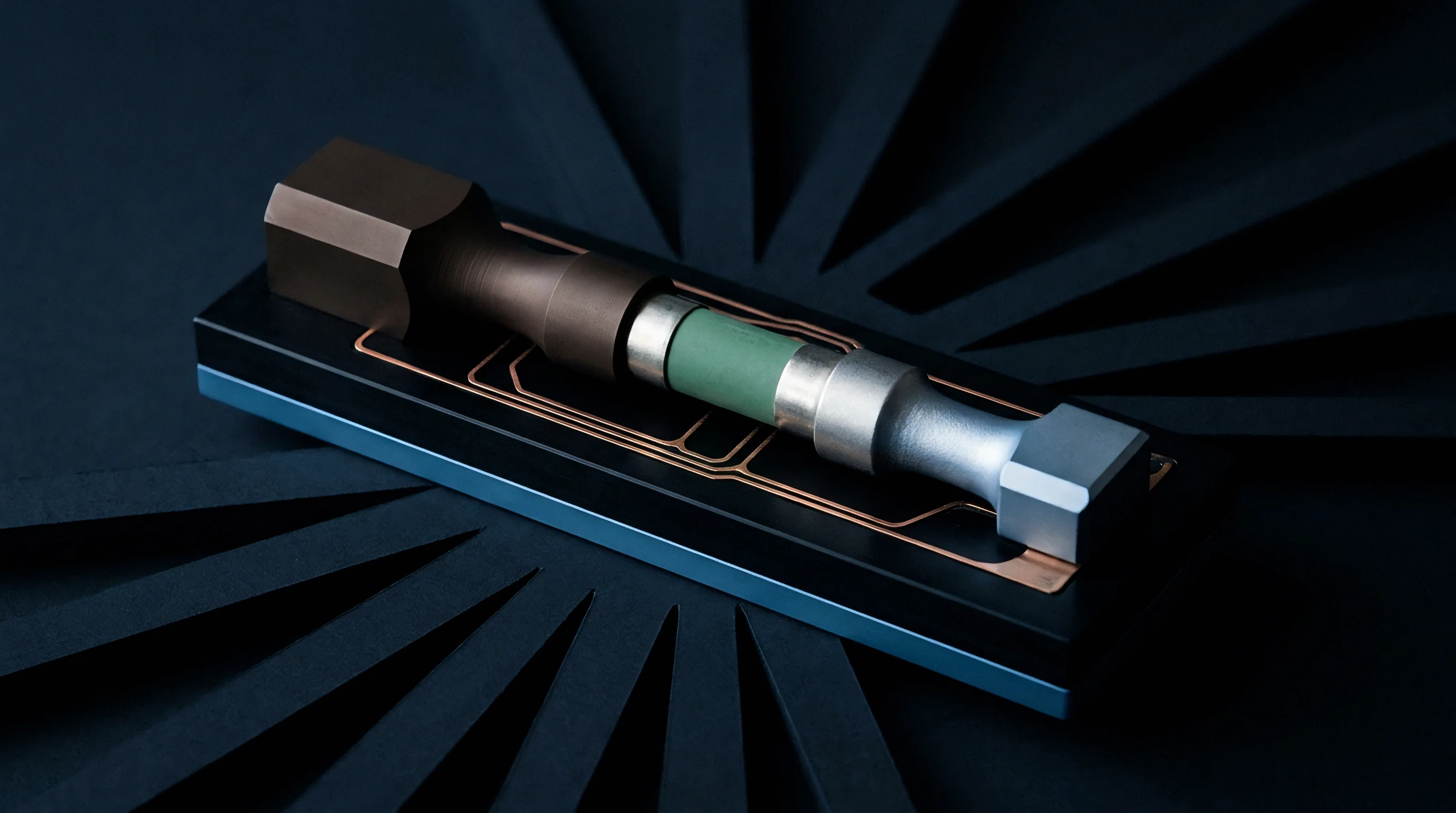
Which Interfacial Forces Prevail during Rapid Aircraft Depressurization?
Transient pressure drops from 101.3 kPa to 11.6 kPa inside flight holds occur within fractions of a minute during rapid cabin depressurization events. Rapid envelope expansion generates lateral shear rates exceeding 0.05 inverse seconds across the electrolyte face. Solid polymer electrolytes exhibit non-Newtonian shear-thinning behavior under high deformation rates.
Temporary loss of viscosity allows localized polymer flow, permanently altering the uniform thickness of the separator layer across the cell area.
Quantifying shear deformation during depressurization requires direct mechanical instrumentation under controlled atmospheric profiles.
- Mount the solid-state single-layer pouch cell inside a temperature-controlled vacuum chamber equipped with optical displacement sensors.
- Apply standard operational stack clamping pressure of 1.0 MPa using an external non-magnetic hydraulic actuator.
- Evacuate the testing chamber from 100 kPa down to 11.6 kPa at a controlled depressurization rate of 15 kPa per minute.
- Measure lateral housing expansion and shear displacement between current collector tabs using laser interferometry.
- Record real-time electrochemical impedance spectra at 10 kHz to capture immediate interfacial contact loss during pressure transition.
Contractual delivery terms must specify minimum stack compression forces under absolute low-pressure transport conditions to prevent warranty invalidation.
Differential mechanical strain alters the localized stress distribution. Composite cathode layers, comprising brittle ceramic active materials, inorganic conductive additives, and polymeric binders, resist lateral movement. Metallic lithium anodes yield easily under combined shear and compressive loading.
Solid polymer electrolytes lie sandwiched between these mechanically mismatched boundaries, bearing the full magnitude of absolute interfacial strain. Micro-tears form along the polymer matrix when peak shear strain exceeds the ultimate tensile elongation limit of the cross-linked polyether chain network.
Does dynamic shear strain permanently degrade interfacial ion hopping pathways even when stack pressure returns to nominal levels after transport?

Impedance
Electrochemical impedance spectroscopy provides quantitative insight into interfacial structural failure. Interfacial resistance across the polymer electrolyte boundary manifests as a characteristic semicircle in the high-to-mid frequency range of a Nyquist plot. Mechanical shear displacement and outgassing-induced micro-cavitation decrease effective ionic contact area, directly expanding the diameter of this charge-transfer resistance semicircle.
Bulk electrolyte resistance remains relatively constant unless substantial plasticizer loss alters internal matrix ion mobility.
Contact area loss concentrates ionic current through surviving intact polymer-electrode contact points. High localized current density accelerates capacity fade, increases cell polarisation during charge-discharge cycling, and lowers energy efficiency. Localized thermal spikes occur at current constriction points during high-rate operation, causing thermal degradation of the adjacent polymer matrix.
| Vacuum Exposure Cycles (100 kPa to 11.6 kPa) | Bulk Resistance Rb (Ω·cm²) | Charge Transfer Resistance Rct (Ω·cm²) | Interfacial Void Area Fraction (%) | Capacity Retention at 1C Rate (%) |
|---|---|---|---|---|
| 0 (Unexposed baseline) | 12.4 | 45.2 | 0.8 | 100.0 |
| 1 (Static 6h exposure) | 13.1 | 68.7 | 3.5 | 96.2 |
| 5 (Dynamic pressure cycles) | 14.8 | 124.0 | 9.2 | 89.5 |
| 20 (Dynamic pressure cycles) | 18.2 | 310.5 | 22.6 | 71.4 |
Interfacial resistance growth is permanent. Re-applying external mechanical stack pressure after vacuum exposure closes macro-scale envelope expansion, but fails to restore atomic-level interfacial contact across damaged polymer boundary zones. Micro-cavities created by localized outgassing and shear tearing persist as microscopic gas barriers, preventing complete electrochemical healing of the active interface.
Interfacial charge-transfer resistance increases by more than six hundred percent after twenty dynamic vacuum cycles due to micro-cavity accumulation.
Current distribution profiles become highly heterogeneous across the cell face. Regions suffering high interfacial resistance cease to participate in charge storage, forcing remaining active areas to operate at effective C-rates far above design intent. Accelerated lithium plating occurs along the borders of micro-delamination zones, creating sharp metallic dendrites that breach the thin separator layer, resulting in internal micro-short circuits and thermal runaway hazards.
Failure to constrain vacuum-induced interfacial shear leads directly to rapid cell capacity degradation and thermal self-discharge hazards during subsequent operational life.
Compliance
International transport regulations demand rigorous verification of cell structural integrity under reduced atmospheric pressures. Standard testing profiles designed for conventional liquid-electrolyte cells often fail to capture the specific degradation modes characteristic of solid-state polymer electrolyte architectures. UN 38.3.3 Test T.2 prescribes storing fully charged cells at an absolute pressure of 11.6 kPa or less for a minimum duration of six hours at ambient temperature.
Standard pass criteria focus on mass loss thresholds below 0.1 percent, absence of external leakage, and prevention of open-circuit voltage drop exceeding ten percent.
Standard static low-pressure tests ignore simultaneous mechanical stress factors. Transport in cargo airframes subjects cells to continuous vibration under UN 38.3.3 Test T.3 concurrently with ambient pressure change. Static vacuum testing does not induce the mechanical shear sliding forces that break delicate polymer-electrode interfaces inside flexible pouch cells.
| Standard / Regulation | Target Pressure (kPa) | Test Duration (h) | Vibration Coupling | Pass Criteria Focus |
|---|---|---|---|---|
| UN 38.3.3 Test T.2 | 11.6 | 6 | None (Static) | Mass loss, leakage, voltage drop |
| IEC 62133-2 Clause 7.3.7 | 11.6 | 6 | None (Static) | Fire, explosion, outer casing rupture |
| RTCA DO-160G Section 4 | 15.2 to 4.8 | 2 to 24 | Optional Thermal/Vib | Equipment operational stability |
| UL 2580 Altitude Profile | 11.6 | 6 | None (Static) | Structural envelope retention |
Assessing compliance for solid-state polymer cells requires supplemental audit procedures beyond basic regulatory test summaries. Regulatory documentation must verify that test samples undergo electrochemical impedance analysis following low-pressure exposure to confirm interfacial structural continuity.
- UN 38.3 Test Summary review requires explicit verification that the specific solid polymer cell formulation and pouch casing geometry match certified test documentation.
- Post-altitude impedance verification checks that charge-transfer resistance growth stays within engineering tolerances agreed upon between buyer and manufacturer.
- Mass loss constituent analysis identifies whether measured weight reductions originate from moisture loss or critical plasticizer outgassing.
- Packaging stack restraint audits confirm that exterior transport cartons apply continuous mechanical pressure plates to offset low-pressure pouch expansion.
Standard packaging provisions defined in IATA Dangerous Goods Regulations Packing Instruction 965 Section IA enforce outer packaging structural strength, yet omit requirements for internal cell module compression maintenance. A cell specification contract clause invoking IEC 62133-2 Clause 7.3.7 alters compliance obligations by transferring the risk of latent post-transport interfacial decay directly to the cell manufacturer whenever delivered batches fail post-flight impedance audits.

Settlement
Commercial disputes over solid-state polymer cell performance frequently surface months after transport, when pack integrators discover unexpected capacity fade rates or high internal resistance during initial module balancing. Determining financial liability requires isolating transport-induced shear degradation from manufacturing defects or improper pack-builder handling. When cells ship via air freight under standard unpressurized cargo profiles without dedicated mechanical module clamping, non-recoverable interfacial delamination takes place quietly inside intact pouch housings.
Landed-cost calculations must account for transport safety compliance failures and latent performance scrap rates. Consider a procurement batch of 50,000 solid-state polymer pouch cells priced at $45 per cell, representing a total shipment value of $2,250,000. Static altitude testing under UN 38.3.3 T.2 shows zero mass loss failure across sample units.
Sub-surface interfacial shear damage suffered during dynamic airframe depressurization manifests as a 12 percent post-arrival batch rejection rate during initial impedance grading at the pack assembly line. Unadjusted procurement contracts leave the buyer bearing $270,000 in immediate scrap inventory losses plus carrier transit costs.
Post-transit impedance grading at 1 kHz identifies interfacial delamination before compromised cells enter module assembly streams.
Incorporate precise technical specifications within cell supply agreements to protect capital investment. Buyer specifications must include mandatory post-transport electrochemical acceptance testing, specifying maximum allowable charge-transfer resistance expansion factors prior to final invoice settlement. Supply contracts must explicitly detail transport packaging parameters, requiring cell suppliers or logistics providers to utilize certified pressure-maintaining shipping crates that enforce a continuous 1.5 MPa stack compression throughout transit.
Freight forwarders limit liability under standard Warsaw or Montreal Convention rules to roughly 22 Special Drawing Rights per kilogram unless special value declarations and dedicated dangerous goods handling protocols are signed. Insurance policies exclude coverage for internal chemical or structural deterioration resulting from inherent vice or inadequate transport restraint. Explicit risk transfer clauses in purchase orders assign financial liability for vacuum shear degradation directly to the cell manufacturer, contingent on incoming acceptance test results executed within fourteen days of customs clearance.