Solid State Electrolyte Cell Packaging Hermeticity Testing Principles
Hermetic containment below 1.0e-8 mbar l/s prevents fatal sulfide electrolyte hydrolysis, demanding helium tracer verification to clear safety regulations.
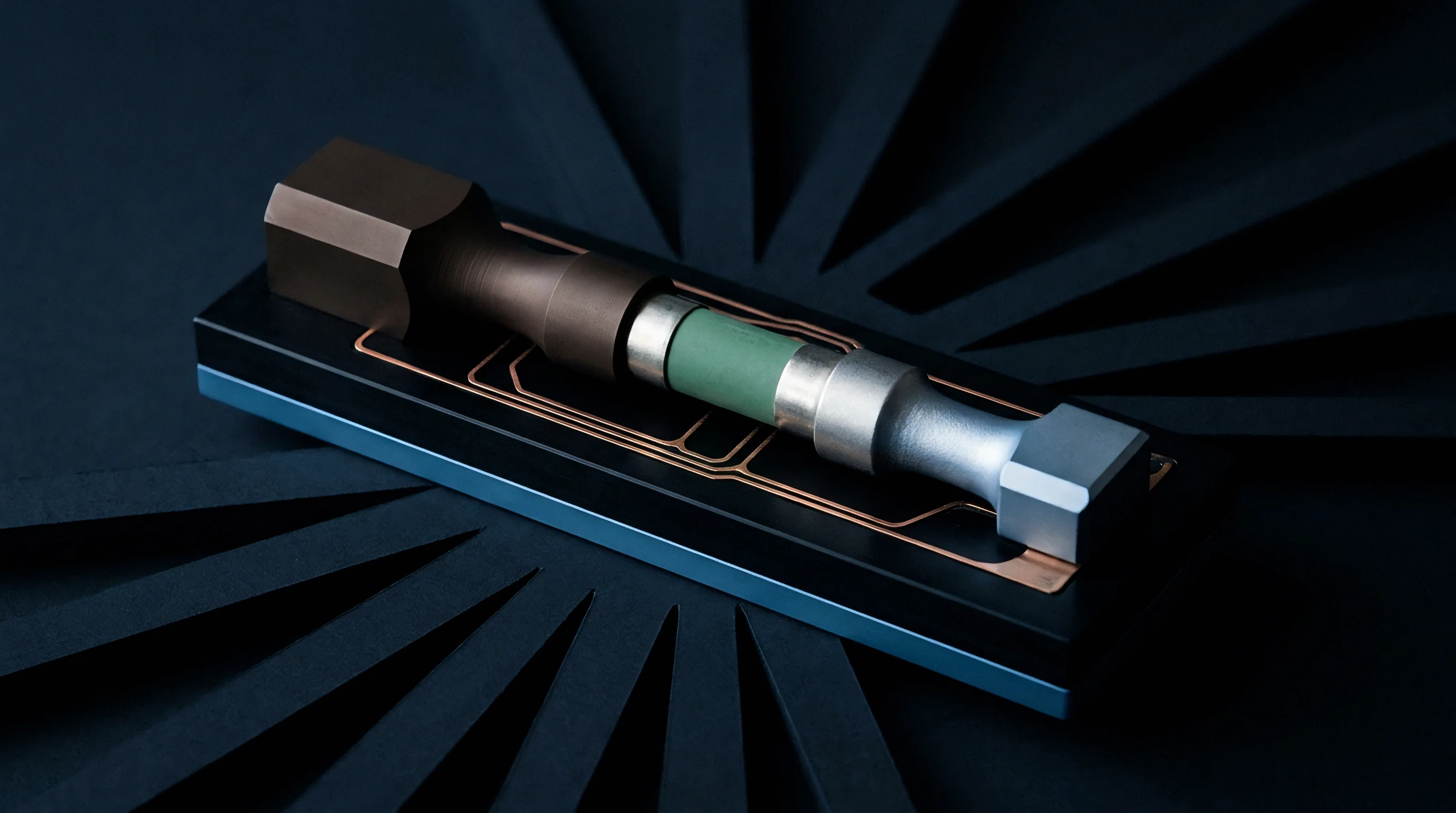

Limit
Mass spectrometer readings below 1.0e-9 standard cubic centimeters per second of helium define the threshold where sulfide-based solid separators avoid ruinous atmospheric moisture breakdown. At 25 degrees Celsius and fifty percent relative humidity, ambient water vapor exerts roughly 1.5 kilopascals of vapor pressure against packaging seams. Any ingressing moisture attacks sulfide solid electrolytes like lithium phosphorus sulfur chloride (Li6PS5Cl) or lithium germanium phosphorus sulfur (Li10GeP2S12), generating toxic hydrogen sulfide gas while scavenging the mobile lithium that forms active conduction pathways.
Ionic conductivity drops sharply from 10 millisiemens per centimeter down to fractional figures within hours of open exposure, driving cell impedance upward.
Solid-state designs trade volatile organic liquid carbonates for solid electrolyte separators paired with lithium metal anodes. This swaps solvent reduction for hydrolytic decomposition and anode oxidation as the primary failure pathway. While conventional lithium-ion cells tolerate moisture ingress rates near 1.0e-6 standard cubic centimeters per second before capacity fade quickens, sulfide chemistries demand seals three orders of magnitude tighter.
Ingressing just one milligram of water hydrolyzes enough sulfide mass to evolve more than one cubic centimeter of hydrogen sulfide gas at standard temperature and pressure. Trapped inside a sealed pouch, this gas produces internal pneumatic pressure, warps stack alignment, and tears the cathode composite away from the solid electrolyte face.
Atmospheric moisture entering an unbonded boundary layer degrades ionic conductivity across sulfide separators within forty-eight hours of exposure.
Oxide electrolytes such as lithium lanthanum zirconium oxide (LLZO) and NASICON-type phosphates remain thermodynamically stable against ambient moisture, yet leave lithium metal anodes exposed to oxygen and nitrogen. Nitrogen gas diffuses across polymer seals to form insulating lithium nitride (Li3N) across the fresh metal surface, feeding localized electronic leakage and dendrite growth along ceramic grain boundaries during aggressive plating. Halide solid electrolytes like lithium yttrium chloride (Li3YCl6) draw in atmospheric water and dissolve into hydrated salts, permanently cutting off the percolation networks needed for room-temperature ion transport.
Packaging hermeticity testing constitutes an active safety safeguard for the electrochemical core.
Missing a leak path above this critical threshold allows unmonitored hydrolysis during ocean transit, yielding gas volumes capable of rupturing outer crates and triggering vessel-wide fire quarantines.

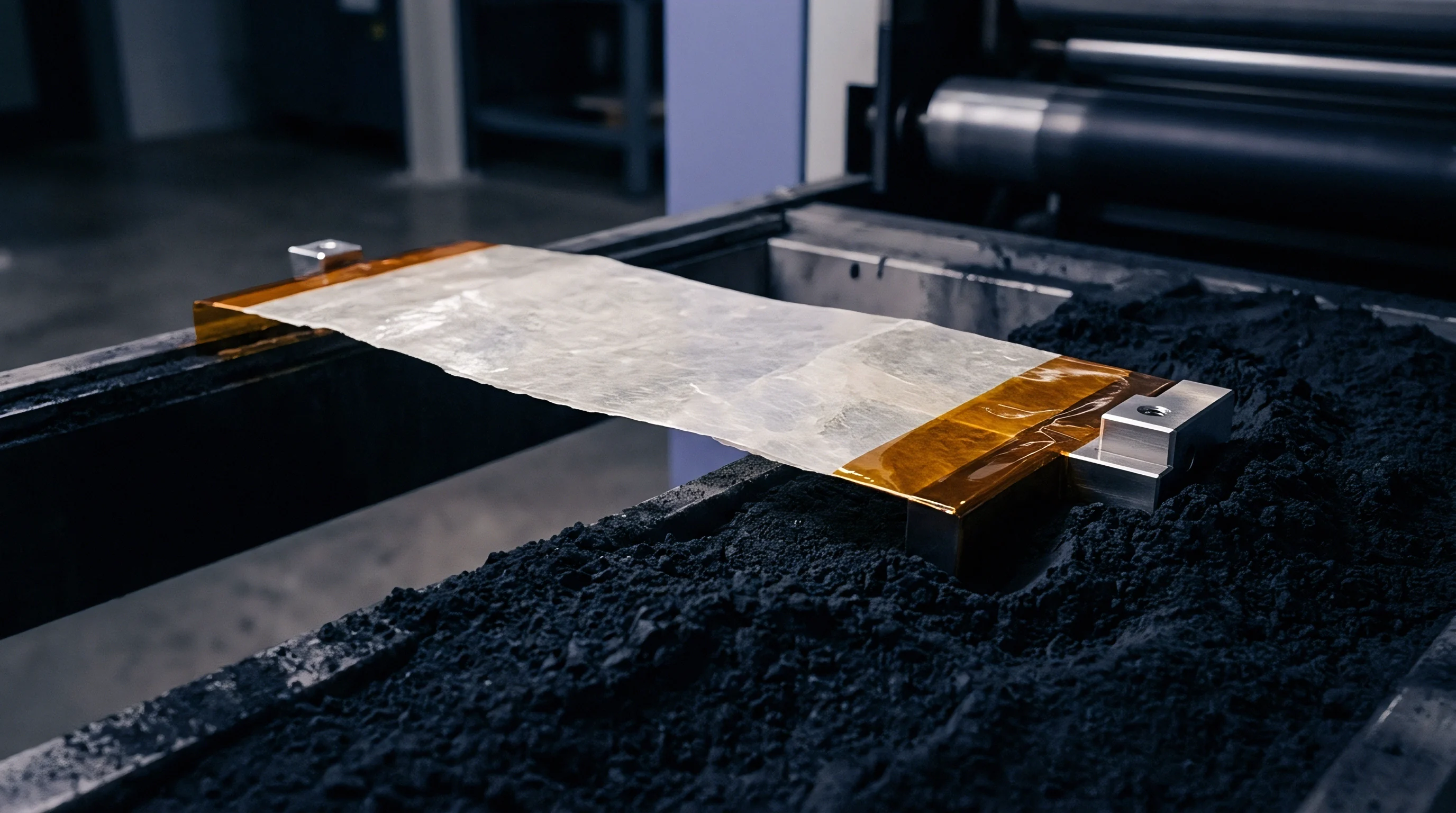
Seam
Polymer-metal packaging laminates bond aluminum barrier foils with heat-sealable polyolefin inner films to shield the internal stack from ambient air. The aluminum core, usually forty to eighty micrometers thick, provides a zero-permeation metallic barrier across pouch faces. Permeation instead concentrates along the heat-sealed perimeter, where water molecules migrate through the exposed sealant profile.
Polypropylene and modified polyethylenes exhibit water vapor transmission rates between 0.1 and 5.0 grams per square meter per day per millimeter of thickness at forty degrees Celsius and ninety percent relative humidity. Keeping this cross-section narrow and maximizing the path length through the heat seal determine whether the barrier survives multi-year storage.
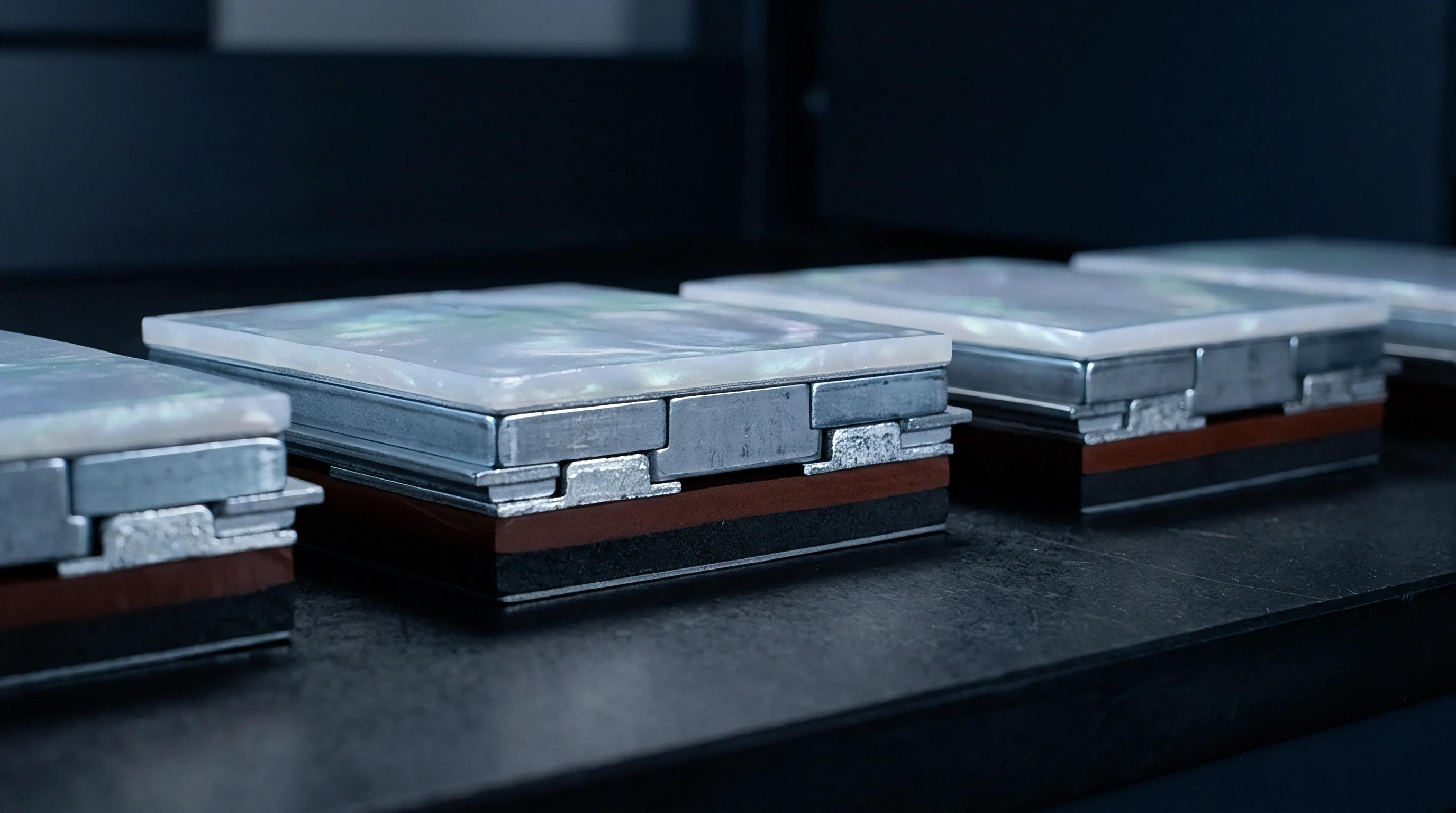
Where Does Moisture Breach Pouch Seams?
Seal geometry governs diffusion kinetics across the perimeter. Widening the seam from three millimeters to eight millimeters lengthens the Fickian diffusion path and delays water arrival at the electrode perimeter. The tab lead seal remains the primary vulnerability.
Copper negative tabs and aluminum positive tabs coated with functionalized films produce three-phase junctions where the metal strip, polymer film, and pouch liner meet. Micro-voids and localized debonding along these interfaces form capillary leak channels. In contrast, hard-cased prismatic cells replace perimeter polymers with glass-to-metal feedthroughs or laser-welded flanges, eliminating polymer diffusion entirely while introducing brittle failure risks under sustained vibration.
| Packaging Architecture | Barrier Material | Seal Type | Moisture Transmission Rate | Primary Failure Mode |
|---|---|---|---|---|
| Flexible Pouch | Aluminum Composite Foil | Polypropylene Heat Seal | 1.0e-3 to 1.0e-2 g/m2/day | Polymer matrix moisture diffusion and tab interface micro-voids |
| Reinforced Pouch | Multi-layer Metal Laminate | Epoxy-Reinforced Polyolefin | 1.0e-4 to 5.0e-3 g/m2/day | Boundary layer debonding under external stack pressure |
| Prismatic Can | Deep-Drawn Aluminum Alloy | Laser-Welded Header | Below 1.0e-7 g/m2/day | Laser weld porosity and micro-cracking at header seam |
| Cylindrical Steel | Nickel-Plated Steel Tube | Glass-to-Metal Seal | Below 1.0e-9 g/m2/day | Ceramic glass cracking during thermal cycling |
External stack pressure applied across solid-state cells alters stress distribution throughout the perimeter seal. Cycling sulfide and oxide cells demands continuous uniaxial compression between 0.5 and 5.0 megapascals to maintain mechanical contact between the lithium metal and ceramic particles during stripping and plating. This clamping force compresses pouch edges unevenly: over-tightening thins the polymer film, shortening the diffusion path and accelerating ingress, while under-tightening leaves internal gas from minor parasitic reactions free to peel the seam from within.
- Capillary Channeling forms along tab seal corners when adhesive films fail to flow completely around tab edges during thermal sealing.
- Polymer Chain Relaxation under elevated temperature weakens the heat-seal bond strength, increasing permeability to ambient gases over time.
- Laser Micro-Porosity emerges along prismatic lid welds when alloy vaporization creates pinholes spanning the wall thickness.
- Thermal Expansion Mismatch between metal current-collector leads and glass insulators induces interfacial shear cracks during thermal shifts.
Marginal leak detection readings often reflect tracer gas absorption in the outer polyamide pouch skin rather than genuine micro-fissures running through the sealed perimeter.


Metrology
Helium mass spectrometer leak detection offers the sensitivity required to confirm package integrity at microscopic scales. The process runs in vacuum mode or sniffer mode. In vacuum systems, the cell sits within an evacuated chamber plumbed directly to the spectrometer analyzer.
Vacuum pumping carries helium atoms through packaging fissures into an electromagnetic sector field, sorting ionized gas fragments by mass-to-charge ratio. Because solid-state cells lack internal void space or compressible headspace, standard bombing cycles introduce specific limits: an autoclave forces helium into any through-leaks under external pressure, followed by chamber evacuation to track the tracer gas as it vents back out.
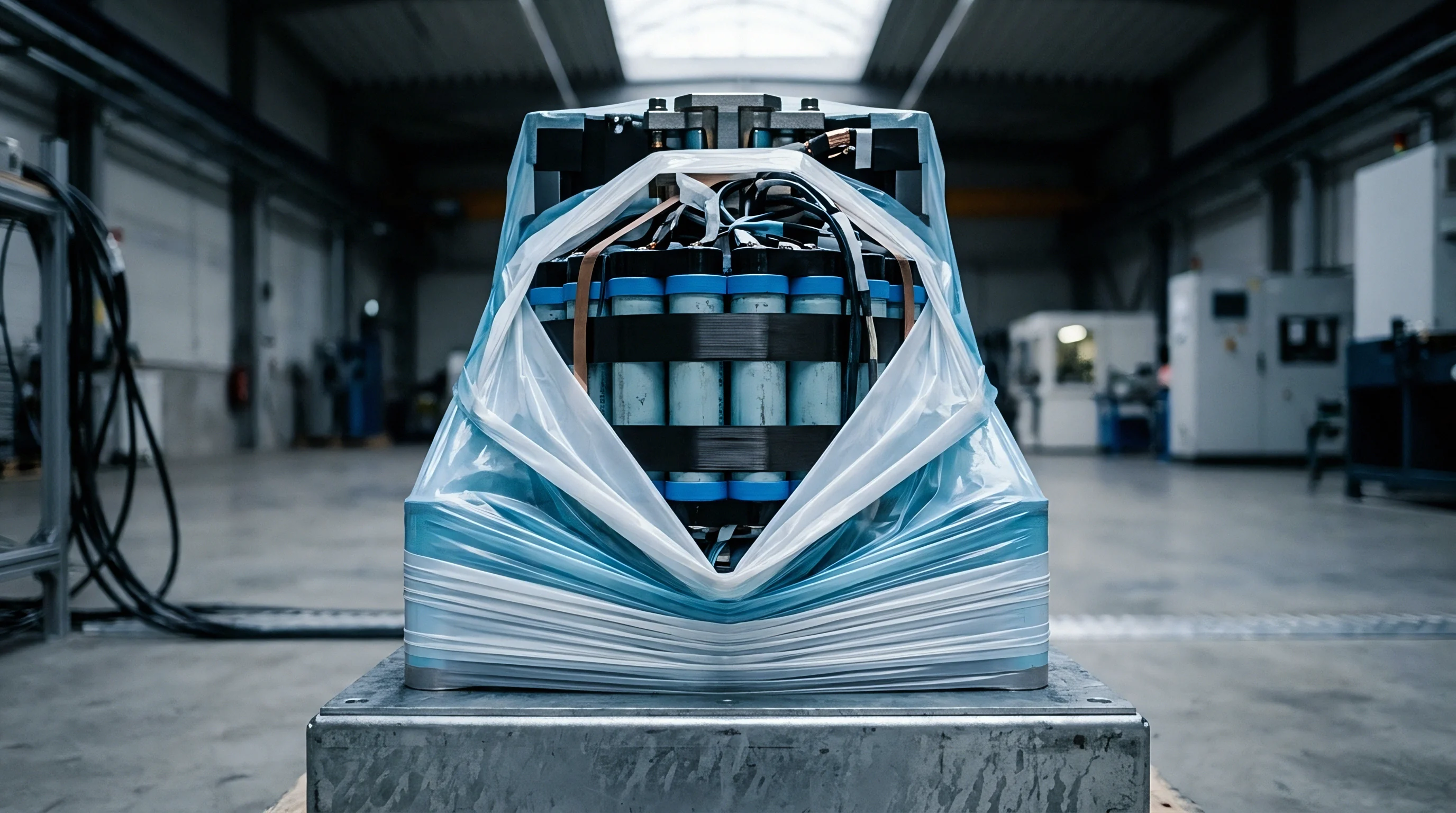
How Do Pressure Deltas Compromise Seals?
Pulling high vacuum around a pouch cell draws the laminate layers outward, stressing perimeter seals and generating false-positive readings when helium previously adsorbed on the exterior nylon skin outgasses into the test volume. Industrial screening requires rigorous background outgassing compensation. Optical emission spectroscopy and tuned diode laser absorption spectroscopy provide non-destructive inline options, measuring specific concentrations of moisture, oxygen, or volatile solvent traces within sealed volumes without vacuum chambers.
Consider a qualification lot of large-format prismatic solid state cells measuring 200 millimeters by 100 millimeters by 30 millimeters. Assume a required operational service life of ten years in an ambient climate running forty degrees Celsius and eighty percent relative humidity. The allowable cumulative water ingress over the ten-year span equals 5.0 milligrams to preserve the sulfide electrolyte integrity.
Water vapor pressure in this ambient condition equals 5.87 kilopascals. Under standard conversion arithmetic derived from molecular effusion physics, the measured helium leak rate correlates with ambient water vapor ingress according to the square root of their respective molar masses and viscosity coefficients. The calculated allowable helium leak rate across the prismatic header weld equals 2.3e-8 standard cubic centimeters per second at one atmosphere differential.
| Metrology Method | Tracer Medium | Minimum Detectable Leak | Cycle Throughput | Sample Destructive Risk |
|---|---|---|---|---|
| Vacuum Chamber Bombing | Helium 100% | 5.0e-10 mbar l/s | 10 to 30 minutes | Pouch swelling and laminate rupture under vacuum |
| Atmospheric Sniffing | Helium 5% in N2 | 1.0e-6 mbar l/s | 15 to 45 seconds | Zero risk to cell enclosure |
| Accumulation Chamber | Helium 100% | 1.0e-8 mbar l/s | 1 to 3 minutes | Low risk under atmospheric pressure |
| Hydrogen Trace Sniffing | Forming Gas (5% H2, 95% N2) | 5.0e-7 mbar l/s | 20 to 60 seconds | Zero risk to cell enclosure |
| Optical Pressure Decay | Dry Air | 1.0e-4 mbar l/s | 5 to 15 seconds | Zero risk to cell enclosure |
Mil-Std-888C Method 1014 defines equivalent helium leak formulas that underestimate moisture diffusion rates through polymeric pouch gaskets by twenty percent.
High-speed production lines often use forming gas accumulation for screening. Nitrogen carrier gas flushes an atmospheric accumulation chamber surrounding the cell, sweeping tracer molecules across a solid-state hydrogen sensor. This avoids the mechanical expansion caused by hard vacuum pulls against flexible pouch faces, trading fine sensor sensitivity for operational line speed.
The standard helium leak conversion factor of 2.3e-8 mbar l/s assumes ideal molecular effusion through circular glass capillaries. That figure rests on laminar flow models from published vacuum standards dating to 2012. If the actual leak path consists of an irregular crack through crystalline polymer spherulites, tortuous capillary diffusion dominates and the true moisture transmission rate diverges from the calculated value by an order of magnitude.
In that operational envelope, empirical calibration curves generated from gravimetric calcium tests supersede theoretical gas dynamic equations.
A leak path that passes dry tracer gas during short-cycle factory screening can allow liquid electrolyte or ambient moisture migration under sustained environmental humidity.
Strain
Mechanical stress, thermal excursions, and electrochemically driven volume changes constantly work against cell enclosures. Silicon-dominant anodes expand over two hundred percent during lithiation, and pure lithium metal foils see localized thickness shifts up to thirty micrometers across charge cycles. This breathing applies cyclic strain to pouch heat seals and prismatic headers.
While rigid clamping maintains interfacial pressure across the solid electrolyte, it concentrates shear stress directly at the perimeter seams. The bond line flexes through alternating tension and compression, opening fatigue cracks along the metal-to-polymer interface.
Thermal excursions between minus forty degrees Celsius and eighty-five degrees Celsius induce unequal expansion across packaging parts. Aluminum has a thermal expansion coefficient near 23e-6 per Kelvin, whereas borosilicate glass feedthroughs sit near 5e-6 per Kelvin. The resulting interfacial shear stress produces micro-cracking across glass-to-metal transitions.
Polymer laminates face comparable failure modes: sub-zero temperatures force the polyolefin sealant below its glass transition point, converting a ductile layer into a brittle matrix prone to micro-cracking under shock.
Deep-sea submersibles and aerospace launch vehicles face analogous structural sealing challenges, where catastrophic seal failures originate at metal-polymer interfaces subjected to combined thermal shocks and intense differential pressures. Solid state cells experience similar internal stresses generated by stack dynamics.
- Anode Breathing Fatigue degrades the tab adhesive bond as cyclic volume shifts flex the metal collector against the pouch casing.
- Thermal Shock Cleavage detaches the glass insulator from the negative terminal pin during temperature shock cycles.
- Pressure Fixture Creep thins the polymer heat-seal rim under continuous five-megapascal clamping loads at elevated temperatures.
- Hydrolytic Blistering delaminates the exterior nylon layer from the aluminum foil core under humid environmental conditions.
Industry projections that pouch cells endure five thousand deep-discharge cycles under two megapascals of unvarying stack pressure without seal fatigue lack independent verification. Buyers managing this uncertainty rely on ten-sample destructive cross-sectioning and micro-leak checks run at five-hundred-cycle intervals.
How do micro-cracks generated by cyclic mechanical breathing propagate through crystallizing seal polymers before mass spectrometers detect measurable tracer leakage?

Acceptance
Mandatory transport certifications control the commercial release of solid-state cells. UN 38.3 testing serves as the baseline regulatory hurdle, requiring cells to pass altitude simulation (Test T.1), thermal cycling (Test T.2), vibration (Test T.3), shock (Test T.4), external short circuit (Test T.5), and impact or crush (Test T.6). Test T.1 subjects packs to an absolute pressure of 11.6 kilopascals for six hours at twenty degrees Celsius.
In conventional cells, T.1 confirms solvent retention; in sulfide packs, it imposes an outward pressure differential that inflates pouch hulls, stressing the peel resistance of peripheral seams. A seam failure here allows ambient air ingress during repressurization, triggering rapid hydrolysis and hydrogen sulfide venting.
IEC 62619 and UL 2580 set containment and safety standards for stationary and automotive battery packs. IEC 62619 Clause 7.2 examines thermal runaway propagation, where cracked seals risk venting toxic reaction gases. European Union Battery Regulation 2023/1542 adds statutory requirements covering carbon accounting, supply-chain diligence, and verified lifetime durability.
Manufacturers must validate operating life targets under real-world storage conditions; an undetected micro-leak admitting ambient moisture shortens pack life and invalidates the technical documentation needed for CE marking and customs clearance.
| Standard Instrument | Applicable Clause | Physical Test Condition | Containment Requirement | Border Clearance Failure Impact |
|---|---|---|---|---|
| UN 38.3 | Clause 38.3.4.1 (T.1) | 11.6 kPa vacuum, 6 hours at 20 °C | No leakage, venting, or mass loss exceeding 0.1% | Immediate shipment rejection at freight handling terminal |
| UN 38.3 | Clause 38.3.4.2 (T.2) | -40 °C to +72 °C, 10 cycles, 6 hours dwell | Zero seal rupture or case distortion | Loss of transport authorization under ADR and IMDG codes |
| IEC 62133-2 | Clause 7.3.2 | External short circuit at 55 °C | Zero fire, explosion, or casing breach | CB Scheme safety certificate revocation |
| UL 2580 | Section 26 | Thermal shock and humidity exposure | Retention of internal atmospheric containment | Refusal of product listing by testing laboratories |
| EU 2023/1542 | Annex IV | Electrochemical durability testing | Capacity retention verification over design life | Prohibition of commercial entry into single market |
Commercial procurement contracts must anchor lot sign-off to post-environmental helium leak testing. Incoming quality gates that evaluate only open-circuit voltage and internal resistance miss leaky seams that fail after weeks in humid transit or storage. Receiving protocols run under ISO 2859-1 general inspection level II draw representative samples from landed lots for vacuum-decay or tracer leak detection.
Finding a single cell exceeding the agreed leak threshold places the entire lot on hold in the bonded warehouse, blocking formal customs entry until the supplier proves sealing consistency.
Commercial contracts incorporating standard warranty clause IEC-TR-62914 reallocate all return shipping costs, port demurrage fees, and mandatory hazardous-waste disposal penalties directly to the cell manufacturer whenever delivered packaging displays leak rates exceeding 1.0e-8 standard cubic centimeters per second upon arrival.