Standardized Verification Protocols for Dangerous Goods Import Document Audits
Rigorous dangerous goods document audits verify UN 38.3 test summaries, safety data sheets, and shipper declarations to prevent costly port delays and cargo holds.

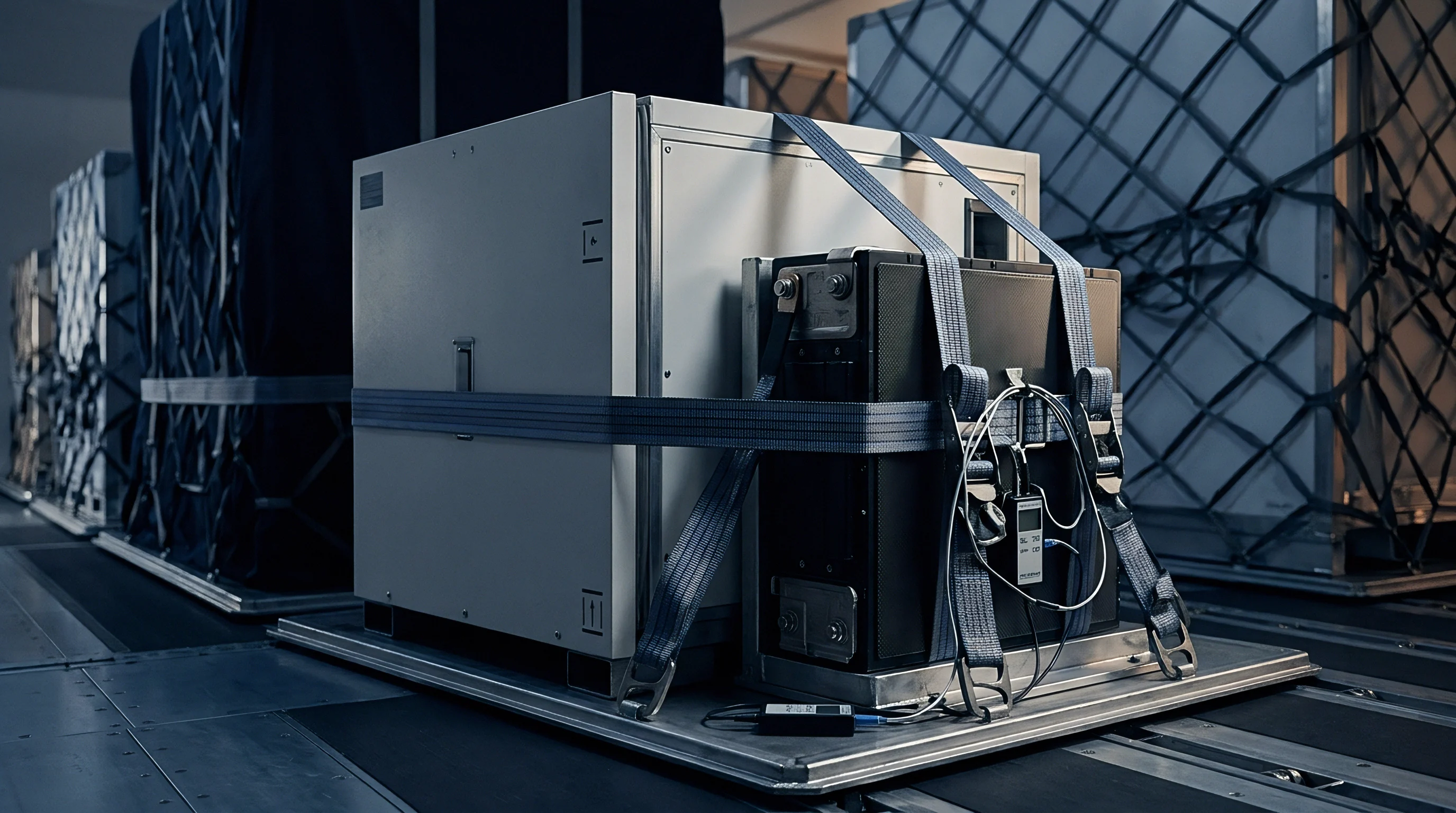
Dock
Customs officers and dangerous goods inspectors hold up lithium battery consignments at port entries primarily over paperwork discrepancies. Once a container arrives at a container freight station, the inbound manifest has to match the shipper’s dangerous goods declaration, the air waybill or bill of lading, and the UN 38.3 test summary. Even a minor variance between gross weight figures on the container bill and net quantities on the declaration will trigger an immediate quarantine.
Field inspections frequently show freight forwarders consolidating individual battery consignments under master air waybills without confirming that the underlying test summaries cover the exact cell model numbers on the commercial invoice.
Markings on the crates must align directly with the declared transport categories. Under Packing Instruction 965 Section IA, outer packaging must display the Class 9 hazard label, the cargo aircraft only label, and the UN 38.3 compliant UN 3480 mark. Port inspectors check the gross mass against the 35 kilograms limit for cargo aircraft.
If an outer box carries a UN specification mark for 4GV performance standards, the dangerous goods declaration must list that exact packaging code. Dockside teams often uncrate shipments to inspect the inner packaging, checking for terminal insulation, plastic divider trays, and flame-retardant absorbent liners.
UN 38.3 revision 7 test summaries must cite the exact test laboratory ISO 17025 accreditation number to remain valid at major European air hubs.
State of charge restrictions present another practical hurdle during dockside audits. Under International Civil Aviation Organization rules, lithium ion cells shipped under UN 3480 cannot exceed a 30 percent state of charge relative to their rated capacity. Inspectors use calibrated open-circuit voltage meters across cell terminals on site to check this.
For nickel manganese cobalt chemistry, a reading over 3.65 volts per cell indicates a charge above the 30 percent ceiling, resulting in immediate refusal by the carrier and regulatory fines.

Package Marking Verification
Inspectors compare physical crate labels directly with dangerous goods declarations. Every outer package must show the UN number, the proper shipping name, and the net quantity of hazardous material inside.
| Document Type | Primary Data Points | Mandatory Standard | Rejection Threshold |
|---|---|---|---|
| Shipper Declaration | UN Number, Proper Shipping Name, Net Weight | ICAO TI / IMDG Code | Weight mismatch over 1.0 percent |
| UN 38.3 Test Summary | Cell Model, Mass, Equivalent Lithium Content | UN Manual of Tests sub-section 38.3.5 | Missing lab signature or ISO code |
| Safety Data Sheet | Section 14 Transport Info, Flash Point | GHS Revision 8 / OSHA HCS | Outdated standard version over 3 years |
Mismatches between crate markings and air waybill manifests regularly stall cargo at transfer hubs. In an audit of a 40-foot container shipment at Rotterdam, three distinct cell part numbers shared a single generic UN 38.3 summary document, triggering a fourteen-day customs hold while the importer retrieved individual factory test files.
Carrier acceptance checklists leave no room for uninitialed corrections or handwritten edits on dangerous goods declarations. The document must clearly list the shipper and consignee names and addresses, transport category, packing group where applicable, and a 24-hour emergency response telephone number. Inspectors frequently test emergency numbers straight from the dock; if an automated voicemail answers or the line rings out, the entire lot is placed on safety hold.
Importers absorbed thirty-four thousand dollars in demurrage fees during a single port rejection incident caused by invalid emergency response registration numbers.


Paperwork
Paperwork compliance for lithium battery shipments centers on the UN 38.3 test summary required by sub-section 38.3.5 of the UN Manual of Tests and Criteria. The standard specifies ten data points, covering manufacturer details, test laboratory credentials, test report numbers, completion dates, full cell or battery descriptions, and test results across stages T1 through T8. A standard safety data sheet does not carry legal standing on its own and cannot replace a signed test summary from an accredited laboratory.
Commercial invoices must state the cell chemistry, capacity in ampere-hours, watt-hour ratings, and the exact part numbers referenced in the test paperwork. A mismatch between a marketing trade name on an invoice and the technical model identifier on a UN 38.3 certificate breaks the documentation chain. Importers generally track factory stock-keeping units against laboratory test revisions in an audit matrix to prevent customs holds at arrival ports.

Document Verification Sequences
- UN 38.3 Summary Validation cross-checks laboratory accreditation status, test execution dates, cell weight, and signature authenticity against published accreditation databases.
- Safety Data Sheet Review verifies the sixteen mandatory section layouts, checking section fourteen for correct UN classification numbers, packing instruction references, and marine pollutant flags.
- Invoice Alignment Check ensures part numbers, total cell counts, watt-hour ratings, and manufacturer addresses correspond across all bills of lading.
- Dangerous Goods Declaration Audit confirms net battery mass totals, packaging code compliance, emergency contact validity, and shipper certification signatures.
Safety Data Sheets must follow the Globally Harmonized System of Classification and Labelling of Chemicals revision eight. Section 14 has to contain explicit transport details: the proper shipping name Lithium Ion Batteries, UN 3480, Class 9 classification, and relevant packing instructions like PI 965 Section IA or Section IB. An outdated sheet referencing superseded regulations will fail document clearance at customs.
A missing laboratory signature on a UN 38.3 test summary invalidates the entire shipping file across all IATA member airlines.
Ocean freight governed by the International Maritime Dangerous Goods Code introduces extra stowage rules. Dangerous goods manifests must specify Stowage Category A, outlining thermal controls and required separation from combustible freight. Importers operating under Special Provision 188 for smaller units must document that equivalent lithium content remains under 20 watt-hours for individual cells and 100 watt-hours for battery packs.
Customs officials compare certificate issuance dates against production stamps on the cells. If a test summary predates manufacture by more than three years, authorities routinely require proof that cell chemistry or internal design has not changed in ways that would require re-testing under UN 38.3 rules.
Air freight carriers routinely refuse consignments when the dangerous goods declaration omits the word Cargo Aircraft Only on shipments exceeding passenger aircraft quantity limits.


Verification
The physical test data underlying the paperwork determines whether a shipment passes a dangerous goods audit. UN 38.3 testing subjects sample cells to eight environmental and mechanical stress protocols. Tests T1 through T5 replicate transit conditions: altitude simulation at 11.6 kilopascals, thermal cycling between 72 degrees Celsius and minus 40 degrees Celsius, vibration runs from 7 Hertz to 200 Hertz, shock loading at 150 peak acceleration acceleration, and external short-circuit testing at 55 degrees Celsius with circuit resistance below 0.1 ohms.
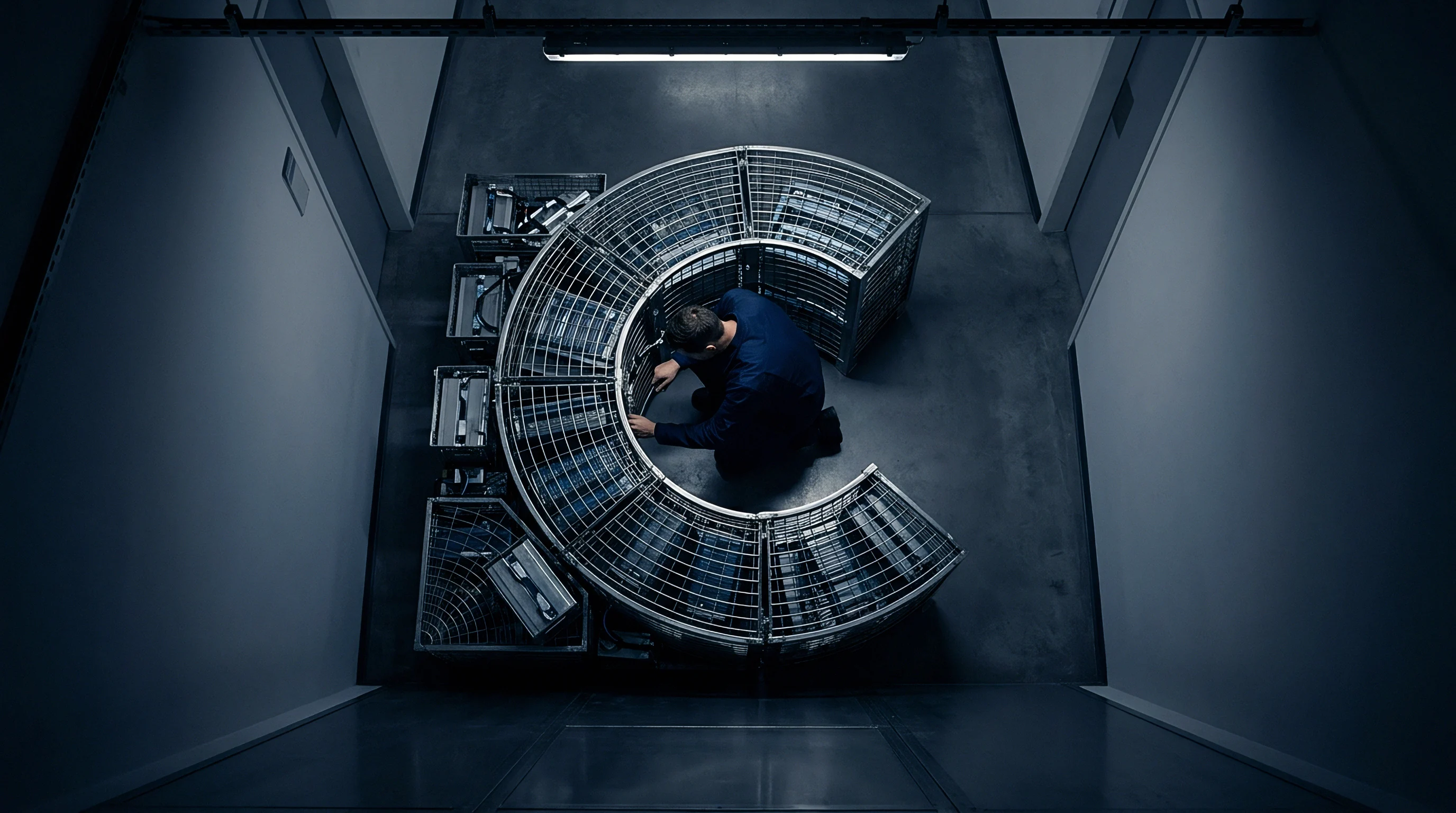
Test Execution Standards
Auditors verify that test reports confirm zero mass loss, zero leakage, zero venting, zero disassembly, zero rupture, and zero fire during mechanical and environmental stress trials.
| Test Parameter | Execution Metric | Acceptance Standard | Audit Failure Sign |
|---|---|---|---|
| T1 Altitude | 11.6 kPa pressure for 6 hours | No mass loss, no leakage | Mass loss over 0.1 percent |
| T2 Thermal | 72°C to -40°C, 10 cycles | No venting, no rupture | Open-circuit voltage drop over 10% |
| T3 Vibration | 7 Hz to 200 Hz sweep over 3 hours | No disassembly, no fire | Structural housing cracking |
| T4 Shock | 150 gn peak acceleration, 6 ms | No flame, no case damage | Internal short-circuit trigger |
Test T6 applies impact or crush loads based on cell size. For cells thicker than 20 millimeters, a 9.1 kilogram mass is dropped 61 centimeters onto a 15.8 millimeter bar placed across the center of the cell. Test T7 tests overcharge protection on secondary batteries by supplying twice the maximum rated continuous charge current for twenty-four hours, while T8 evaluates forced discharge by running cells in series with an external supply at their initial rated capacity.

Can Third-Party Test Summary Certificates Replace Original Laboratory Test Reports?
Third-party certificates are valid proof of transit compliance only when issued by an ISO 17025 accredited facility listed on official accreditation directories. Port inspectors examine these summaries to ensure the documented specifications match the chemistry, form factor (cylindrical or prismatic), and physical dimensions of the incoming shipment.
Manufacturing facilities require independent quality management auditing under ISO 9001 or equivalent production standards. Factories must preserve lot records that trace each batch directly to its corresponding UN 38.3 test report. If an importer cannot demonstrate unbroken traceability from the production line to the transit summary, border agencies can quarantine the entire consignment.
Under Clause 6.2 of the EU Battery Regulation 2023/1542, economic operators importing batteries into European markets assume full legal liability for verifying third-party safety documentation before releasing goods into commercial channels.

Ledger
The financial fallout from failed dangerous goods audits runs well past statutory customs fines. Port demurrage accrues daily on a per-container basis while shipments sit under administrative hold. Storage surcharges for hazardous cargo containers typically run three to five times higher than standard dry box rates because of dedicated containment requirements.
Transit insurance policies contain strict compliance warranties that void coverage if damage occurs during the transport of non-compliant dangerous goods. If a container fire breaks out at sea and investigators uncover an invalid UN 38.3 summary or a flawed declaration, cargo insurers will deny coverage and subrogation claims, leaving the importer of record liable for general average assessments and vessel repair costs.

Financial Risk Profiles
- Port Storage Penalties accumulate daily per container when hazmat paperwork fails incoming verification checks.
- Re-Testing Surcharges incur high costs when third-party laboratories perform emergency batch safety testing at port facilities.
- Carrier Fine Structures impose severe monetary penalties on shippers submitting inaccurate dangerous goods declarations.
- Customs Seizure Liabilities force complete forfeiture of non-compliant cell shipments failing safety verification protocols.
The cost of documentation compliance is modest compared to the overall landed cost per cell. Pre-shipment document audits, factory quality checks, and accredited lab verification keep freight moving and protect against severe liabilities at arrival terminals.
Customs brokers assess compliance risk by tracking historical filing accuracy across supplier bases. Working with unverified vendors increases inspection rates, customs holds, and port delays across an importer’s dangerous goods lanes.
Commercial supply contracts that assign full regulatory liability to overseas suppliers fail to protect importers of record from direct customs penalties.
Importers factor compliance audit expenses directly into their landed unit cost models. In practice, managing this exposure requires clearing all shipping documents before releasing final balance payments to overseas battery suppliers.
Supplier compliance contracts specify that missing or invalid dangerous goods documents trigger automatic payment holds on affected shipments.