Meaning
Mathematical equations modeling the temperature dependence of chemical reaction rates express how kinetic constants change across thermal gradients. In electrochemical systems, the arrhenius relation quantifies how electrolyte degradation and solid electrolyte interphase growth scale with elevated thermal exposure. Standard laboratory protocol applies this formula to extrapolate long-term capacity retention from short-term elevated temperature storage tests.
The relationship governs kinetic processes driven by activation energy where chemical mechanisms remain unchanged across the tested temperature band.
Kinetic Factor
Temperature coefficients establish the baseline for cell aging models. Higher operational thermal energy increases the probability that reactant molecules overcome activation barriers. This relationship translates raw thermal shifts into precise kinetic multiplier predictions during cell aging simulations.
Acceleration Profile
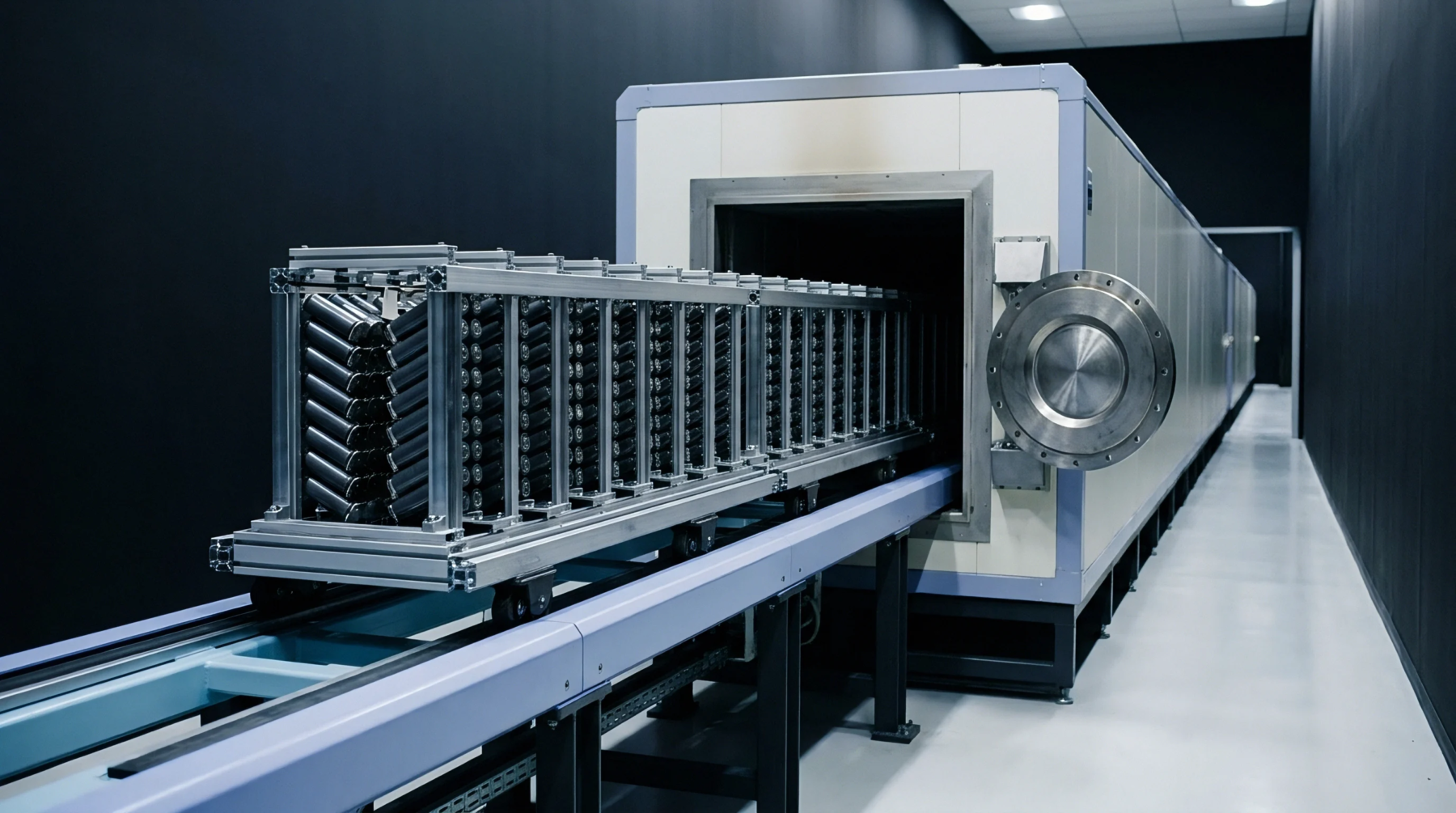
Accelerated life testing relies on elevated environmental chambers to compress multi-year degradation timelines into weeks. By applying the arrhenius relation to measured capacity loss rates across three distinct temperatures, quality engineers calculate the activation energy for specific degradation modes. Lower activation energy values indicate processes that proceed rapidly even at room ambient conditions, whereas higher values mark mechanisms that remain dormant until thermal spikes occur.
Boundary Threshold
Linear extrapolation breaks down when thermal thresholds trigger phase changes or distinct degradation pathways. Polymer separator softening alters reaction mechanisms entirely, rendering single-activation-energy models invalid.