Meaning
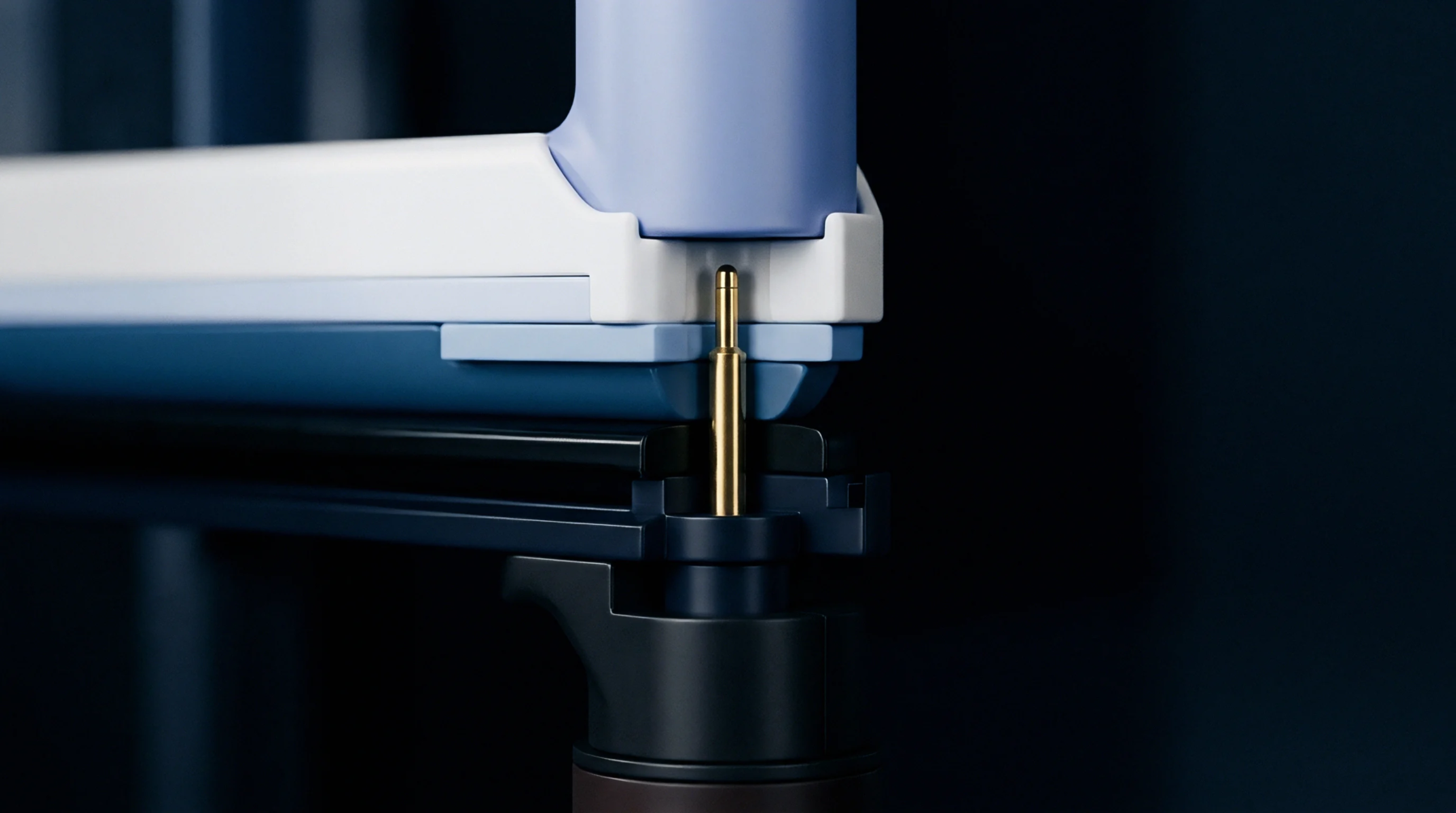
Mechanical spring assemblies consisting of cupped conical discs stacked in series or parallel provide controlled axial compliance within battery pack clamping systems. A belleville washer stack absorbs volumetric expansion from pouch or prismatic cells while maintaining a pre-determined minimum compressive load across charge cycles. This mechanical buffer prevents over-pressurization during lithiation and prevents gapping during delithiation.
The boundary of application stops where internal mechanical movement exceeds the flattened height of the disc combination.
Spring Architecture
Conical disc arrangements permit tailoring of load versus deflection curves by altering disc orientation. Parallel stacking multiplies load capacity at a fixed deflection, whereas series stacking increases total axial deflection under constant load. Mixing series and parallel groupings allows targeted force profiles.
Clamping Behavior
Maintaining consistent pressure prevents separator crushing and interface delamination over thousands of operational cycles. When battery cells undergo expansion during lithium intercalation, the belleville washer stack yields linearly to absorb the dimensional change. If the spring force degrades, thermal contact resistance between cell surfaces and cooling plates increases dramatically.
Lower contact force reduces heat dissipation capacity across module interfaces. This temperature elevation leads to localized hot spots and accelerated capacity loss across the assembly.
Retention Threshold
Retaining adequate pre-load requires choosing alloy compositions resistant to creep under sustained elevated temperature exposure. High stress environments accelerate stress relaxation within spring steel or nickel alloys, reducing active force over prolonged service life. Once stress relaxation exceeds design limits, structural looseness compromises both mechanical stability and thermal transfer efficiency.