Meaning
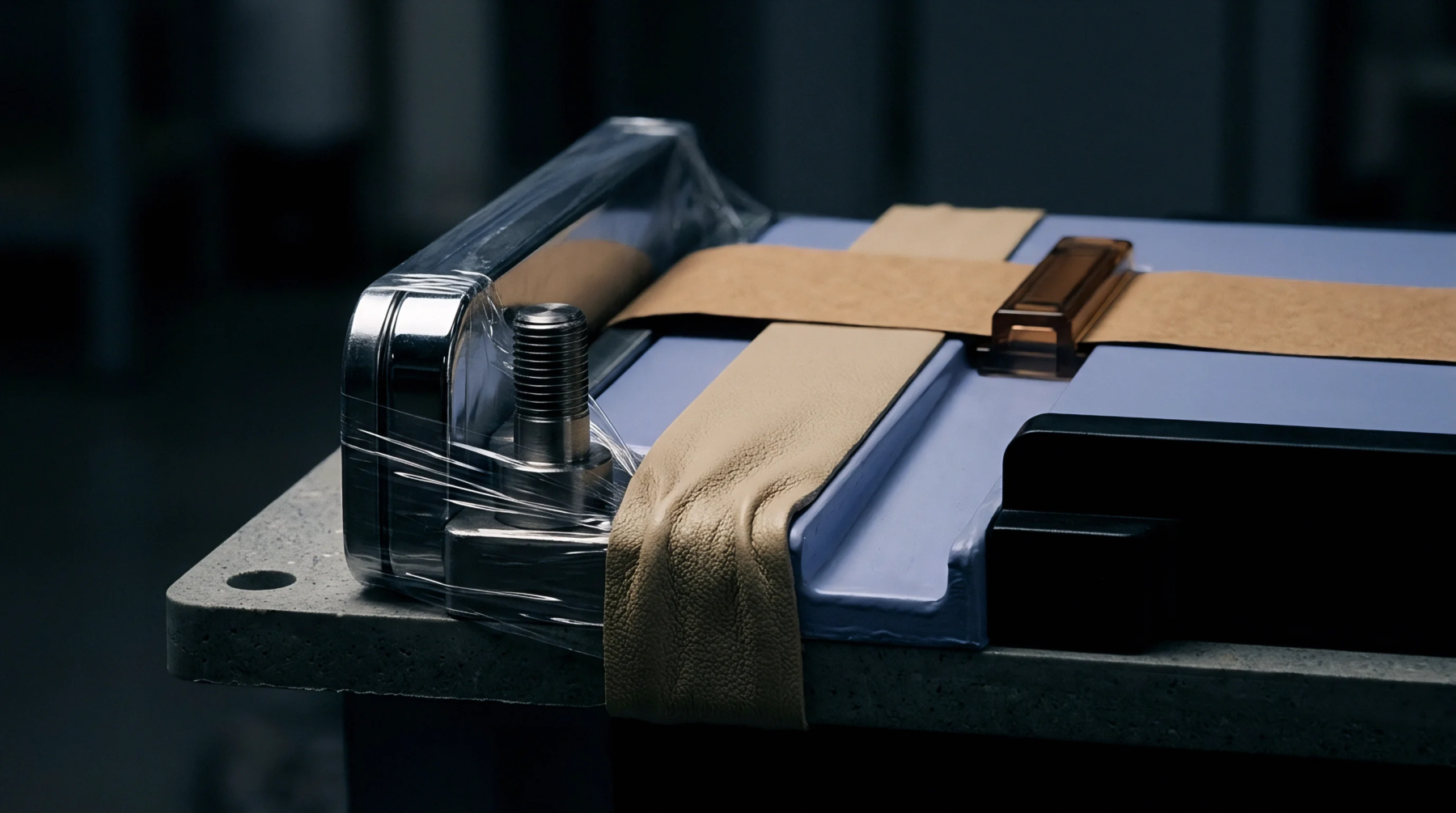
Metal terminal degradation arises from the repetitive mechanical and thermal strain imposed on the electrical connections between cells. This progressive cracking, known as busbar tab fatigue, occurs due to the differential expansion of adjacent cells during charge-discharge cycles and road vibrations. It threatens the electrical continuity of the pack by raising junction resistance and generating localized heat.
Stress Profile
Cyclic displacement of the cell terminals during breathing cycles creates a complex multi-axial strain state at the joint interface. This strain generates localized micro-cracks that grow through the thickness of the joint under the influence of continuous vehicle vibrations. High-frequency vibrations from the road act alongside the low-frequency expansion of the cells, resulting in a compound loading profile.
If busbar tab fatigue is left unchecked, it causes localized heating at the connection, which can lead to thermal runaway in adjacent cells.
Material Selection
High-conductivity copper and aluminum alloys are selected to balance electrical performance with mechanical compliance. Sourcing contracts specify high-elongation tempers of these metals to resist busbar tab fatigue, as soft-annealed materials can accommodate greater strain before crack initiation occurs. Although these annealed options present a lower yield strength, their superior fatigue limit under displacement-controlled loading makes them the preferred choice.
Laser welding parameters must be closely controlled to prevent the creation of brittle intermetallic phases that would otherwise reduce the fatigue life of the joint.
Mitigation Method
Physical strain relief is integrated into the busbar geometry to decouple the joint from cell movements. Engineers design formed loops or arches into the conductor to absorb displacement through bending rather than shear deformation. This design choice prevents busbar tab fatigue from occurring and allows the use of stiffer cell packaging layouts.