Hydrothermal Relithiation Dynamics and Sintering Parameter Optimization in Direct Recycled Active Materials
Hydrothermal relithiation and optimized sintering restore lithium stoichiometry and lattice order in degraded cathodes at lower operating cost than hydrometallurgy.

Dock
Incoming feeds of end-of-life battery scrap arrive with variable degradation histories, mechanical damage, and surface contamination. Direct recycling bypasses the destructive elemental extraction of hydrometallurgy by preserving the crystal framework of cathode materials. Success depends on the quality of delaminated black mass before chemical re-lithiation begins.
Aluminum current collector fragments, residual polyvinylidene fluoride binder, and organic electrolyte decomposition products disrupt subsequent lithium incorporation if left unmanaged.
Spent Cathode Scrap Grading and Impurity Thresholds
Mechanical shredding and dry magnetic separation yield cathode concentrates containing varying levels of metallic copper, aluminum foil micro-flakes, and graphite fines. Aluminum contamination above 500 parts per million induces side reactions during thermal treatment, forming lithium aluminate phases that deplete active lithium inventory. Copper particles remaining in the feedstock cause internal electrical micro-shorts when re-processed powders are re-coated into high-density electrodes.
Batch sorting protocols categorize incoming spent material based on transition metal ratios and bulk density.
| Contaminant Type | Maximum Permissible Limit | Analytical Detection Method | Downstream Process Impact |
|---|---|---|---|
| Metallic Aluminum (Al) | 350 ppm | Inductively Coupled Plasma (ICP-OES) | Forms inactive LiAlO2 during sintering; consumes free lithium. |
| Free Copper (Cu) | 100 ppm | X-ray Fluorescence (XRF) | Accelerates self-discharge; risk of micro-shorting across separators. |
| Residual PVDF Binder | 1.2 wt% | Thermogravimetric Analysis (TGA) | Generates hydrofluoric acid at high temperatures; degrades kiln linings. |
| Carbon Black / Graphite | 2.5 wt% | Combustion Elemental Analysis | Consumes ambient oxygen during calcination; reduces nickel species prematurely. |
Delaminated Powder Moisture and Organics Retention
Solvent extraction using N-methyl-2-pyrrolidone or dimethyl sulfoxide removes binder matrices to release active material particles from current collectors. Incomplete solvent recovery leaves heavy hydrocarbon residues on particle surfaces. Thermal pretreatment in inert gas at 350°C volatilizes light organics prior to hydrothermal processing.
Exposure to ambient air during storage introduces moisture that hydrolyzes surface lithium compounds, creating a carbonated skin on depleted cathode grains.
Uncontrolled fluorine retention from incomplete binder removal converts lithium salt inputs into insoluble lithium fluoride during thermal processing, permanently lowering recovered specific capacity.
Kinetics
Hydrothermal processing reconstitutes lithium-deficient active materials through liquid-phase ion diffusion under elevated temperature and pressure. Degraded cathodes exhibit lithium vacancies alongside surface phase transitions to rock-salt or disorder-spinel configurations. Direct insertion of lithium ions into the depleted layered lattice requires overcoming mass transfer resistance across particle surfaces and grain boundaries.
Aqueous Lithium Intercalation Pathways in Deficient Lattices
Dissolving lithium hydroxide or lithium carbonate in deionized water creates an ion-rich liquid medium capable of wetting micro-cracked secondary aggregates. Hydrothermal conditions lower the activation energy for lithium insertion into vacant 3b crystallographic sites. Solid-state diffusion limits room-temperature relithiation, whereas hydrothermally driven mass transport saturates sub-surface vacancies within hours.
High concentration gradients between solution and particle interiors accelerate internal lithium ion movement without destroying the parent transition metal skeleton.
Hydrothermal treatment at 200°C for 4 hours in 1.5 molar lithium hydroxide restores lithium stoichiometry in NMC622 from 0.82 to 0.99 without lattice dissolution.
Hydrothermal Temperature and Pressure Boundary Windows
Sustaining temperatures between 180°C and 220°C inside sealed pressure vessels maintains water in a sub-critical state, enhancing ionic conductivity and fluid permittivity. Pressure levels from 1.2 to 2.5 megapascals force dissolved lithium ions into deep internal fissures formed during thousands of charge-discharge cycles. Exceeding 240°C triggers structural dissolution of transition metals, leaching nickel and cobalt into the liquid phase while forming unwanted lithium metal oxide hydrates.
Deficient operating pressures prolong treatment times beyond economic feasibility.
Doubling vessel pressure does not compensate for inadequate residence time, as mass-transfer bottlenecks persist inside micro-cracked secondary aggregates.
Thermal
Re-establishing crystal symmetry and removing lattice strain requires high-temperature calcination post-hydrothermal relithiation. Solid-state sintering repairs crystallite fractures, eliminates point defects, and drives residual surface lithium into the bulk lattice. Thermal parameters dictate final particle morphology, tap density, and electrochemical stability under high-voltage operation.
Thermal Annealing Profiles and Oxygen Partial Pressure Controls
Calcination regimes involve controlled heating ramps, isothermal dwell periods, and regulated cooling rates. Heating at 3°C to 5°C per minute prevents thermal shock microcracking across grain boundaries. Holding temperatures between 750°C and 850°C for nickel-rich layered oxides restores order between lithium and transition metal layers.
Pure oxygen flow during calcination maintains nickel in the trivalent state, preventing spontaneous reduction to divalent nickel, which blocks lithium diffusion pathways.
Which Atmosphere Gas Ratio Minimizes Cation Mixing during Re-Calcination?
High-nickel cathodes like NMC811 demand an atmosphere containing at least 90 percent pure oxygen during thermal annealing. Nitrogen or ambient air atmospheres lead to oxygen loss from the crystal lattice at temperatures above 700°C. Oxygen vacancies facilitate the migration of divalent nickel ions into monovalent lithium sites due to their similar ionic radii. Maintaining a high oxygen partial pressure suppresses oxygen loss, forcing transition metals to remain within their native octahedra.
Sintering holding times above six hours at peak temperature enlarge crystallite dimensions beyond the threshold where particle integrity withstands high C-rate cycling.
- Nickel-Lithium Disorder Divalent nickel occupies vacant lithium sites during low-oxygen thermal holds, creating localized rock-salt domains that permanently block lithium transport paths.
- Particle Sinter-Bridging Excessive dwell times at peak temperature fuse adjacent secondary particles, driving tap density up while severely restricting electrolyte wetting surface area.
- Surface Lithium Carbonate Layering Slow cooling in carbon-dioxide-containing atmospheres precipitates insulating lithium carbonate coatings on freshly annealed particle surfaces.
- Thermal Shock Microcracking Rapid cooling rates exceeding 10°C per minute generate severe intra-granular stress, fracturing primary crystallite contacts.
| Annealing Temp (°C) | Dwell Time (h) | Atmosphere Gas Mix | Cation Mixing Ratio (Ni in Li layer) | Initial Discharge Capacity (0.1C) |
|---|---|---|---|---|
| 720 | 4 | 100% Air | 6.8% | 172 mAh/g |
| 780 | 6 | 80% O2 / 20% N2 | 2.4% | 194 mAh/g |
| 830 | 6 | 100% O2 | 1.1% | 206 mAh/g |
| 880 | 8 | 100% O2 | 3.9% | 188 mAh/g |
Oxygen partial pressure must exceed ambient atmospheric density whenever the nickel fraction of the active cathode surpasses seventy percent.
Structure
Phase conversion from disordered structures back to stoichiometric layered structures governs the commercial viability of direct recycled active materials. Degradation during original battery lifetime causes localized phase transitions from the space group R-3m to the cubic rock-salt phase Fm-3m or spinel Fd-3m. Restoring crystallographic order requires atomic realignment across transition metal slabs.
Cation Re-Ordering from Rock-Salt to Layered Hexagonal Phase
Thermal energy provided during sintering enables nickel ions trapped within lithium layers to migrate back to transition metal planes. X-ray diffraction patterns confirm structural recovery when the doublet peaks corresponding to the 012/014 and 108/110 crystal planes clear completely. High cation ordering yields low magnetic susceptibility values, signaling the removal of localized disordered spins.
Cathode active materials targeted for automotive applications specify a minimum X-ray diffraction peak intensity ratio of 1.20 between the 003 and 104 reflections.
Microcrack Healing and Secondary Particle Cohesion
Repeated electrochemical volume changes fracture the primary grain boundaries within spherical secondary particles. Hydrothermal relithiation deposits lithium salts inside these internal microcracks. Subsequent calcination fuses these boundaries back together through localized mass transport and crystal growth.
The mechanical integrity of secondary aggregates recovers, restoring resistance to particle pulverization during electrode calendering.
- Sample five grams of relithiated powder post-sintering under inert argon atmosphere.
- Collect high-resolution X-ray diffraction patterns over a two-theta range of 10 to 70 degrees.
- Calculate the intensity ratio of the 003 to 104 diffraction peaks to confirm cation ordering.
- Measure atomic absorption spectroscopy response to verify lithium to transition metal stoichiometry.
Whether residual internal nanovoids created during extended field cycling re-seal completely during low-temperature sintering or act as stress concentration sites during subsequent high-voltage cycling remains under active investigation.
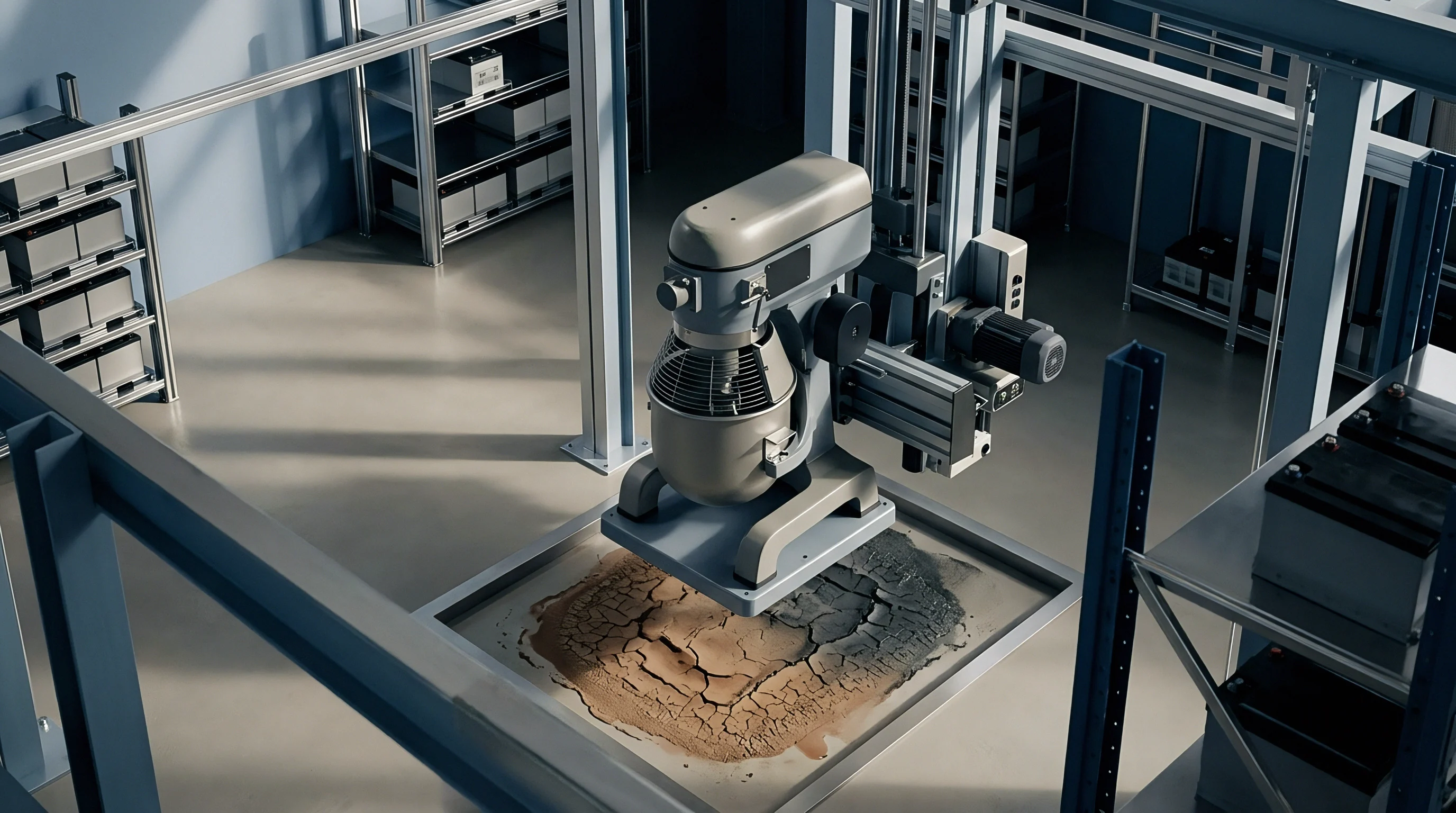
Assay
Verification protocols validate that re-engineered cathode materials match or exceed the physical, chemical, and electrochemical specs of virgin cathode powders. Testing requires multi-tier analytical validation before approving recycled material lots for battery cell assembly lines. Discrepancies between bulk elemental composition and true surface stoichiometry frequently conceal battery performance risks.
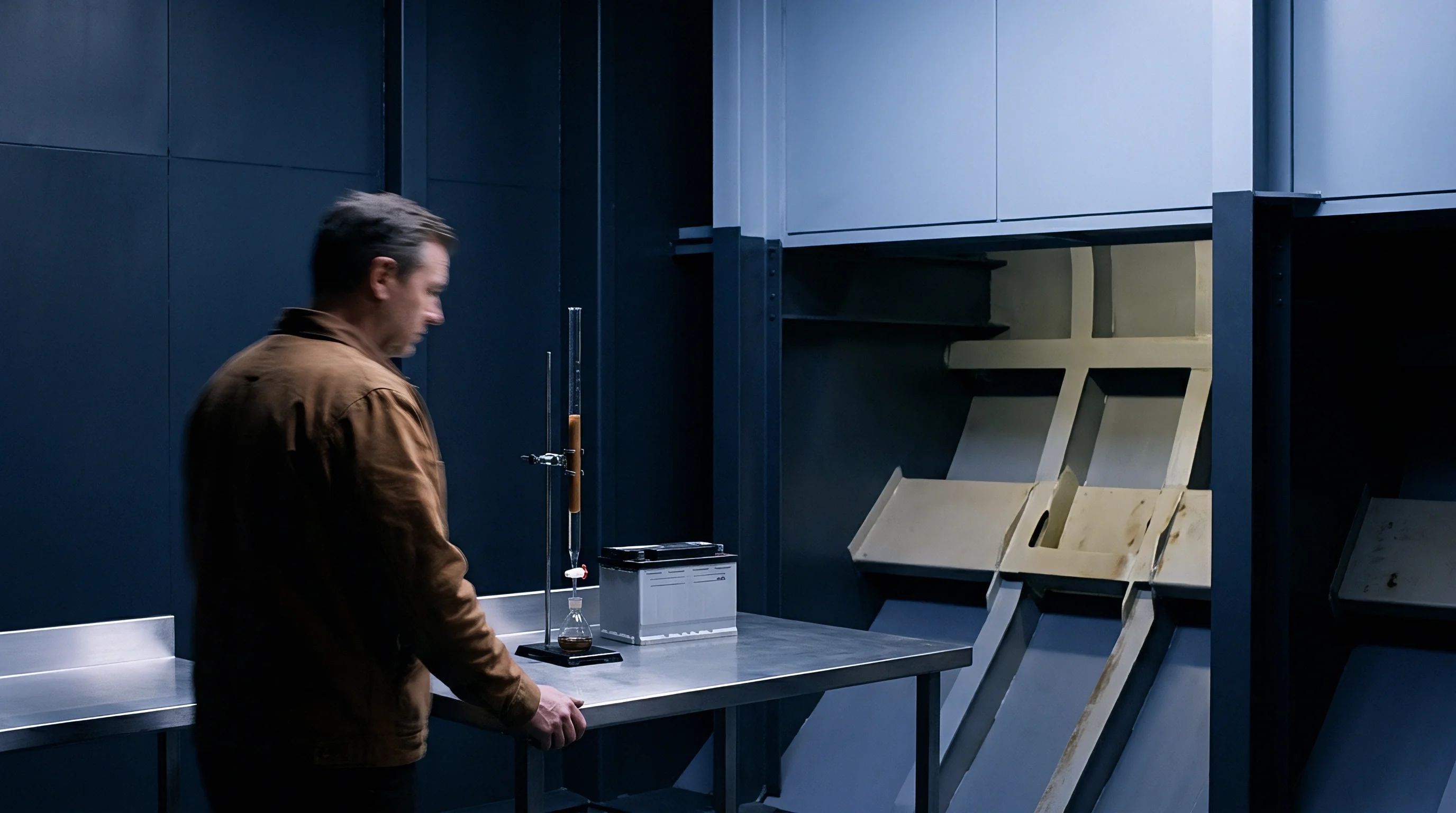
Analytical Stoichiometric Verification and Phase Purity Diagnostics
Inductively coupled plasma optical emission spectroscopy establishes total elemental ratios of lithium, nickel, cobalt, and manganese. Surface sensitive techniques like X-ray photoelectron spectroscopy confirm transition metal oxidation states in the outer 10 nanometers of particles. X-ray diffraction whole-pattern Rietveld refinement quantifies residual rock-salt fraction and lattice parameter constants a and c.
| Metric / Parameter | Test Standard / Technique | Virgin Benchmark Range | Minimum Recycled Acceptance Value |
|---|---|---|---|
| Li/(Ni+Co+Mn) Ratio | ICP-OES Analysis | 1.01 – 1.03 | 1.00 – 1.03 |
| XRD Intensity Ratio I(003)/I(104) | Rigaku Powder XRD | > 1.30 | > 1.25 |
| Specific Surface Area (BET) | N2 Adsorption Analysis | 0.25 – 0.45 m2/g | 0.20 – 0.50 m2/g |
| First Discharge Capacity (0.1C, 2.8-4.3V) | Coin Cell / Half-Cell Testing | 200 – 208 mAh/g | 198 mAh/g |
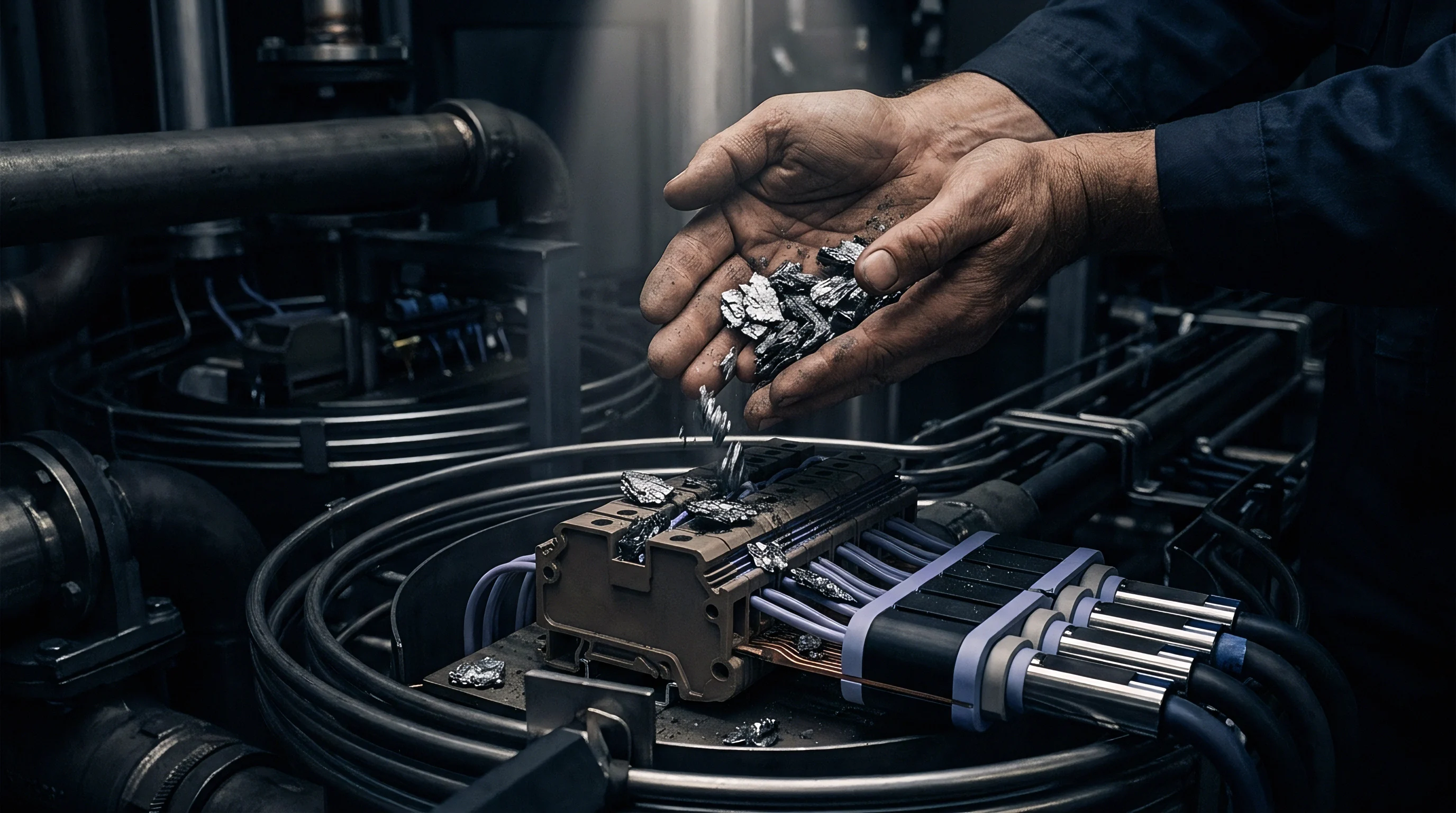
Electrochemical Cycle Validation and Coulombic Efficiency Limits
Automated coin-cell testing protocol evaluates initial coulombic efficiency across three formation cycles at C/10 rates. First-cycle efficiency below 88 percent indicates un-passivated surface defects or unreacted lithium species. Extended cycle life evaluation requires pouch cell configuration under 1C charge and 1C discharge regimes with continuous thermal tracking at 45°C.
Direct recycled cathodes exhibiting first-cycle coulombic efficiency below 88 percent routinely degrade to 80 percent capacity retention within 300 full discharge cycles.
- Stoichiometric Ratio Lock Lithium to total transition metal ratio must fall strictly between 1.00 and 1.03 to ensure structural equilibrium.
- Phase Pure Hexagonal Index X-ray diffraction peak intensity ratio I(003)/I(104) must exceed 1.25 to verify minimal cation mixing.
- Residual Carbonate Boundary Soluble surface lithium carbonate content must remain under 0.4 weight percent to prevent gassing inside sealed pouch cells.
- First Cycle Efficiency Pass Initial coulombic efficiency must reach or exceed 88.0 percent during half-cell formation testing at C/10 rate.
Batch release documentation under IEC 62660-3 requires verified chemical purity and initial coulombic efficiency metrics before any recycled cathode lot enters cell production lines.
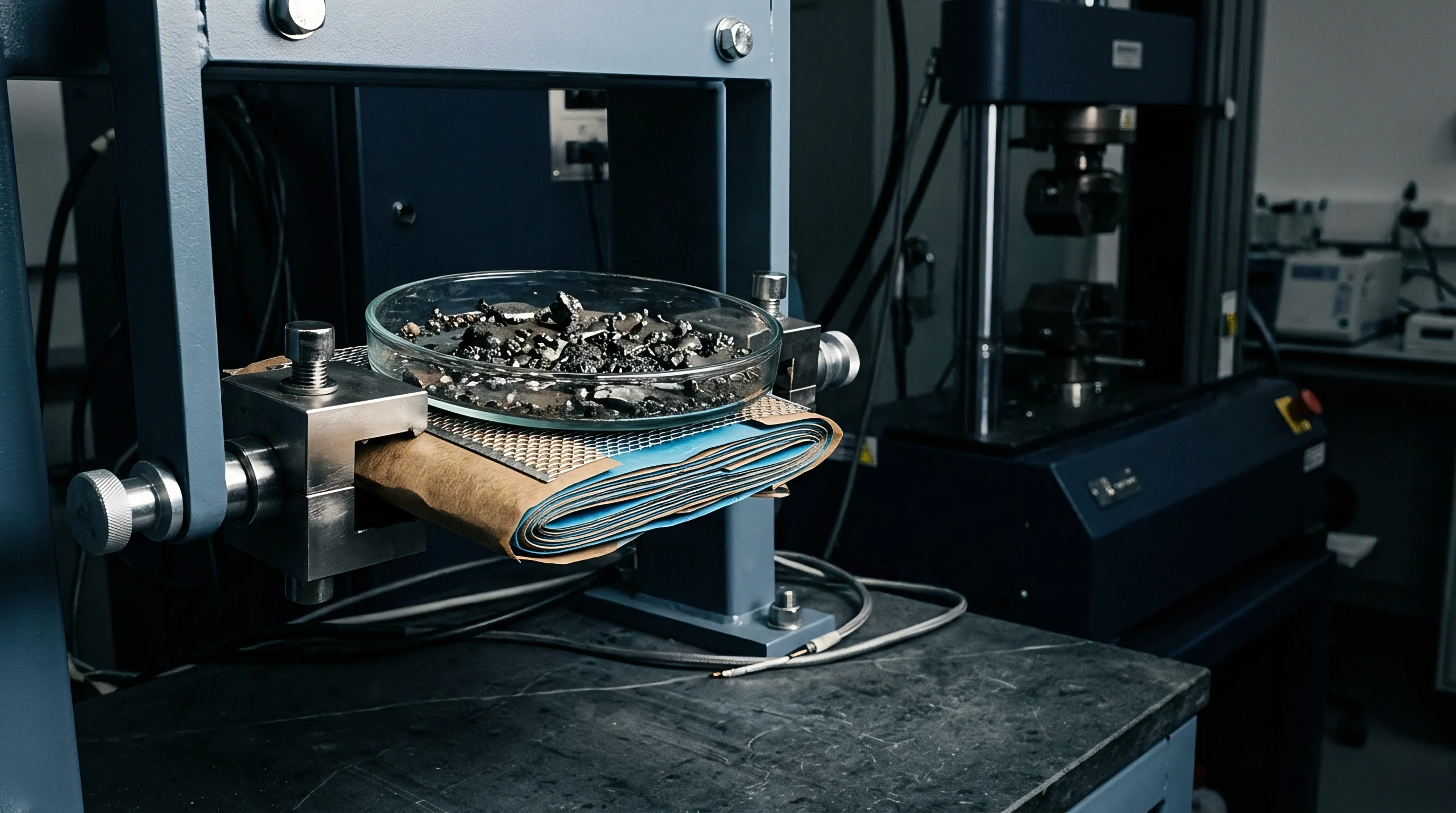
Margin
Commercial viability of direct recycling hinges on energy efficiency, reagent consumption rates, and total capital investment relative to hydrometallurgical recycling routes. Hydrometallurgy destroys the cathode crystal lattice using strong acids before using costly solvent extraction to isolate individual metal salts. Direct recycling saves processing energy by preserving cathode framework structures, but operational expenses depend heavily on chemical consumption during hydrothermal re-lithiation.
Operational Cost Comparison between Direct Recycling and Hydrometallurgical Routes
Re-lithiation reagents, thermal energy for kilns, and wastewater management dominate operational expenses in direct recycling facilities. Hydrothermal lithium hydroxide additions represent the single largest variable cost component. Reagent consumption increases non-linearly when processing severely depleted cathode feedstocks with lithium loss over 20 percent.
Capital Footprint and Sintering Energy Balance
Direct recycling lines bypass chemical precipitation reactors, solvent extraction batteries, and precursor calcination infrastructure required by conventional recycling operations. Autoclave system equipment specifications dictate batch sizes and maximum throughput rates. High-temperature rotary kilns consume 60 to 70 percent of total plant electrical power.
Take a 1,000-kilogram processing batch of degraded NMC622 cathode scrap carrying a 15 percent lithium deficiency. Reconstituting this material requires 62 kilograms of battery-grade lithium hydroxide monohydrate inside a 3,000-liter hydrothermal autoclave system operating at 200°C for four hours. Electrical consumption for the hydrothermal step averages 1.2 kilowatt-hours per kilogram of processed powder, while subsequent oxygen-atmosphere sintering at 800°C for six hours consumes an additional 3.8 kilowatt-hours per kilogram.
Assuming an electricity cost of 0.08 USD per kilowatt-hour and lithium hydroxide priced at 22.00 USD per kilogram, the direct operational cost to relithiate and heat-treat the powder totals 2.06 USD per kilogram. Conventional hydrometallurgical processing of an identical scrap volume, including acid leaching, solvent extraction, precursor precipitation, and long-duration calcination, incurs chemical and energy costs averaging 3.85 USD per kilogram. The 1.79 USD per kilogram cost delta secures an operational margin advantage for direct recycling, provided processing line yield stays above 92 percent.