Meaning
Low-cycle fatigue equations incorporating mean stress corrections forecast structural component degradation under thermal cycling and mechanical strain accumulation. The mathematical relationship known as Coffin-Manson-Morrow calculates total strain amplitude versus endurance cycles by combining elastic and plastic strain components with a Morrow mean stress adjustment factor. Within battery system development, Coffin-Manson-Morrow governs fatigue life estimation for battery cell tabs, busbars, and cooling plate channels subjected to repeated expansion and contraction during charge-discharge thermal cycles.
The formulation governs total strain amplitude, fatigue ductility parameters, fatigue strength coefficients, and mean stress values. The model stops applying under non-linear creep-fatigue interaction regimes at extreme temperatures or under complex multiaxial strain states without prior critical plane transformation.
Strain Partitioning
Total strain range splits into elastic strain controlled by Hooke law and plastic strain governed by material ductility coefficients. The elastic portion dominates high-cycle fatigue durability where stresses remain well below material yield thresholds. Plastic strain terms drive damage accumulation during low-cycle high-amplitude load events such as thermal shock or severe mechanical deformation.
Combining both regimes into one continuous equation enables smooth life estimation across transient load ranges.
Mean Stress Adjustment
Morrow modification shifts the elastic fatigue strength coefficient by subtracting the mean stress value present during cyclic loading. Tensile mean stress accelerates fatigue damage by lowering allowable strain range for a target life, whereas compressive mean stress extends structural life. Electric vehicle battery busbars experience shifting mean stress levels as pack assembly tolerances and thermal expansion establish residual stress states.
Accurate mean stress incorporation prevents overestimating busbar life during cyclic electrical loading.
Durability Validation
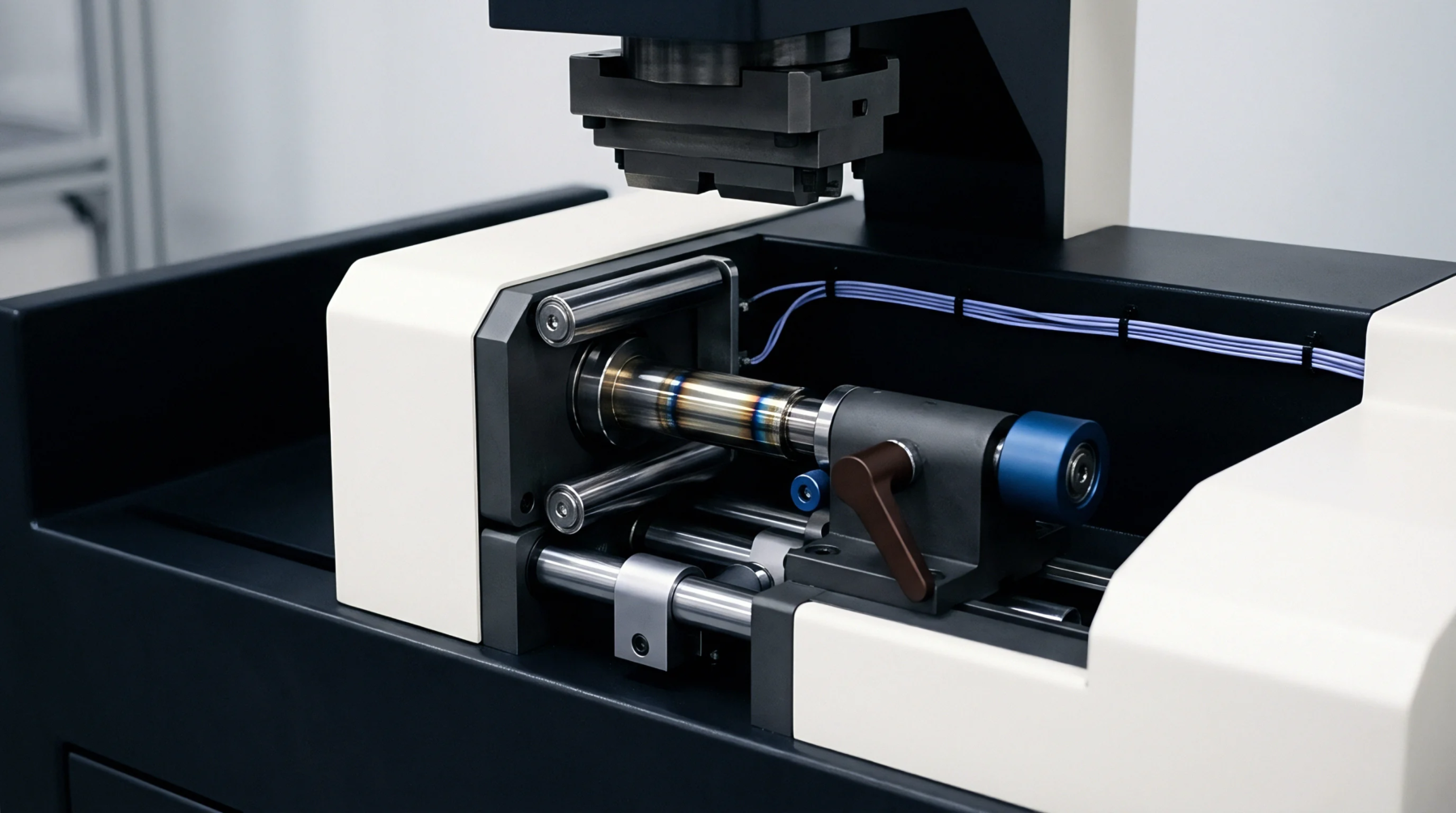
Engineering teams validate strain-life predictions by subjecting physical components to strain-controlled cyclic fatigue testing on servo-hydraulic test frames. Test specimens yield material constants including the fatigue ductility exponent and cyclic yield strength. Finite element simulations export local strain tensors into fatigue software packages applying the Coffin-Manson-Morrow formulation.
Deviations between predicted life and laboratory test results signal unmodeled environmental degradation, such as electrolyte exposure or localized Fretting corrosion.